
Why We Liked Chimp Trekking More Than Gorilla Trekking
Chimpanzees and gorillas are among our closest living relatives, sharing 99.0% and 98.4% of our DNA respectively. Trekking into the forest to spend time with these intelligent creatures is one of the most intimate and jaw dropping wildlife encounters on the planet, and absolutely worth the trip to East Africa to do so. I'll be the first to admit that my opinion that chimpanzee trekking is more exciting than gorilla trekking is an unpopular one, but I have prepared a defense and would like to make the case. Below, you'll find the information you need about both experiences, as well as my recommendation for how to make the best of your time with these incredible animals.
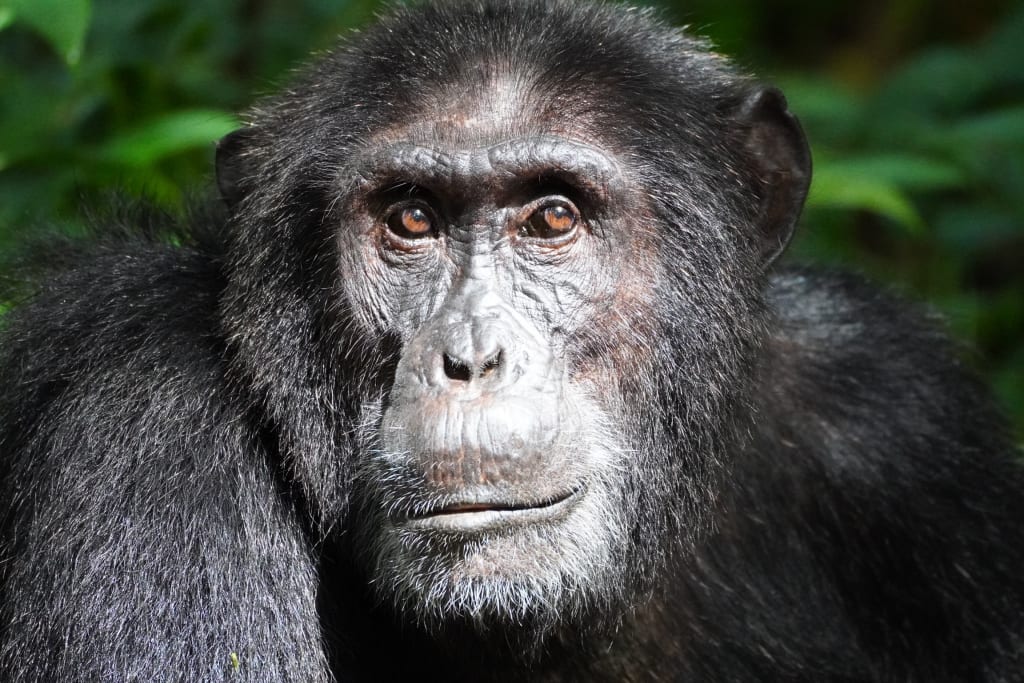
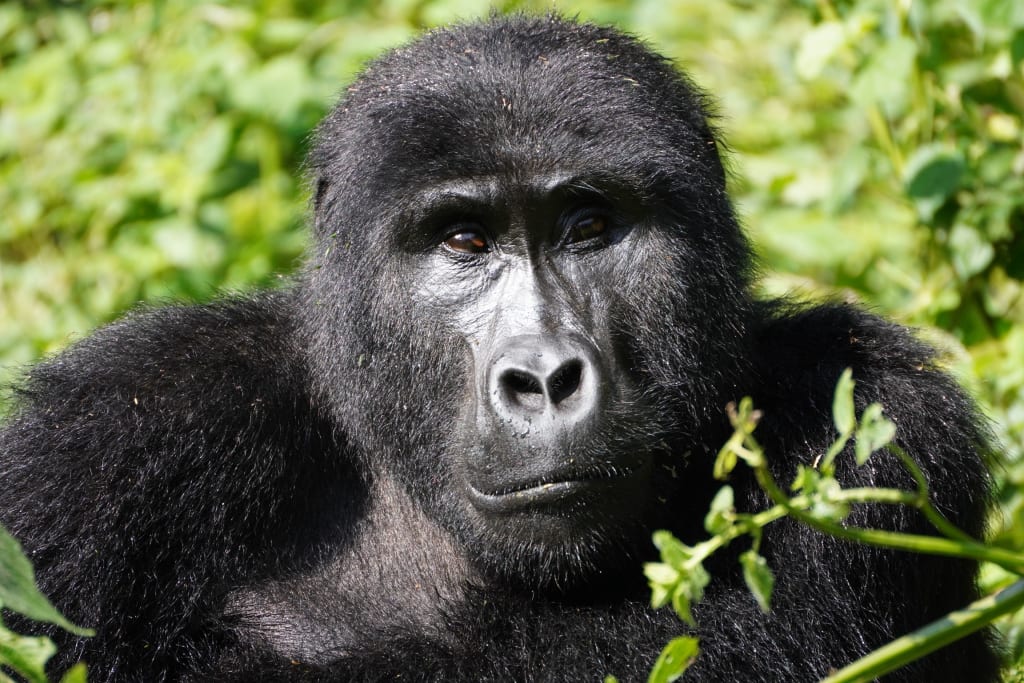
WHERE CAN I SEE CHIMPS?
The most reliable place to trek with chimpanzees is in Kibale National Forest in Uganda. As of 2026, the permits cost $250 for one hour with the chimps in a small guided group.
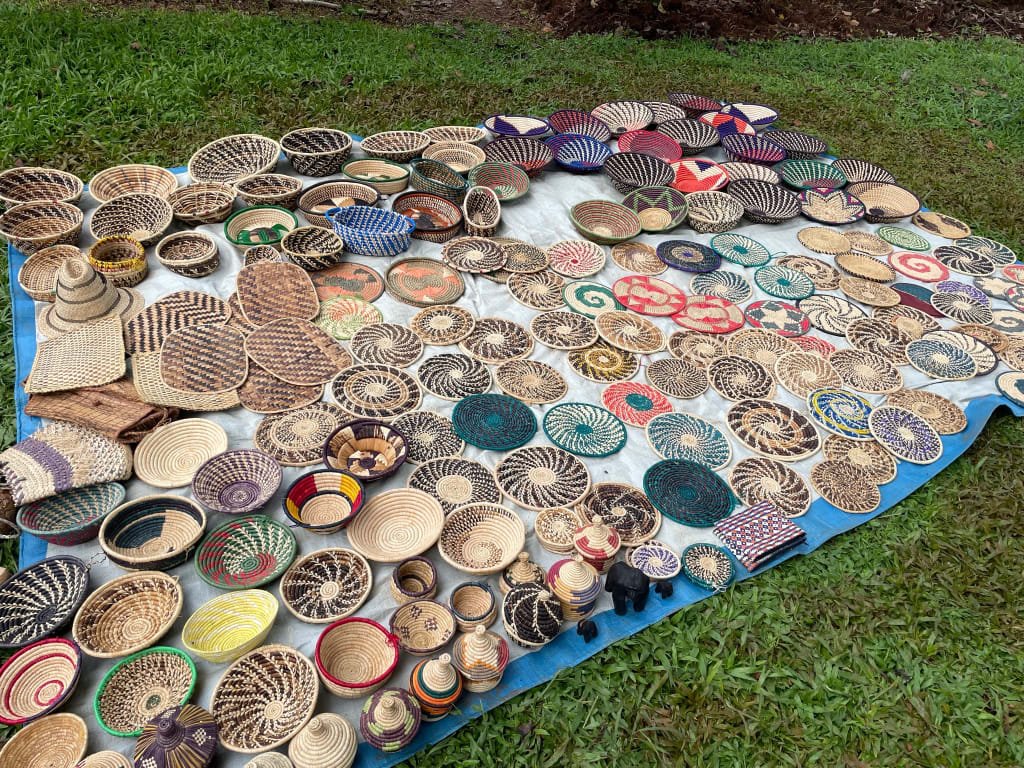
While you're in the area, I recommend doing a cultural experience. We met a man who makes banana beer, a group of women weaving baskets, and a woman who makes her own coffee. I also recommend a local tour of Bigodi Wetland Sanctuary, where we saw colobus monkeys among other things.

WHERE CAN I SEE GORILLAS?
There are three primary places in the world to trek with gorillas: Volcanoes National Park in Rwanda, Bwindi Impenetrable Forest in Uganda, and Virunga National Park in Democratic Republic of the Congo. We immediately eliminated Virunga and the DRC due to safety concerns.
We chose Uganda for a number of reasons. First, we were interested in chimp trekking as well as gorilla trekking, and Uganda is the best country for the two. Uganda also boasts the highest concentration of gorillas in the world, and the permits in Uganda are significantly cheaper than those in Rwanda ($800 in Uganda compared to $1500 in Rwanda as of 2026).

While you're in the area, I recommend scheduling a visit to meet the Batwa Tribe. They were very friendly and warm, and it was interesting to learn how these people have suffered following the government protection of the forest to protect the gorillas.

WHAT IS HABITUATION?
Habituation is the process of teaching animals that humans are not a threat through peaceful exposure to researchers for the same amount of time each day over long periods (many years). Once these apes get comfortable with the presence of humans, visitors can observe them closely without disrupting their behavior.
It takes roughly 3 years to habituate gorillas, and 5-10 years to habituate chimps, who tend to be more suspicious. Researchers only habituate half the population of gorillas in case disease spreads from the interaction with humans (both species can catch diseases from humans, so it's required to wear a mask in their presence!).
Even after the process of habituation, scientists and researchers closely monitor these animals. For gorillas specifically, trackers need to lay eyes on each gorilla each day to ensure they're healthy, as gorillas are Endangered (believe it or not, this is good news, as previously they were Critically Endangered). There are only just over 1,000 mountain gorillas left in the world.
DO I NEED A GUIDE?
Both the gorilla and chimpanzee trekking experiences are guided by nature and there is no option to go alone. You need trackers to find the animals, a guide to teach you about the animals, and security to keep you safe (they carry guns for protection against the apes, just in case, as well as forest elephants, which are surprisingly aggressive).
More broadly speaking, I would say it's imperative to have a guide while in Uganda, for a number of reasons. First, the guides are trained to spot animals and understand their habits. They also rely on their local networks: other guides will communicate with them over the radio when there are exceptional sightings. They also form relationships with national park staff, who will generously allow you to off-road to get a better vantage point at distant wildlife (keeping a safe distance of course!). I found this to be a key difference between Uganda, less developed for tourism, and neighboring Kenya and Tanzania, who experience higher crowds and stricter regulations.
In addition, the guides know where it's safe for tourists to eat, and are familiar with the long, bumpy roads. The country looks small, but it takes a long time to get from place to place, and trust me - you'd rather relax and take a nap in the back than tackle that drive yourself.
We personally went with Kajie Safaris, and they were phenomenal. Our guide Bob was friendly, incredibly knowledgeable, and cared immensely about our experience. By the end of our 8 day safari, he became a true friend of ours. More than a year after our safari he sent us a kind message checking in on us.
WHERE TO STAY?
We stayed at Kibale Forest Camp before chimp trekking. It was a tented camp with hot showers and a large, comfortable bed, as well as an open concept common area and beautiful surrounding gardens.
In Bwindi, we stayed at Bweza Gorilla Lodge. It was a luxury hotel with a balcony and insane views of the surrounding forest.


TIME OF YEAR?
The best time of year to trek with apes is the dry season, which runs from June to September.
OUR EXPERIENCE WITH CHIMPS
I do not exaggerate when I say that trekking with chimpanzees was in the top 5 best experiences I've had abroad. It was one of those rare action packed encounters that has stayed with me, even years later, and I return to it in my mind time and time again.
We first encountered an elderly male chimp, hanging in the middle of the trail relaxing. He was completely unbothered by our presence and even led us to the rest of his family.

The majority of the chimps started off in the trees, as it had rained in the morning and the chimps were using the canopy for protection against the raindrops. Thankfully, they descended rapidly.
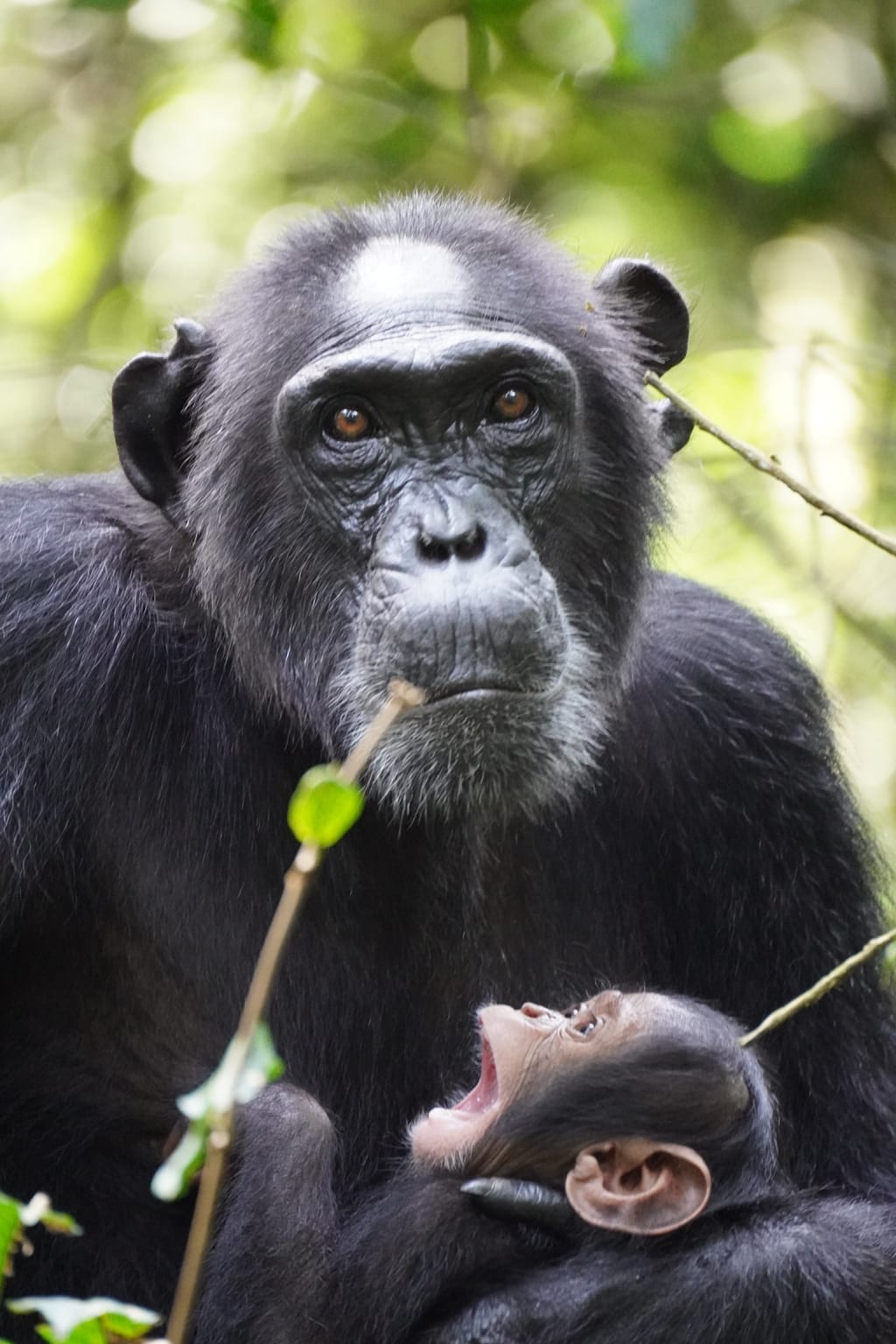
We started following a female chimpanzee who was shielding her newborn baby from view. Male chimpanzees will often kill babies in an effort to assert their dominance or claim their territory, so mothers are programmed to shield their young at all costs. We followed her around for at least 20 minutes, until she finally relaxed and allowed us a full view of her baby. Alex was able to capture the shot below: one of the best he's ever taken!
We then migrated over to a group of males who were lounging on the ground.

An injured chimp walked by on all fours, elevating one of his hands that had been injured in a fight according to our guide. Chimps show their submission by volunteering to groom their peers, and soon they formed a congo line of grooming that was entertaining to watch from the sidelines.


The experience culminated with a high shriek from one of the chimps in the distance, which was returned with pants, hoots, and other vocal calls from the chimps right in front of me. They immediately leapt up and dashed off into the forest in the direction of the call. My guide explained that a conflict had broken out within the group, and the young chimps were requesting help in the resolution. It's hard to describe what it felt like listening to their powerful voices echoing through the canopies right in front of our face.
Sadly, though, our hour with the chimps had come to an end, and we departed seconds after the chimps cleared the area.
FUN FACTS ABOUT CHIMPS
Chimps are omnivores, and eat monkeys in addition to plants such as figs and leaves.
Chimps have lighter skin at birth, which gradually darkens as they age.
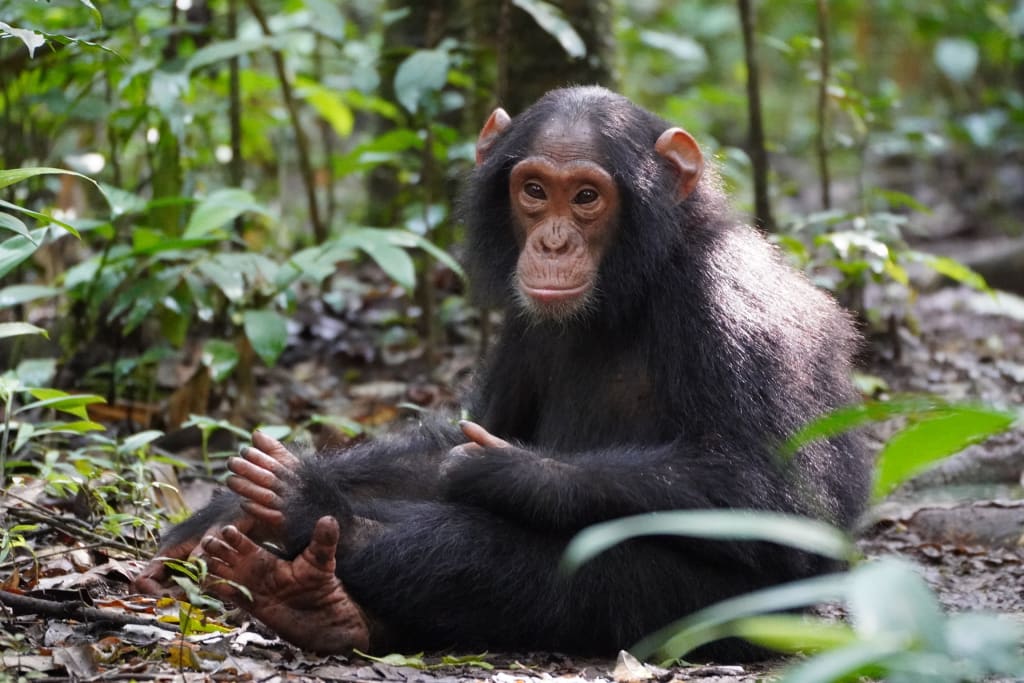

Chimp families can number up to 120 individuals!
Chimps make and use tools to fish for termites or break hard shells on nuts.
If you want to learn more about chimpanzees, I recommend Jane Goodall's book In the Shadow of Man, describing her groundbreaking research with chimpanzees in Tanzania. I also recommend the documentary Chimp Empire, filmed in Kibale National Forest, but don't watch before you go! It'll make the experience even more powerful if you don't know what to expect.
OUR EXPERIENCE WITH GORILLAS
We had a shaky start to the morning, recovering from a minor bout of food poisoning. The guides advised the park rangers on which hiking group their guests should be part of, with each group traveling shorter or longer lengths into the forest to meet with different gorilla families. Ordinarily we'd be voting for a longer trek, but our guide placed us in the shorter hike group given the circumstances. We only hiked roughly half an hour before we reached our family.
The trackers guided us to a family of roughly 15 individuals, which at first consisted of adult females and juveniles.


The gorillas spent the hour eating plants - unsurprising as gorillas spend up to ten hours a day feeding on plants.


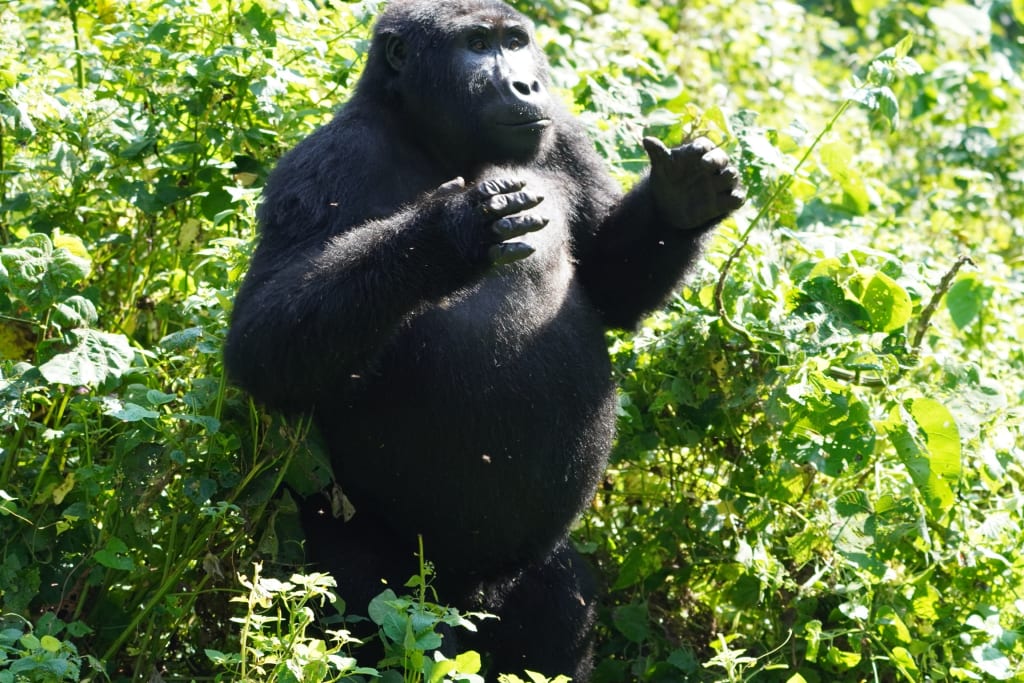
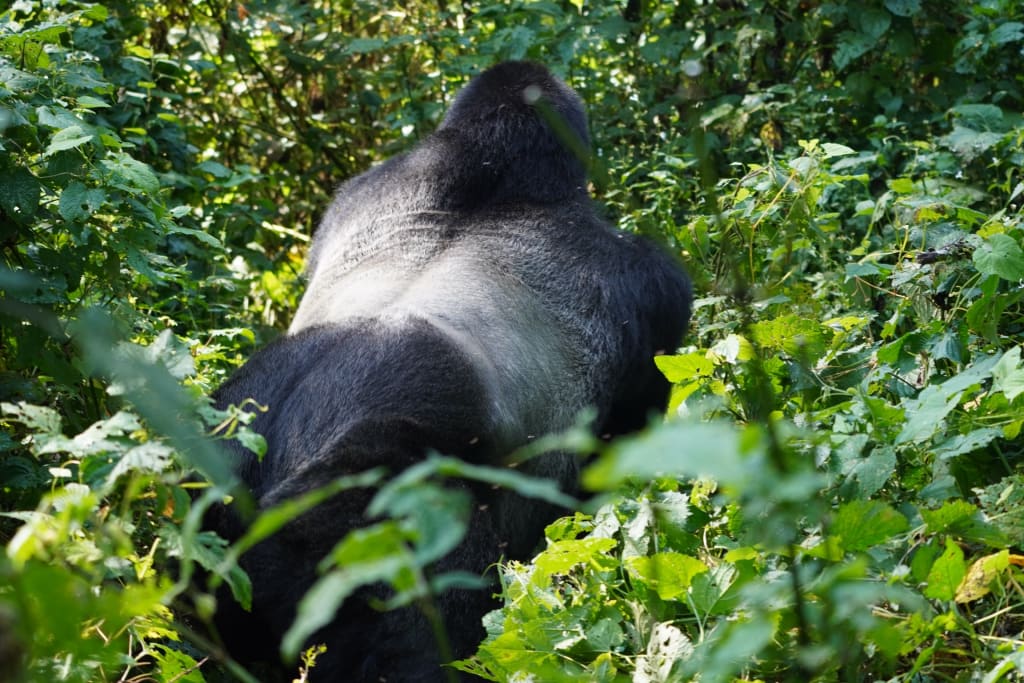
Soon, the silverback gorilla entered the area. He was striking. I was blown away by his sheer size and power.
We did have a scary encounter with one of the female gorillas, who decided to swipe at a visitor's leg as she ran by. The lady fell back onto her bum, unharmed but shaken, and we looked to our tracker for guidance. We took a few steps back and continued with the viewing.

The hour was comparatively uneventful, but we enjoyed being in the presence of these majestic creatures.
FUN FACTS ABOUT GORILLAS
Gorillas, unlike chimps, are primarily herbivores, despite weighing up to 400 pounds.
Gorillas live in tight knit families led by a silverback gorillas: a male gorilla who is at least 15 years old. There can be multiple silverbacks in a group of gorillas. They tend to die from fights with each other, disease, or even falling out of trees. Female gorillas usually leave their birth group to find a new family to mate with, since there's usually only 1-2 silverbacks in a group, probably their father.
WHY WE PREFERRED CHIMP TREKKING
My guide, Bob, couldn't believe that we preferred chimp trekking over gorilla trekking, and candidly I haven't found anyone online to agree with me either. But I'll make the case, as I have some pretty compelling points below.
First, the chimpanzees interacted with each other much more than the gorillas. Gorillas spend the grand majority of their time eating, and tend to spread out when they eat to decrease competition for resources and avoid conflict. Chimps, on the other hand, interact often, whether that's to call out to each other, groom each other, or even fight. They were also just more active in general, climbing up and down trees, running across the terrain, and making funny poses.
Second, the gorillas were aggressive! They grunted often if they felt we were too near, and as I mentioned one gorilla swiped at the leg of one of our visitors and knocked her on her bum! This incident had my heart racing, although I was thankful to have the guide and the security guard providing directions on what to do. The chimps, by contrast, were indifferent towards the presence of humans, would make eye contact, and continue on with their business.
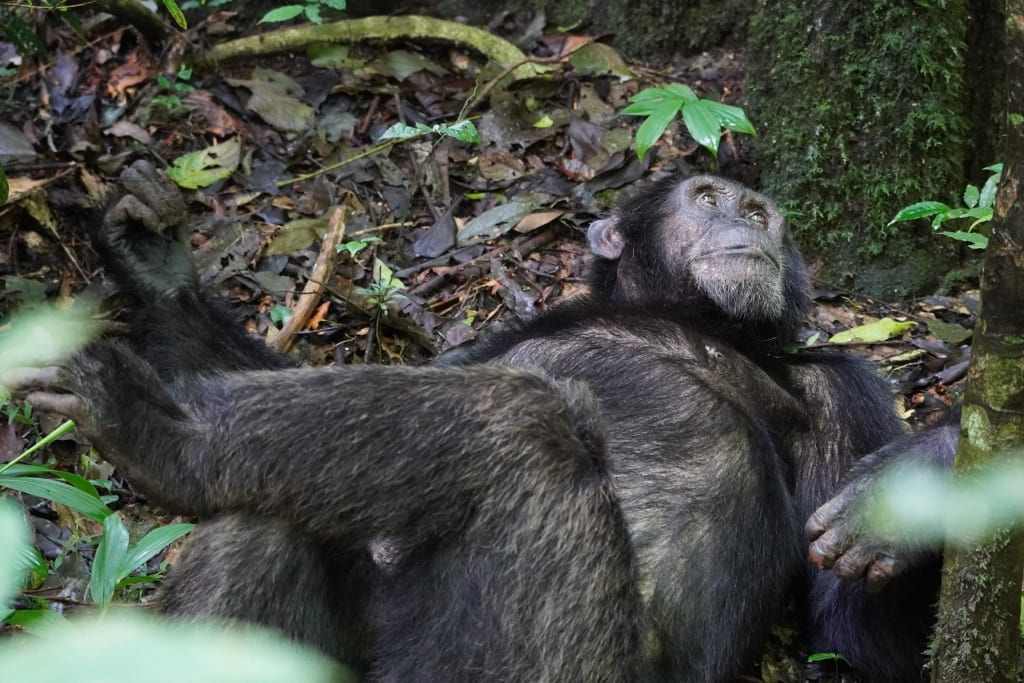

Third, chimps are complex creatures, with social structures that are more complex than those of the gorillas. We were able to learn many things about their hierarchies from watching their interactions.
Lastly, chimps are more genetically related to humans. Their similarities to us were uncanny, and interesting to observe.

OUR RECOMMENDATION
If you're in Uganda, you should experience both chimp trekking and gorilla trekking. They offer shockingly different experiences, are unique worldwide, and are close enough geographically to be convenient. If you can afford it, I highly recommend doing two chimp treks, ideally on different days. We got lucky on our afternoon chimp trek and saw unbelievably high levels of activity, but the group who went in the morning came back disappointed, as the rain made the chimps lazy and they hid out in the tree canopy for the entire hour. For the best chance at witnessing their interactions, hedge your bets and go twice. Obviously gorilla trekking is more of an investment, and the gorillas (while they do climb trees) tend to spend more time on the ground and cover shorter distances, leading to more reliable viewing experiences.

FAQs
Is it safe in Uganda?
We found it to be safe in Uganda. The locals are incredibly friendly, and are often excited to see foreigners ("mzungu" in Luganda, the local language, which translates loosely to foreigner or white person). We had many children chase after our vehicle and wave as we drove through their villages.
Is it safe to gorilla/chimp trek?
Yes, the apes are habituated, and are used to the presence of humans. There are also security guards with arms there if necessary.
Do I need malaria meds?
Yes, it's highly recommended that you get a prescription to prevent malaria, which is prevalent in Uganda. I have taken atovaquone/proguanil (Malarone) many times now and have never experienced side effects.
What should I wear?
I recommend long pants, a light long sleeve shirt, long socks, and hiking boots or sneakers. There are many insects and plants in the jungle that could irritate your skin. I personally got bit by a red safari ant and let me tell you - it stung! Some guides or lodges also provide gaiters for your ankles.
How many people are in each group?
Usually there are about 8-10 people in the group for both chimpanzee trekking and gorilla trekking. We got lucky with the chimpanzee trekking and had a guide to ourselves! This would never happen with gorilla trekking, where the permits sell out months in advance.
How far in advance should you book?
I recommend booking 6-12 months in advance for the high season, as permits sell out. We traveled to Uganda in 2023 and booked 3 months out, and were lucky to secure permits, although we had to visit the chimps in the afternoon instead of the morning because the morning had sold out. Gorilla and chimp trekking has become increasingly popular though, and if I was booking the trip again I would book further in advance.
How hard are the hikes?
The gorilla hikers in Bwindi Impenetrable Forest are divided into groups based on their physical ability or how long they want to hike. The hike lasted roughly 30 minutes each way. There was overgrowth that our guides would trim back as we proceeded down the path, and short stretches of elevation growth or decline. Kibale National Forest is very flat, by contrast, and easy walking.
How close do you get?
Do I need to wear a mask?
Yes, because apes can catch the same diseases as humans.
What happens if you're sick on the day of your trek?
Since apes can catch the same diseases as humans, it's important that you reschedule your trek. Gorillas in particular are critically endangered, so ensure you're feeling healthy before proceeding with your hike.
Are the sightings guaranteed?
Sightings are practically guaranteed, yes. These parks hire trackers to keep track of the movements of the wildlife and ensure you're able to spend time observing them.
How long do I get to spend with them?
After locating the apes, you get to spend one full hour observing the apes. The activity itself will be longer, as it includes trekking through the forest to find them.
Can the apes touch you? Can you touch the apes?
You should never make physical contact with the apes. If they approach you, you should follow the guide's instructions and calmly step back.
What should you do if a gorilla charges?
Your guide will give clear instructions at the beginning of the trek, but the rangers are prepared for any case. They are also armed for your protection.