
Travel Disasters & 21 Tips on How to Avoid Them
Even the most prepared traveler is bound to encounter unexpected situations while abroad. It’s part of the deal. I am certainly no exception. While our travels have been relatively smooth, we’ve definitely had our fair share of travel disasters.
Below, I share some of the most frustrating travel mishaps, for your pure enjoyment, and tips on how to avoid the worst of them below no matter where you’re planning to go.
TRAVEL DISASTERS
HONDURAS: STRANDED IN HONDURAS
“Unfortunately, there are no seats left on the plane, but we can get you out Friday.”
Alex and I exchanged a look. “But it’s Monday. We have to work this week.”
This was the situation Alex and I found ourselves in as we stood at Roatan’s tiny airport after 5 days of scuba diving in Honduras’ famous Bay Islands. We had scheduled a flight home, but there was only one flight per day to the USA and it was overbooked today. They also refused to bump someone else from their seat in the fully booked flights on Tuesday, Wednesday, and Thursday. Our big reward for being bumped was a lousy $250 flight voucher, and they wouldn’t even give us a refund on the seats we weren’t using on the plane (which cost more than $250 per person, I can assure you!) since we booked non-refundable tickets…
We were kicking ourselves for not bringing our work laptops (a mistake we’ve never made again!). We needed to get home, so we had two alternatives. There was a flight to the capital of Honduras: Tegucigalpa. From there, we could get a taxi and drive to another airport over an hour away. We were hesitant to do this, since we heard safety was more of a concern on the mainland (the third person who got bumped from the flight ended up doing this, and he was fine). The second option was an insanely expensive and roundabout flight schedule: fly to Belize, then Texas, then finally New York. We opted for option 2.

In the end, it was pretty cool, because we got to fly in a semi-private plane! This plane was so small, it could seat a maximum of 10 passengers, and all luggage had to go beneath the plane. We sat directly behind the pilots!

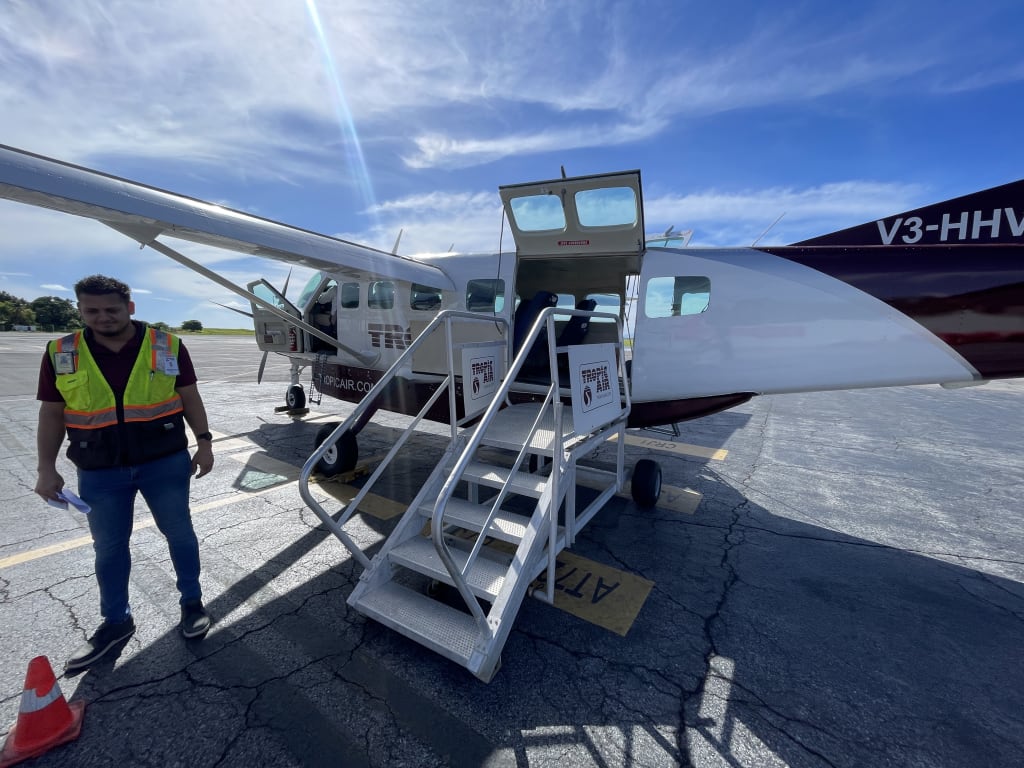
Ultimately though, it was quite a stressful day and we missed one extra day of work. Lesson learned: do not wait until you get to the airport to check in for your flight. If you’re last to check in, you’re the first to be booted off the flight. We have NEVER waited to check in at the airport since. (Actually, you have to wait to check in when you fly with a pet, so I suppose that’s the exception, but now that gives us anxiety!).
MEXICO: STRANDED ON THE HIGHWAY
“Just slam your foot down on the gas petal!”
“I am!” Alex replied.
We were on the last leg of a roadtrip around Mexico’s Yucatán Peninsula. We had traveled from Cancún, to Playa del Carmen, Tulum, and Valladolid, and were headed back to Cancún for our flight to the States. Unfortunately, though, our car just wasn’t going to make it.
It was an old car, but it had gotten us this far. Yes, maybe it made a little noise sometimes when we drove, but otherwise we had no cause for concern as we had spent hours driving and had noticed nothing concerning.
Now, though, we were on a highway, and the car just would not move. We had driven a few hours, then stopped to get gas, and the second we restarted the car, it protested. It would not move an inch. We crawled back on to this major four lane road and stopped at a stoplight. The problem is we just couldn’t start again. Alex pressed the gas petal as far as it would go and the car just inched forward as cars zoomed around us, honking. We immediately turned on the emergency lights and continued crawling until we found a spot to safely pull over: a gas station. We waited there for hours until the rental car company came with another car. The funny part was that the rental car employee came alone, and just hopped in the car we had driven and continued to crawl down the road!
Safe to say when we returned to Mexico the following year to get married, we chose to rent a car with a different company.
ALMOST MEXICO: WHERE IS MY PASSPORT?
The night before our flight to Mexico, my husband and I tore up our apartment looking for Alex’s passport. We spent hours overturning every inch of that place (and our apartment is only 700 square feet). We never found that passport. We expedited a new one and made it to Mexico the following week, but my tip would be to locate your passport the week before the flight and confirm that the expiration date is at least 6 months after your return.
PERU: WILL WE EVER MAKE IT TO MACHU PICCHU?
We experienced almost every disaster imaginable on the journey to Machu Picchu.
It started on the train ride to the starting point of the 1 Day Inca Trail. The train stopped on the track for hours, as a train up ahead had engine problems and wasn’t able to move. The train car was hot, and I started to feel a little woozy. I then got an alert from my Apple Watch: irregular heart activity. I checked my heart rate: over 140 bpm. I was sitting down. How is this possible? And then I felt it. I was going to lose consciousness.
The next hour was torture. I was sipping water, fighting to stay conscious. My husband was frantically googling next to me. “It says if your heart rate is that high, we should go to the hospital.”
I panicked. I flew all the way to Peru to do this hike! I was not to be deterred.
I’m not going to lie and say that this was in any way an intelligent decision. It wasn’t. I should have taken Google’s advice, especially since I was in the middle of nowhere. But I decided to do the hike anyway and it ended up being the right move. What I didn’t know at the time was that this was the onset of a medical condition called Postural Orthostatic Tachycardia Syndrome (POTS) that I have to this day. I assumed the dizziness I was experiencing was either related to the altitude or the altitude medication I was taking. The reality was that my blood was pooling in my legs and not enough was getting to my brain, so hiking actually encouraged circulation and helped me feel better.
That’s not to say this was a stress free experience. Our guide told us that since the train was delayed so many hours, we would have to move at top speed to make the second gate by 3pm (otherwise we’d be turned around). Not the news I was looking to hear, since I was still dizzy. Thankfully, though, I started to feel better as I started moving, and we made it to Machu Picchu as planned.

If you thought the story ended there, you are wrong! My husband woke up with food poisoning the next morning: the day we were supposed to explore the ruins. I had little appetite during the hike and didn’t eat the boxed lunch the tour company provided for us, but my husband did eat. The food likely spoiled as we sat on the hot train for hours. The problem was there are no bathrooms inside Machu Picchu, and you can only enter once. We ended up using up our supply of Pepto Bismol and waiting it out until he felt a little better and we felt comfortable using our tickets and were able to spend a few hours exploring the ruins with no incidents!
SEDONA, ARIZONA: FOOD POISONING STRIKES AGAIN
Out of all the places around the world to get food poisoning, I was pretty surprised Alex got it in Las Vegas, Nevada.
It was a Friday afternoon and we loaded up the rental car, ready for the 4.5 hour drive to Sedona, Arizona, where we planned to go hiking for the long weekend.
Tragically, halfway through the drive Alex started to feel nauseous. We were on a highway in the middle of nowhere, surrounded by mountains and without cell phone reception. He pulled over the first chance he got to throw up. “Okay, I feel better now. We can keep going.”
That didn’t last long, though, and just 10 minutes later we found ourselves in the same predicament. It was a real problem, too, because I haven’t driven a car in almost a decade (I have a fear of driving after a car accident I got into in high school, plus my unstable POTS doesn’t make me any less nervous).
We had a few options, none of which seemed fantastic: power through, switch drivers, or stay the night in a random motel. I actually took the wheel for a minute or two, but I was just too anxious to keep going, and of course it started to pour. We ended up at a motel. Three days of awesome hikes quickly turned into one day of a shorter hike than planned in low spirits.

UGANDA & TURKEY: MORE FOOD POISONING
I could really write a whole article on the times we got food poisoning abroad, but I think you get it. Alex got a bad case of food poisoning in Turkey. We should have known - the food came out of the restaurant kitchen alarmingly quick after we ordered. But, the hotel owner recommended this spot (he MUST have been getting a kickback) and we were hungry. Well, Alex paid for it for the next few days. I was spared, and I think that’s because I don’t eat meat.

We had a similar experience in Uganda. Most restaurants your guide will take you to in Uganda are designed for tourists and you won’t have any issue. However, luck was not on our side this day, as the tourist restaurant was closed and we were forced to eat at a local spot. Cleanliness was…a problem at this spot.
All three of us, our guide included, ended up with mild food poisoning. It was all the more stressful because we were gorilla trekking the next day: the whole reason we booked a trip to Uganda in the first place! Ordinarily, we’d sign up for the long hike to see the gorillas, but our guide made the call to put us in the short hike group given the recent GI issues. Thankfully the story didn’t get any worse from there.
These days, I carry quite a large, fully stocked medical bag to every place we travel. I always include Activated Charcoal, Pepto Bismol, Gas-X, and prescription Azithromycin.
JAMAICA: YOU WILL MAKE THE BOAT
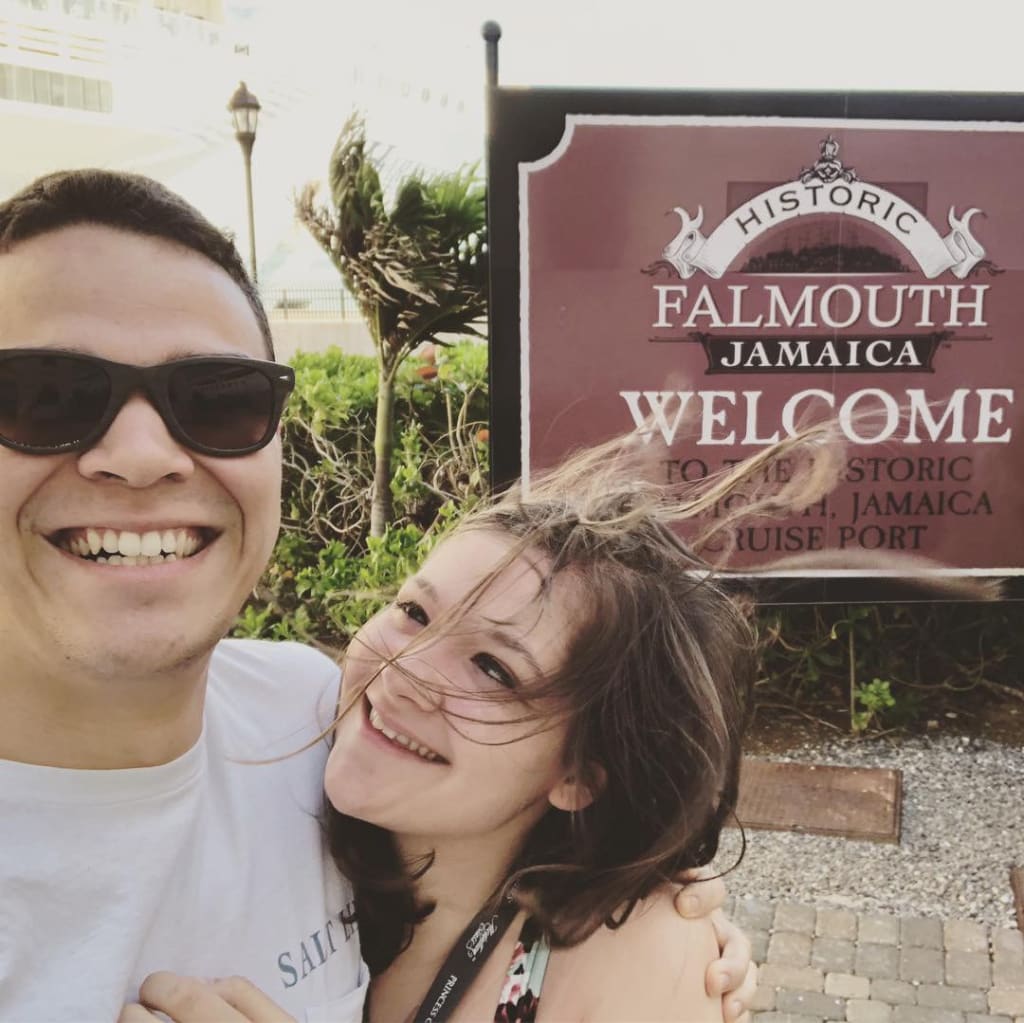
Well before I “discovered” international travel, my college friends and I took a cruise over spring break. One of the stops was Falmouth, Jamaica. We had no plans and were immediately greeted with a throng of vendors selling their experiences. We started talking to a man selling us a waterfall and dolphin experience. “Sounds great! What time will we be back?”
“What time does your cruise depart?”
The first red flag. Answer the question!
“4pm.” We were assured we’d be back in time, so we handed over the cash.
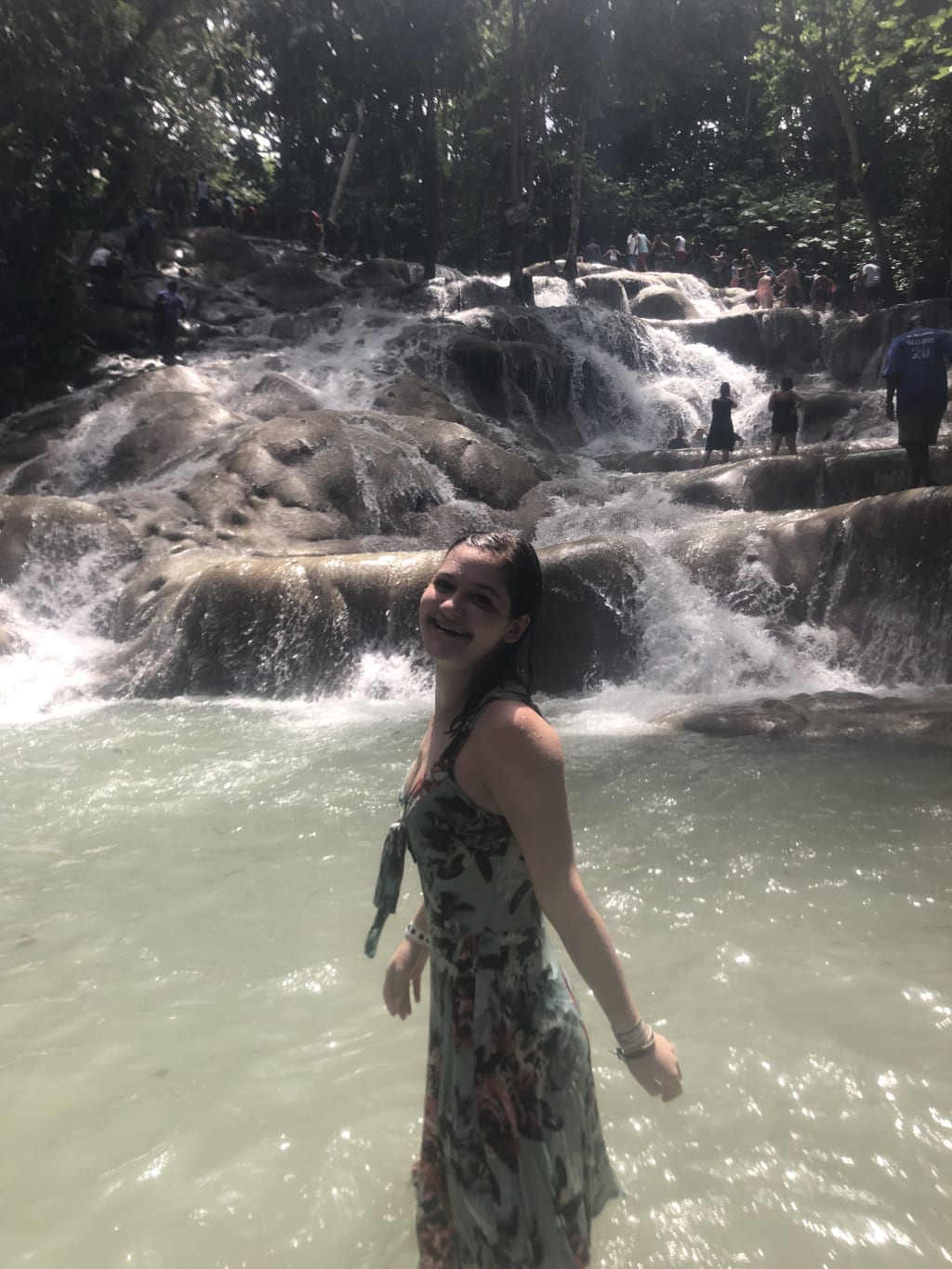
This excursion involved a long bus ride to a waterfall, followed by a walk up a waterfall. At the waterfall, I overheard a conversation from a tourist just a few steps ahead of me.
“So they said we’ll get back at 6, so we can make a dinner reservation for 7:30.”
6?
I immediately confronted the guide that sold us the package.
“Ah, yes, this group will get back at 6. But good news - there’s a bus leaving now we can get you on that bus.”
We had to abandon our tour halfway through and frantically hop on the bus headed back to the port. We barely made it, and I recall it being quite the stressful day.
Now, I rarely leave things up to chance. I like to book in advance with operators that have a proven track record of success and a long list of 5 star reviews from other customers. Sadly, I never even learned the name of this operator, so I couldn’t leave my lousy review!
PERU, ECUADOR & GUATEMALA: THE ALTITUDE
Alex and I are no stranger to high altitude destinations, nor to the odd side effects that come along with that. Thankfully neither of us have ever had a truly awful case of altitude sickness, but we’ve experienced the symptoms for sure.
The most mild case was in Quito, Ecuador (9,350 feet above sea level). I assumed a bad stomach ache I had was from food poisoning (see 12 examples of similar cases above!) but I never had any GI upset. I couldn’t sleep from the pain. Turns out a Gas-X solved the problem. Apparently being at altitude slows down your digestion.
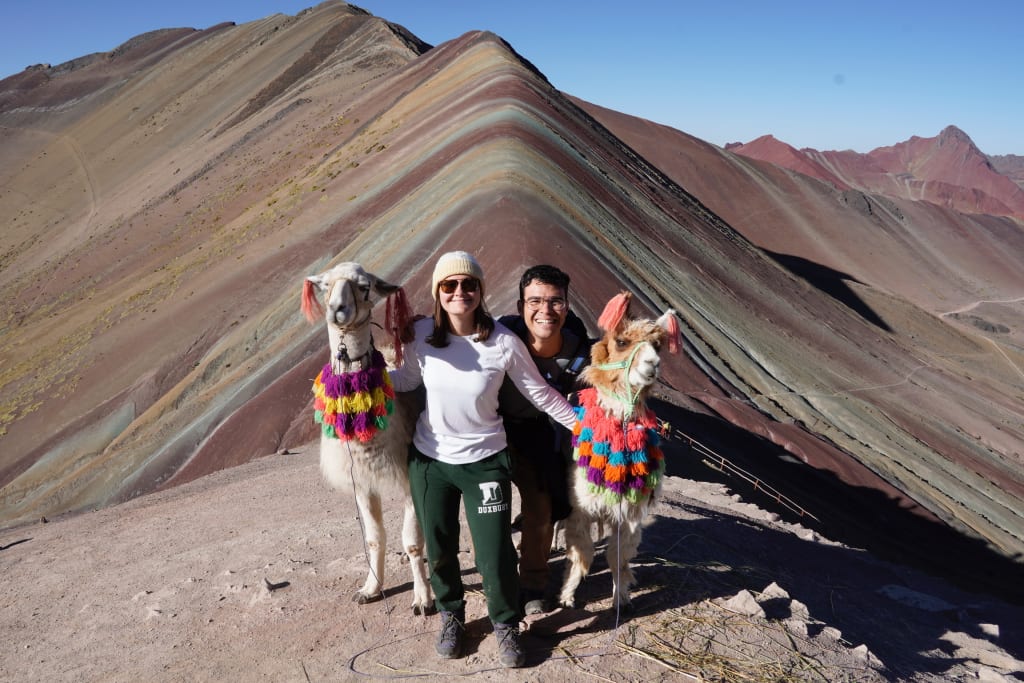
In Peru, we really challenged our bodies at Rainbow Mountain (17,060 feet above sea level). I could barely walk for lack of air in my lungs. I felt fine otherwise, but learned that your digestion halts while you’re at altitude and speeds up as you descend back down, so be prepared for that!

The worst case for me was after the Volcán Acatenango hike in Guatemala (~12,000 feet above sea level). I had been much higher before, but I hiked for 7 hours, and my body couldn’t handle the exertion + altitude combination. I ended up throwing up four times.
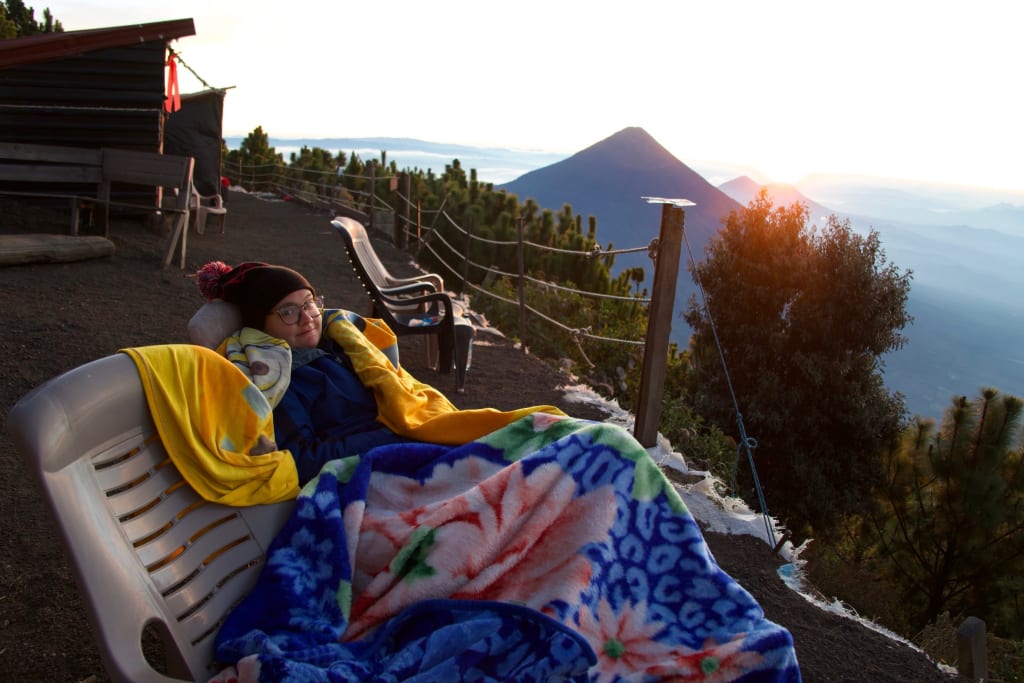
Altitude sickness can be lessened by taking Acetazolamide (also known as Diamox), avoiding alcohol, eating smaller meals, having Gas-X on hand, and avoiding too much intense exercise.
JORDAN: WAR BREAKS OUT
We didn’t make it to Jordan, despite our best efforts. A conflict between the United States and Iran broke out that made travel unsafe in the region. I highly recommend paying attention to cancellation policies as you book travel and opting for the flexible cancellation where available. I always create a document that lists the price and cancellation policy for everything we book, as we’ve had to cancel trips in the past due to COVID and sick family members. I recommend this over travel insurance as it costs nothing and it’s easier to get your money back if something goes wrong (you really have to read the fine print on your insurance policy for what they will and will not cover).
PERU: YOU CAN’T CONTROL THE WEATHER
This is what we kept telling ourselves as we sat at our lodge in the Amazon Rainforest watching the rainforest disappear behind a curtain of rain. We planned three days of exploration in peak season, the season with less rain allegedly, but got unlucky with the weather. We tried to go out anyway, but spent hours dredging through the rain and saw not a single animal. Ultimately you can plan everything perfectly but still get unlucky with the weather.

TURKS & CAICOS: STRANDED AT THE AIRPORT
Another moment back in time where Alex and I were naive travelers with few trips under our belt. We arrived at the airport in Turks & Caicos ready for a relaxing trip, only to be stranded at the airport for over an hour. The taxis did not take credit cards, and the only ATM onsite would not accept my debit card nor Alex’s. I was in a full state of panic. We were the last couple sitting on the tarmac outside the airport, until some kind soul volunteered to drive us 15 minutes down the road to our hotel. We left an envelope full of cash with the driver’s name on our return to fly home, but of course we don’t know if he ever got it. Every single trip we take now, we make sure to carry cash.
UTAH: WE WERE NOT PREPARED FOR THIS
I’ll start by saying - this is one of those rare instances where a disaster ends up working out better in the end for everyone!
Alex and I had planned a road trip across Utah, starting with an epic hike, The Narrows, in Zion National Park. We were driving from Las Vegas, where I had a work conference the week before, when we got the call from the park ranger. “You need to pick up your permit by the time we close at 5,” he explained over the phone.
“Well,” I responded. “We’re 2 hours away and it’s 4:15. What are our options?”
The ranger kindly agreed to bump our permits to the following day so we could pick up our permits tomorrow.
We had the pleasure of meeting John the next day at the park desk. We had planned to do the “Top Down” 24 mile hike in one day, but he convinced us this would be a miserable and stressful experience. He told us to go buy a sleeping bag and sleeping pad and camp under the stars. We weren’t exactly prepared. Alex had only a tiny backpack.

But it ended up being one of our favorite travel experiences of all time. All that to say, be flexible with your plans. Sometimes, things might work out for the better.
TIPS TO AVOID THE SAME MISTAKES (& OTHERS)
I have compiled a list of my best general travel tips to ensure you don’t run into anything that can be prevented.
Make sure you store your passport in a safe place and check the expiration date when you book a flight. Make sure your passport won’t expire for at least 6 months after your trip. Many countries won’t let you in if your passport is set to expire within 6 months. Similarly, if you’re going to rent a car or travel domestically, check your driver’s license expiration date.
Many countries require visas. Check the entry requirements before you book your flight and make sure to submit the paperwork in advance. It often takes time to process the visa, and sometimes visas have requirements like vaccines that you’ll need to get in advance before submitting your visa application.
Some countries require an International Driver’s Permit (a translation of your driver’s license into many languages). Also, be sure to check if your destination drives on the same side of the road as you do at home. If you can’t drive a manual car, make sure to pay attention when you book the rental car. In many countries, it’s more difficult to find an automatic car.
If the airline loses your luggage, it will be easier to locate. I put one in my carry on too, just in case they gate check the bag.
You’ll want to purchase a plug adapter from Amazon.
Since I’m a US citizen, I often check the US Department of State website. I personally feel comfortable traveling to any destination level 3 or below if I’ve researched it and feel confident that it will be safe.
If flights are overbooked, they remove the last passenger to check in. Check in ASAP, especially if you’re in a remote destination.
Most destinations I’ve traveled to accept US Dollars, however it’s also valuable to have local currency. I usually bring some USD, and then pull some cash from an ATM once I arrive in the local currency. Currency exchange desks are usually not a great deal, so I try to avoid those where possible.
It’s important to check the guidelines on vaccines and medications for specific destinations. Common travel vaccines (that I have had) include typhoid, yellow fever, TDAP, and Hepatitis B. Common medications include Acetazolamide (for altitude) or Atovaquone/Proguanil (for malaria prevention).
My first tip is to take preventative measures to avoid food poisoning in the first place. Eat at packed restaurants with lots of reviews during peak meal times and get recommendations from locals on where to eat. If, despite your best efforts, you do get food poisoning, use the medicine you brought with you. I always travel with Activated Charcoal, Pepto Bismol, Gas-X, and prescription Azithromycin. Also, for what it’s worth, I’ve only gotten food poisoning once compared to Alex’s 4 times, so there might be a correlation between avoiding meat and avoiding food poisoning (I’m a vegetarian/pescatarian).
That way there, you can access offline and communicate easily with locals.
Especially if you’re driving through remote areas or you don’t have an e-sim, it’s helpful to have the maps downloaded onto your phone.
Use an app like Airalo (not sponsored) to buy an e-sim that will get you a data plan for a set number of days at your destination. It’s so much easier than buying a physical sim card at the airport (and comes without the risk of losing your phone’s built in sim card).
I communicate with tour operators and hotels very often over WhatsApp. You can also make calls via WhatsApp, which is much cheaper than making international phone calls. It’s also very secure (messages are encrypted).
I personally don’t like to leave things to chance or book things through my hotel. Often hotels have arrangements to send business to local operators in exchange for a cut. They might not be incentivized to recommend the highest quality operator. In addition, the best options usually fill up in advance. I rely on Google and TripAdvisor reviews and make flexible reservations in advance.
You probably don’t want to travel to the Caribbean during hurricane season, or to view whales in Tonga when the whales are in Antarctica until June. Do your research on the best time to visit your destination for the activities you’ve picked.
You can’t always add extra days, but if you’re flying all the way to a certain destination for a particular activity and you’ll be depressed if you can’t do it, I recommend adding a “flex day.” At the very least, schedule a plan B for rainy days, so you’re not sitting around the hotel instead.
I tend to write an outline of my itinerary before I book a single activity or hotel. Then, I check the hours for every activity. It’s very helpful when certain spots are closed on particular days or booked out at certain times. Book your most constrained activity first, then fill in the gaps with the rest to ensure you get to do everything you want.
Generally I do trust it. But, if you’re driving in remote places with poor infrastructure, I wouldn’t rely on Google to estimate the correct driving times. Also, if you’re traveling via ferry (as I was during my trip to Norway) check the last ferry schedule. Google might not factor in the ferry schedule into drive time estimates and you might find yourself stranded if you’re driving outside peak hours.
This might seem obvious, but read the emails your hotels and tour operators send. Read the website before purchasing an activity. Read a few reviews. We almost missed out on one of the greatest hikes (The Narrows) because we didn’t read the fine print in our hiking permit that said you must visit the ranger’s office in person the night before.
You’d be surprised how many travel disasters start with improper footwear. Doing a hike? Wear hiking boots with traction. Wading through rocky waters? Wear water shoes. (I personally cut my foot on a rock in the hot springs at Tabacon Resort in Costa Rica).