
Exploring San Juan La Laguna: Lake Atitlán’s Most Colorful Village
Our visit to Lake Atitlán was primarily about relaxing. We had just finished the hike up Volcán Acatenango and to say we were exhausted would be the understatement of the year. We booked a stay at a lakeside resort and an hour-long massage, content to do nothing for a couple days. I had just one activity on my Lake Atitlán bucket list: I wanted to explore the lakeside town of San Juan La Laguna.
I had spent hours poring over blog articles and watching YouTube videos about Lake Atitlán. The one town that kept coming up again and again as the travelers’ favorite was the colorful village of San Juan La Laguna.
We spent an afternoon in this adorable town, shopping in art galleries, watching a traditional weaving demonstration, and learning about Mayan stingless bees. It was a wonderful afternoon and I’m very glad we visited.
Below, I break down how we spent the day and the stops you can’t miss if you’re planning your own visit.
WHERE IS SAN JUAN LA LAGUNA?
San Juan La Laguna is a small town on the western shore of Lake Atitlán in Guatemala.
WHAT IS LAKE ATITLÁN?
Lake Atitlán is a giant lake surrounded by three volcanoes and a dozen or so villages, each with its own distinct personality.
All three volcanoes are dormant or at least quiet. Volcán Atitlán is technically classified as active, but its last recorded eruption was almost 200 years ago in 1853.
WHERE IS LAKE ATITLÁN?
Lake Atitlán is located in the Sololá Department in southwestern Guatemala. It takes ~3-5 hours (depending on traffic) to drive from Guatemala City, the location of the nearest international airport, to Panajachel, the only town on Lake Atitlán that is accessible by road.
OUR EXPERIENCE
Mayan Stingless Bees
I let a bee bite me at Mundo de Abejas Mayas.
That’s right, I said bite, not sting.
Let me tell you the full story.
Alex and I showed up at Mundo de Abejas Mayas (World of the Mayan Bees in English) in San Juan La Laguna for the free 15 minute tour.
A staff member came over right away and introduced himself. He then gave us some context on bees.
He started off by asking us to guess how many unique species of bees there are. My answer was nowhere near 20,000, the correct answer.
Most people are familiar with honeybees: the bees that live in hives and produce honey. Our tour guide referred to these as “European bees.” He explained that their main tactic for defending their hive is using their stingers. This is sometimes powerful enough to deter large predators like bears from going after their honey.
The bees that are native to Lake Atitlán are stingless. Their primary mechanism for defending themselves is a bite. While European honeybees had to contend with large honey-loving predators like bears, the stingless bees around Lake Atitlán did not, so they likely evolved to have less powerful defense mechanisms.
Stingless bees, referred to as “Mayan bees” at Mundo de Abejas Mayas, have been kept by Mayan communities for thousands of years. European honeybees, on the other hand, were introduced to the Americas by European colonists in the 1600s. Both bees are social: they live in colonies with a queen bee that lays the eggs, worker bees (the females) that collect nectar and pollen, make honey, and defend the colony, and drone bees (the males) that mate with the queen. Drones die immediately after mating (their reproductive organs are torn from their bodies).
Only a small percentage of bee species live in large, organized colonies. The vast majority of bee species (over 90%) are solitary, meaning each female builds her own individual nest without a hive or queen.
After this brief orientation, our guide led us around the property. There were 5 hives to explore, each with a different species of bee.
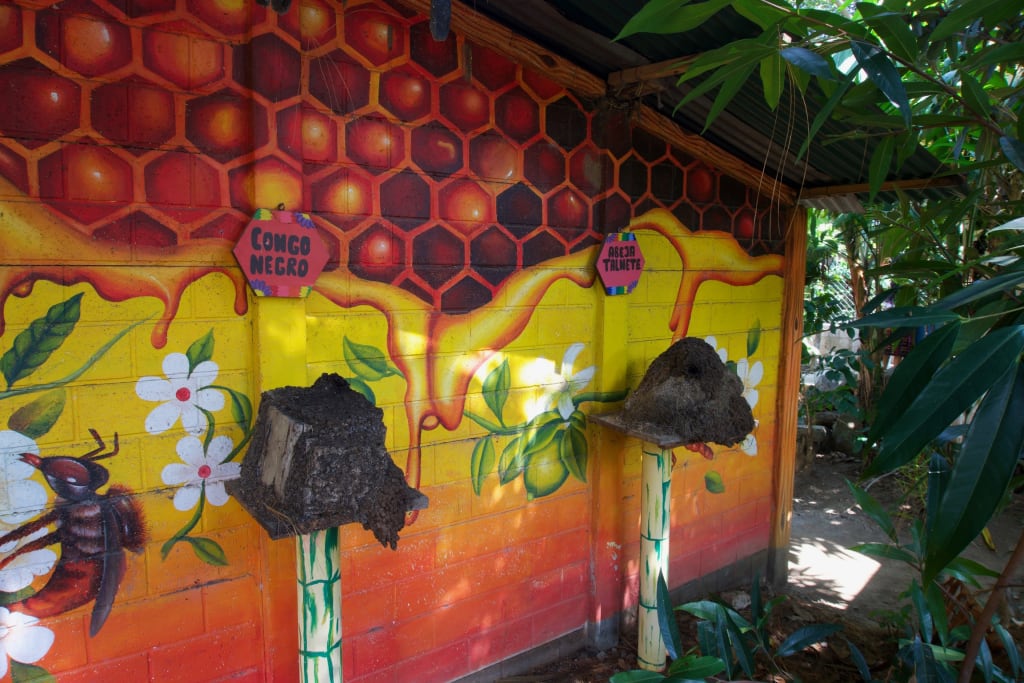
The first belonged to the abeja limoncello. These bees pollinate citrus plants and create a (very delicious) honey that tastes citrusy as a result. The honey from these bees is very expensive, as one hive, which holds approximately 5,000 bees, produces only half a liter of honey over the course of an entire year!
The next hive we checked out belonged to a colony of congo negro bees. Their honey is traditionally used as a remedy for stomach aches and sunburns.
At this point, our tour guide told us we could stick our finger in the hive if we wanted. He must be kidding, right?
“It doesn’t hurt,” he promised. So, against my intuition, I stuck my finger at the entrance to the hive and waited for the bee to bite me. A dozen bees immediately landed on my finger, but nothing happened. A few seconds passed before I felt a tiny pinch on my index finger. I had been bitten by a bee! That was certainly a first.
It didn’t hurt at all, as I tried to reassure Alex. But he wasn’t convinced and he decided to pass on this once in a lifetime experience. Fine by me. I could tease him about wimping out for the rest of the day!
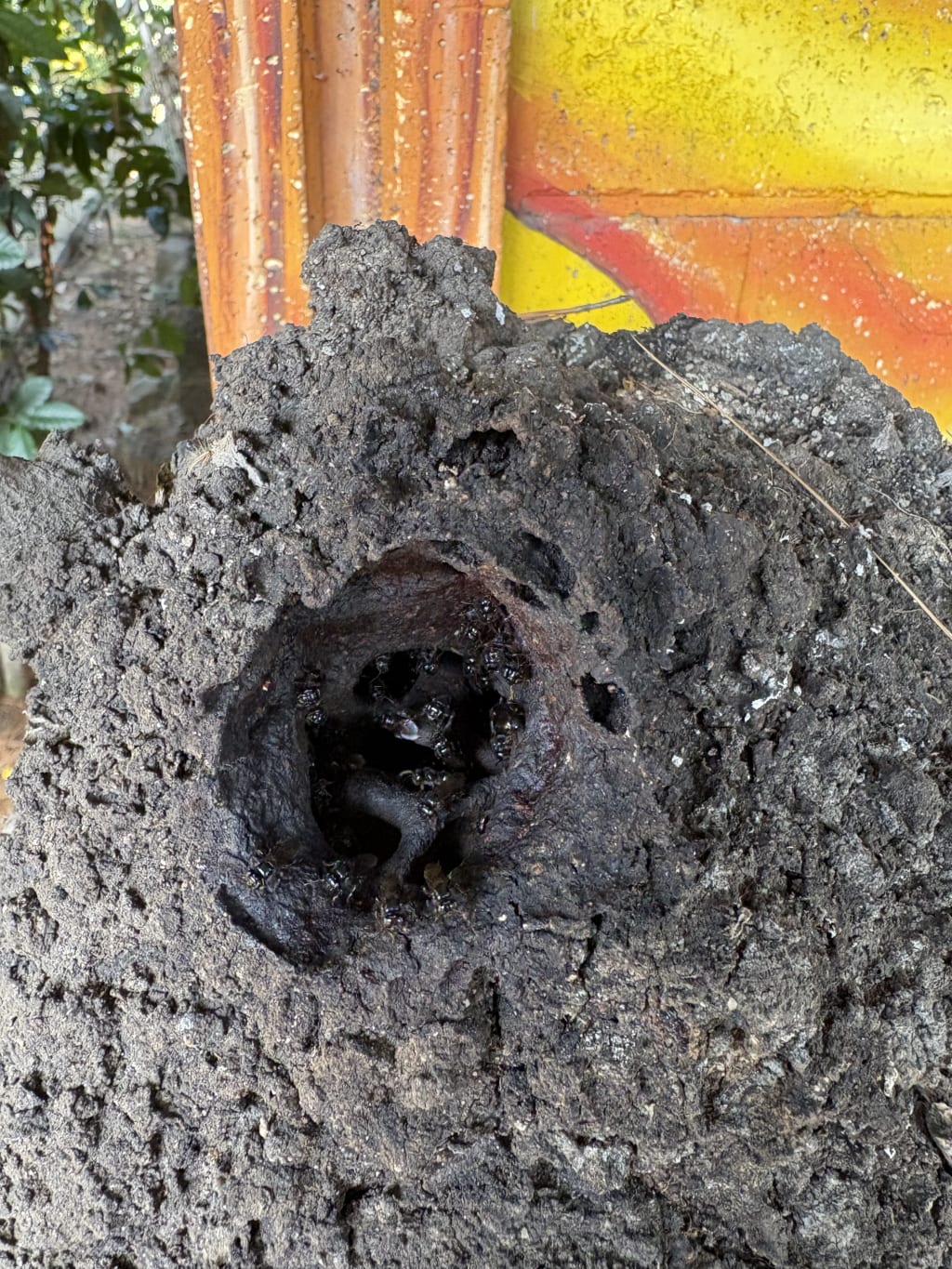
We checked out the last three hives before we headed to the giftshop. We learned that honey from a few of the stingless bee species isn’t primarily used as food but rather as remedies. The honey from abeja talnete, for example, is good for curing ear infections and stimulating blood circulation. The honey from abeja doncella (princess bee) hives is helpful as eye drops. I found that to be a bizarre concept, pouring honey in one’s eye.
We got to sample some honey at the giftshop before heading out. It was absolutely delicious. We spent less than twenty minutes at the Mundo de Abejas Mayas, but in my opinion it was a fantastic stop. I gravitate towards experiences that are a) unique and b) educational and this was both. If you visit San Juan La Laguna, make sure to stop by the Mundo de Abejas Mayas.
Shopping at Art Galleries
Almost every other shop in San Juan La Laguna is an art gallery. Each one is filled to the brim with gorgeous paintings in the brightest colors. I have never been to a place with a higher concentration of incredible galleries.

We must have popped into at least ten. We liked the “bird’s eye view” style of art that was so popular here. These paintings would show scenes, usually from a harvest, as if you were up in the sky, looking down. We decided we wanted a painting in that style for our kitchen and we made it our mission to explore all our options and find the best one.
We ended up with this incredible painting from a small gallery called Galería Ketzele that showed three separate scenes: a coffee harvest, a maize (corn) harvest, and an apple harvest. I’ll be honest. When we purchased the painting, I half expected never to see it again. We paid in cash and were told it would be shipped to our home address. Yeah, right. But, Albino Pérez Yojcom was true to his word, and our painting arrived a few weeks later. In my personal opinion it looks fantastic in our kitchen.

There are so many galleries to check out. Popping into one of San Juan’s many galleries is a must do if you’re in Lake Atitlán.

Visiting a Weaving Cooperative
The Tz’utujil Maya women have been weaving on backstrap looms in the Guatemalan highlands for generations. They use plants they find in their surroundings to dye cotton in different shades before weaving the threads to make clothing.
The women in San Juan La Laguna have formed cooperatives, where they work together to preserve these traditional techniques while earning an income from the textiles they sell. There are a number of excellent cooperatives in San Juan, including the Lema Association, TinteMaya, and Casa Flor Ixcaco, the one Alex and I decided to visit.
Casa Flor Ixcaco is a cooperative of 34 Mayan women. Tourists can visit the cooperative to shop for the textiles the women make and attend one of their two weaving demonstrations: a free version or a longer, more in depth, paid version.
We opted for the free version. I wish we went for the paid version, because the demonstration we watched was quite short (less than 10 minutes) and felt pretty rushed. By the end, we understood the basics of how backstrap loom weaving works, but I would have been curious to learn more.
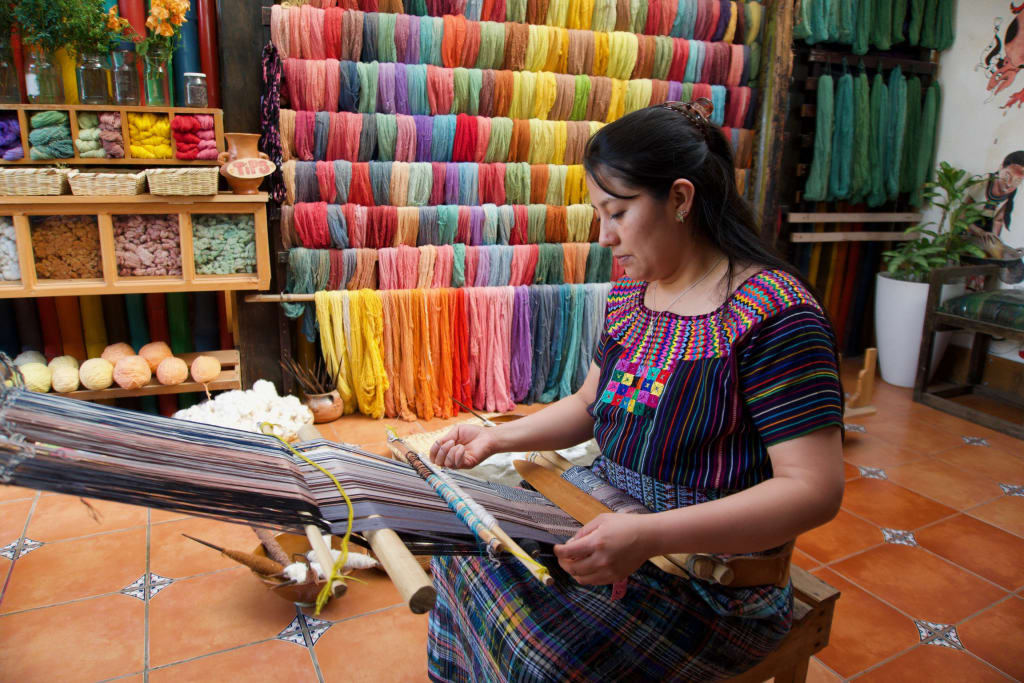
During the demonstration, one of the weavers explained that first, the women remove the seeds from the cotton and then clean and beat it for 20 minutes to make it smooth. They then spin it into yarn and dye the cotton with various seeds, leaves, tree bark, and flowers.

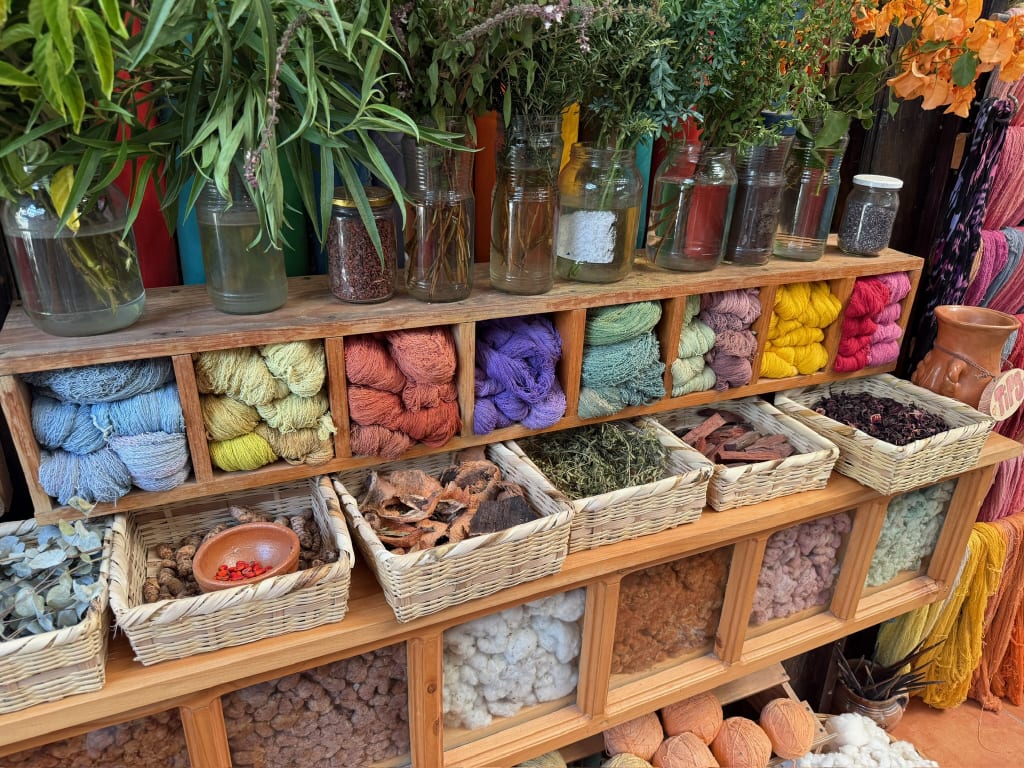
Once the cotton has been dyed, the women prepare it for the loom. The loom itself is surprisingly simple. One end is attached to a fixed object, while the other is secured around the weaver’s waist with a strap. By leaning forward or backward, the weaver can adjust the tension on the threads as she works.
The women then pass different colored threads through the loom to slowly build the pattern, row by row. Some designs take months to complete.
After watching the demonstration, we browsed around the shop. In my opinion, a textile from a weaving cooperative in San Juan makes a fantastic souvenir. Each purchase supports not only these women, but also their goal of preserving their cultural heritage.
Eating Chocolate
It doesn’t take much effort to convince me to visit a chocolate shop. I read great things about the Chocolate Factory, Licor Marrón in San Juan La Laguna, specifically about their chocolate workshop. We didn’t do the workshop because we had recently done one in New York at Raaka, but we did purchase a lot of chocolate here.
Medicinal Plants
The last stop of the day was Plantas Medicinales Mayab. This shop offers tours that teach visitors about medicinal plants and the ways the Mayans traditionally used them. When we arrived, a tour was already underway in Spanish, and we were too tired by that point to wait for the next one, but we did purchase a few items in the giftshop. It made me wish we'd had a little more energy left, because I would have loved to learn more about traditional Maya medicine. It was interesting to browse the shelves and see how many locally grown plants are still used by the Mayan communities today.
OTHER THINGS TO DO IN SAN JUAN LA LAGUNA
With more time, I would have walked up to the Mirador Kaqasiiwaan viewpoint over Lake Atitlán (also known as the Cerro de la Cruz viewpoint). The photos I saw online looked beautiful. To get there, you will need to hike 20 minutes up a steep hill or hire a tuk tuk. When you get to the top, you’ll walk along a painted platform and enjoy views of the towns and volcanoes that surround the lake.
OTHER THINGS TO DO ON LAKE ATITLÁN
I was very interested in doing the Rostro Maya or Nariz del Indio (in English, the Indian Nose) hike, but both Alex and I were still sore and burnt out from our hike up Volcán Acatenango two days earlier, so we decided against it. If I were to return to Lake Atitlán, it would be the first thing I added to my itinerary.
I had also originally planned to do a cooking class with Maya Kitchen in San Pedro La Laguna but we ended up doing a cooking class in Antigua instead. I did read excellent reviews about Anita, her cooking class, and her life story though.
With more time, I would have explored a few more villages. Santa Catarina Palopó got rave reviews. It’s known for its Painted Village community project that transformed the town’s homes and buildings with colorful murals. Shopping for hand-painted blue and white ceramics in San Antonio Palopó was also at the top of the list, and I know Alex would have enjoyed a yoga class in San Marcos, the “hippie” town.
HOW MUCH TIME DO YOU NEED?
We spent just under 4 hours in San Juan La Laguna and felt like we had plenty of time to visit the places we were most excited about. If you want to add a few more activities, like the longer weaving demonstration, a chocolate or medicinal plants tour, or the Cerro de la Cruz viewpoint, I would plan to spend around 6 hours in San Juan.

For Lake Atitlán in general, the amount of time you’ll need depends on the pace you prefer to travel at.
Alex and I have a limited amount of PTO (paid time off) and we enjoy fast paced travel, so we spent 2 days on Lake Atitlán and thought that was great. We by no means saw it all, but we were excited to move on and see other places by the time our 2 days came to an end. However, 2 days is definitely less time than most people spend at Lake Atitlán. Most itineraries I read online recommended 4-5 days in Lake Atitlán.
I would probably recommend 3 days at Lake Atitlán. Here’s how I would spend them:
Day 1
Relax by the lake, especially if you just did the hike up Volcán Acatenango before you arrived.
I would rent a paddleboard or book a massage and enjoy the views of the volcano towering over the lake.
Day 2
Take a cooking class in the morning and walk around the streets of San Pedro La Laguna.
Pick another village to explore in the afternoon. I highly recommend San Juan La Laguna.
If you go, don’t miss the art galleries and the Mayan stingless bees.
Day 3
Do the Rostro Maya hike at sunrise. Make sure to hire a guide.
After breakfast and some downtime, visit another lakeside village in the afternoon.
We would have probably picked Santa Catarina Palopó, San Antonio Palopó, or San Marcos if we had the extra day.
GETTING TO LAKE ATITLÁN
There is no public transportation that will get you from Guatemala City, the city with the nearest international airport, to Lake Atitlán. You will need to book a shuttle.
V-Hiking, the company we did the Volcán Acatenango hike with, offered a post-hike shuttle to San Juan La Laguna for 250Q (~$33) per person, which is what we booked. It took ~3 hours to reach Panajachel, the only village on Lake Atitlán that’s accessible by road. We had one bathroom break at a rest stop along the way. We then took a lancha (water taxi) from Panajachel to our hotel near Santa Cruz La Laguna.
GETTING AROUND ON LAKE ATITLÁN
To get from village to village, you will need to ride on a lancha (water taxi). Our ride from La Fortuna’s private dock (near Santa Cruz) to San Juan cost 25Q (~$3) per person each way. The prices vary, but you should negotiate down if the prices quoted are much higher.
Fair warning: the lanchas will make a lot of stops to pick up or drop off passengers at each village. Often, lanchas will wait at a particular dock until more passengers get on board. Be prepared to wait a lot. It took us over an hour to get from the La Fortuna dock near Santa Cruz to San Juan.
It’s worth waiting for the lancha, though. I would not recommend walking between the villages, as there have been reports of robberies on the paths between the villages.
Once you reach the village, you can walk or hire a tuk tuk.
BEST TIME OF YEAR TO VISIT
The best time to visit Lake Atitlán is during the dry season, which runs from November to April. We went in early January and had wonderful weather.
WHERE TO STAY
I found all the options in Lake Atitlán to be a little overwhelming. There were so many hotels and the majority received mixed reviews. I spent hours researching the different villages and the pros and cons of staying in each. Funny story: Alex mentioned he wanted to get more involved in planning our travels, so we sat down together to research hotels in Lake Atitlán. After an hour, he gave up, saying it was way too much work.
I did manage to find an option I was excited about though: La Fortuna at Atitlán. It had its own private pier and was just outside the quiet town of Santa Cruz La Laguna. Many reviews on hotels in other villages complain about dogs barking at night, but this hotel just outside a major village did not seem to have that issue.
We loved our hotel. It ended up being one of my favorite places I’ve ever stayed at. The hotel was small, with just 7 rooms. Our room was tucked away in the jungle. It had a stunning outdoor bathroom with a soaking tub that we put to use every night and somehow there were no bugs, even at night.
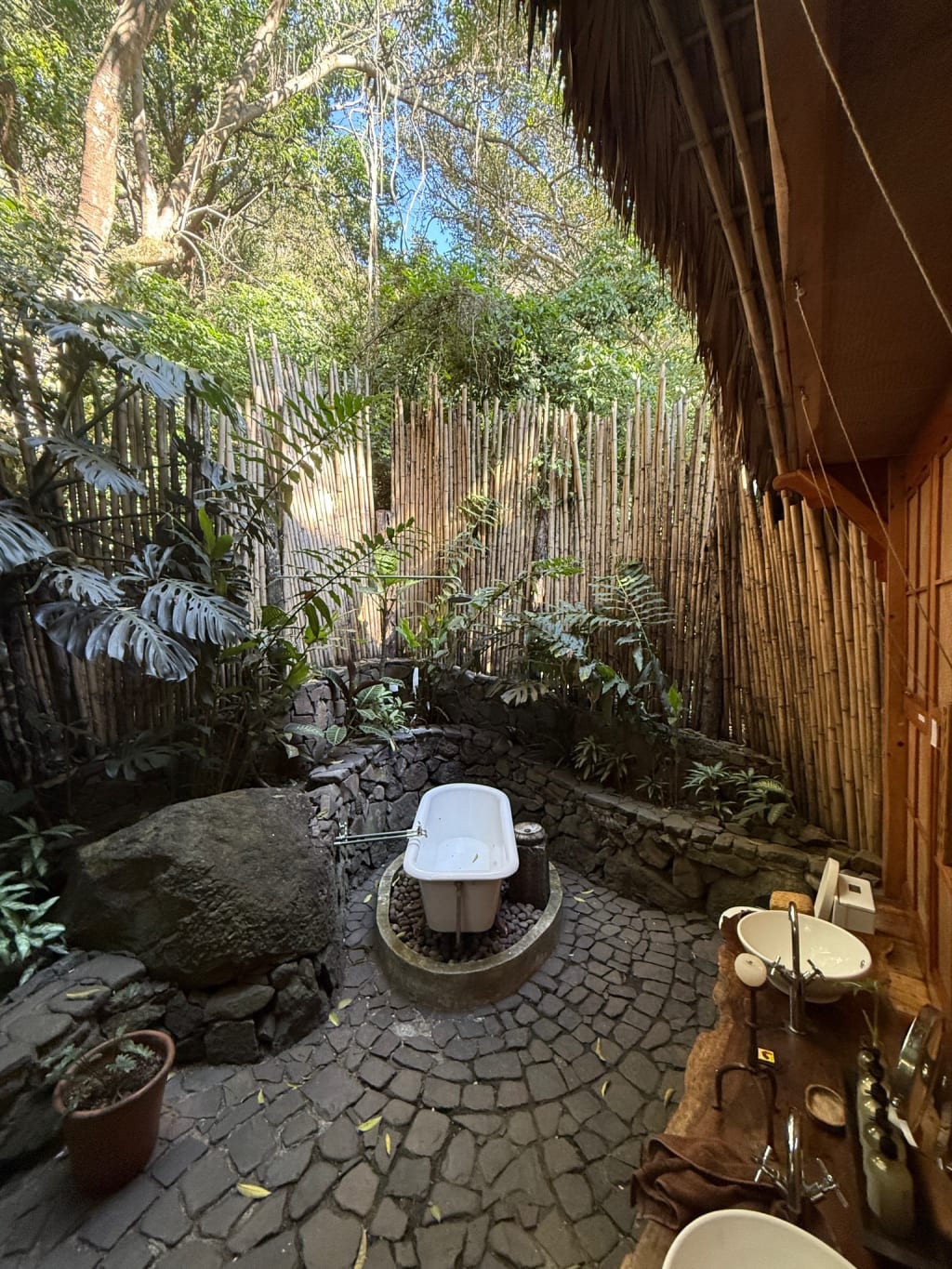
There were cats and dogs roaming around the property and it was landscaped beautifully. There was a stunning view of one of the volcanoes that you could take in while you hang out in the sauna or the pool.
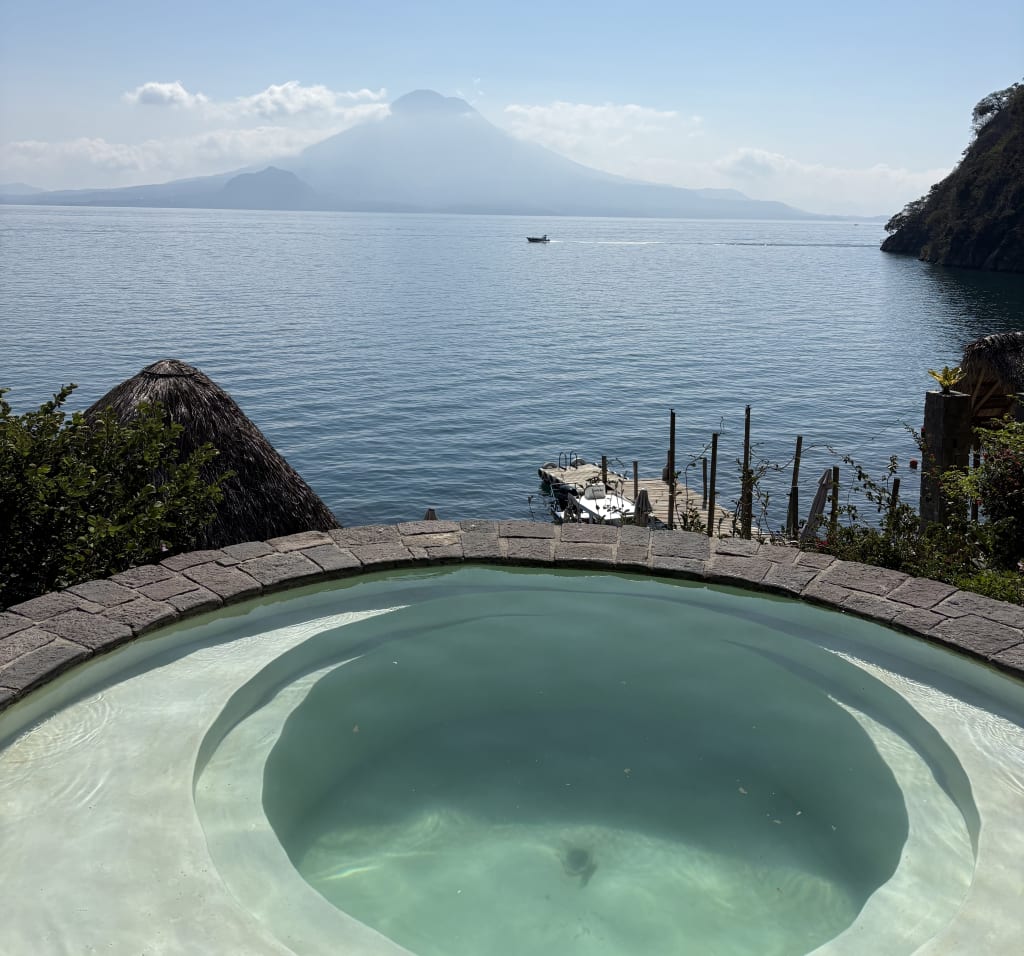
The food was delicious and you could eat it at the restaurant, in your room, or anywhere else you wanted. I recommend the tables right near the dock.

I also had the most wonderful one hour massage for only $45. I highly recommend a stay there. Be sure to book your room at least a few months in advance.
IS IT WORTH IT?
It is.
Believe it or not, I didn’t include Lake Atitlán on the first draft of my itinerary for my Guatemala trip. When I’m designing an itinerary, I usually build it around “bucket-list” experiences. I couldn’t find anything in Lake Atitlán that felt unique or exciting enough to plan an entire trip around.
I ultimately added it to the itinerary because I saw the endless rave reviews, and it felt like I wouldn’t get the full picture of what Guatemala is really like without visiting Lake Atitlán. I am so glad we did. It was a fantastic blend of relaxation, culture, and spectacular scenery.
If you’re planning to fly into Guatemala City and spend five days or more in the area, I would add Lake Atitlán to your itinerary.
FAQS
Is it safe?
Both Alex and I felt safe the entire time we were in Lake Atitlán. That being said, there have been reports of pickpocketing and robberies, mainly on the quiet roads outside the villages. Don’t walk on these roads; take a lancha to get from village to village instead. Hire a guide if you plan to hike. Keep an eye on your belongings while you’re in the villages. Avoid walking around alone after dark. If you take this advice, you won’t need to spend your entire visit worrying about safety. We never felt like we had to be on high alert and I would absolutely not let these reports stop you from visiting Lake Atitlán.
Can you visit Lake Atitlán as a day trip from Antigua?
I would not recommend this. Google Maps says the drive from Antigua to Panajachel is only two and a half hours, but in reality it can be as long as 5 hours, depending on traffic. The minimum amount of time I would personally recommend staying in Lake Atitlán is 3 nights/2 days to make the drive time worth it.


