
2 Tips to Avoid the Crowds at Fushimi Inari (Kyoto)
I dare you to google "Fushimi Inari crowds". If you just google "Fushimi Inari", you get photos of the gorgeous bright orange torii gates. Add the keyword "crowds" and you see the scary reality: seas of tourists occupying every free inch. Trust me when I say this is not the experience you want.
But don't worry, my experience more closely resembled the photos you saw on the first search. Alex and I were able to get Fushimi Inari all to ourselves.
I'm here to give you my two tips to ensure you have a peaceful experience here like we did.
FIRST SOME CONTEXT: TEMPLES VS SHRINES
Japan's two primary religions are Shinto and Buddhism. While many tourists use the words "temple" and "shrine" interchangeably, they're actually quite different.
Shrines are Shinto. Originally many Shinto shrines were simply natural objects such as trees. Nowadays, shrines are buildings, stone monuments, or sacred gates. The torii gates found around Japan signify the entrance to a sacred Shinto space, likely a shrine. Therefore, Fushimi Inari is Shinto.
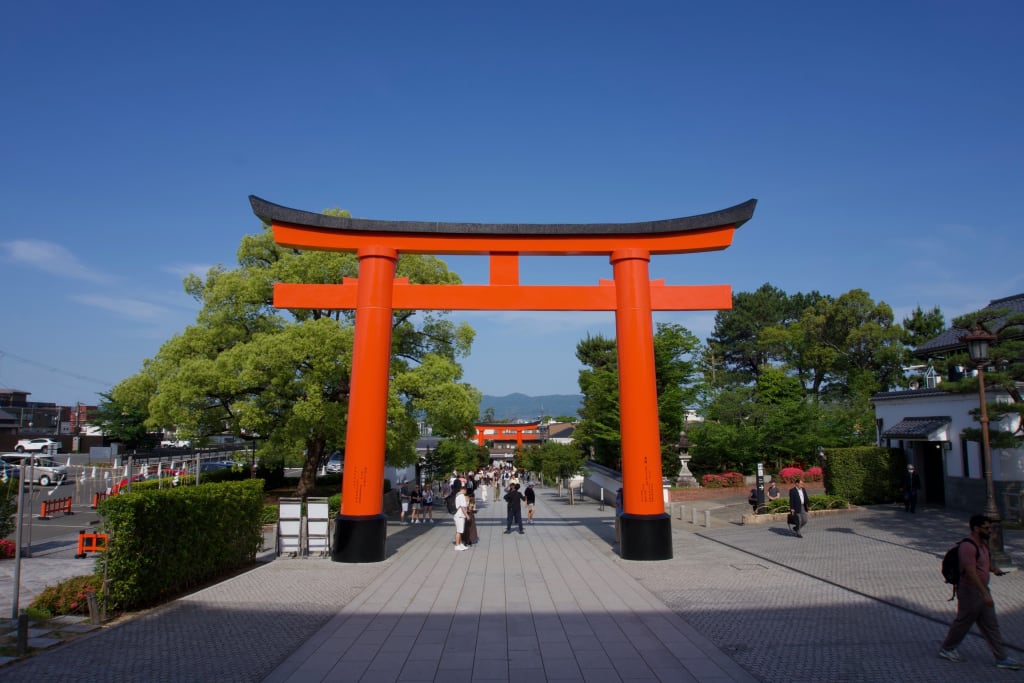
Temples, on the other hand, are Buddhist. Starting in the 6th century, Buddhism made its way from India over to Japan and Buddhist temples and pagodas began cropping up.
Today, there are around 1,600 Buddhist temples and 400 Shinto shrines in Kyoto alone.
You used to have to bathe for 3 days before entering a Shinto shrine. Now you just wash the left hand, then right hand, then rinse your mouth.
WHAT IS FUSHIMI INARI?
Fushimi Inari is Kyoto's most famous Shinto shrine, best known for its thousands of bright orange torii gates that wind up the slopes of Mount Inari. Each gate was donated by individuals and businesses as offerings to Inari, the rice and agriculture deity, and the writing on the gates is the name of the donor.
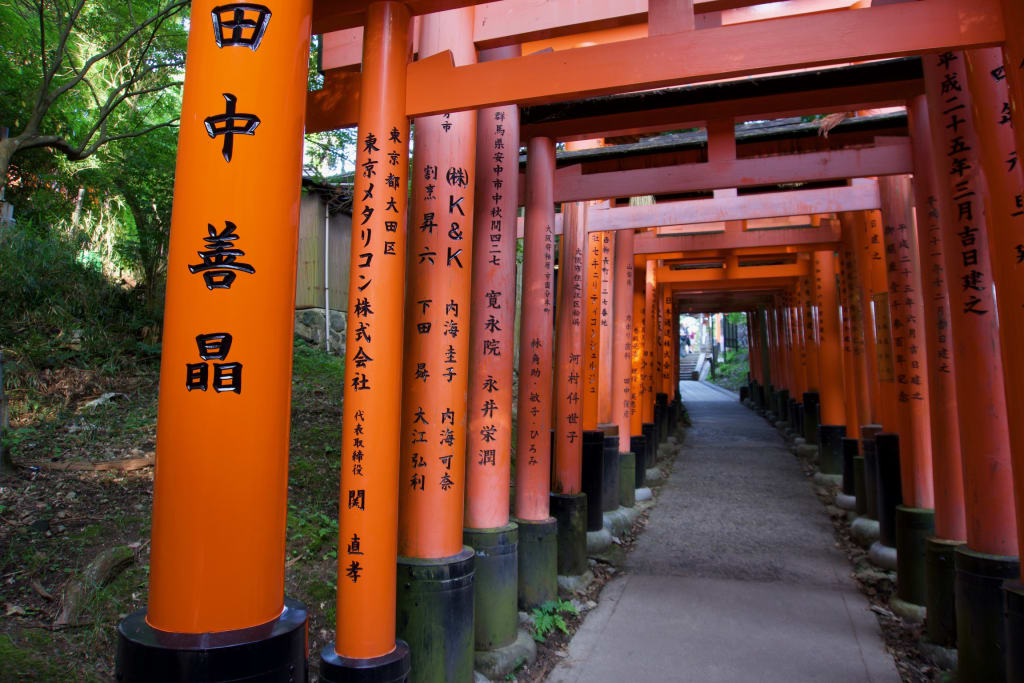
Fushimi Inari is the head shrine of more than 30,000 Inari shrines across Japan and it was established over 1300 years ago in 711 AD.
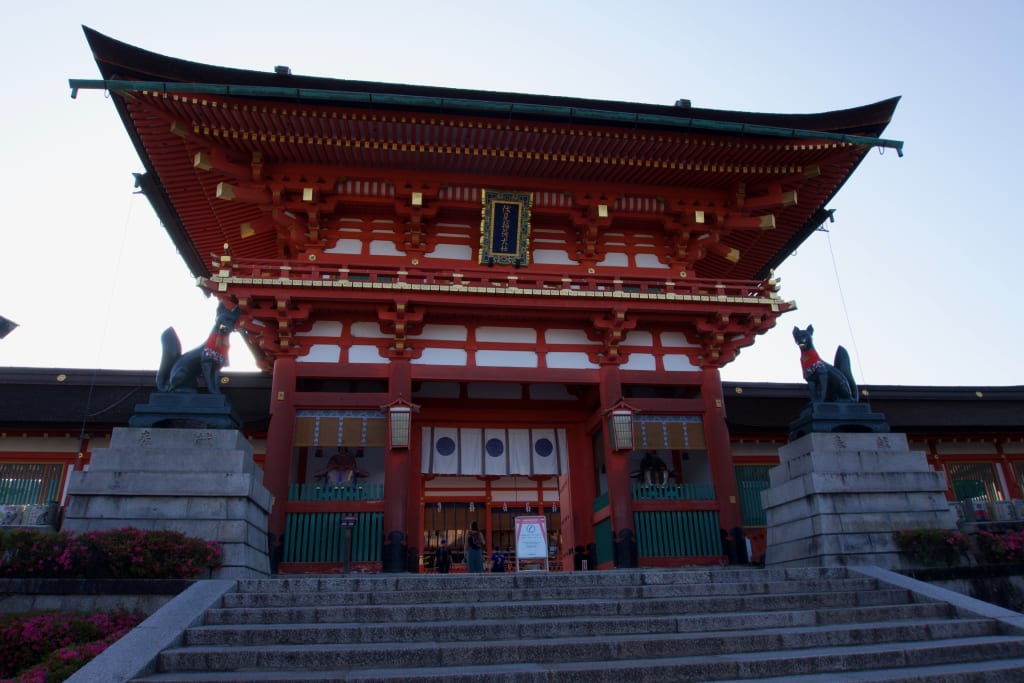
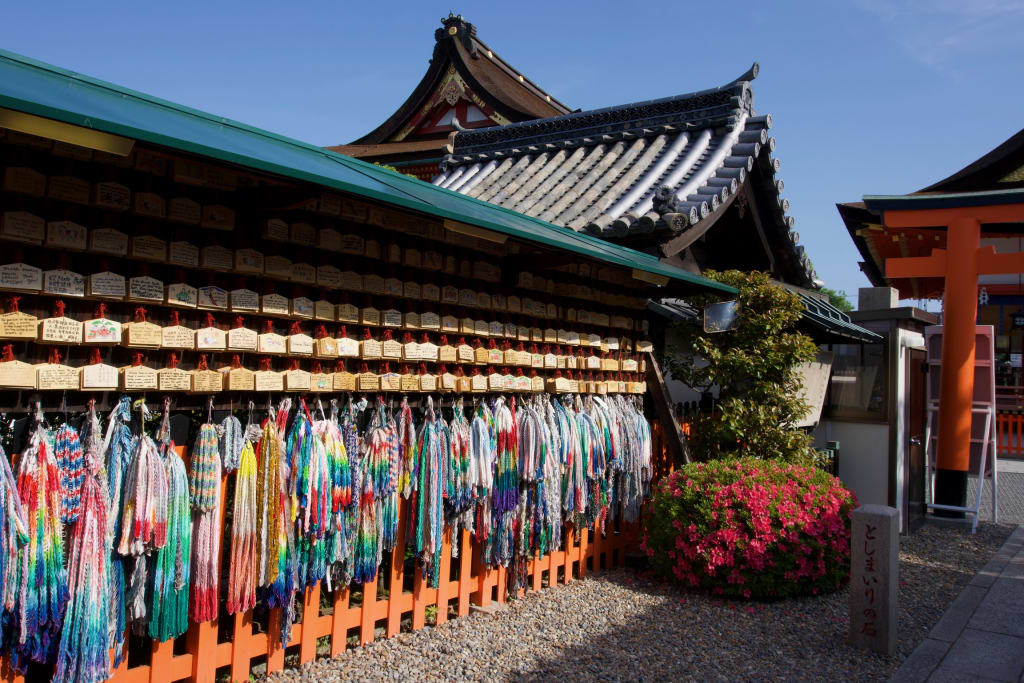
TIP 1 FOR AVOIDING CROWDS
You night owls aren't going to want to hear this, but you'll need to wake up very early. I would suggest a 5 AM alarm for a 6 AM start time. I expected to have the place to myself when we arrived at Fushimi Inari at 6:15 AM, but already there was a small group of tourists entering the gates with me. By the time we finished our stroll and were leaving at 7:45 AM, the crowds were significantly worse. I can't imagine what they'd be like at 10 AM!
TIP 2 FOR AVOIDING CROWDS
Don't be discouraged if you start the walk through the gates with more tourists than you'd like. The crowd tapers significantly after the viewpoint over Kyoto, about 25 minutes into the walk. The first 10-15 minutes of the walk are relatively flat, but turns more and more into a stair stepper activity as it progresses, at which point the vast majority of tourists turn around.
After the viewpoint, we had the place to ourselves and could enjoy the sound of birds chirping instead of iPhones snapping photos.
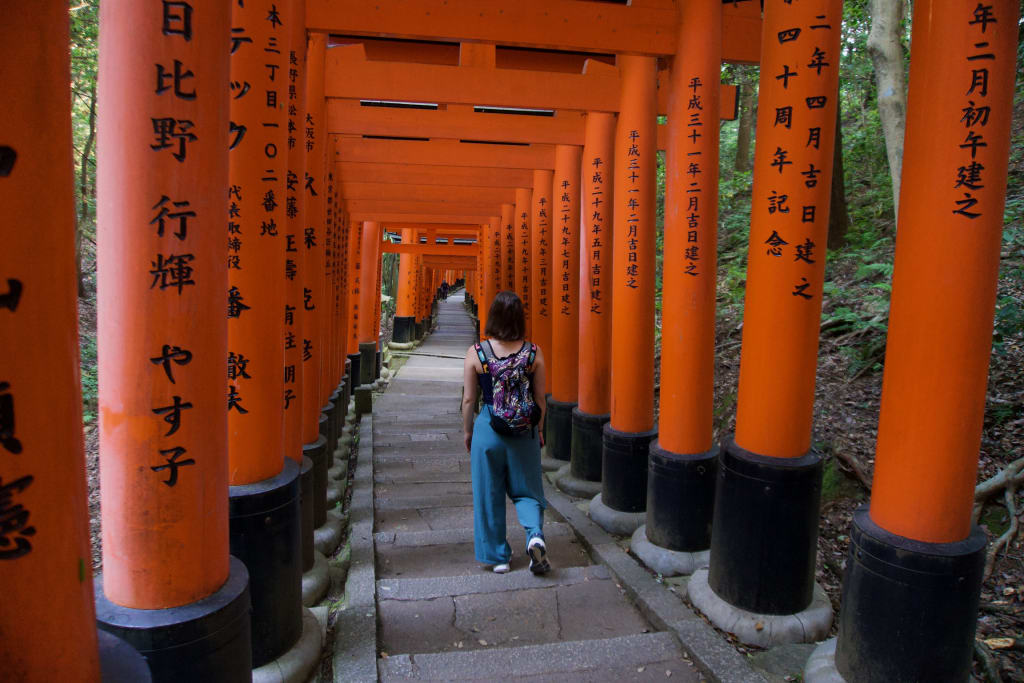
We did the full loop to the top of Mount Inari and back and it took just under 90 minutes, with one detour and plenty of photos.
OUR EXPERIENCE
Let's just say that Alex wasn't as enthusiastic as I was about the 5 AM alarm. His first question was "can we sleep in for another hour or two and go at 8?" I was unrelenting. We had to go now.
We made it to the large torii gate at the entrance by 6:15 AM. Panic set in immediately when I saw a number of other tourists head towards the entrance alongside me. I was so sure it would be as simple as getting up early and we'd have the place to ourselves. Turns out nothing's that easy in Kyoto!
My instinct, and everyone else's, was to snap a hundred photos as soon as I entered. This place was stunning and so unique! We frantically shot in the seconds where the crowds dwindled or someone volunteered to patiently wait to pass until we were done taking the photo.
Not long afterwards, the stairs started and got my blood pumping. As my heart rate climbed, the grogginess induced by the early wakeup soon vanished. Hallelujah!
We reached the viewpoint over Kyoto. Honestly I didn't find it to be anything noteworthy, but we had just visited the Arashiyama Monkey Park Iwatayama the day before and I was quite awestruck by that view. So perhaps this just paled in comparison. The good news was that the other tourists seemed more intrigued by the viewpoint than we were. They stayed back to snap photos and we ditched the crowds and continued on our way.
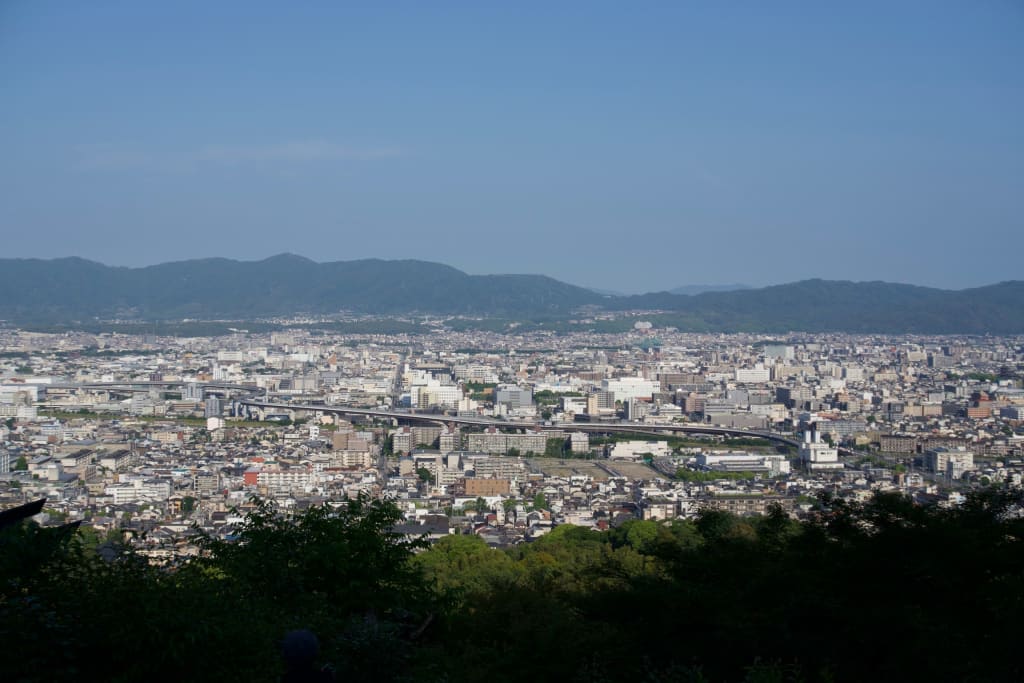
What came next is what I remember loving most. There was perfect silence, aside from our footsteps and the sounds of a bird chirping. Now, we could take our time with the photos. There was no one else in sight!
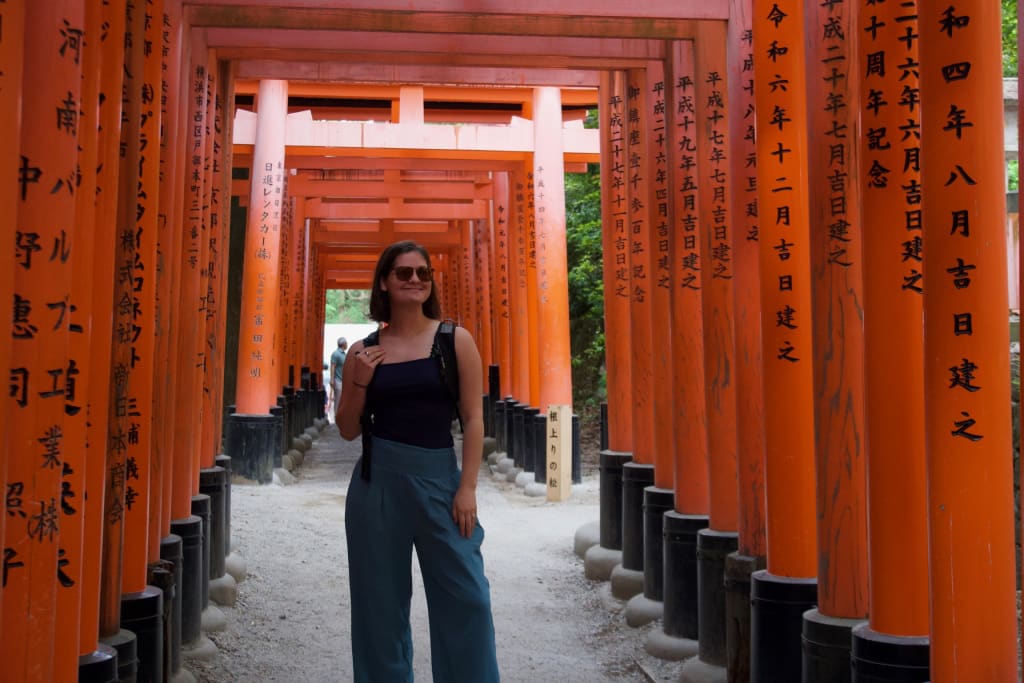
We made it through the full loop in 90 minutes.
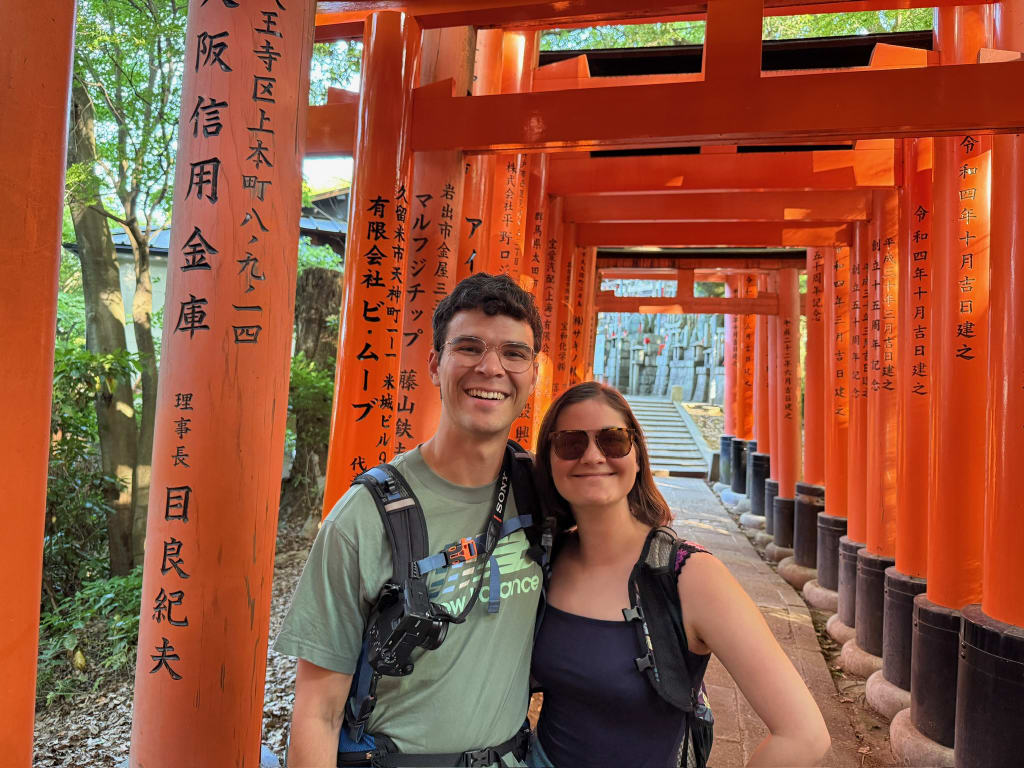
On our way out, I couldn't help myself: I wanted to see what the crowds looked like at the entrance now. I wanted to show Alex why we needed to get up early.
The entrance was now packed. This was starting to resemble the photos of the crowds I saw online. Alex was so glad I pushed him out of bed early, and I promise, you will be too!
IS IT WORTH IT?
Absolutely, specifically it's worth the early wakeup call. We dealt with crowds at many of the other attractions in Kyoto, but agreed this confined space within the gates at Fushimi Inari would have been a nightmare with a throng of people. Walking through the gates was a wonderful way to start a day in Kyoto and we highly recommend this iconic experience.
FAQS
Is it worth hiking to the top?
If you're looking to have the place to yourself, yes it's worth continuing past the viewpoint over Kyoto. There are no other viewpoints past the one where the path diverges into three, where most people turn around, so I wouldn't expect any awesome views, but it's much more peaceful past this point and you can really soak up the peaceful feeling you get underneath the torii gates.
How long does it take to hike to the summit?
It took us 90 minutes, but I've seen anywhere from 1.5 to 3 hours as guidance online.
How much does Fushimi Inari cost?
It's free!
When is the earliest I can visit?
It's "open" 24/7 so you can visit whenever you like.


