
Cruising the Galápagos with Ecoventura: What You Need to Know
Our trip to the Galápagos was one of the most memorable trips we’ve ever been on and holds such a special place in my heart. Every moment felt like pure magic, from watching dolphins leap out of the water, to swimming alongside penguins, sea lions, and sharks, and everything in between. We took in the most otherworldly landscapes on each island that look unlike anything I’ve seen before or since. We lounged on the most beautiful, untouched beaches I’ve laid eyes on, right alongside giant colonies of sea lions or birds who could care less that we were a mere few feet away. If you’re considering a trip to the Galápagos, just do it. There’s no place like it on Earth.
I’ve written many articles on my experience with the wildlife on each island. In this article, I’ll tell you everything you need to know to plan the trip that’s right for you.
OVERNIGHT ACCOMMODATIONS: LAND VS BOAT
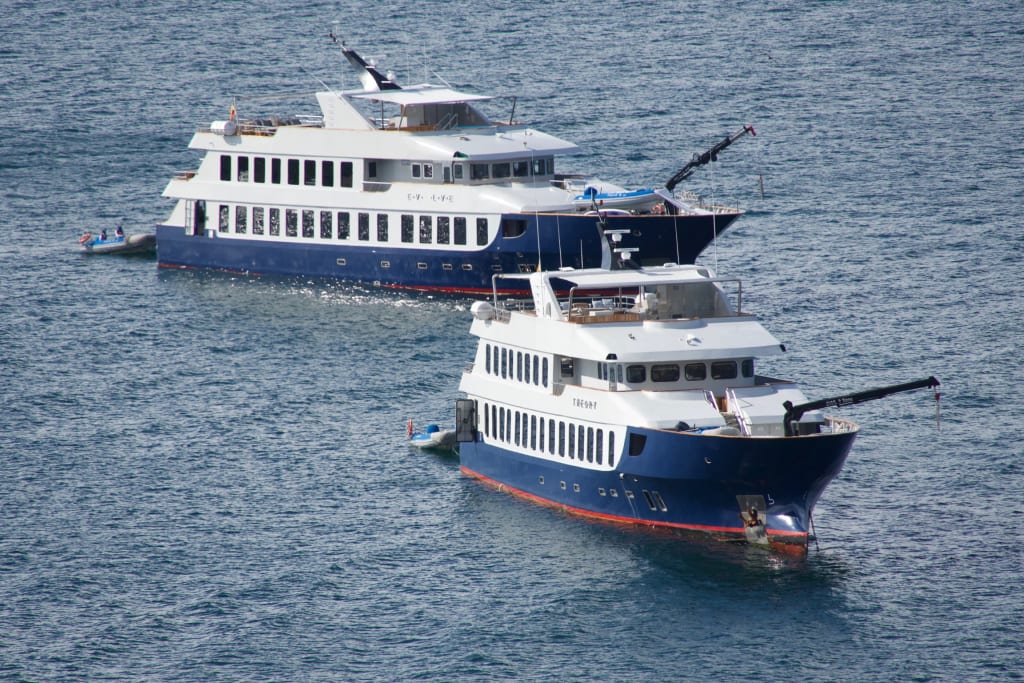
The first decision you’ll need to make when planning a trip to the Galápagos is deciding whether you want to explore by boat or stay on one of the inhabited islands and take day trips to the surrounding islands. I highly recommend exploring by boat if it’s in your budget. You’ll be able to explore more remote islands and spend less time in the day transiting back and forth to the island you’re staying on.
BOAT TRIPS: SELECTING A TOUR OPERATOR
If you opted to explore via boat, great choice! You won’t regret it. Now there’s a few more decisions to make.
First, if you’re a scuba diver, you might want to select a liveaboard that’s designed for divers. You’ll want to have your Advanced Open Water certification to dive in the Galápagos as the islands are known for strong currents and challenging conditions and most operators require this certification.
If you’re not a strong diver, don’t worry. The Galápagos has some of the best snorkeling in the world. In fact, we chose to visit the Galápagos because I lost the ability to scuba dive after a medical diagnosis and was craving underwater adventure that was still accessible to me. You’ll have the chance to get in the water with many other tour operators.
If you have poor eyesight like me, I highly recommend investing in a pair of prescription goggles for diving or snorkeling.
The next decision to make is whether you want a large ship or a smaller one. Large ships won’t rock as much, so if you’re worried about getting seasick, that might be a safer choice. They also tend to offer more luxurious facilities such as hot tubs and gyms, although a number of smaller ships offer these as well.
We opted to go for a smaller ship for a number of reasons. First, the Galápagos has strict regulations on how many visitors can land on certain islands at a time. With a smaller group, you can spend more time on land with each excursion without having to worry about visitor caps or without having to wait for the zodiacs to move 100 people between boat and shore. We also cared about smaller guest to guide ratios which would allow us to ask questions to the naturalists that were guiding us around.
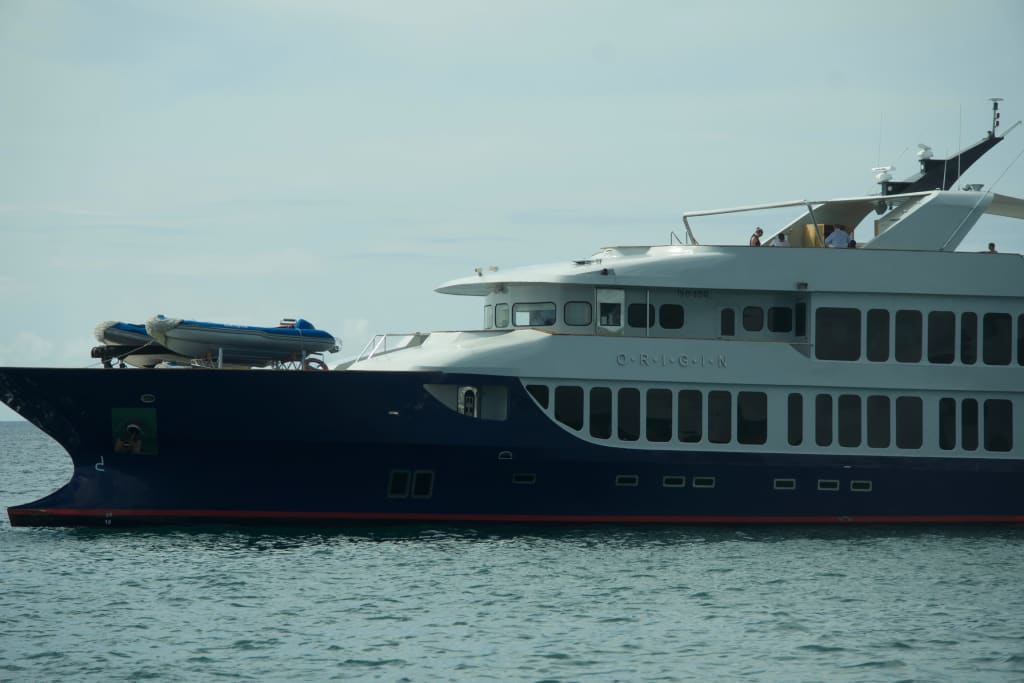
We booked our Galápagos trip with Ecoventura, which hosts at most 20 guests per ship at a time (our ship had 16 guests). In addition to the fantastic guest to guide ratios, we were excited about the strong reputation Ecoventura had for outstanding naturalists and the luxurious yacht we would spend the week on. I also spoke with my college roommate who went on a trip with Ecoventura and had nothing but positive things to say.
WHICH ITINERARY
Ecoventura offered two one-week itineraries: Beaches & Bays and Volcanic Wonders. They also offer the option to do both itineraries back to back, which only two people on our ship chose to do.
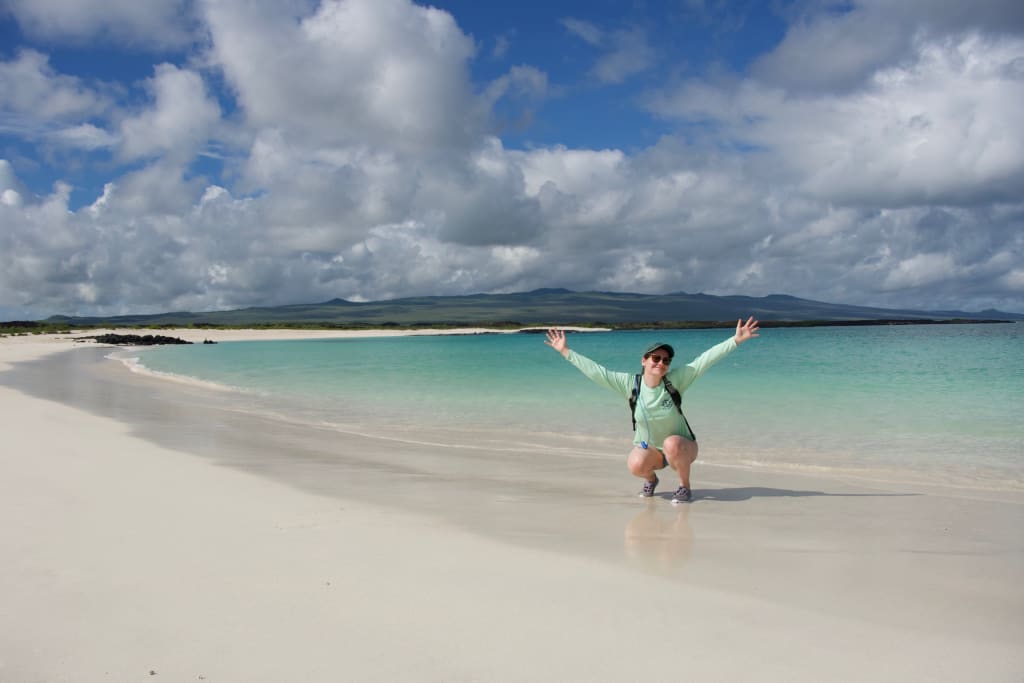
If you’re selecting just one itinerary like we were, you’ll have to weigh the pros and cons. On both itineraries, you'll see sea lions, marine iguanas, giant tortoises, blue-footed boobies, frigatebirds, sea turtles, and many underwater creatures. The Beaches & Bays itinerary is strongest if you want to see the waved albatross or relax on the gorgeous white sand beaches. The beaches in the Galápagos were the most beautiful I’ve seen in my life.
If you’re more interested in remote, volcanic landscapes unlike any place else on Earth, or if you want to see Galápagos penguins, flightless cormorants, or massive marine iguana colonies, the Volcanic Wonders itinerary might be the way to go. That being said, while the chances of seeing the Galápagos penguins is highest on Isabela and Fernandina islands (which you’ll explore on the Volcanic Wonders itinerary), Alex and I had a fantastic encounter with them on Bartolomé Island on the Beaches & Bays itinerary. We were very pleased with our choice of Beaches & Bays.
ROUTINE ON BOARD
Most days, we followed a similar schedule. We would wake up and have breakfast. Then, we would have a morning walk on the island we were docked nearest to, which would typically last 2-3 hours. After lunch, we would snorkel for about an hour. We would then change and head out for the day’s final excursion, usually another walk on a different part of the island or a neighboring island. Each day would end with a multi-course dinner and a briefing on the next day’s activities and wildlife highlights.
LIFE ON THE SHIP
I’m not the kind of person who typically wants to just sit back and relax on vacation, but I could have spent the entire week just lounging on the Ecoventura yacht. The amenities were fantastic. There was a rooftop deck with chairs for sunbathing, a full bar, and a hot tub overlooking the nearby islands. There was an indoor lounge stocked with snacks at all times and a small gym on the lower deck that Alex visited every day (I did not).
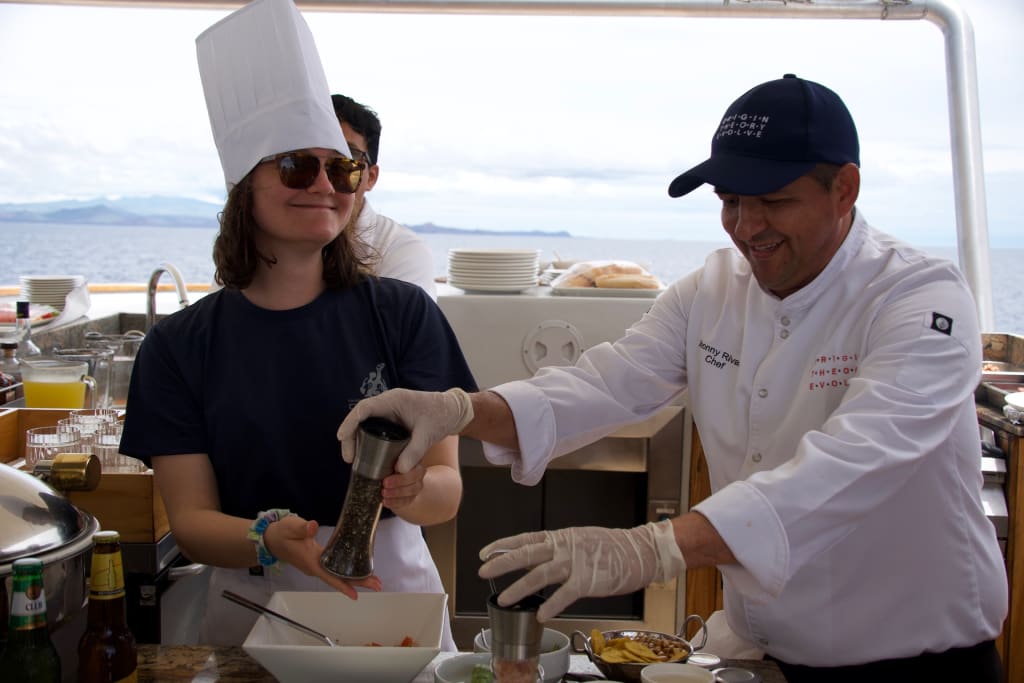
In addition to the excursions on land, the staff at Ecoventura planned a number of activities on board, including a “pirate” dance party and a ceviche cooking demonstration with the chef.
Most evenings, we dined with our fellow passengers, but one night we were invited to dine with the Captain, Peter, and listen to his stories. He was such a delight. We were also invited to visit him in the “bridge”. I got to steer the ship (with his supervision of course) and even honk the horn. He tried to teach us about all the controls, but there were just so many!
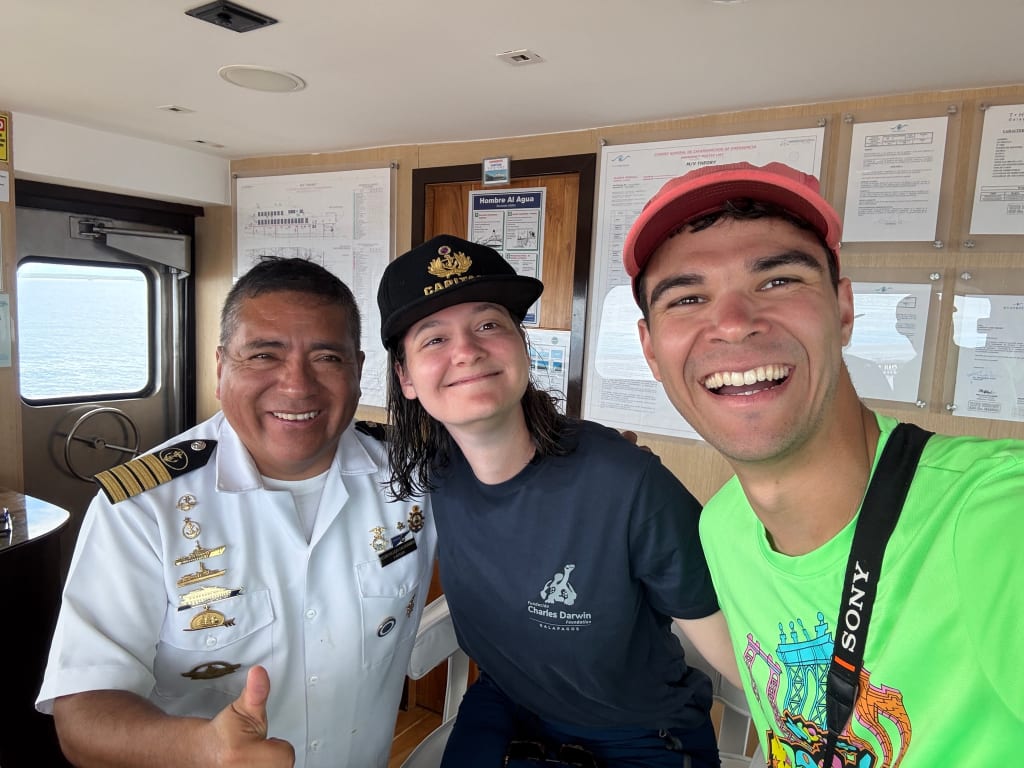
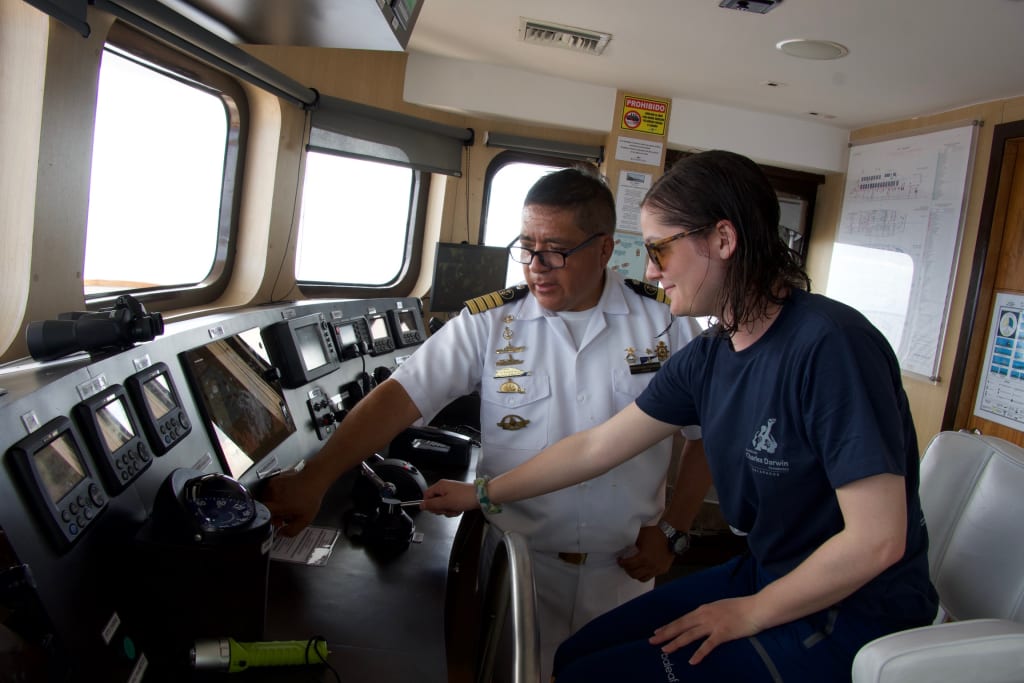
The service onboard was phenomenal. The staff went above and beyond to make everyone happy. They cleaned our cabin multiple times a day while we were out on excursions so we never returned to a room covered in sand.
One story from the Captain's Dinner perfectly captured the level of service. Our captain shared that one night a few years ago, a passenger pressed her emergency button at 2 AM. The captain jumped out of bed to run to her cabin and see what was wrong. It turns out, she was hungry and wanted a pizza. If I were the captain, I would have chastised her for pressing the emergency button when in fact there was no emergency. The crew’s response? They made one for her.
BEST TIME OF YEAR
There truly is no bad time of year to go to the Galápagos. However, there are tradeoffs.
From December to May, the Galápagos is in the warm and wet season. The seas are calmer, the temperatures more comfortable, the landscapes are greener, and there is better visibility for snorkeling. We went during April and experienced no rain.
June to November is the cold season. Marine life is more abundant during this time, although the seas are rougher. When you snorkel, you’ll want to wear a wet suit during this time.
In terms of wildlife on land, if you want to see the blue-footed booby’s courtship dance, plan to visit between June and August. If you’d prefer to see the waved albatross’ courtship dance, April to June gives you your best shot. To see the frigates inflate their red pouches, I’d recommend March through May.

We went in April and had a fantastic time. I asked our guide, Martín, which month he would recommend and he said May, although he reiterated that there is no bad time to visit.
HOW TO GET THERE
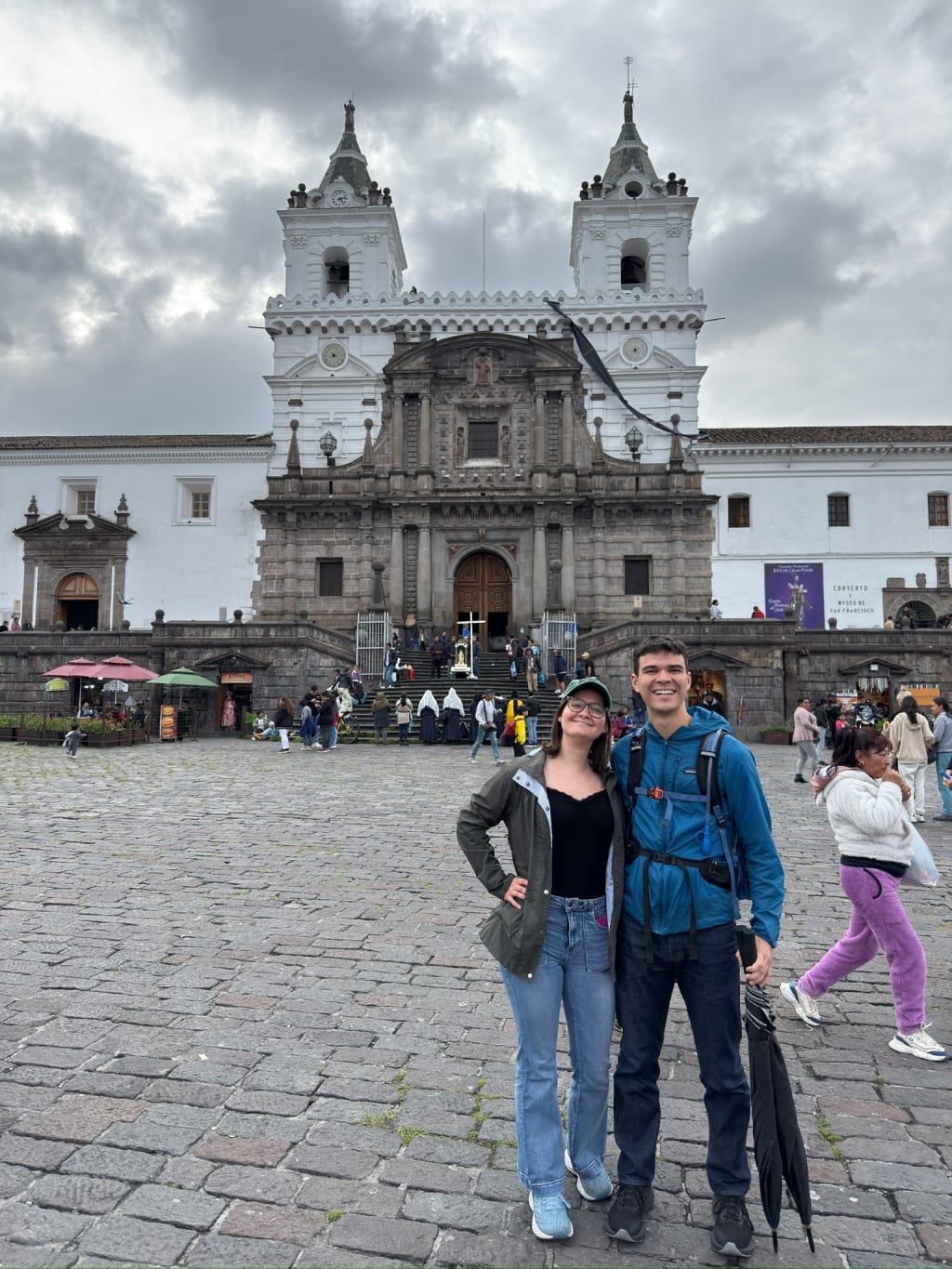
Before arriving in the Galápagos, you’ll be encouraged to spend a day or two in either Quito or Guayaquil on mainland Ecuador. I highly recommend choosing Quito. There’s more to do and it’s considerably safer than Guayaquil, which has unfortunately seen an increase in violent crime in recent years. If you do choose to stay in Quito, I recommend securing altitude medication such as Acetazolamide in advance, as Quito sits at over 9,000 feet above sea level.
Your tour operator will likely give you the same advice, but you should plan to arrive in the country a day early before your flight to the Galápagos in case your international flight into Ecuador is delayed. We arrived in Quito on Friday, spent Saturday exploring the city, and departed for the Galápagos on Sunday.
From Quito or Guayaquil, you can then fly directly to the Galápagos. There are multiple airports in the Galápagos. We flew into San Cristóbal.
ENTRY REQUIREMENTS & FEES
All visitors to the Galápagos are required to pay the Galápagos National Park entrance fee ($200 for adults, $100 for children) and purchase a Transit Control Card ($20). Some tour operators, such as Ecoventura, will allow you to pre-pay that fee and they will handle a lot of the paperwork. It’s worth confirming with the operator you choose whether or not they will provide assistance.
The Galápagos also has strict biosecurity controls designed to protect the fragile ecosystem. Expect your luggage to be screened before departure and avoid bringing fresh fruits, vegetables, seeds, or other restricted items.
HOW FAR IN ADVANCE TO BOOK?
Generally, I would recommend booking 6-12 months in advance. However, we booked only 3 months in advance and had no issue securing a cabin.
A NOTE ON SEASICKNESS
On a smaller ship, seasickness is more of a concern. Most passengers on our ship, ourselves included, were completely fine, and no one experienced severe seasickness. Alex felt a little queasy one night when we had some waves, but overall we found it quite manageable. I will say, we both felt very strange the day after we left the ship for good. I felt like I was rocking from side to side, even though I was sitting on land. I found that odd, because I didn’t experience that sensation on any of the island excursions when I got off the ship. The sensation subsided within 24 hours.
Whether you tend to get seasick or not, I recommend bringing Dramamine with you just in case so you’re prepared.
IS IT WORTH IT?
A trip to the Galápagos is worth every penny we spent and maybe more. It was one of the most memorable trips we’ve ever been on and probably the most unique. It was the perfect blend of relaxing and adventurous, a balance I have a tough time striking on most itineraries as I love to pack in as much as I can when I travel. I assure you, you won’t regret a trip to the Galápagos.
FAQS
How much does it cost?
I’ll be honest. This is not a budget-friendly trip, but I promise, it’s worth the splurge!
We spent $10,500 per person for the week-long cruise with Ecoventura and paid a $220 per person Galápagos conservation fee on top of that. We also budgeted a few hundred dollars for tips for the Ecoventura staff.
For flights, we flew from New York to Quito for $660 on the budget airline Avianca, which I don’t recommend. The seats in Economy don’t recline and it’s a red-eye, meaning you won’t get a wink of sleep. We also paid $250 to Ecoventura for the airfare from Quito to the Galápagos. They have seat allotments reserved in advance on the plane so we didn’t need to make those reservations ourselves.
Other fees included all expenses associated with the two days we spent in Quito beforehand (hotel, tours, food, airport transfer, etc) and travel insurance.
The total came out to a little over $12,000 per person.
How many days do you need in the Galápagos?
I’d recommend 7 or 8 days for a first visit.
How was the food onboard?
The food was incredibly high quality. It was delicious! We were treated to breakfast, lunch, and a multi-course dinner each day. In addition, there would be snack courses every time we got back to the ship from an excursion and they had a few snacks (chocolate bars, chips, etc) that were available to grab at any time.
They did a good job taking into account dietary restrictions for myself (as a pescatarian) and Alex (who has a nut allergy). When they prepared meat-heavy foods, they would offer me an alternative meal option. We did have an incident where Alex ate peanuts by mistake because in Ecuador peanuts are considered a legume, not a nut. This is technically correct. If you have a nut allergy, be sure to specify exactly which nuts you’re allergic to.
What should I pack?
Here’s what I brought:
- Reef-safe sunscreen. I was NOT a fan of the sunscreen I brought from the brand Coral Safe. I looked like a ghost the entire trip. But it’s important to find a reef-safe brand for this trip.
- Bug spray
- Dramamine
- If traveling to Quito beforehand: altitude medication and Gas-X, which can be helpful for high altitude as your digestion slows
- Other medication you might need, like Advil or Pepto Bismol
- Waterproof camera gear. We thought the Insta360 and dive case worked great.
- Regular camera gear. Alex brought his Sony A6400 and a Tamron all-in-one 18-300mm lens.
- Electronics and chargers
- Binoculars. These are optional because Ecoventura provided one pair to share for each cabin.
- Rash guards for snorkeling
- Swimsuits
- Athletic clothing for land excursions
- Nice evening attire for dinner
- Sun hat
- Sunglasses
- Prescription goggles. Optional, but so worth it if you need them.
- Water shoes
- Flip flops
- Closed toe shoes such as sneakers
- Hand-held fan for hot excursions
- LMNT electrolytes
- Toiletries
- Water bladder for land excursions. This is optional because Ecoventura provided us with small reusable water bottles.
- Small backpack for land excursions
- Hand sanitizer
- Passport
- Cash in USD
How physically demanding is this trip?
It’s an active trip, but should be manageable for most people. If you can walk around for 2 hours at a casual pace (with lots of breaks to spot wildlife) or swim for up to an hour (optional), you’ll be fine.
Should I do both Ecoventura itineraries back to back?
You can if you have the time and money, but we didn’t regret choosing just one. We saw the grand majority of the highlights of the Galápagos in the week we spent there.
Can I visit the Galápagos if I don’t swim?
Absolutely. Snorkeling is optional. You’ll still have plenty to do and see if you choose to just participate in the land excursions.
Is the Galápagos safe?
Very safe. Most of the islands you visit by boat are uninhabited, so there are minimal concerns to be had about crime or theft.
EXPLORE MORE
Planning your own trip? I’ve written detailed guides on each island we visited, along with a deep dive (no pun intended!) into snorkeling in the Galápagos.

Wildlife in the Galápagos: What You’ll See and Where to Find It

50 Wild Things I Learned in the Galápagos (That Blew My Mind)

Snorkeling in the Galápagos with Sea Lions, Sharks, & More

Bartolomé: A Penguin Lover’s Paradise in the Galápagos

Saving the Galápagos: Tortoise Conservation on Santa Cruz Island

The Most Magical Moment in the Galápagos (North Seymour & South Plaza Islands)

Española: The Galápagos Island That Completely Won Me Over

First Impressions of the Galápagos in San Cristóbal
