
First Impressions of the Galápagos in San Cristóbal
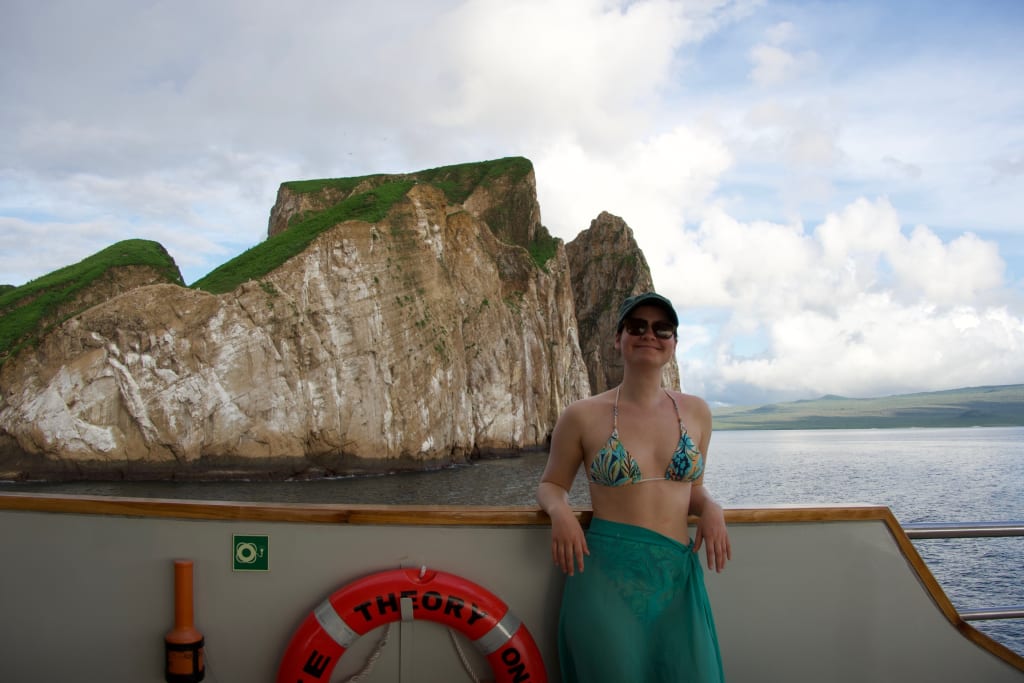
Our first day in San Cristóbal set the tone for the entire voyage. Almost immediately after we set sail, as I was taking in the view of Kicker Rock, I knew this week would live on in my memory forever. In San Cristóbal, I had my first introduction to some of the Galápagos’ most famous inhabitants (including the blue footed booby and frigatebird) and stepped foot on the most pristine beach I’d ever seen. Below I’ll tell you everything about my first impressions of the Galápagos (spoiler alert: it’s amazing).

SAN CRISTÓBAL
San Cristóbal was the first island Charles Darwin stepped foot on during his legendary voyage aboard the HMS Beagle in 1835 that would ultimately inspire his Theory of Evolution. It’s also the oldest continually inhabited island in the Galápagos, starting off as a penal colony in 1880 to host prisoners from the mainland (after an experimental penal colony on the nearby Floreana Island failed). Today, it’s home to the second largest human population in the Galápagos (surpassed by only Santa Cruz) with over 5,000 residents.
OUR EXPERIENCE
Following in Charles Darwin’s footsteps, San Cristóbal was the first island I stepped foot on. We landed at the airport and were carted away to the yacht that would be our home for the next week.

Before we even stepped foot on the boat, we got our first wildlife sighting: a pod of sea lions bathing on some rocks near the boardwalk.
We set sail in the evening and headed straight for one of the most iconic landmarks in the Galápagos: Kicker Rock. Two cliffs tower side by side to form a spectacular vision.


The waters around Kicker Rock are a hotspot for sharks. Many scuba divers dive here to swim alongside giant schools of hammerheads, but other species (including reef sharks and the Galápagos shark) are commonly spotted nearby as well. On our cruise, we only snorkeled, so we didn’t hop in the water here.
First thing after breakfast the next morning, we set out on the zodiacs. We saw many crabs that, from a distance, looked like tiny black spiders scuttling up the cliffs. Nearby, there were bright, colorful crabs. I learned that as juveniles, Sally Lightfoot crabs blend into the black volcanic rock, but as they mature, they transform into some of the most vividly colored creatures in the Galápagos.

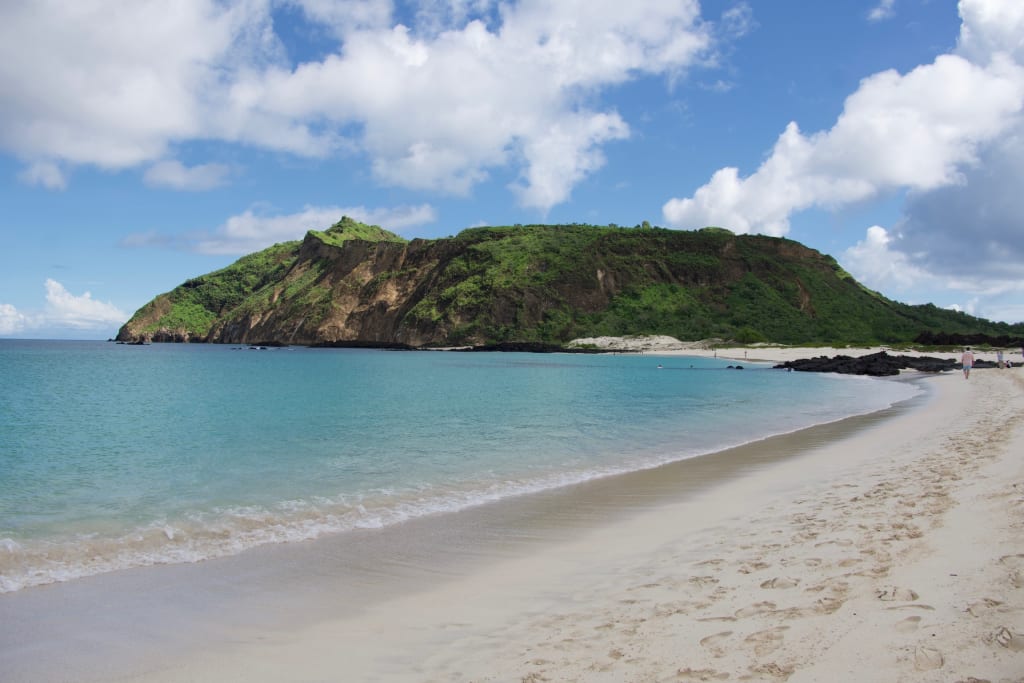
We soon landed on a nearby beach that was blissfully empty. There was not even a hint of human presence on the beach and the only footprints in the sand were my own.


We also had the chance to meet one of the Galápagos’ most famous inhabitants: the blue footed booby. We were only a few paces away yet the booby seemed unperturbed by our presence.
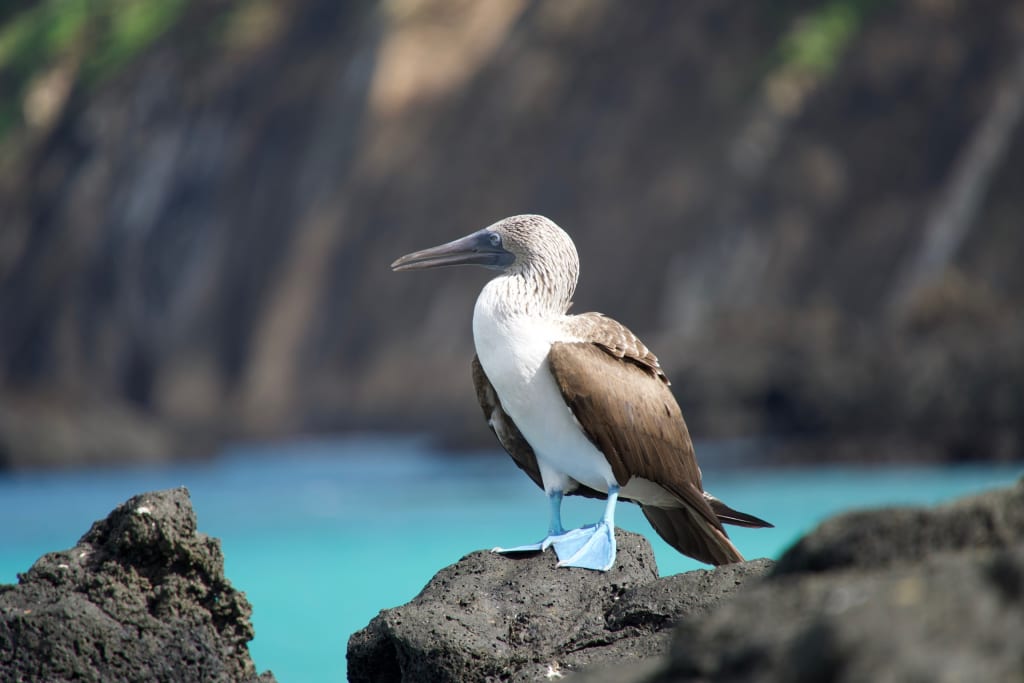

We watched as the booby gracefully glided and then suddenly did a nose dive into the water in search of its next meal. Apparently, they’re only successful on ~10% of their hunts.
The booby wasn’t the only bird we encountered. We saw this incredibly large pelican up close as well.

After about an hour of walking around, resting on the sand, and taking a quick dip in the ocean, we headed back to the yacht for lunch.
The next activity was a snorkel. It turned out to be one of the best swims we had the entire week, as we would be meeting the playful sea lions for the first time.
The blue footed booby we saw this morning certainly showed no fear of humans, but it didn’t actively seek out our attention. This was not the case with the sea lions. They wanted to swim so close I thought they’d collide with me, and they took a keen interest in my Insta360, going as far as to poke it with their noses.
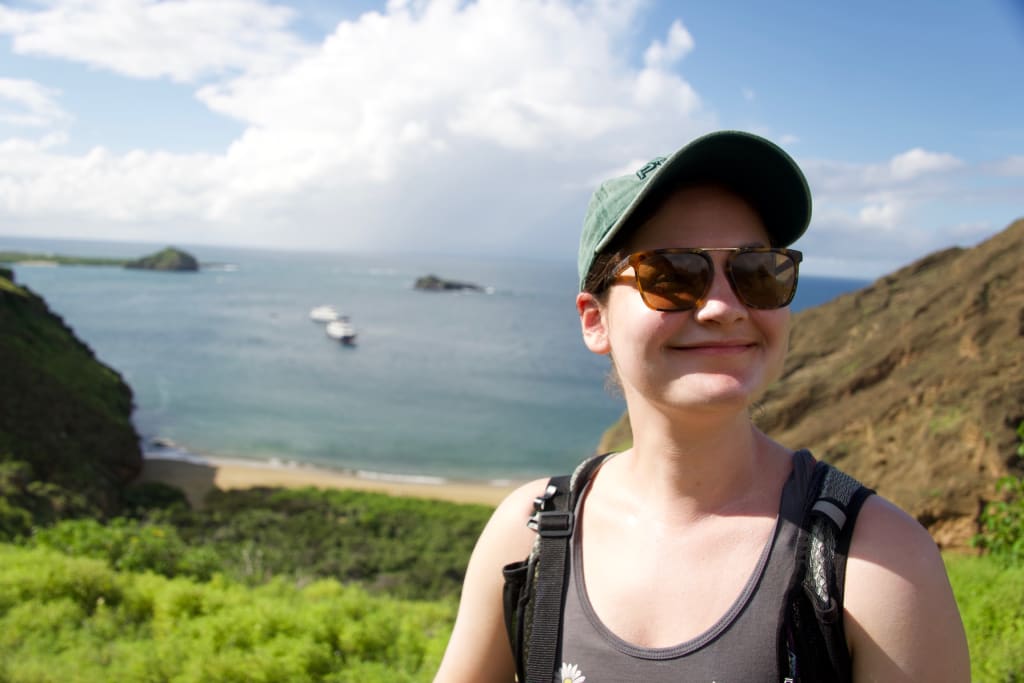
We had one activity left in store for us after the snorkel: a hike to see frigates and red footed boobies.

The highlight was seeing a male frigate with his full red pouch inflated in an effort to impress the nearby females. We even saw him doing a full courtship display, which I might describe as something distantly resembling a yodel and a little shake, although sadly we didn’t catch this on video.


We also came across red footed boobies, a far less famous cousin of the blue-footed booby. We learned that a male blue footed booby attracts females with its bright turquoise feet, while a red footed booby attracts females with its bright turquoise beak.

The booby was accompanied by a cotton ball which turned out to be a chick!


As we headed back towards the boat, we saw a small herd of goats in the distance. Our guide told us he had to report these, as they’re an introduced and invasive species that has done a lot of damage in the Galápagos. I would learn a lot about invasive species throughout the next few days.

By the time I got back to the ship I was exhausted but, more than anything, excited for what was in store for the rest of the week. The Galápagos had already blown me away with its beauty.
EXPLORE MORE
Planning your own trip? I’ve written detailed guides on the islands we visited, plus roundups on Galápagos wildlife, snorkeling, and the wildest facts I learned along the way.

Cruising the Galápagos with Ecoventura: What You Need to Know

Wildlife in the Galápagos: What You’ll See and Where to Find It

50 Wild Things I Learned in the Galápagos (That Blew My Mind)

Snorkeling in the Galápagos with Sea Lions, Sharks, & More

Bartolomé: A Penguin Lover’s Paradise in the Galápagos

Saving the Galápagos: Tortoise Conservation on Santa Cruz Island

The Most Magical Moment in the Galápagos (North Seymour & South Plaza Islands)

Española: The Galápagos Island That Completely Won Me Over
