
50 Wild Things I Learned in the Galápagos (That Blew My Mind)
My mind was blown a hundred different times during my trip to the Galápagos with Ecoventura. One of the most incredible parts of visiting the islands isn’t just seeing the wildlife, it’s learning an incredible amount about this magnificent place and all its inhabitants.
I challenged myself to write down everything I learned over the course of the week and somehow ended up with more than 120 facts. This list barely scratches the surface, but these are the ones that stuck with me the most.
THE GALÁPAGOS (IN GENERAL)
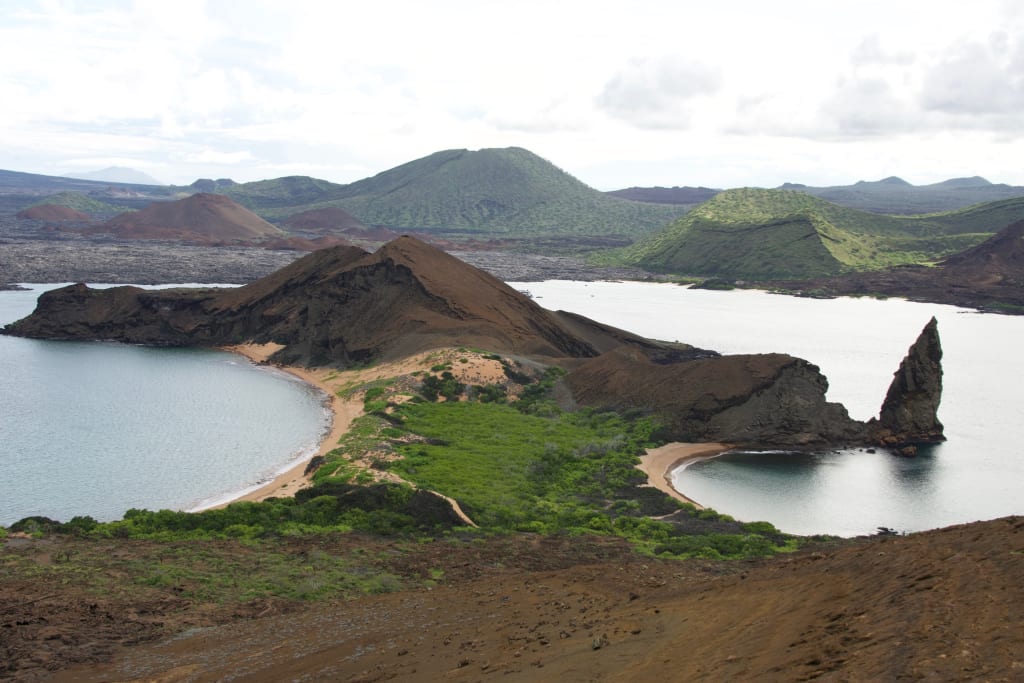
Charles Darwin might be the most famous visitor of the Galápagos Islands, but he only stayed in the Galápagos for 5 weeks, was only on land for 19 days, and visited only 4 of the 18 islands. He also was very unscientific with his notes and mislabeled some of the specimens he brought back with him.
A mysterious German baroness once tried to colonize Floreana Island. Her story attracted a lot of attention when people around her started disappearing or turning up dead and it’s now the subject of a Netflix documentary called The Galápagos Affair: Satan Came to Eden (that I have yet to watch but it’s on my list!).
If the sand feels cool under your feet, it’s likely fish poop. If it’s hot, you’re standing on volcanic rock.
In the Galápagos, animals are either endemic (only found here), native (found here and elsewhere), or introduced (brought by humans and often invasive). Marine iguanas are endemic. Sea lions are native. Goats and rats are introduced (and have reached a lot of havoc on the ecosystems in the Galápagos).
The name Galápagos comes from the Spanish word galápago which means tortoise, specifically saddleback tortoise. There is a theory that the word galápago came from the Spanish word for “to gallop” (galopar), as the Spanish made the connection from saddle (the shape of the tortoise’s shell) to horses to galloping.
96% of the Galápagos is claimed by the national park. Only 4% is private property.
Movement to and from the Galápagos is strictly controlled; residents can move to mainland Ecuador, but mainland Ecuadorians can’t relocate to the islands.
FRIGATES
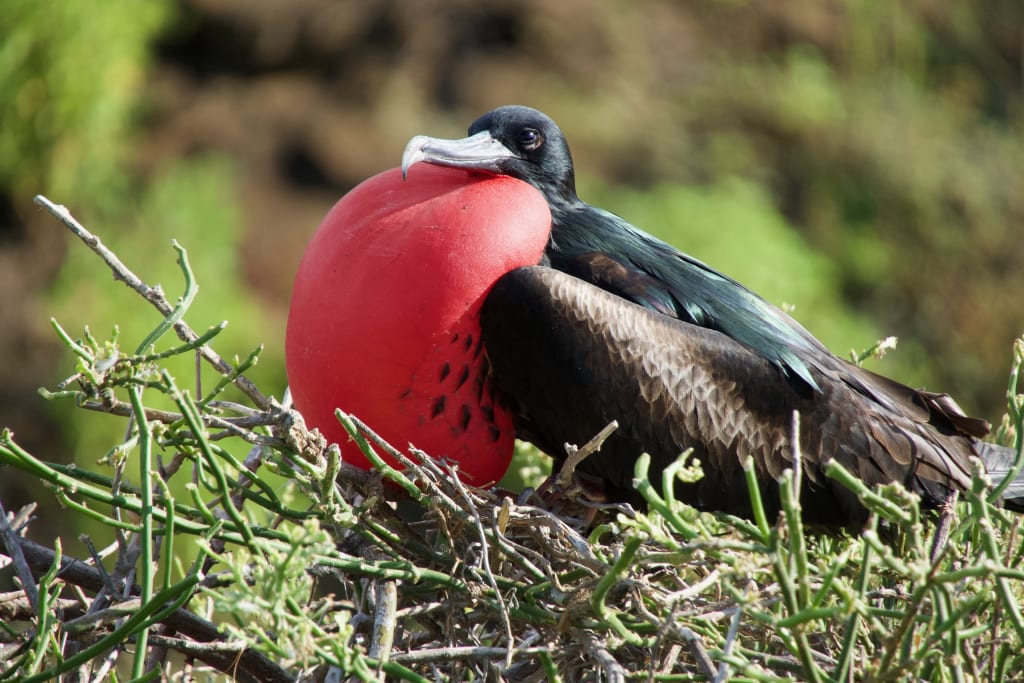
Male frigates inflate their bright red throat pouches to attract mates during mating season (April and May). It takes 20-25 minutes to inflate or deflate, and they can stay puffed up for hours.
The Galápagos is home to two species of frigatebirds: the magnificent frigatebird and the great frigatebird- two birds with an excellent marketing team.
Both the male and female frigates care for their chick together for 18 - 24 months.
BOOBIES

The male blue footed boobies attract females with their bright feet.
Blue footed boobies are only successful on around 10% of their dives.
The population of blue footed boobies is declining along with their main food source, sardines. The blue footed boobies have started hunting other fish, which is easier for the males (with their longer beaks) to catch. Thus, the population decline is disproportionately affecting females, which means reproduction has slowed significantly.
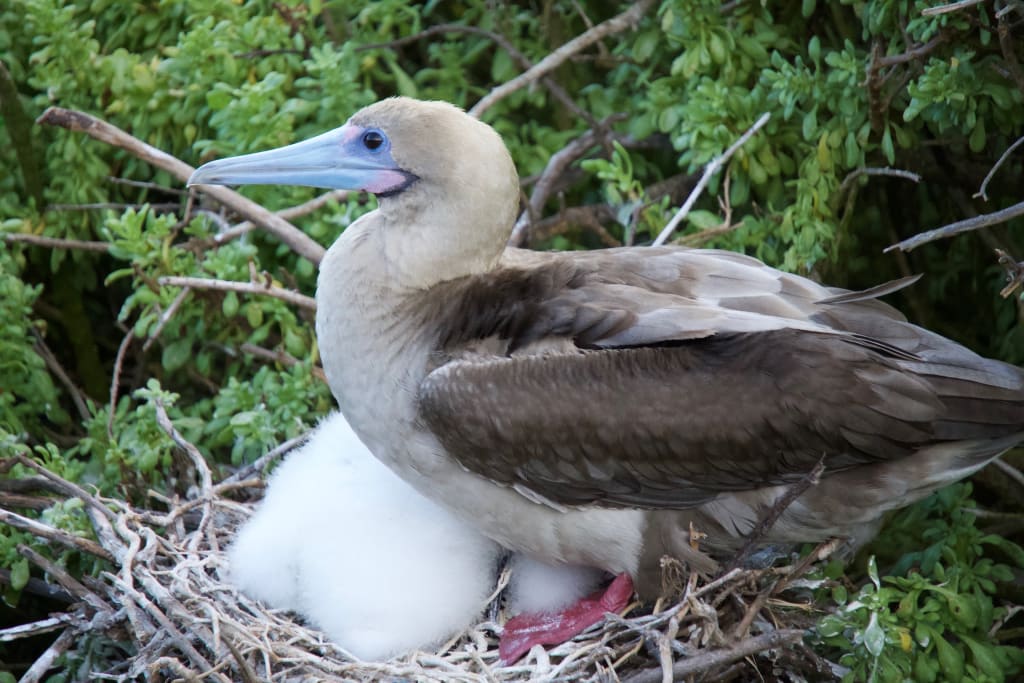
Blue footed boobies might flaunt their feet, but red footed boobies rely on their turquoise beaks to attract females, a color far rarer in nature than red.
Boobies are one of the Galápagos’ most famous inhabitants but they are not endemic to the Galápagos; they can also be found in Australia and New Zealand.
Blue footed boobies and red footed boobies will not cross-breed.

Nazca boobies cannot fly for the first 3 months of their life; they have to shed weight and heavy feathers first. After that, it takes them 4-5 months to learn to fish with their mothers before they’re on their own.
Male nazca boobies build nests (piles of stone) to attract the females, who sometimes make them move everything around before agreeing to mate.
FLAMINGOS
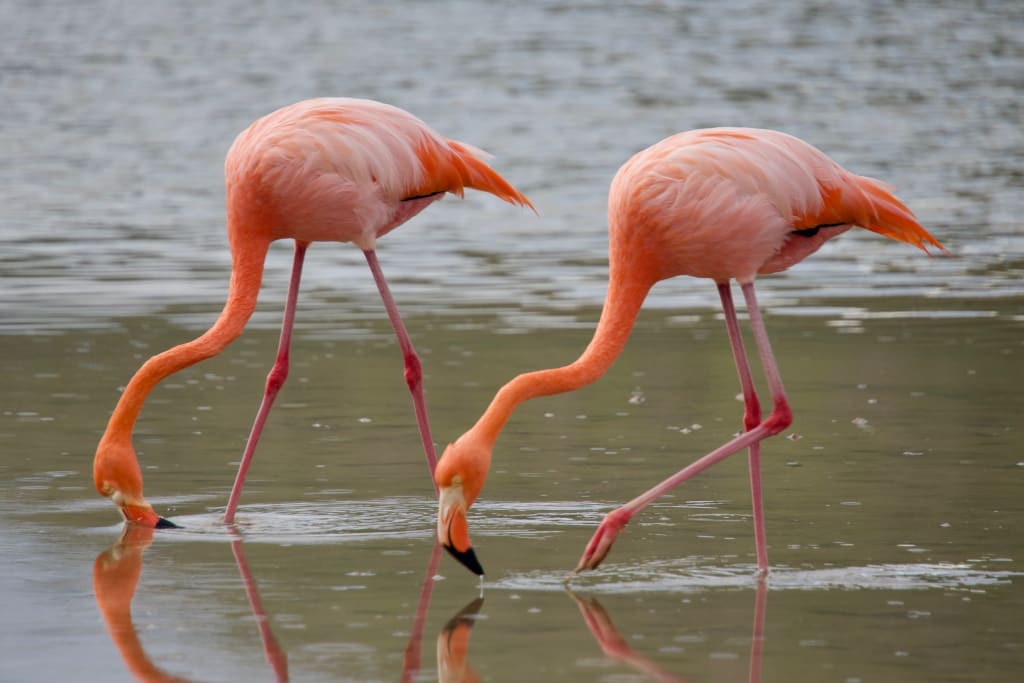
Flamingoes are pink because of the shrimp larvae they eat.
ALBATROSS
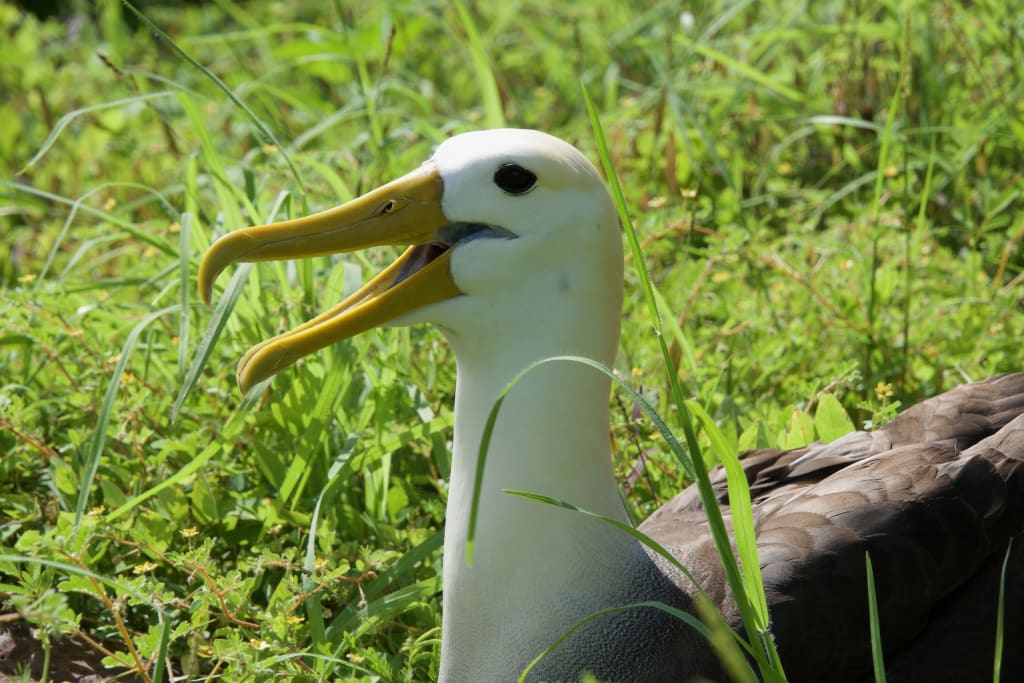
Albatrosses can drink seawater and shoot the excess salt out through their beaks. No fresh water needed.
PENGUINS
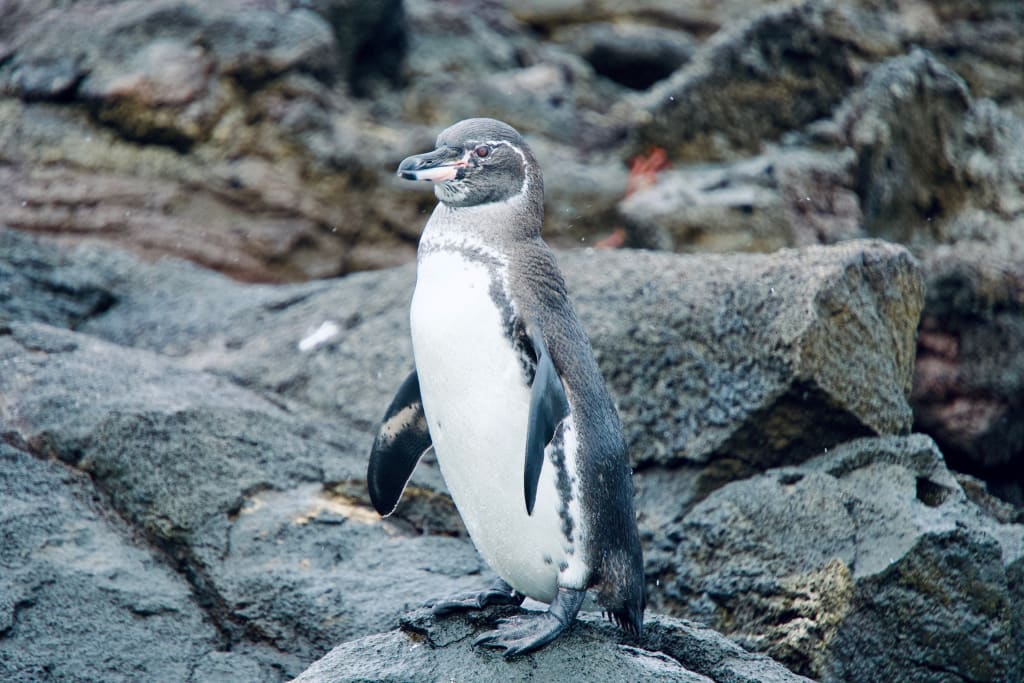
The Galápagos penguins are the 3rd smallest penguins in the world and the only ones North of the equator.
Galápagos penguins have the largest flipper-to-body ratio of any penguin, helping them move quickly through the water.
Sea lions are faster than penguins but penguins win on agility; they can turn on a dime.
Galápagos Penguins live for about 18 years and they mate for life.
SEA LIONS
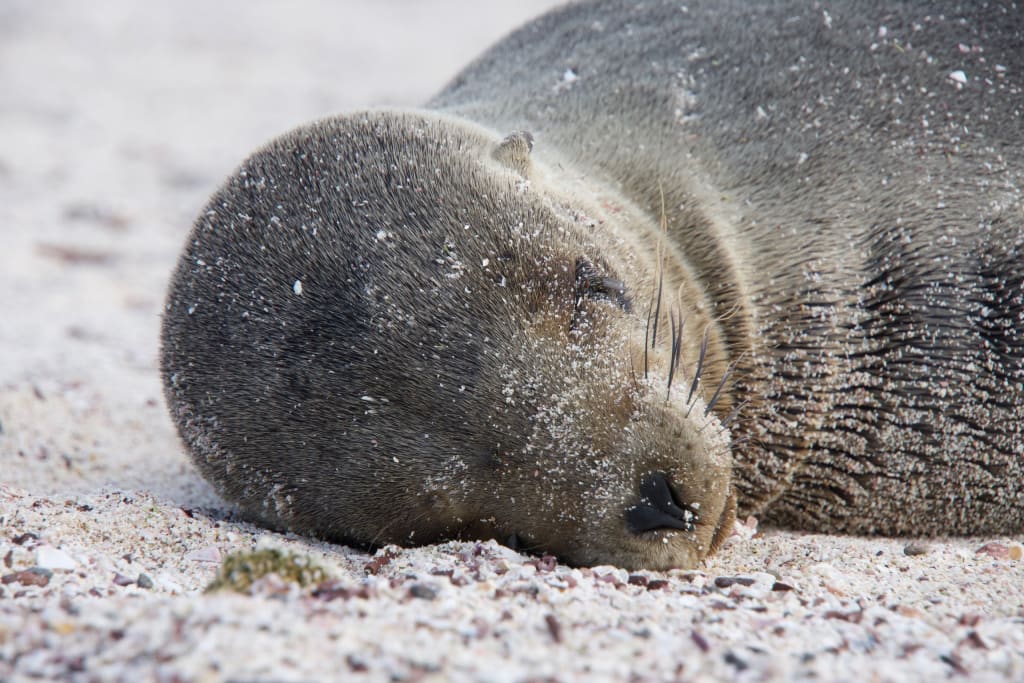
In the Galápagos, sea lions don’t have natural predators, so the females leave their babies alone on the beaches and go fishing for up to 6-7 hours.
Sea lions can dive up to 100 meters, even though they only hold their breath for 10-15 minutes.
Male sea lions join established colonies of females and their pups. Sea lion males who can’t mate with the females (because they weren’t chosen or because they’re too old) form bachelor colonies.
Sea lions live for about 25 years and reach sexual maturity somewhere between 5 and 7 years.
Females can have one pup per year (they have a gestation period of 11 months), but because they nurse their young for up to 2–3 years, their overall reproduction rate is relatively slow.
Sea lions have strong front fins and weak back fins, whereas seals have strong back fins and weak front fins.
TORTOISES
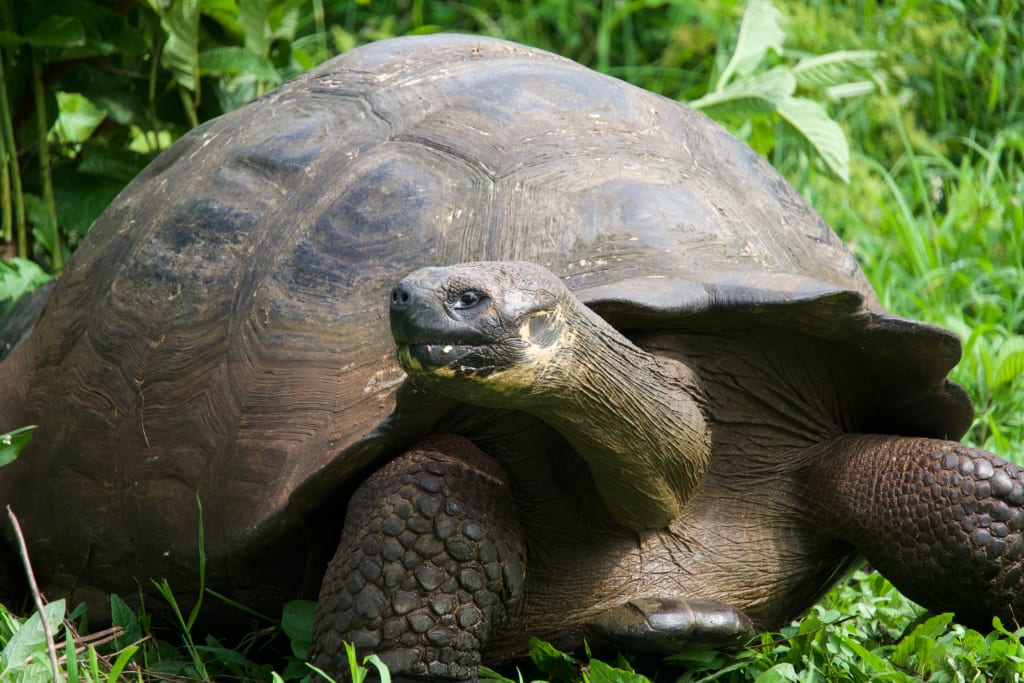
Tortoises can survive up to a year without food, so early sailors would take them aboard ships as a live food source, devastating their populations.
At one point, there were only 14 tortoises left on Española island (12 females and 2 males). They were moved to a breeding center on San Cristóbal and their offspring were later reintroduced to the island.
Tortoises don’t reach sexual maturity until they’re 35 years old. They don’t grow shells until they’re 2 years old.
Scientists believe that tortoises can live to be 150 years old, but they’re not entirely sure. This is because a tortoise’s stem cells regrow over time (unlike those of humans that start to decline after their 20s) making it difficult to determine their true lifespan. The oldest tortoise we know for sure (under research) is 50 years old.
Male tortoises can weigh up to 400 pounds.
Tortoises live on land and can pull their heads into their shells, unlike turtles, who live in the water and can’t fully retract their heads.
Tortoises' sense of smell, sight, and hearing are not very good, but they are good at feeling vibrations around them.
TURTLES
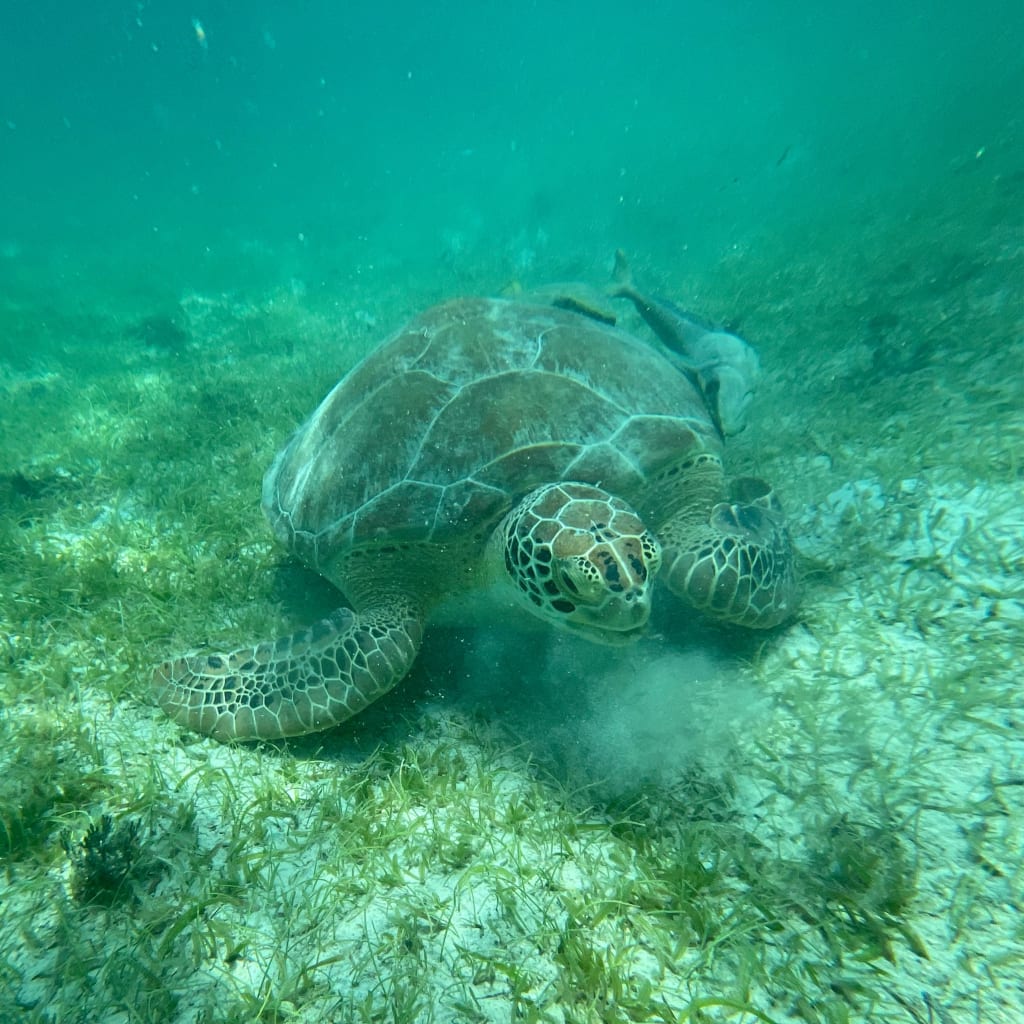
Turtles can hold their breath for 4-5 hours and they sleep underwater.
Only female sea turtles ever come on land (to lay their eggs). Males never do. Females also sleep on the beach sometimes to avoid mating with males when they’re tired after long migrations.
Turtles lay 60-70 eggs, and around 40-50 of them hatch. The eggs stay incubated in the sand for about 3 months before hatching.
Orcas love to eat just the arms and legs of the turtles; it’s too much work for them to crack the shells.
IGUANAS

Male land iguanas pick a cactus as their own and defend it from rival males. They will invite females in to eat the fruits of the cactus (and mate) though.
Iguanas (and tortoises) eat cactus fruits and spread the seeds through their droppings, essentially replanting them across the islands.
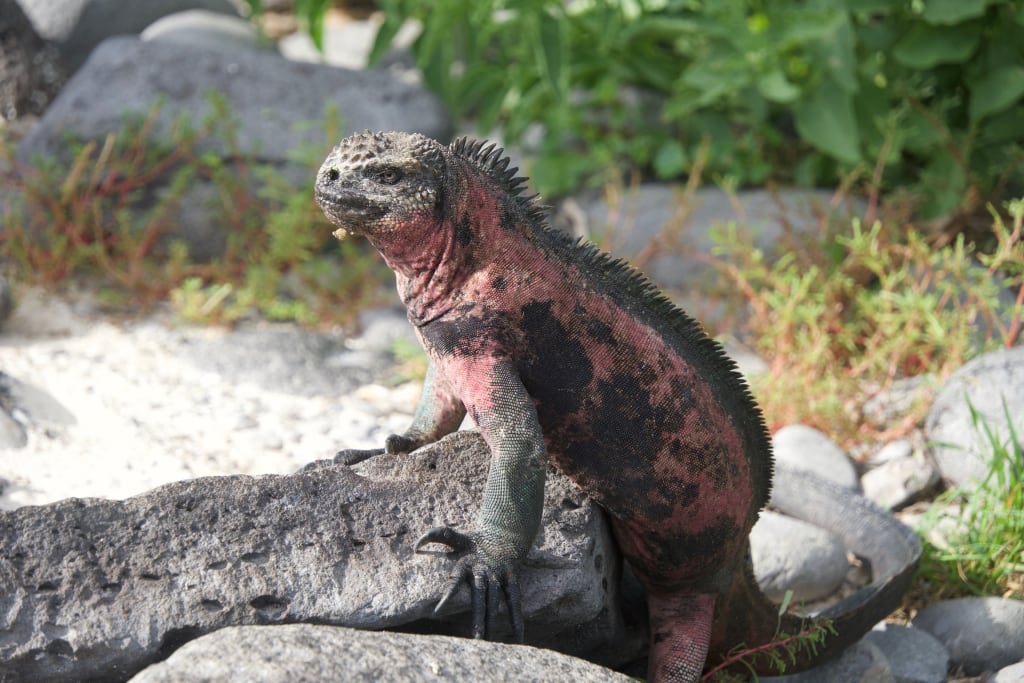
In addition to land iguanas, the Galápagos is home to the marine iguana: the only lizards in the world that swim and feed in the ocean.
Marine iguanas are usually black but turn red and green during breeding season, earning them the nickname “Christmas iguanas”.
Like albatrosses, marine iguanas expel excess salt through their noses after feeding on algae in seawater.
CRABS
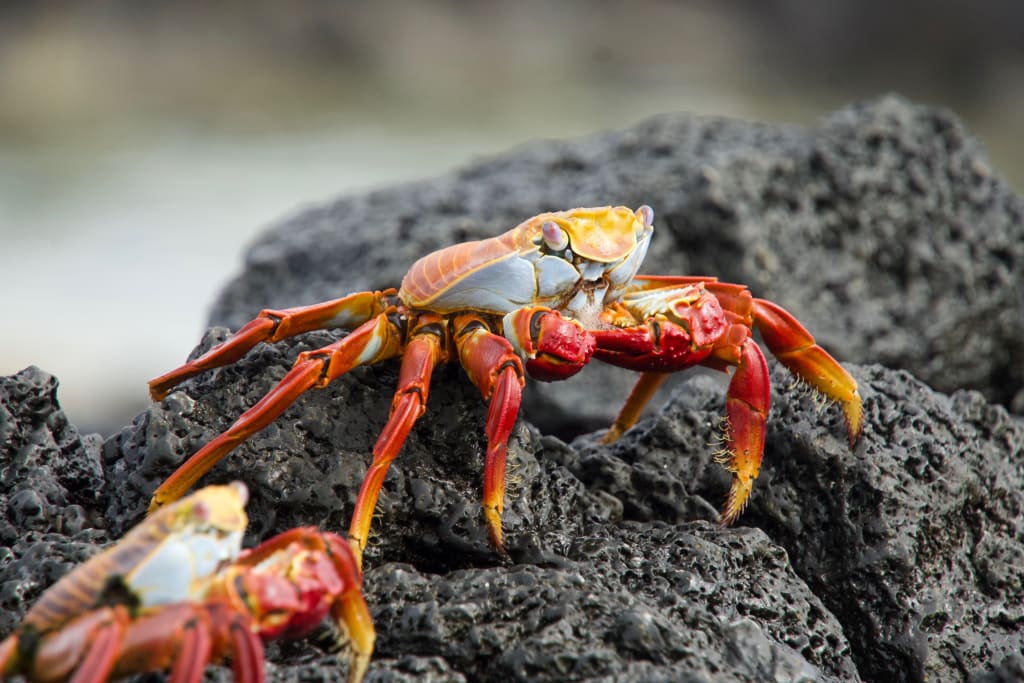
Crabs lay 5,000 - 10,000 eggs at a time.
Crabs in the Galápagos turn red when they reach sexual maturity. On mainland Ecuador however, where the bright red crabs have become bait for humans, they have noticed crabs at sexual maturity are still black. This is probably an evolutionary adaptation to avoid being hunted.
OTHER ANIMALS
Piranhas have anti-coagulants in their saliva, which prevents blood from clotting, which is why you can bleed excessively if you’re bitten by one.
Galápagos hawk females rule the family and take multiple male partners, all of whom help raise the chicks and defend the territory.
EXPLORE MORE
Planning your own trip? I’ve written detailed guides on the islands we visited, plus roundups on Galápagos wildlife, snorkeling, and the wildest facts I learned along the way.

Cruising the Galápagos with Ecoventura: What You Need to Know

Wildlife in the Galápagos: What You’ll See and Where to Find It

Snorkeling in the Galápagos with Sea Lions, Sharks, & More

Bartolomé: A Penguin Lover’s Paradise in the Galápagos

Saving the Galápagos: Tortoise Conservation on Santa Cruz Island

The Most Magical Moment in the Galápagos (North Seymour & South Plaza Islands)

Española: The Galápagos Island That Completely Won Me Over

First Impressions of the Galápagos in San Cristóbal
