
Española: The Galápagos Island That Completely Won Me Over
Gun to my head, I’d say Española Island was my favorite of the 7 islands we visited during our week-long voyage in the Galápagos. Two of my most treasured memories (watching marine iguanas battle each other and staring out at the striking green cliffs) took place here. Below, I’ll break down my favorite moments during our day at the awe-inspiring Española Island. It’s an island you can’t miss!
ESPAÑOLA ISLAND
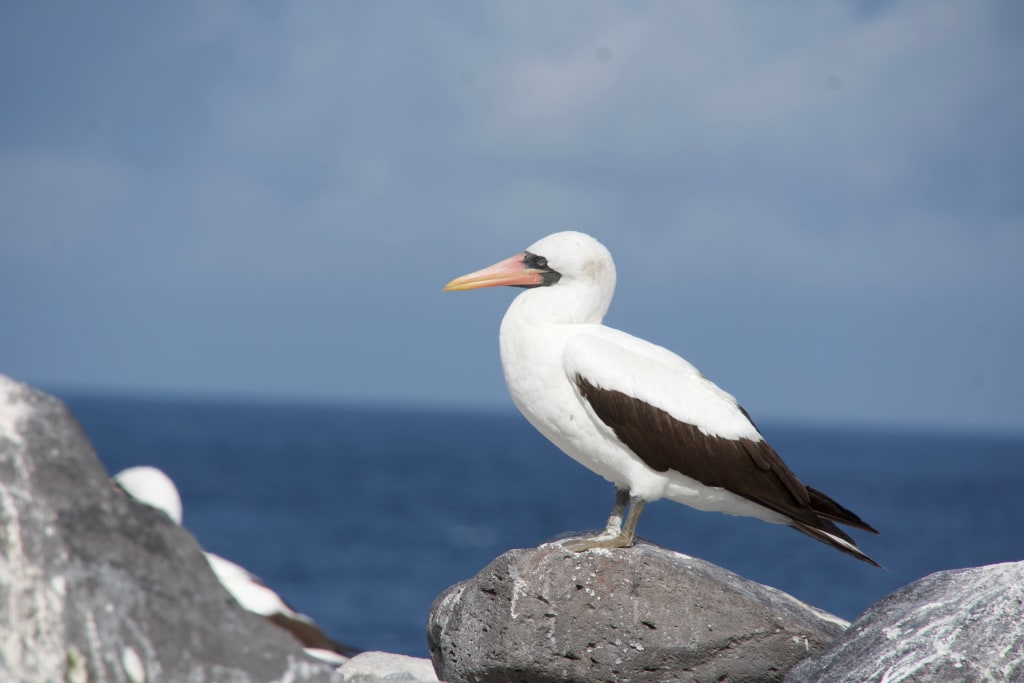
Española is the southernmost island in the Galápagos and one of the oldest (estimated to be around four million years old). It is famous for “hosting” the courtship dances of the waved albatross (which are endemic to this island) that take place from April to December. It also has a dense concentration of other species, including blue footed boobies, Nazca boobies, marine iguanas, and sea lions.
OUR EXPERIENCE
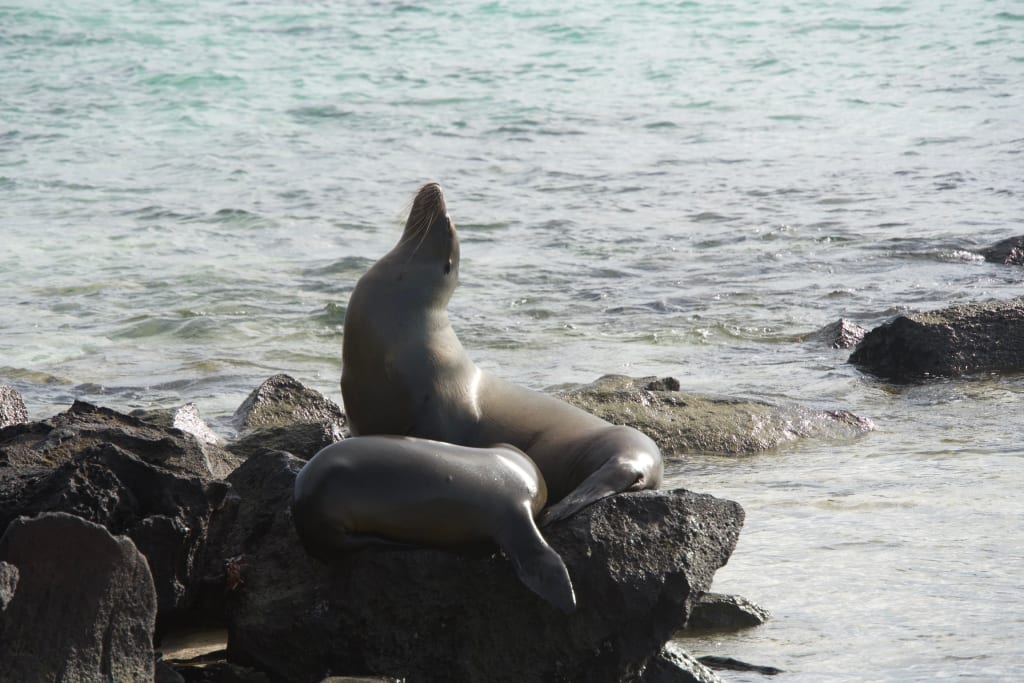
The morning activity was a nature walk on the island. We were immediately greeted by a pod of sea lions.
Our next encounter was with a strange looking bird. “This is a juvenile blue footed booby,” our guide explained. That couldn’t possibly be true! It didn’t resemble the blue footed boobies we had seen yesterday in the slightest! It looked more like a cotton ball.
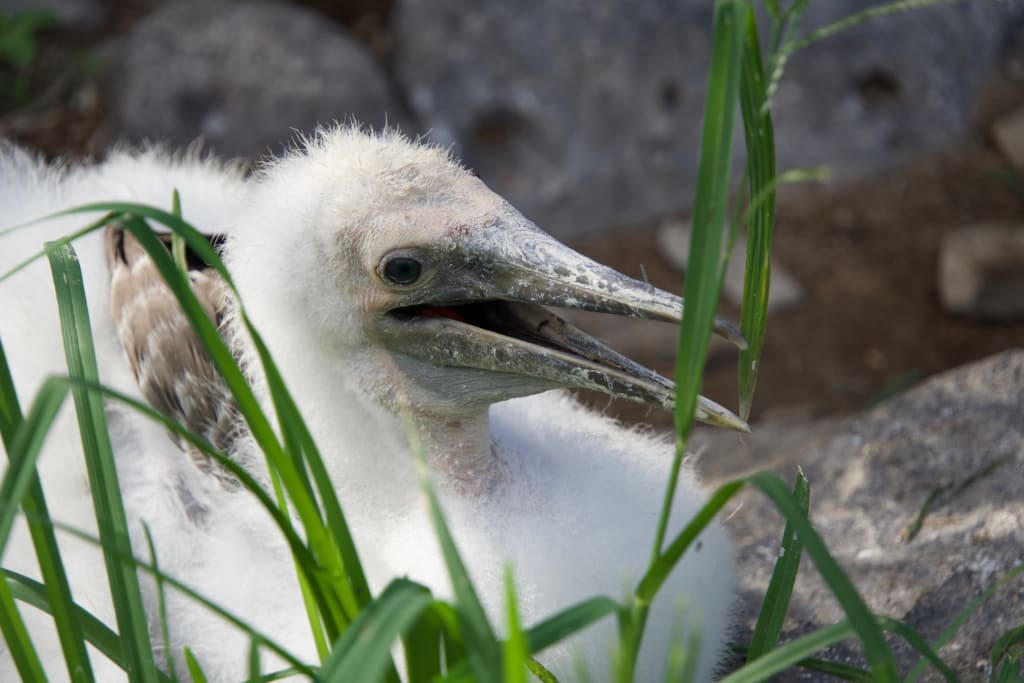

Blue footed boobies are born with heavy, fluffy down feathers that they soon shed before they’re able to fly. This baby boobie was cooling itself down by panting excessively.
We saw a number of other juvenile boobies throughout the day as well.


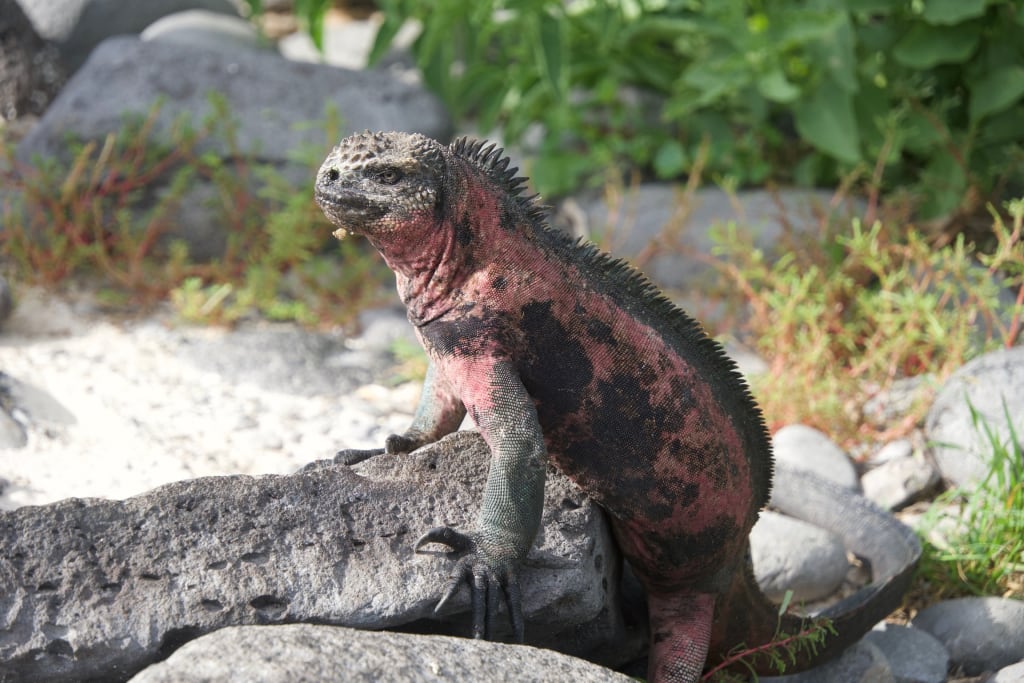
We then headed to iguana territory and saw one of the famous “Christmas iguanas”: a male marine iguana whose red coloring during breeding season signals he is ready to mate.
We couldn’t leave iguana territory without visiting the marine iguana “sorority” (okay maybe that’s not what the guide called it but it captures the idea). By my estimation there were over a hundred female marine iguanas gathered in one small patch of land. I wish I had a photo to show just how many there were.
During nesting season, female marine iguanas dig nests in the warm sand, lay their eggs inside, and cover the nest before returning to the ocean. Española Island is incredibly rocky, so there are few patches of dirt they can use to build their nests.

Therefore, there is fierce competition for the prime spots. We saw many females battling it out for a tiny patch of dirt.
A great animal sighting is one thing, but it’s quite rare to have such an intimate view of an animal’s behavior. It was the kind of moment you’d watch on a documentary (where it took an entire film crew months to finally capture the moment). Who knew marine iguanas were such fascinating creatures? It ended up being one of the most memorable moments on the trip for me.
We continued walking, this time in search of the waved albatross: a critically endangered species with over 99% of its global population living on Española. It is the largest bird in the Galápagos and has a wingspan of up to 8 feet. Tourists from around the world flock to Española to witness the albatross’ famous courtship dance, an elaborate ritual that (ideally) marks the beginning of a long relationship for a new breeding pair, as the albatross mate for life.
We visited the Galápagos the second week of April and we were too early in the season to see the dance, but we saw the bird. It was ginormous and had no fear of humans.

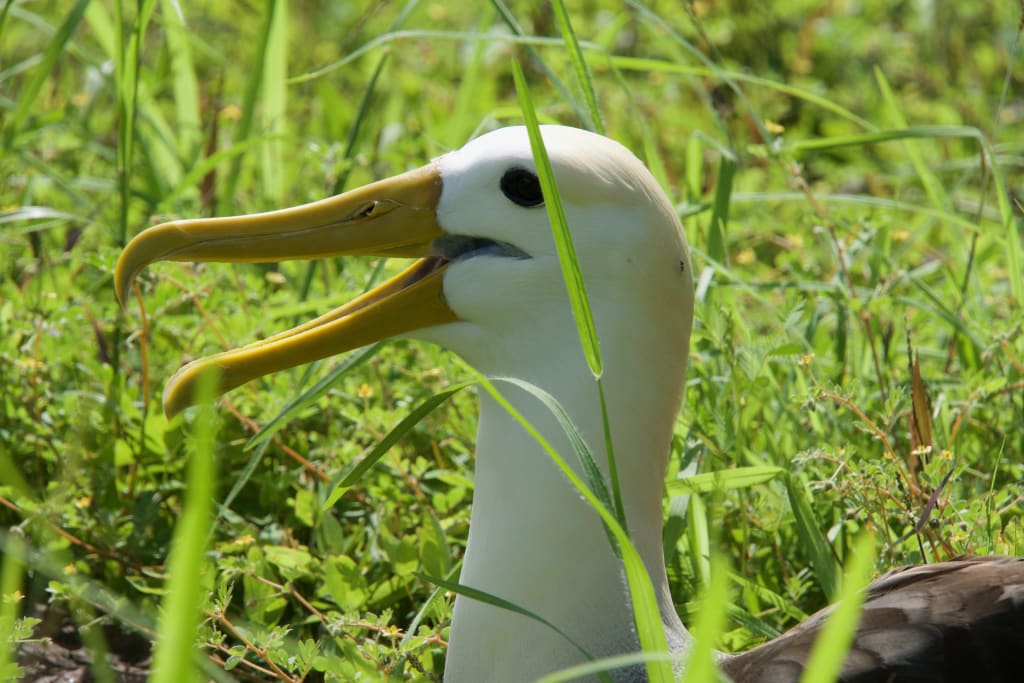
After capturing a few photos of the albatross, we continued on to (arguably) the most stunning views we saw our entire week in the Galápagos. On one side, we saw a blue footed booby admiring an erupting geyser, creating a rainbow right in front of us.
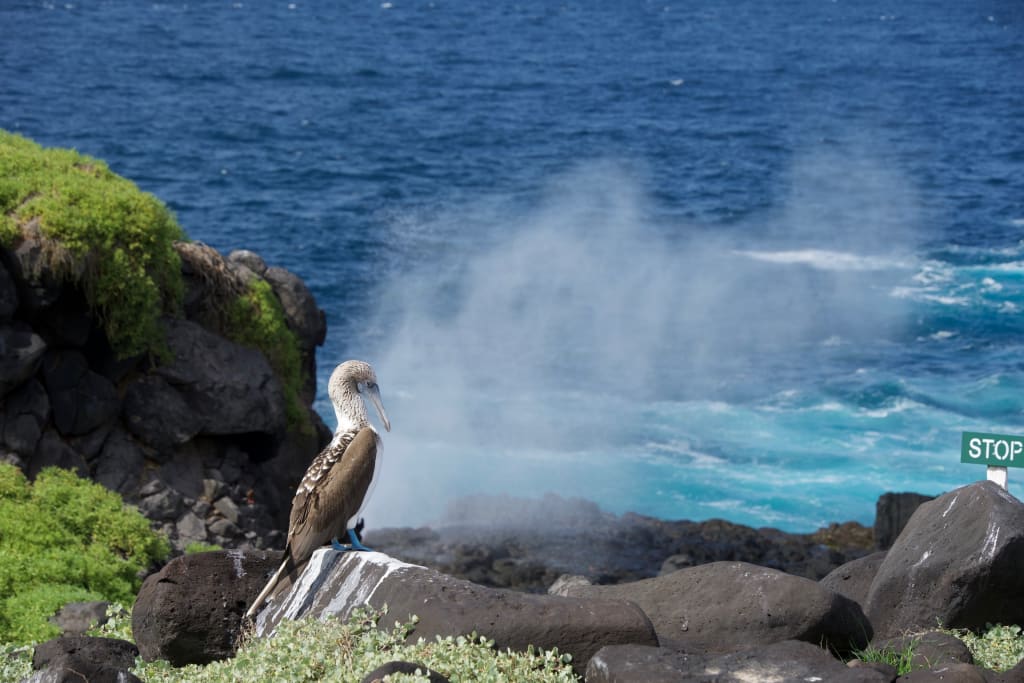
On the left, we saw untouched towering cliffs that rivaled Ireland’s Cliffs of Moher (not that I’ve been there - yet).


There was so much natural beauty on this island, delightfully untouched by humans. My feet were firmly planted to the ground and I practically had to be dragged away by the guide when it was time to leave. On the walk back, we passed a colony of sea lions who were sunbathing.

Every so often, they would flick sand on themselves to shoo away the flies.
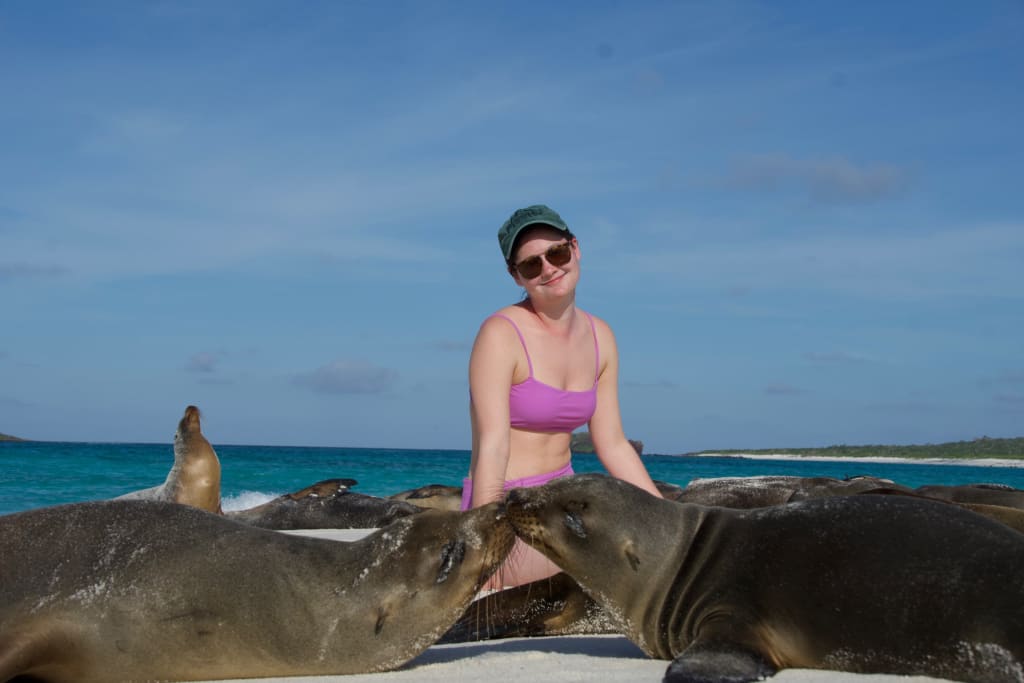
After a break for lunch and a snorkel, we started the second land excursion of the day: a trip to Gardner’s Bay. A giant colony of sea lions call this beach home and we had the opportunity to lie amongst them and snap some photos.
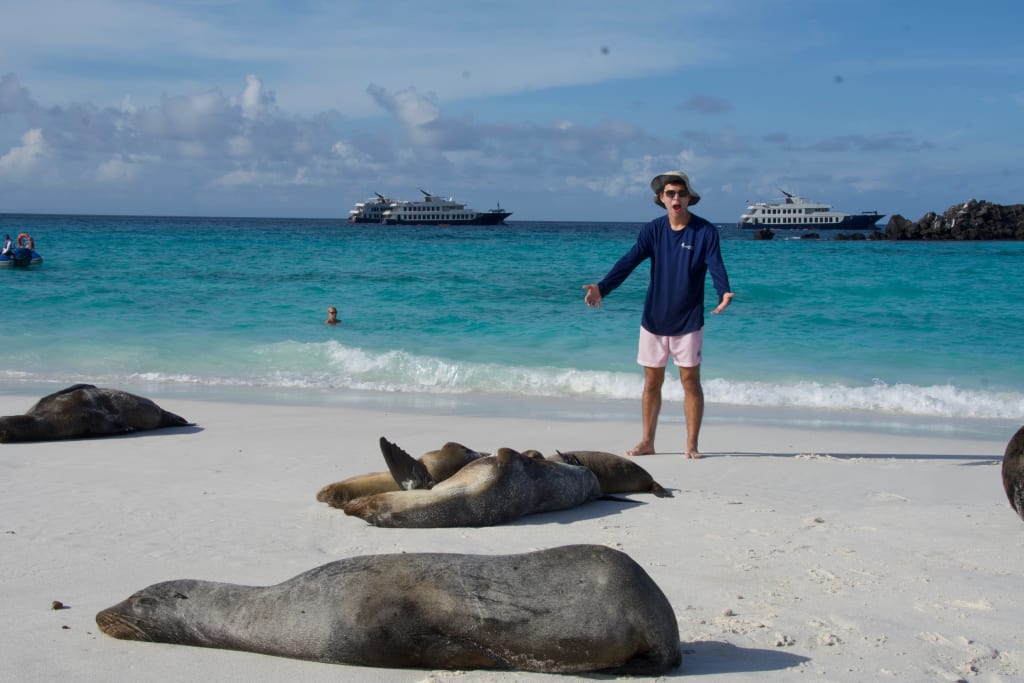

I admired a little pod of juveniles snuggling together in the sand and even photo-bombed an intimate moment between these two sea lions.
After a little over an hour on the beach, we transitioned to the last activity: kayaking. Alex and I admittedly do not have the arm muscles necessary to make this a relaxing activity in any way and we struggled to keep up with the rest of the group (who were clearly professionals). We didn’t see much wildlife from the kayak, but we had a nice time admiring the island from a different angle. We admittedly asked a zodiac to tow us back after a little over an hour (no shame!).
EXPLORE MORE
Planning your own trip? I’ve written detailed guides on the islands we visited, plus roundups on Galápagos wildlife, snorkeling, and the wildest facts I learned along the way.

Cruising the Galápagos with Ecoventura: What You Need to Know

Wildlife in the Galápagos: What You’ll See and Where to Find It

50 Wild Things I Learned in the Galápagos (That Blew My Mind)

Snorkeling in the Galápagos with Sea Lions, Sharks, & More

Bartolomé: A Penguin Lover’s Paradise in the Galápagos

Saving the Galápagos: Tortoise Conservation on Santa Cruz Island

The Most Magical Moment in the Galápagos (North Seymour & South Plaza Islands)

First Impressions of the Galápagos in San Cristóbal
