
Snorkeling in the Galápagos with Sea Lions, Sharks, & More
When a POTS diagnosis forced me to give up scuba diving, I turned my attention to finding the world’s most incredible snorkeling hotspots. My google search led me to the Galápagos, where I would have four out of the five of my most outstanding water encounters of all time (only the octopus alluded me, which I had the privilege of snorkeling with in Honduras). I will forever remember my encounters with sea lions, penguins, sharks, and dolphins, but those are just a few of the amazing species I saw below the surface of the water.
SEA LIONS
Sea lions are easily one of the most iconic animals in the Galápagos, rivaled only by the giant tortoise. But unlike the tortoise, you get to do more than just observe them. Tourists flock to the Galápagos for a chance to swim with these playful and intelligent creatures.

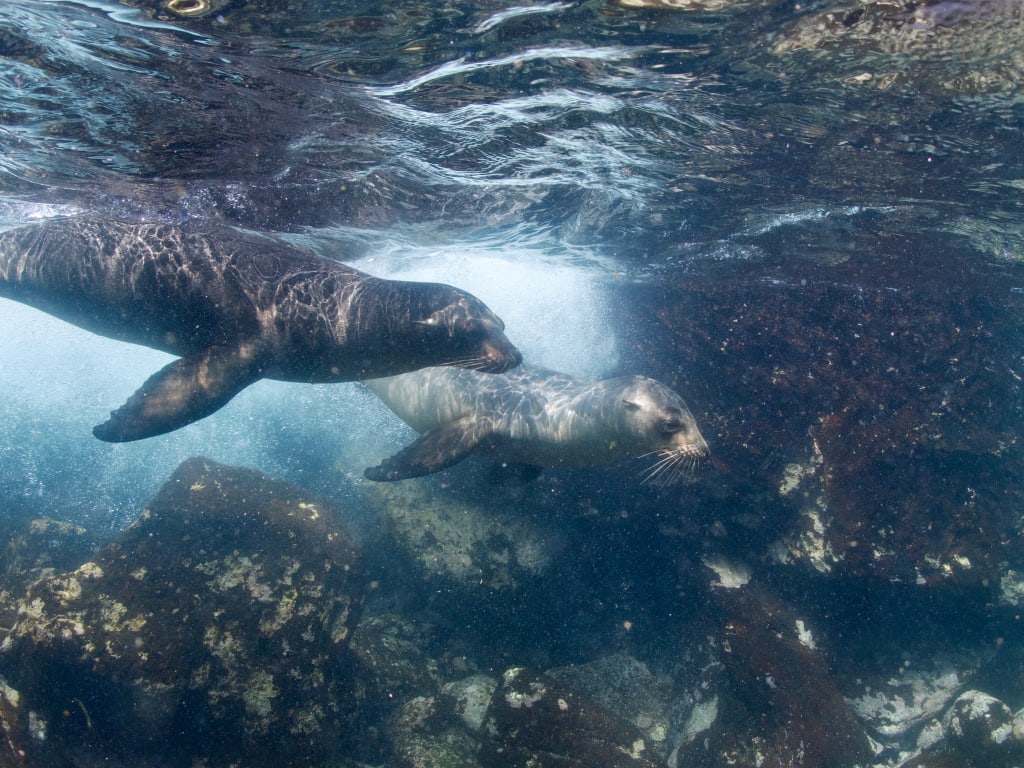
The sea lion pups in particular were fascinated by my Insta360 camera and would go as far as poking it with their nose. All the sea lions would dart about as I swam, taunting me until I’d play along.
We swam with sea lions on three different islands, with the highest density in San Cristóbal and Floreana and a few on Española.
PENGUINS
While it’s entertaining to spot Galápagos penguins hopping around on land, swimming with them in the water is even more thrilling. These penguins glide by at lightning speeds and can change direction with just a moment’s notice.
The Galápagos penguin is the second smallest penguin species on Earth and the only one spotted in the Northern Hemisphere. The vast majority (over 75%) live on Isabela Island, but we snorkeled with a few groups around Bartolomé Island.
Penguins aren’t the only species of bird you can see out on the water. If you're lucky, you’ll catch a glimpse of a flightless cormorant or a blue footed booby nose-diving into the water in search of its next meal.
SHARKS
The thrill of swimming with a shark never wears off, no matter how many times I’ve had the opportunity to do so. There are many species of sharks in the Galápagos, most notably the white tip reef shark (quite common), black tip reef shark, Galápagos shark, and the elusive hammerhead shark (seen when scuba diving more so than snorkeling).
We had a number of encounters with white tip reef sharks. I saw a pod of them snuggled up together and snoozing under a rock around Bartolomé, so I swam down to get a closer look.
I also saw one around Floreana. I didn’t swim with any black tip reef sharks, but I did see 20 to 30 baby black tips hugging the shore around Santa Cruz in search of their next meal.
The best footage of a shark might be the one our guide, Martín, captured outside North Seymour. I saw this Galápagos shark from a distance but he got a close up view.
Many people have asked me “isn’t it dangerous to swim with sharks?” My answer: much less so than you would think. Sadly, sharks are largely misunderstood and demonized, as they’re often portrayed as vicious predators in the media and in famous movies such as Jaws. I was personally comforted to know that, out of the 500+ species of sharks that exist in our oceans, only 3 have ever been responsible for more than 10 human fatalities in recorded history (those are the great white, tiger, and bull sharks). The grand majority of shark species are docile and will leave humans undisturbed (as long as they’re not approached).
MARINE IGUANAS
There’s no other place on Earth where you can catch an iguana swimming. Marine iguanas are endemic to the Galápagos and snorkeling with these creatures sounds like an incredible experience.
We happened to see one swimming in a small puddle on a beach walk on Santa Cruz, but unfortunately did not get to snorkel with any. If snorkeling with marine iguanas is a priority, I’d recommend visiting Española, Fernandina, or Isabela Islands.
RAYS
The Galápagos is home to a long list of rays, including the golden ray, eagle ray and marble ray. Especially lucky visitors might encounter manta rays and mobula rays in addition.
We saw a number of eagle rays around North Seymour and a mating pair in the waters outside Floreana. We also saw a marble ray in Bartolomé.

TURTLES
Sea turtles are a fan favorite worldwide, and in the Galápagos, we were lucky to swim alongside them near Floreana and North Seymour.
FISH & CRUSTACEANS
While larger wildlife often steals the spotlight, fish and crustaceans also play a role in making the underwater scene in the Galápagos so magnificent. There are many species of colorful fish, including king angelfish, parrotfish, and yellowtail surgeonfish.
You can also catch sightings of crustaceans such as lobster roaming around.
DOLPHINS, ORCAS, AND OTHER LARGE MARINE MAMMALS
Only the luckiest of lucky travelers will bump into a dolphin while snorkeling. While we did not have this privilege, we did have an extraordinary encounter with a pod of a hundred dolphins on our last night in the Galápagos near North Seymour island. (I suppose we could be considered among the luckiest, because our captain said it was the first time he’s ever seen dolphins near this island).
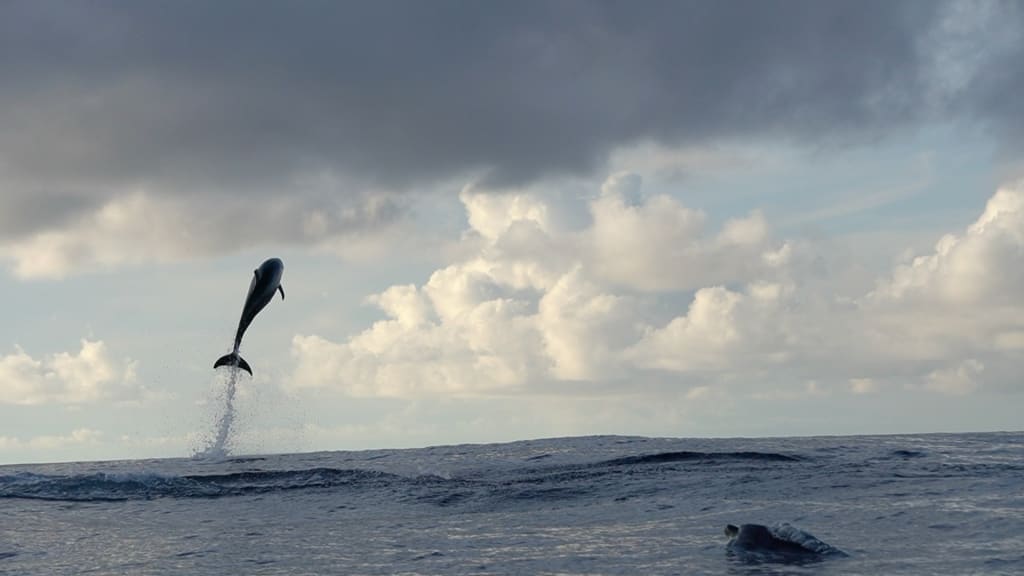
Other elusive underwater inhabitants include the orcas and humpback whales, but again, they are uncommon.
FINAL THOUGHTS
You’ll have a hard time finding an underwater paradise that outshines the Galápagos. Every snorkeling excursion was memorable and different from the last. The sea lions were so playful, the penguins so speedy, and the sharks so thrilling. I’m almost grateful that I lost the ability to scuba dive, because I otherwise might not have gone to the Galápagos in search of the best snorkeling. I hope I’ll get the opportunity to return to the Galápagos one day and meet its cast of underwater characters all over again.
FAQS
What is the best time to snorkel in the Galápagos?
You can comfortably snorkel in the Gaápagos year-round and find an abundance of wildlife. However, certain species are more active at different times of the year.
Sea lions are active year round. However, many species, including sharks, penguins, and marine iguanas, prefer colder water and are more active during the cooler months of July to November. The tradeoff is that the water temperature is much less comfortable for humans, the seas are rougher, and the visibility is poorer.
We snorkeled in April and saw sharks and penguins, although we missed the marine iguanas.
Is it better to snorkel or scuba dive?
It depends on what you’re most excited to see. If the goal is to see sea lions, it’s better to snorkel, as they tend to stay near the surface (as they have to come up for air every 10 minutes). If you’re most excited about sharks, scuba diving offers more frequent sightings, as well as the chance to swim with schools of hammerhead sharks. That being said, I saw sharks a number of times while snorkeling (and that’s quite common).
With the strong currents and cold temperatures deep underwater, the Galápagos is best for divers with their Advanced Open Water certification, so new divers might consider snorkeling instead. I promise you won’t be disappointed!
What gear do you need?
I would highly recommend bringing a rash guard (to keep you warm), bathing suits, prescription goggles, and an underwater camera or dive case for a phone. Our tour operator, Ecoventura, provided all snorkel gear, including a wet suit (unnecessary in the warm water we had), snorkel, flippers, and goggles.
What camera equipment did you use?
I used an Insta 360 X4 camera with the Insta 360 Dive case. Alex used an Olympus TG7 camera with underwater housing. Overall, we were more impressed with the quality of the footage on the Insta 360 (and it was a much lighter setup).
What were the water conditions like?
The water was relatively calm and the temperature was comfortable in April.
Was the water deep?
Some days we snorkeled in quite shallow water near rocks. Other days we were in the open ocean in deeper water.
How long were the excursions?
We spent 45 minutes to an hour in the water most days.
How likely am I to see sea lions? Sharks? Penguins? Marine iguanas?
It’s practically guaranteed that you’ll see sea lions. They are the most reliable sighting in the water in the Galápagos year-round.
Sharks are also very common, and you’ll likely see at least one white tipped reef shark during your visit.
Penguins are more elusive and only found on certain islands. You have a greater than 50% chance of seeing them if you visit Isabela or Bartolomé islands. We saw many penguins around Bartolomé.
Your best chance of seeing a marine iguana swim is around Española island. Your odds are over 50%, but sadly we did not see any.
Is it safe to swim with sharks?
Yes, it is safe to swim with sharks. Encounters with sharks will be calm and sharks will ignore your presence. I was also comforted by the fact that, out of the 500+ species of sharks that exist in our oceans, only 3 have ever been responsible for more than 10 human fatalities in recorded history (those are the great white, tiger, and bull sharks), all of which are very rarely seen in the Galápagos (and in much deeper water than you would venture into during a snorkeling excursion).
EXPLORE MORE
Planning your own trip? I’ve written detailed guides on the islands we visited, plus roundups on Galápagos wildlife, snorkeling, and the wildest facts I learned along the way.

Cruising the Galápagos with Ecoventura: What You Need to Know

Wildlife in the Galápagos: What You’ll See and Where to Find It

50 Wild Things I Learned in the Galápagos (That Blew My Mind)

Bartolomé: A Penguin Lover’s Paradise in the Galápagos

Saving the Galápagos: Tortoise Conservation on Santa Cruz Island

The Most Magical Moment in the Galápagos (North Seymour & South Plaza Islands)

Española: The Galápagos Island That Completely Won Me Over

First Impressions of the Galápagos in San Cristóbal
