
Saving the Galápagos: Tortoise Conservation on Santa Cruz Island
You’ll want to check out Santa Cruz if you’re interested in seeing giant tortoises, the most emblematic of the Galápagos’ many inhabitants. Some incredibly noble work is being done on this island to actively protect endangered species and ensure that ecosystems remain balanced and that future generations of humans get to share a planet with these wonderful creatures. I thoroughly enjoyed my visit to both El Chato Ranch and the Charles Darwin Research Station, and below I’ll make the case for why you should prioritize a visit to this island to learn not only about tortoises, but about conservation initiatives in the Galápagos in general and why they are so important.
SANTA CRUZ
Santa Cruz is the second largest island in the Galápagos and the main tourist hub. It’s famous for its incredible conservation initiatives helping a variety of species, most famously tortoises but also sea turtles, sharks, marine birds, and many more.
HISTORY OF TORTOISES IN THE GALÁPAGOS
A few hundred years ago, Galápagos tortoises could be found wandering freely on almost every island in the Galápagos. Sadly, early explorers discovered that they made an excellent live food source, as they could sustain themselves for up to a year without food. Subsequently many species were driven to extinction and the ones that remain have alarmingly small populations. In fact, only 2 of the islands had populations of tortoises that could sustain themselves without help from conservation experts.

Nowadays, hunting is thankfully less common, but tortoises still face many threats, including invasive species such as rats and cats, climate change, and disease. There are now active initiatives at the Charles Darwin Research Station in Santa Cruz, Arnaldo Tupiza Breeding Center in Isabela, and Jacinto Gordillo Breeding Center in San Cristóbal to raise baby tortoises and release them into the wild when they’re strong enough to combat these threats and continue breeding on their own.
OUR EXPERIENCE
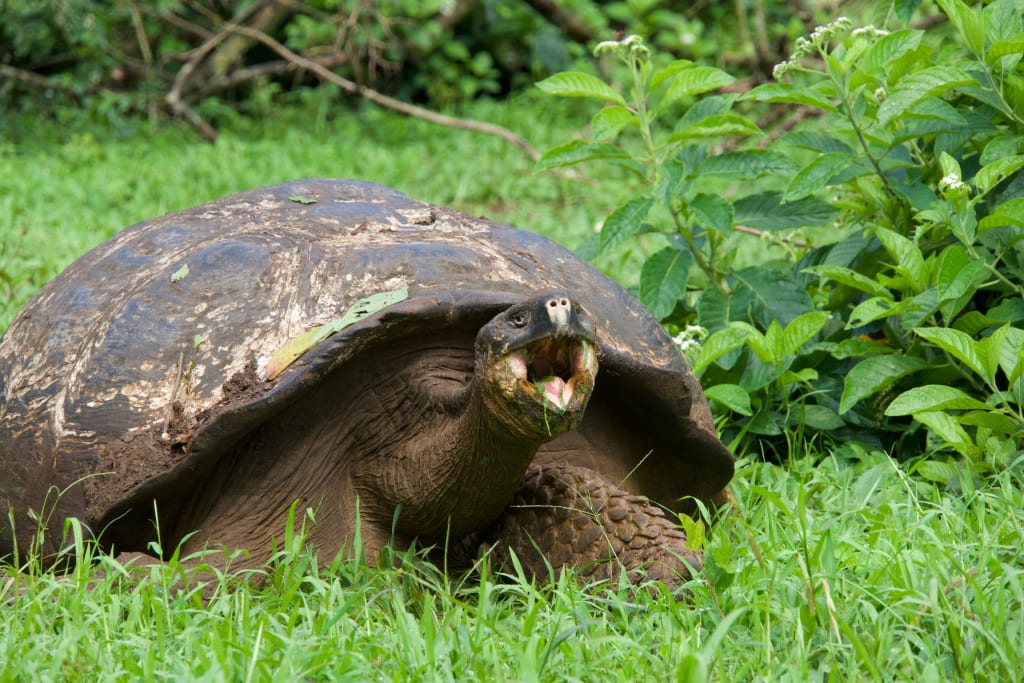
A visit to Santa Cruz meant we would finally come face to face with the icon of the Galápagos: the giant tortoise. We headed to El Chato Ranch up in the highlands first thing in the morning. I was glad to hear that the tortoises aren’t held captive on the ranch and there are no fences, but they stay due to the abundant lush grass that can be found on the property that the tortoises enjoy feeding on.
We were suited up in tall rainboots and instructed immediately upon arrival to move slowly and quietly. If we wanted to approach the tortoises for a photo, we should do so from behind, as they only have a field of vision in the front and sides due to their hefty shell. Tortoises are rather timid creatures and often hide in their shell and hyperventilate at the smallest stressor. We snapped many fantastic photos of these majestic creatures.


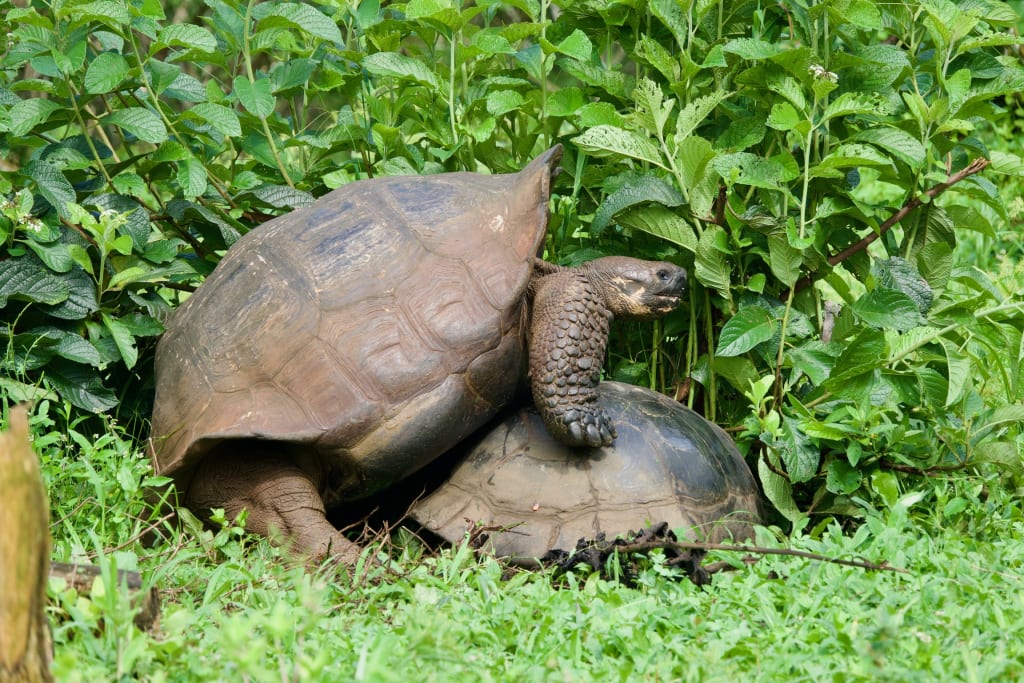
We heard a grunting noise in the distance and our guide, Martín, hurried us around the corner just in time to see two tortoises mating!
Well, kind of. Martín explained that the female didn’t actually lift her tail, but the male was humping her. Tortoise mating is a bit like a game of cat and mouse. When a male tortoise wants to mate, he’ll approach the female and the female runs away, waiting for the male to chase after her. What we were witnessing was still part of the chase: the male had caught up, but the female still wasn’t interested enough to mate. I learned that when the females do decide to mate, the process can take 2-3 hours!
After the walk with the tortoises, we had the chance to plant a tree in support of conservation. The process took just a couple minutes and most tourists participated.

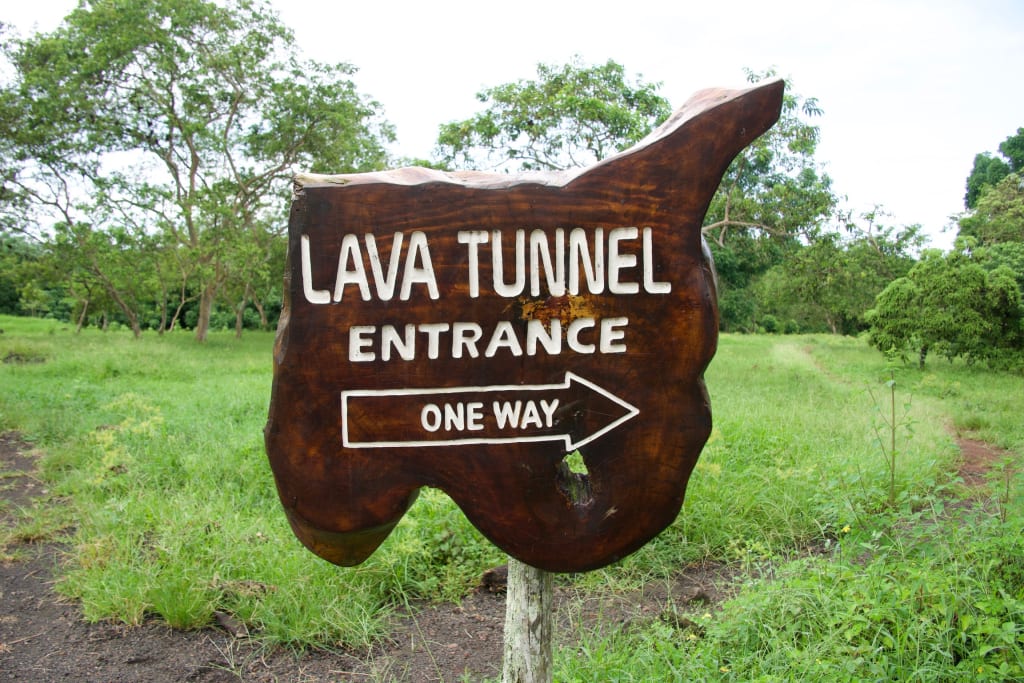
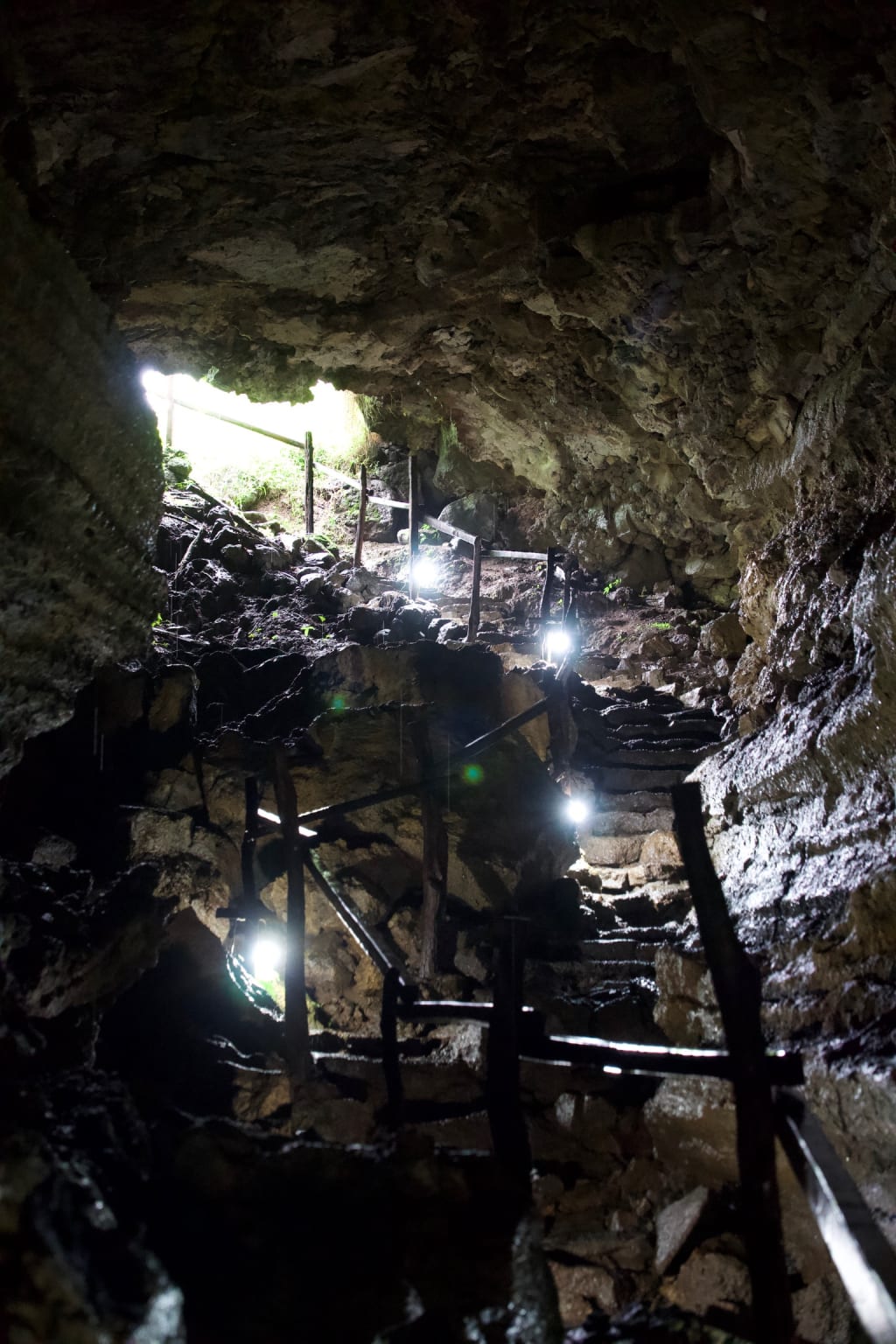
Finally, on our way out, we walked through a lava tunnel: a cave formed by lava thousands of years earlier during the volcanic eruptions that ultimately formed the island of Santa Cruz. The lava tunnel was the one part of the El Chato Ranch that I felt was underwhelming if I’m honest.

Before departing we had the opportunity to walk around in a reception center with a café, a souvenir shop, and, most interestingly, a tortoise shell that you were encouraged to crawl into. I just had to! It was giant, and I fit in with no problem.

In the afternoon, we checked out the Charles Darwin Research Station, home to a world renowned breeding program that raises endangered giant tortoises and releases them into the wild when they’re large enough to fight off introduced predators like rats and cats. The giant tortoise project is just one of many conservation initiatives that CDRS operates.

On the tour of the facility, we saw an adult saddleback tortoise (a different species than we had seen that morning) as well as different enclosures for tortoises of a variety of species in different age groups.

These baby tortoises (less than a year old) were tiny. It’s unfathomable that they grow into the giant tortoises weighing up to 400 pounds that we saw in the morning!
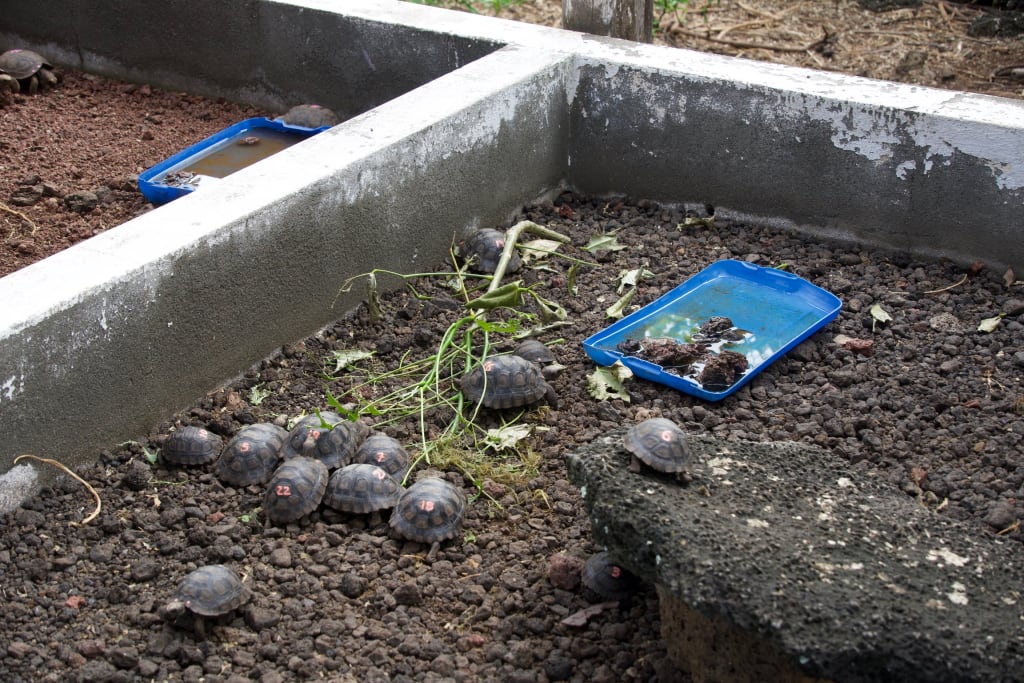
One poor baby tortoise flipped itself on its back and was in a full blown panic trying to right itself.
The highlight for me was watching the group of 3 year old tortoises interact with each other.
There was one particularly aggressive male that went and picked fights with any tortoise in his vicinity.


I learned a lot on the tour. While I was familiar with the stories of humanity’s detrimental impact on the lives of tortoises in the past, I didn’t realize this remained a problem (albeit on a smaller scale) today. Our guide told us that people target these breeding facilities to try to smuggle baby tortoises (more portable than their adult counterparts) out of the country. In 2018, 123 baby tortoises were stolen from a breeding facility on another Galápagos Island, Isabela. That same year, 26 tortoises were smuggled all the way to Peru before they were eventually recovered and returned to the Galápagos. The most unbelievable story involved a tourist caught at the airport with 185 baby tortoises wrapped in plastic and stuffed inside his suitcase. Clearly the most invasive of all the species introduced into the Galápagos is mankind. Thankfully, security at these breeding centers has increased since these incidents.
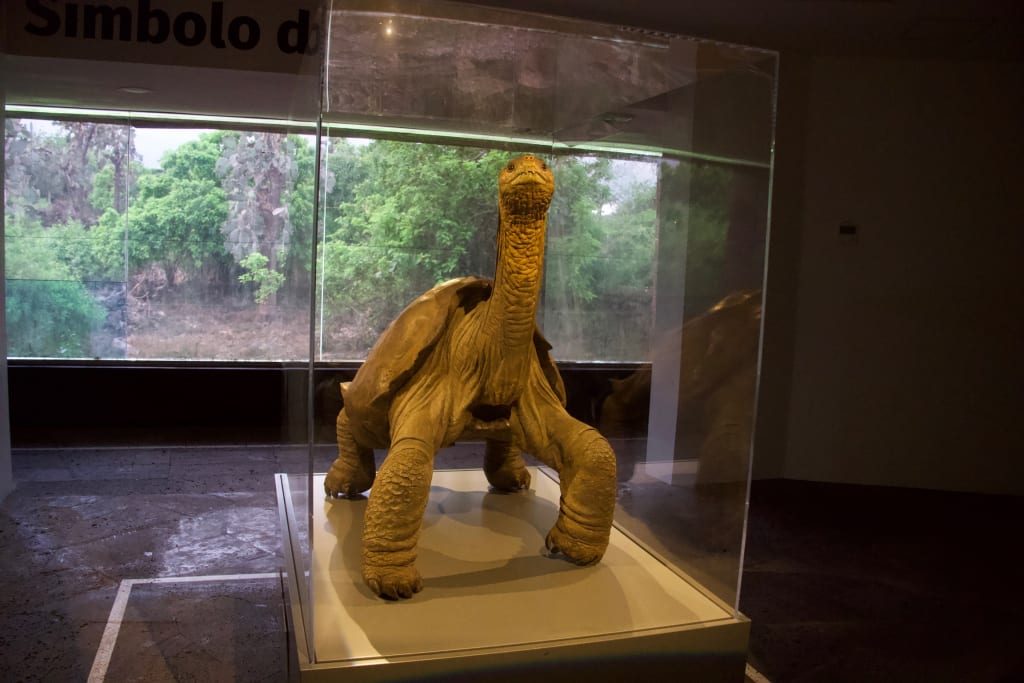
The last stop on the tour of the Charles Darwin Research Station was a moment with the remains of Lonesome George, the very last Pinta Island tortoise who passed away in 2012. He had made a name for himself around the world as a symbol of conservation and with his passing, an entire species disappeared forever.
Sadly, the tour of the Charles Darwin Research Station was over. On the way out, I purchased an awesome T-shirt listing all the shark species in the Galápagos (I am a diver and love sharks). The proceeds went in support of conservation!

We had one more activity in store in Santa Cruz scheduled for the following morning. We took a leisurely walk on the beach, where we saw a marine iguana swimming in a large puddle and vibrantly colored Sally Lightfoot crabs.


Compared to a few other walks in the Galápagos, it was relatively uneventful, but it was still so serene walking on the pristine sand with no other humans in sight. I’d bet you wouldn’t find beaches like that anywhere else in the world.
EXPLORE MORE
Planning your own trip? I’ve written detailed guides on the islands we visited, plus roundups on Galápagos wildlife, snorkeling, and the wildest facts I learned along the way.

Cruising the Galápagos with Ecoventura: What You Need to Know

Wildlife in the Galápagos: What You’ll See and Where to Find It

50 Wild Things I Learned in the Galápagos (That Blew My Mind)

Snorkeling in the Galápagos with Sea Lions, Sharks, & More

Bartolomé: A Penguin Lover’s Paradise in the Galápagos

The Most Magical Moment in the Galápagos (North Seymour & South Plaza Islands)

Española: The Galápagos Island That Completely Won Me Over

First Impressions of the Galápagos in San Cristóbal
