
One Day in Peru's Sacred Valley: Highlights & Honest Thoughts
We had only twelve hours to explore the Sacred Valley. There is so much to do in this region, between touring ancient Incan ruins, wandering through markets, visiting charming mountain villages, and feeding llamas and alpacas. We knew we couldn't do it all with just one day, but we thought we made the most of the time we had.
Below, I'll break down how we spent our day in the Sacred Valley, along with what we'd do differently if we were to visit again.
WHAT IS THE SACRED VALLEY?
The Sacred Valley is a region in the Andes mountains with a rich cultural heritage. The valley was one of the most important regions in the Incan Empire due to its fertile soil that could support many crops and its convenient location near the empire's capital in Cusco. Today, in the various towns in the region, you can find Incan ruins, weaving cooperatives, markets, agricultural terraces, alpaca sanctuaries, and much more.
OUR EXPERIENCE IN THE SACRED VALLEY
We booked a day tour of the Sacred Valley from Cusco. We had a jam-packed itinerary that took a full twelve hours to work our way through. It was a tiring but rewarding day, and we really enjoyed our time in the Sacred Valley. Below, I've detailed the stops along our route.
RACCHI VIEWPOINT
On the drive to the Maras Salt Mines, we pulled over on the side of the road and hopped out of the car for an epic view of the Sacred Valley down below.
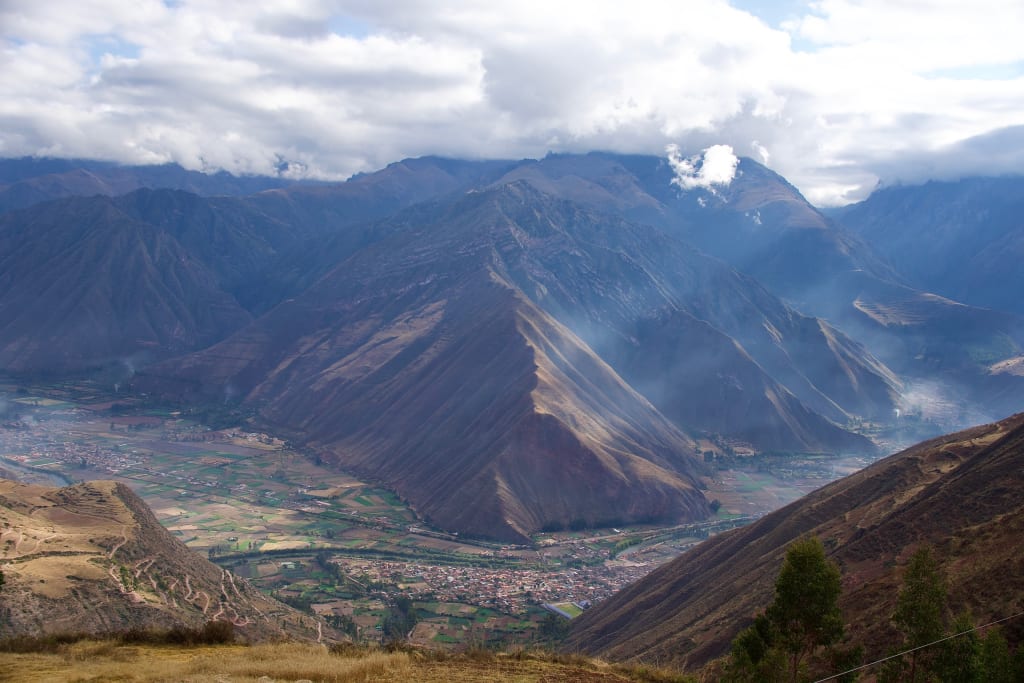
From what I can tell from my online research after the fact, this was the Racchi viewpoint. It was well worth the stop.
MARAS SALT MINES
The Maras Salt Mines set the bar high for the rest of the day. This was my favorite stop in the Sacred Valley, alongside the Manos de La Comunidad llama and alpaca sanctuary.
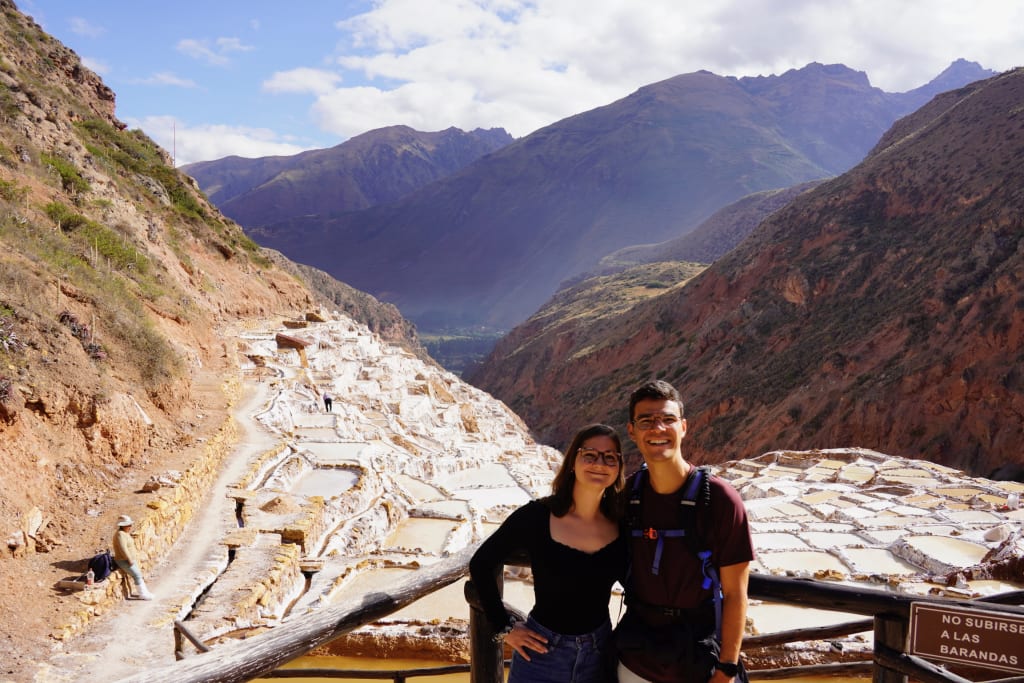
The Maras Salt Mines are a collection of more than 3,000 individually owned salt terraces. Each terrace is carefully filled with saltwater, which is left to evaporate in the sun. It takes 3 weeks for the water to disappear and leave behind crystallized salt that is then harvested by the farmer who owns the plot.
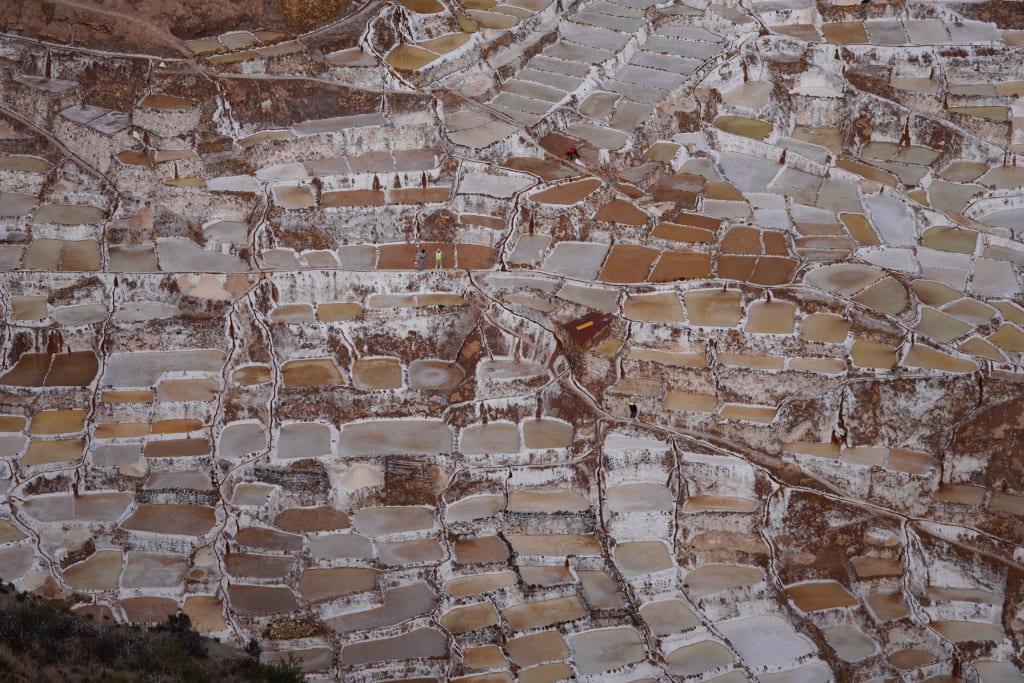
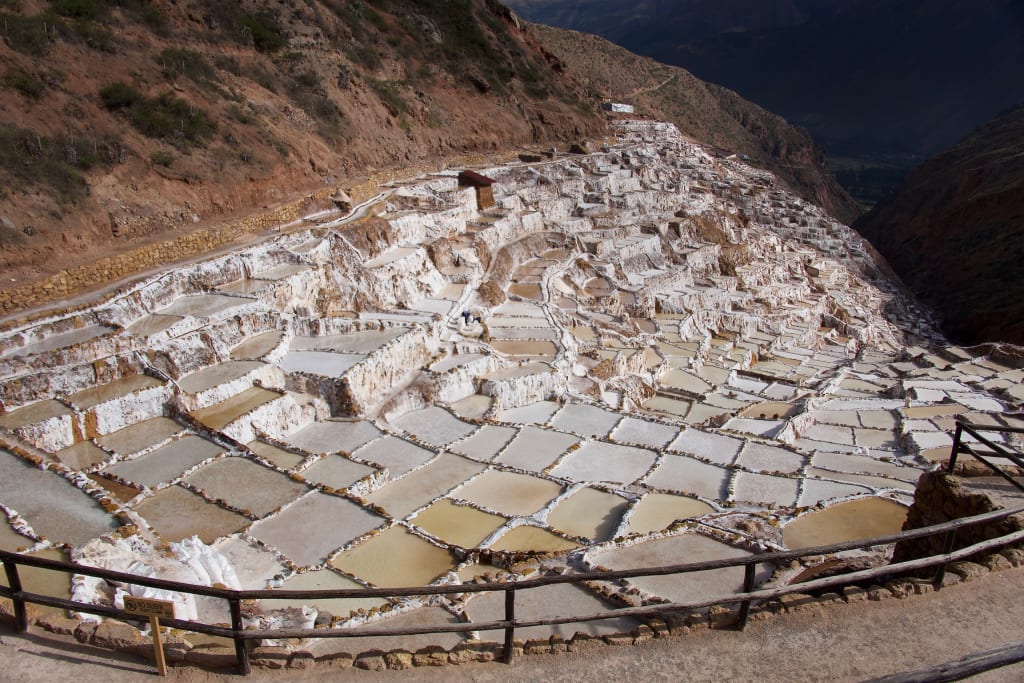
We started our tour of the salt mines with a bird's eye view over the terraces from the road. It seemed to stretch out in both directions for as far as the eye could see. The terraces were quite striking visually and like nothing I had ever seen before.
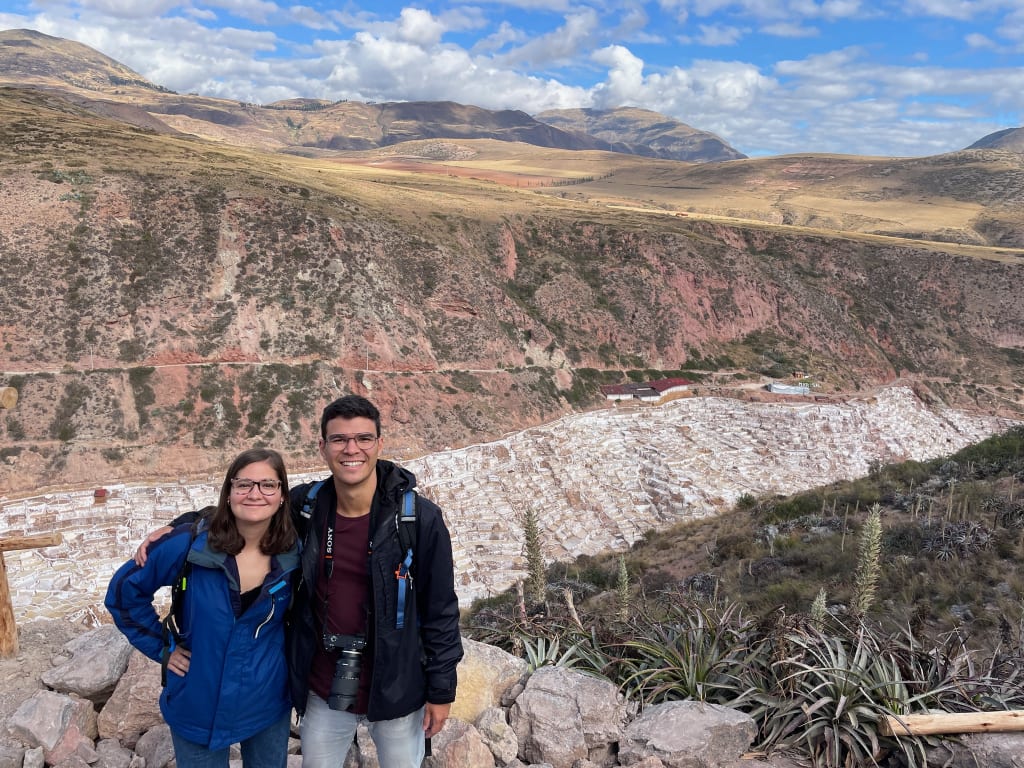
The Maras Salt Mines predate the Inca Empire by a significant margin. They have been around for more than 2,000 years!
We were then able to approach much closer with a short walk down to the terraces.
From here, we could see the farmers harvesting their salt.
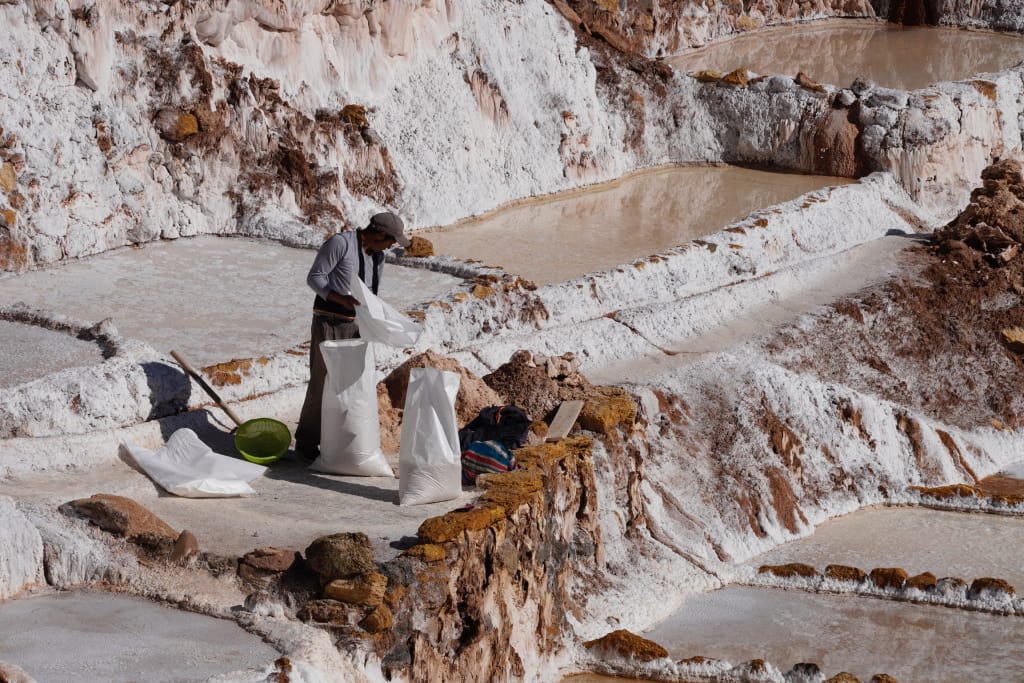
Our guide Percy explained that the saltwater that fills the terraces comes from a natural underground spring. Millions of years ago, two tectonic plates collided and created the Andes Mountains. Saltwater from the Atlantic and Pacific Oceans was then trapped underneath the mountains, creating salt deposits that still exist today. As freshwater passes through those deposits, it absorbs the salt and minerals.
The salt that is harvested in Maras naturally contains magnesium and iron and the farmers add iodine so that it can be sold for consumption.
After learning how the salt is produced, we climbed back up the road towards our car. It was a steep walk, but it was worth it. We visited a gift shop on our way out where we purchased a bag of salt and some sea salt chocolate, both made with the locally harvested Maras salt of course.
MORAY
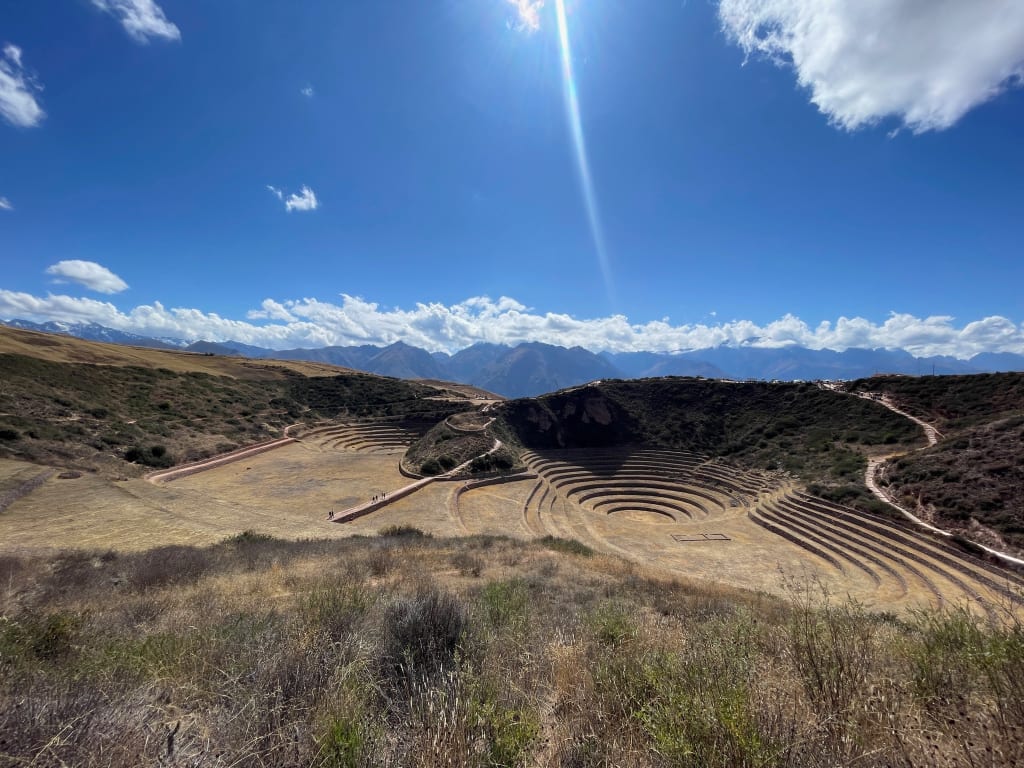
Our next stop was Moray. Many tourists assume that Moray was an ancient amphitheater, but in fact it was an agricultural testing center. The Incas used the circular terraces to test how different crops grew under varying altitudes and climate conditions.
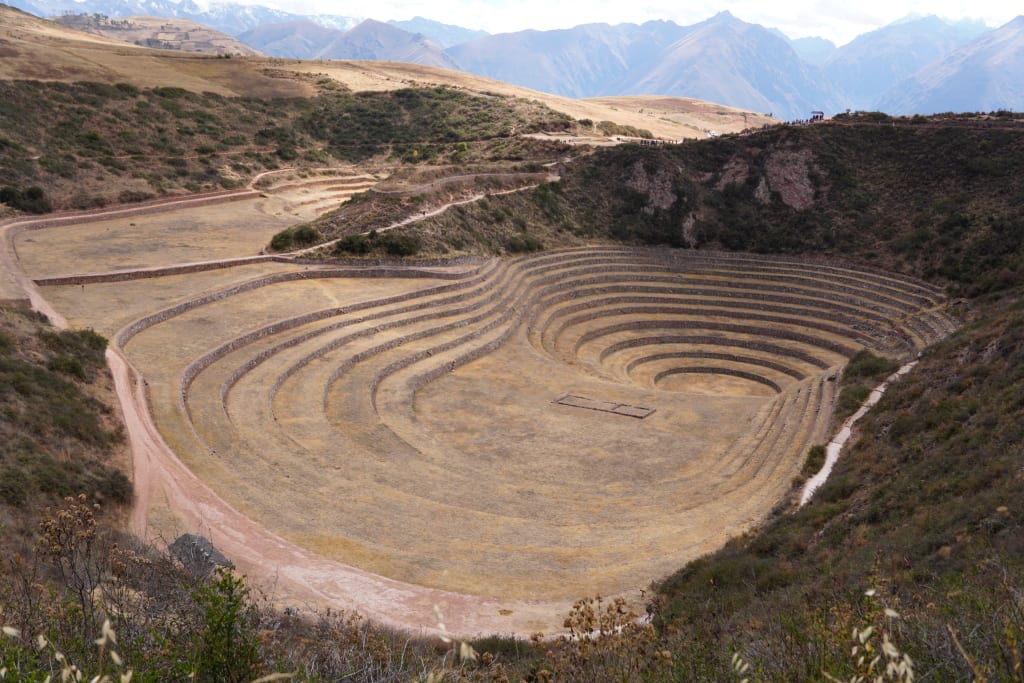
One of the primary crops grown here was potatoes. Did you know that Peru grows more than 3,000 varieties of potatoes? I had no clue that so many varieties even existed!
OLLANTAYTAMBO
We then made the drive to Ollantaytambo. I had read about Ollantaytambo in my book, The Last Days of the Incas, so I was particularly excited for this stop. I knew it was the setting of one of the most significant battles between the Incas and the Spanish conquistadors 500 years ago. After Cusco (the Incan capital) was captured, Manco Inca (the emperor) retreated to Ollantaytambo. The Incas famously flooded the valley around Ollantaytambo, making it difficult for the Spanish horses to reach them and securing (an albeit temporary) victory.
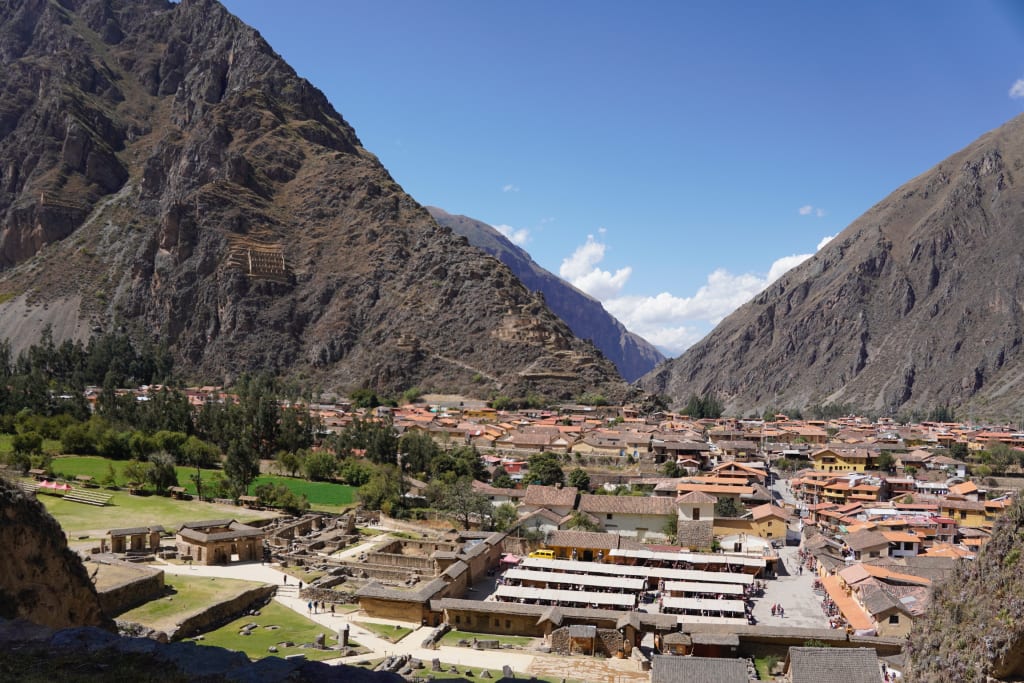
Nowadays, at Ollantaytambo, you can see the ruins of the incomplete Temple of the Sun that sits high on the mountainside while you take in the views of the valley below. The Temple of the Sun was never completed as its construction was still in progress when the Spanish invaded.
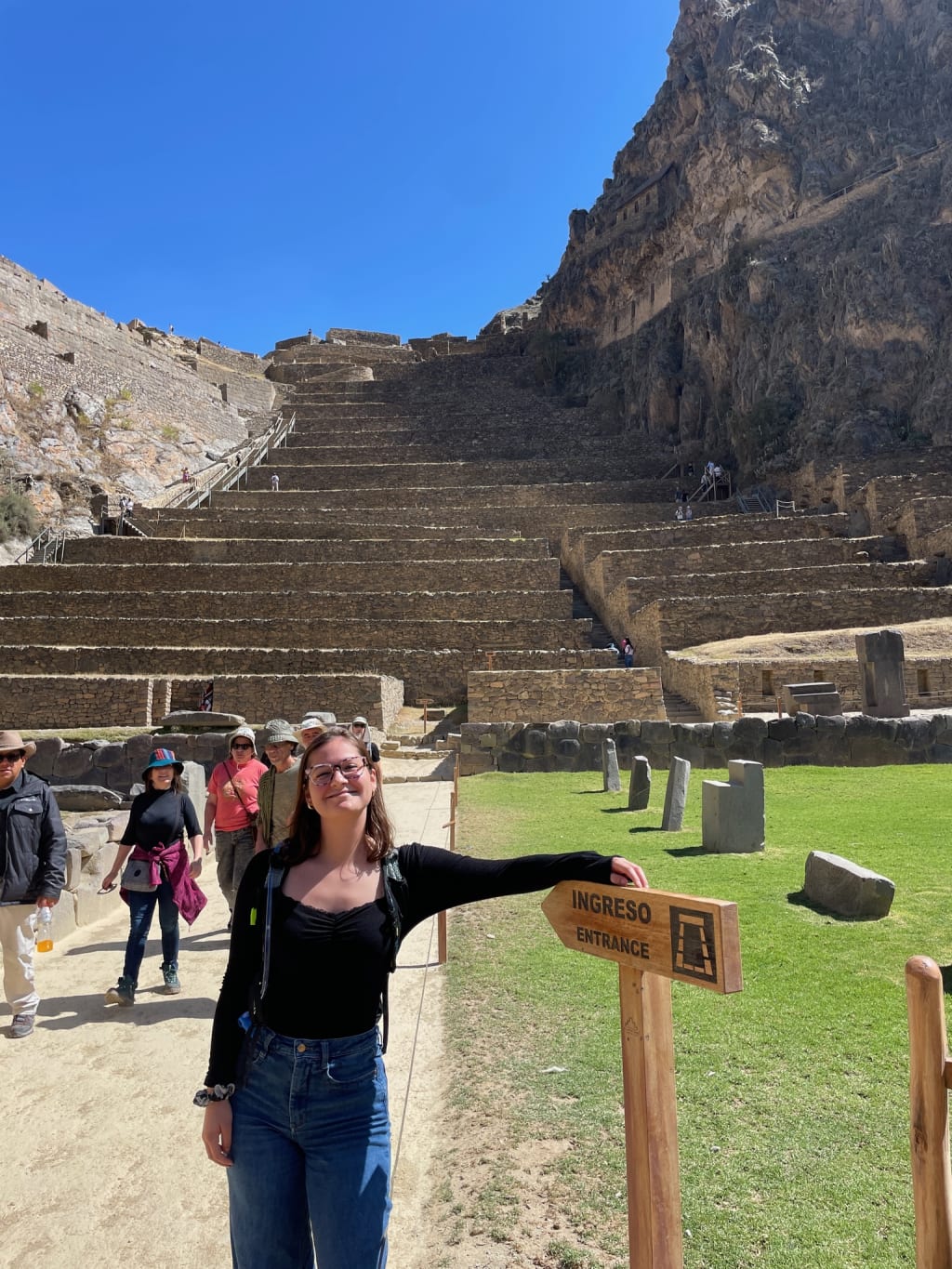
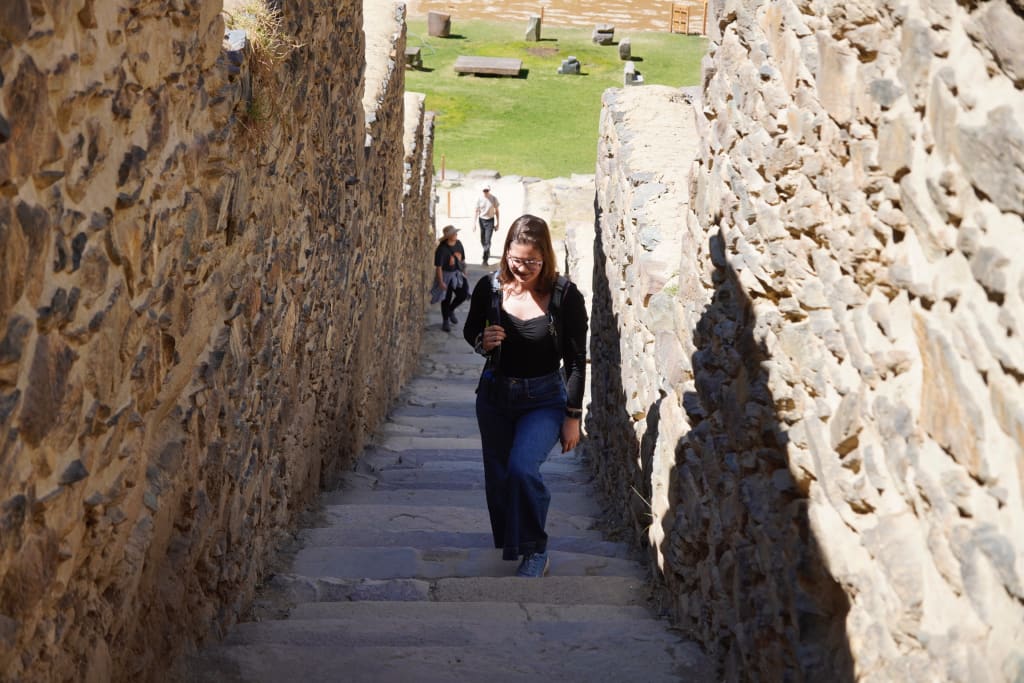
I had read approximately 8 million blog articles on the Sacred Valley before visiting, and the grand majority of authors had mentioned Ollantaytambo as their favorite village. I have to say, I might be the only person that wasn't blown away by Ollantaytambo. I preferred a number of the other sites we visited in the Sacred Valley.
Ollantaytambo is the town where you will catch the train to Machu Picchu if you plan to visit. It's a good idea to spend the night here before you leave.
PISAC RUINS & MARKET
We then proceeded to Pisac, where we could explore ruins and, surprise surprise, more agricultural terraces.
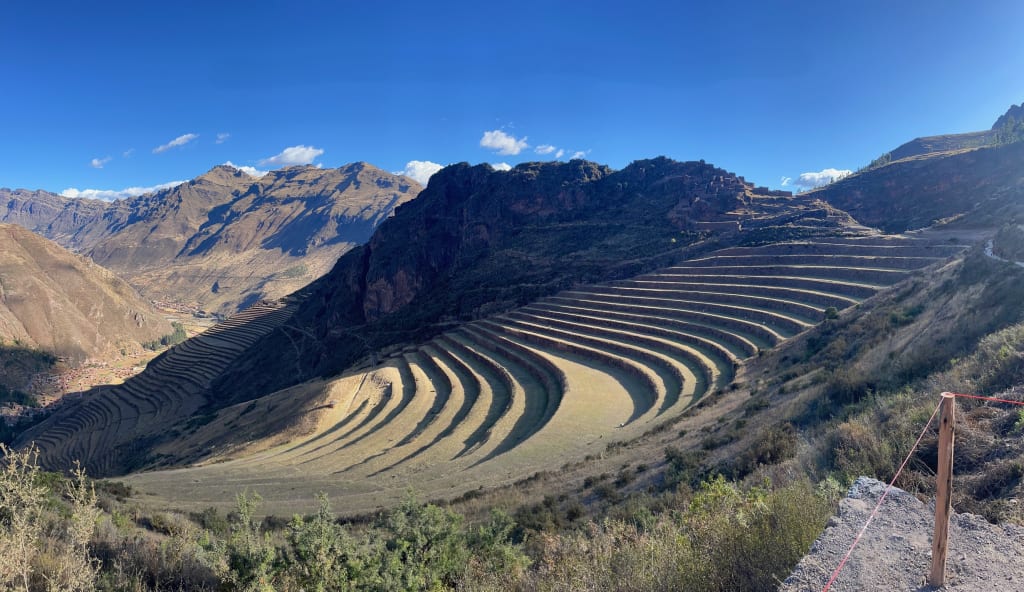
We wandered up the steep slopes towards the ruins at the top of the mountain.
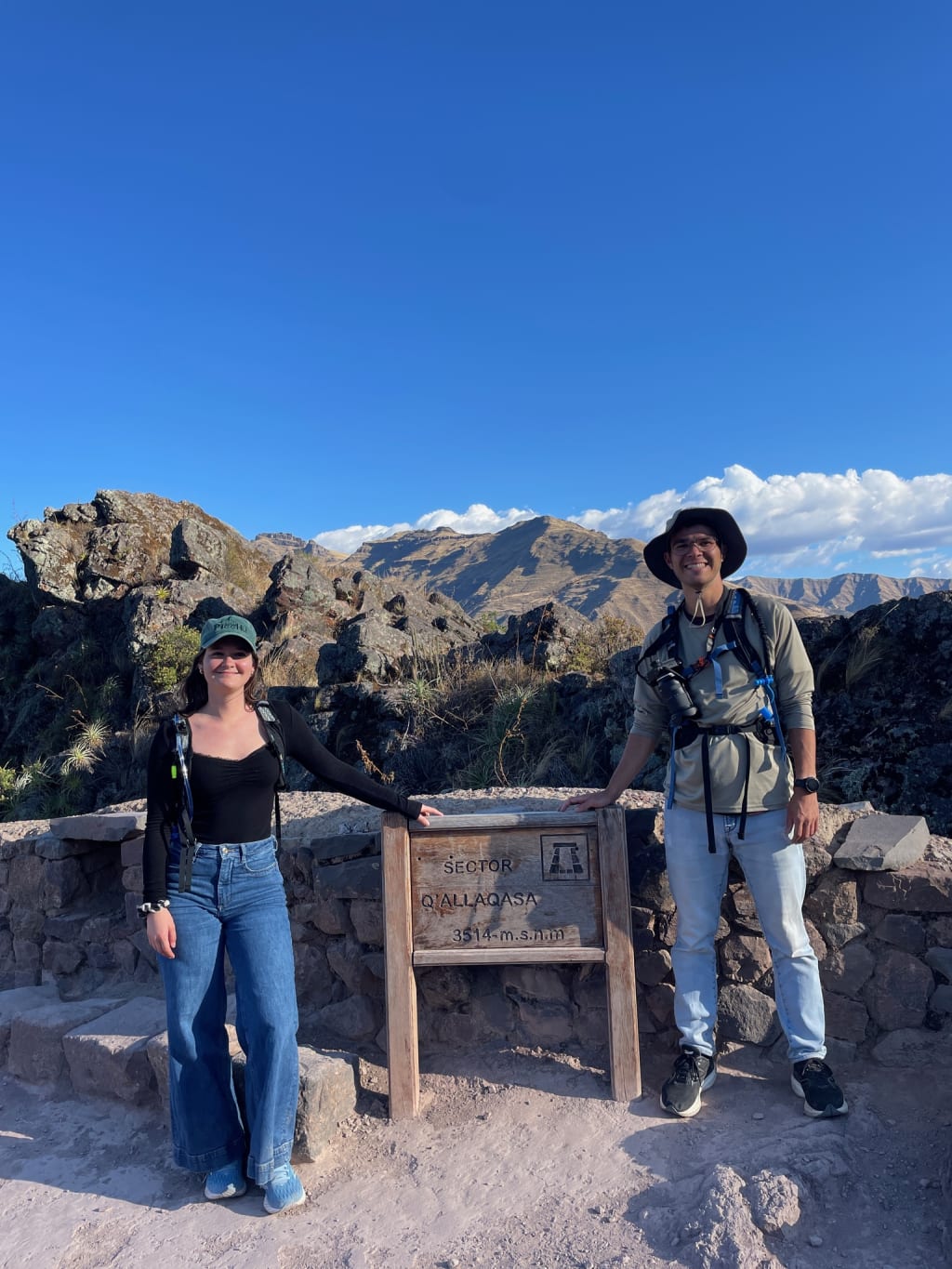
From here, we could see the largest Incan cemetery in the Cusco region from a distance, which were really just caves carved into the side of a mountain. Incan nobles were mummified and buried in caves with valuable possessions, including treasures and tapestries. The caves were then sealed, but many were looted after the Spanish conquest. Today, you can't see much, but it was still pretty cool to learn about their burial traditions.
After exploring the ruins, we headed to the nearby market. I used this time as an opportunity to practice my Spanish with the vendors and Alex used it as an opportunity to snack on an empanada.
LLAMA & ALPACA SANCTUARY
Do not skip this next stop. It was the most fun we had in the Sacred Valley.
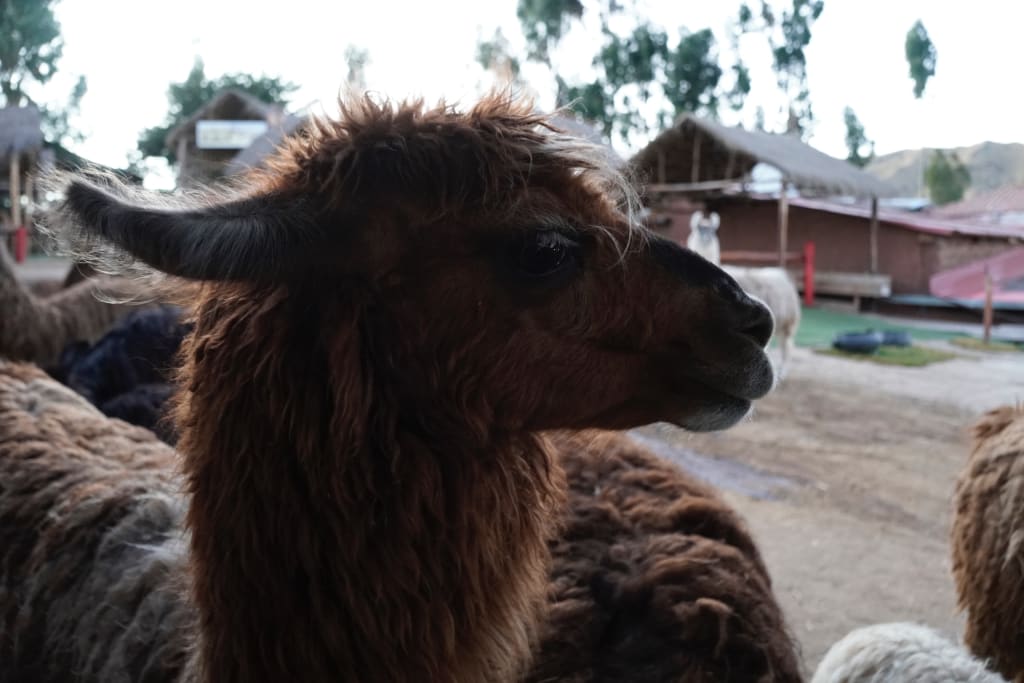
Alex and I visited Manos de la Comunidad. Twice, actually, as it was (unbeknownst to us) included in both our Cusco and Sacred Valley day tours. Manos de la Comunidad is an animal sanctuary where visitors can interact with llamas, alpacas, vicunas, and guanacos as well as shop for alpaca wool clothing. We got to feed all four of the South American camelids.
Camels are close relatives of the South American camelids (llamas, alpacas, vicunas, and guanacos).
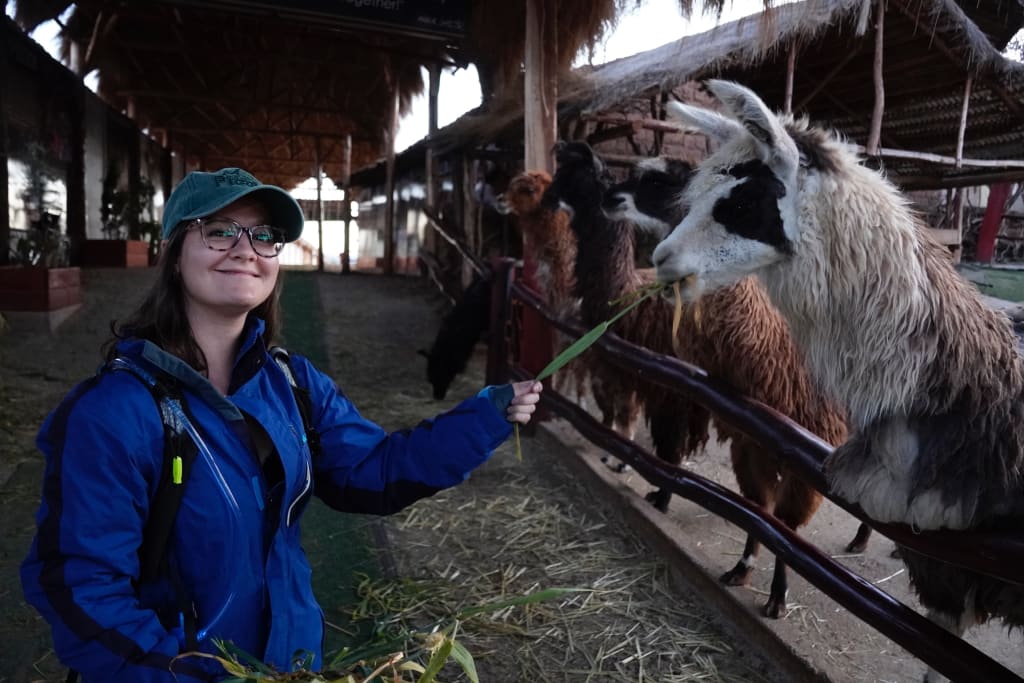
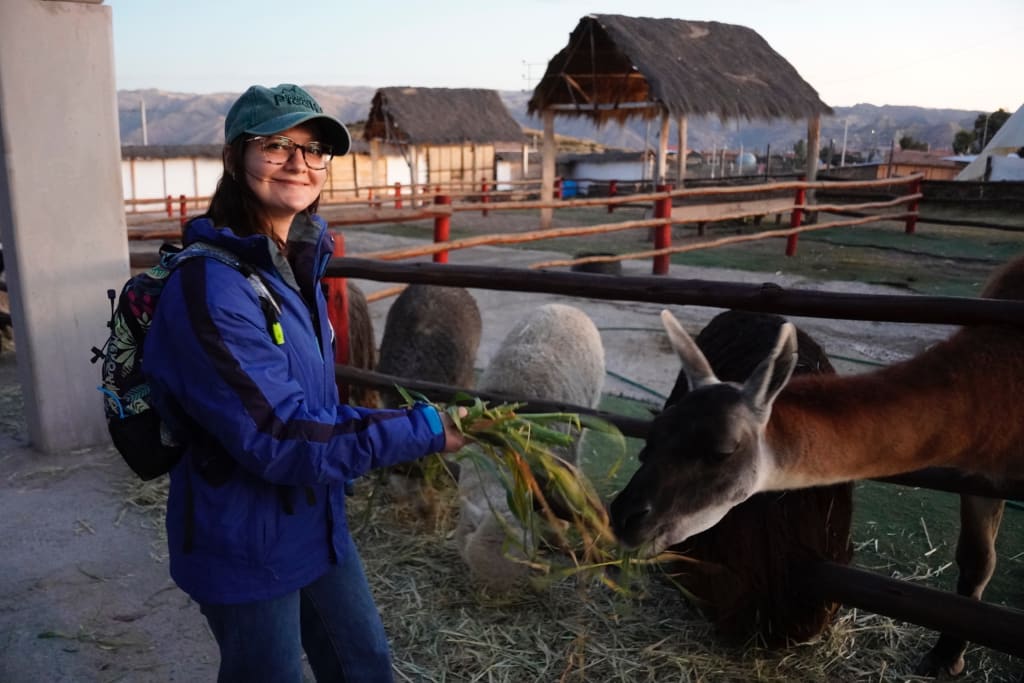
Our guide explained that llamas and alpacas were both domesticated by the Incas, but used for very different purposes. Alpacas were valuable for the Incas mainly for their soft wool which could be made into warm clothing, whereas the llamas were helpful for carrying goods as they are much larger and stronger than alpacas.
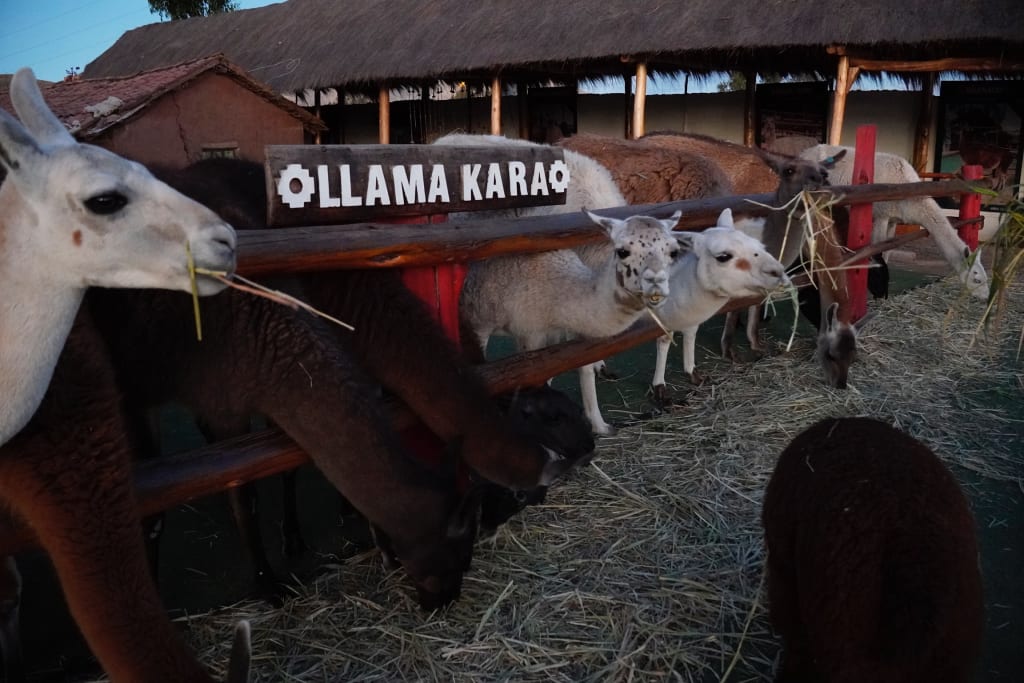
While we were hanging with the alpacas, our guide explained that "baby alpaca" wool, which is among the softest natural fibers in the world, does not necessarily come from a baby. That label simply means that the wool came from the first shear of that particular alpaca, which produces some of the softest, finest wool.
It's a good thing I had a good sense of humor the day I fed these alpacas. It turns out alpacas can have quite the attitude. As Alex was feeding one, another one got jealous and spit at him! Of course I laughed, and the alpaca spit on me too! Alex was rather irritated but I just found it funny. Thankfully I carried wet wipes around so it was not a major issue.
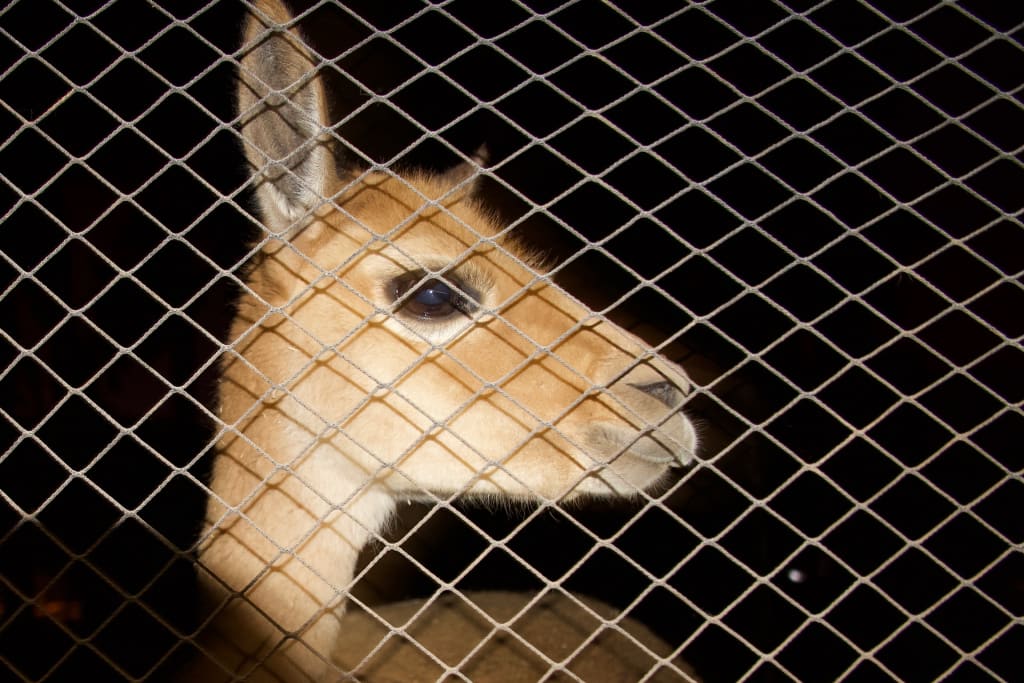
Seeing the vicunas was also particularly memorable, because I had never heard of the animal before my visit. Vicuna wool is outrageously expensive, as the majority grows on the animal's chest and underbelly only, and vicunas are relatively rare. We were also told that their wool is only harvested once, but that information seems inconsistent with the information I read online.
After hanging out with the animals, we spent some time browsing in the gift shop. I bought a baby alpaca wool hat that would keep me very warm when I went camping near Rainbow Mountain a few days later.
Once the shopping was done, it was time to head back to our hotel. By the time we returned to Cusco by the end of the evening, we were completely exhausted. Twelve hours had flown by, and although we had only scratched the surface of everything the Sacred Valley had to offer, I was very glad we had made time for it.
OTHER SACRED VALLEY HIGHLIGHTS
Since we only had a day, we had to make some tough decisions. We couldn't do it all. If we had another day, we'd pick from the following list of stops.
Chinchero
This was the one stop I was most looking forward to. I was incredibly disappointed when we ran out of time and had to skip our visit to Chinchero. I had wanted to visit the famous weaving cooperatives and watch a demonstration from the women on the technique used to make the beautiful textiles sold throughout the region.
Skylodge Adventure Suites
An adventure I strongly considered but ultimately scrapped due to a lack of time was spending a night in Skylodge Adventure Suites. To get to the capsules hanging off the side of a cliff that will serve as your home for the evening, you have to ascend the cliff via a via ferrata, a climbing route where you're secured to steel cables with a harness. We had already done via ferratas in Switzerland and Norway so we passed, but it looked pretty cool when we drove by it.
Other Adrenaline Activities
For those looking for a healthy dose of adrenaline, there are many other activities in the Sacred Valley that might appeal to you, including ziplining, ATV tours, whitewater rafting, or mountain biking.
HOW MUCH TIME DO YOU NEED?
At a minimum, you need one full day to explore a handful of the villages in the Sacred Valley. But, if you have more time, there is enough to do to occupy two or three days, especially if you choose to spend a night in Skylodge Adventure Suites.
DO YOU NEED A GUIDE?
You don't need one, but I would recommend going with a guide. The Sacred Valley's sites are much more meaningful when someone explains what you're looking at, not to mention the distance between the villages can be quite far. It's much easier to go on a guided tour than to rent a car for the day to drive from place to place.
We went with Peru Summit Adventures and had a good experience. We particularly liked that you could customize the itinerary on the private tour so you could pick the villages that interested you most. I was disappointed that I was promised a weaving demonstration that did not happen, but otherwise had a fantastic day.
IS IT WORTH IT?
It is definitely worth spending at least a day in the Sacred Valley if you're in the Cusco region, even on the tightest of itineraries. Visiting the villages gave me a deeper understanding of Inca history and culture that made my experience at Machu Picchu even more meaningful. It's also helpful to acclimatize to the altitude before heading to Machu Picchu, especially if you plan to hike there, so it's a great way to ease into the adventure.
If I were visiting again, I would prioritize visits to Maras Salt Mines, Moray, Chinchero, and Manos de la Comunidad. Many people would probably be surprised that I left out Ollantaytambo, but we were not as impressed as others seem to be. I would also strongly consider adding a second day to the itinerary to climb the via ferrata to the pods on the edge of a cliff at Skylodge Adventure Suites.
However you choose to spend your time, I'm sure you won't regret it. The Sacred Valley is much more than just the road to Machu Picchu.
FAQS
How much did the tour cost?
We paid $150 per person for a private 12 hour tour. This did not include lunch.
How can I avoid altitude sickness?
To avoid altitude sickness I recommend staying hydrated (and ideally taking electrolytes), taking altitude medication, and avoiding alcohol and intense exercise for the first couple of days. Many locals also drink coca tea to reduce the effects of altitude.
Do I need altitude medication to visit the Sacred Valley?
You don't need it, but I recommend it. We took Acetazolamide and it really helped. We experienced minimal side effects, just some occasional tingling in our hands and feet that is quite common and harmless.
When is the best time to visit the Sacred Valley?
The best time to visit is during the dry season from March to November.
If I only have one day, which stops should I prioritize?
I would prioritize visits to Maras Salt Mines, Moray, Chinchero, and Manos de la Comunidad. Many people would probably be surprised that I left out Ollantaytambo, but we were not as impressed as others seem to be.


