
How to Visit Rainbow Mountain (Vinicunca) Without the Crowds
Alex and I had reached a stalemate. We were planning a trip to Peru and trying to decide which of the two most famous “rainbow mountains” to explore. He wanted to check out Vinicunca, the first “rainbow mountain” and the largest with the most vibrant colors. I was wary of the crowds and the extremely high altitude at Vinicunca and was voting for Palccoyo, an equally stunning yet less crowded alternative with three “rainbow mountains” and a view of Ausangate glacier.
Ultimately, we picked Vinicunca. I plan our itineraries independently 95% of the time, pitching a complete plan to Alex and waiting for his go or no go. This time, he did the research. If he was excited to explore Vinicunca, we would explore Vinicunca.
Thankfully Alex had a great idea for how to avoid the crowds, which were my primary concern with Vinicunca, and it worked perfectly. Below I’ll tell you how we did it, plus everything you need to know to visit Rainbow Mountain for yourself.
WHAT ARE RAINBOW MOUNTAINS?
Peru is home to several mountains with colorful stripes formed by different mineral deposits, including iron (producing red stripes), copper (turquoise stripes) and sulphur (yellow stripes). While many mountains contain these minerals, it's incredibly rare for them to be arranged in such colorful stripes.
VINICUNCA VS PALCCOYO VS PALLAY PANCHU
Vinicunca was the first “rainbow mountain” discovered. Around a century ago, the glacier covering Vinicunca melted, revealing a series of stripes on the mountain underneath. It became a popular tourist attraction starting in 2015.
A few years later, Palccoyo was promoted as an alternative to Vinicunca. Even more recently, Pallay Punchu joined the list.
As I mentioned, I was dead-set on hiking Palccoyo. I read a lot of blog articles and the consensus seemed to be that Palccoyo was the quieter alternative with scenery that was just as stunning and at a lower elevation (16,000 feet compared to Vinicunca’s 17,000 feet, but at that elevation, 1,000 feet makes a big difference). The hike was supposed to be easier, and there were 3 rainbow mountains instead of just 1.
Ultimately, I had a great time at Vinicunca. The mountain is striking and it’s the “classic” rainbow mountain experience. I also found that being at such a high elevation ended up being one of the most memorable parts of the experience. But I will always wonder what Palccoyo would have been like. If only we had time for both!
In typical data engineer fashion, I put together a table with some statistics comparing the three rainbow mountains to help you decide which one might be the best fit for you.
| Vinicunca | Palccoyo | Pallay Punchu | |
|---|---|---|---|
| Hike Difficulty | Hard (mostly due to elevation) | Easier | Moderate |
| Max Elevation | 17,000 feet | 16,000 feet | 15,700 feet |
| Crowds | Heavy | Light | Very light |
| Landscape | One iconic rainbow mountain and Red Valley | Three rainbow mountains and view of Ausungate Glacier | One jagged ridged rainbow mountain |
| Travel Time from Cusco | ~3 hours | ~3.5 hours | ~4 hours |
If you’re trying to decide which Rainbow Mountain to visit, here’s what I would say.
If you want the classic experience with the most vibrant colors and don’t mind a more strenuous hike, pick Vinicunca.
If you dislike crowds, want a hike that’s a little easier, or are worried about the high elevation, go with Palccoyo.
Generally, I wouldn’t recommend picking Pallay Punchu over Vinicunca or Palccoyo, since the colors aren’t as bright and it’s further away from Cusco.
A NOTE ON THE ELEVATION
Vinicunca is at a very extreme elevation. To see it, you’ll hike up to 17,000 feet above sea level.
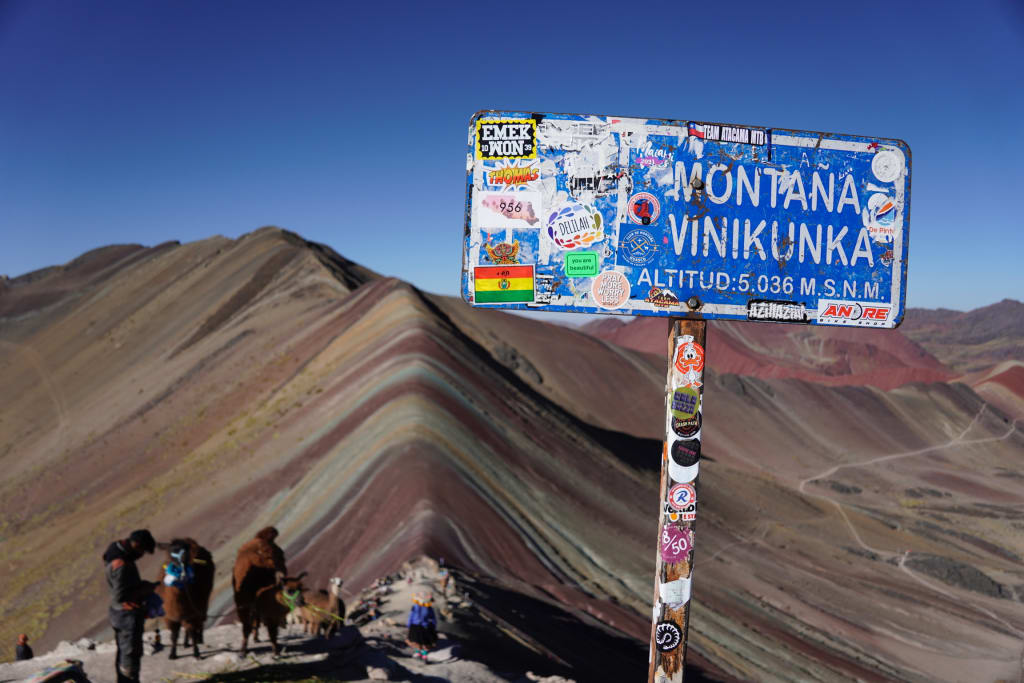
If you’ve done research on the Cusco region, you’ve probably seen the warnings for altitude sickness. It’s worth calling out that Rainbow Mountain is considerably higher than Cusco, which sits at 11,000 feet above sea level. While it’s possible to acclimatize after a few days in Cusco, it’s not possible to acclimatize in Vinicunca. It’s simply too high up for humans to stay for long periods of time.
If you plan to go to Vinicunca, I have a number of strong recommendations. First, and most important, make sure you spend a few days in Cusco adjusting to the elevation before attempting this hike. This is the most important piece of advice I can give you. Do not skip this. You will feel much better if you have adjusted to the elevation at 11,000 feet before attempting to ascend to 16,000+.
Second, I would personally not attempt this hike without altitude medication, such as acetazolamide. I saw a number of tourists struggling with the altitude vomiting outside buses pulled over onto the side of the road. Taking acetazolamide reduces the chances of severe symptoms such as this.
Third, bring water, hydrate aggressively, and consider bringing electrolytes (such as LMNT) along as well.
Lastly, be aware of the symptoms of altitude sickness, including vomiting and dizziness, and come prepared. I highly recommend going to Rainbow Mountain with a guide, as they are often equipped with first aid kits and oxygen tanks. Most likely you won’t need the oxygen, but it’s reassuring to have it available if you should need it.
I recognize that this all sounds very intense and scary. I don’t want to scare you off, but I want to emphasize the importance of being prepared. If you’re prepared, you likely won’t have too many issues! Alex and I both had very manageable symptoms. Alex complained of headaches, and I had some mild stomach discomfort and shortness of breath.
It’s worth noting that digestion slows at elevations that high, so bloating and mild stomach pain is relatively common. Keep in mind that when you descend back down, your digestion will speed up, sometimes quite quickly. Be sure to plan a bathroom break on your journey home.
If you are struggling with the hike, there are other options. You can pay to have a horse carry you up to the base of Vinicunca. That being said, I personally felt pity for the horses who were running up the slopes back and forth all day carrying the humans around. I am not confident they’re well-treated, so I was personally hesitant to support that and decided to walk to Vinicunca.
HOW TO AVOID THE CROWDS
I had two reservations about booking a tour to Vinicunca. The first was the wake-up time. Day tours from Cusco typically depart between 3 and 5am. Ouch.
The second was the crowds. If you’ve read any of my other articles, you’ll know how much I dislike crowds. I find it much easier to appreciate a place when I'm not shoulder-to-shoulder with dozens of other people. And there are not just dozens of people here at Rainbow Mountain. In peak season, there are more than a thousand people on the trail per day. That’s more than twice the number allowed on the Inca Trail.
Thankfully, Alex came up with a genius plan that solved both problems. We asked our tour operator, AB Expeditions, if we could camp near Rainbow Mountain the night before our visit. That would save us the ~3 hour drive in the morning, allowing us to sleep in a little longer, and ensure we’d beat all the tour buses that would arrive later. AB Expeditions readily agreed and assembled a team of four people to drive us to Hanchipacha, cook dinner, and set up camp.
This experience was great, but I’ll warn that it was not luxurious. It was quite cold camping at ~14,500 feet above sea level, although we were comfortable with heavy jackets, hats, sleeping bags, and warm water bottles at our feet. We did wake up a few times throughout the night, but that’s quite common at high altitude.
Another recommendation we read online was to try visiting Vinicunca in the afternoon, since most of the crowds arrive in the morning. Our tour guide advised against this, as weather changes quickly in the afternoons and there is a better chance of clear skies in the morning.
OUR EXPERIENCE
I was pretty surprised when the van showed up at our hotel and four gentlemen hopped out to greet us. I never imagined it would take a crew of four to support just the two of us! But these guys were great. Over the next 24 hours, these men would guide us to Hanchipacha, set up camp, prepare our meals, and make sure we were ready to tackle Rainbow Mountain the following morning.
After driving through the Peruvian countryside for a few hours, we arrived at a small house just after sunset. The house was quite basic, with just one room and with no indoor plumbing. Our crew immediately got to work setting up tents outside and unpacking the food supplies they brought with them from Cusco.
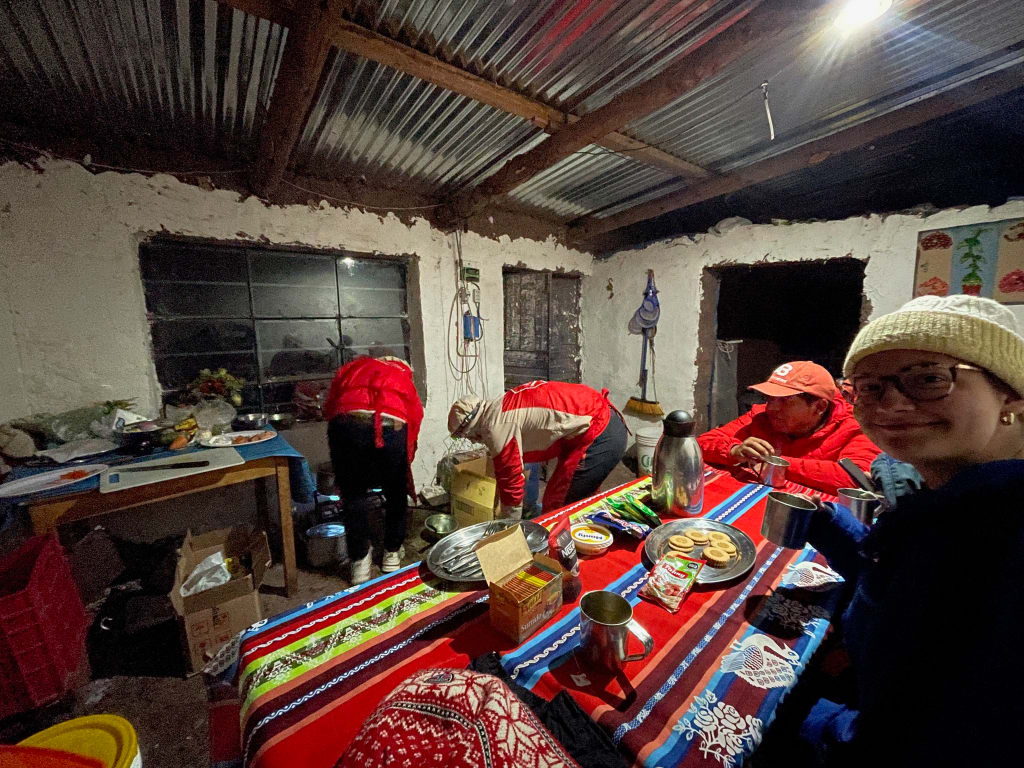
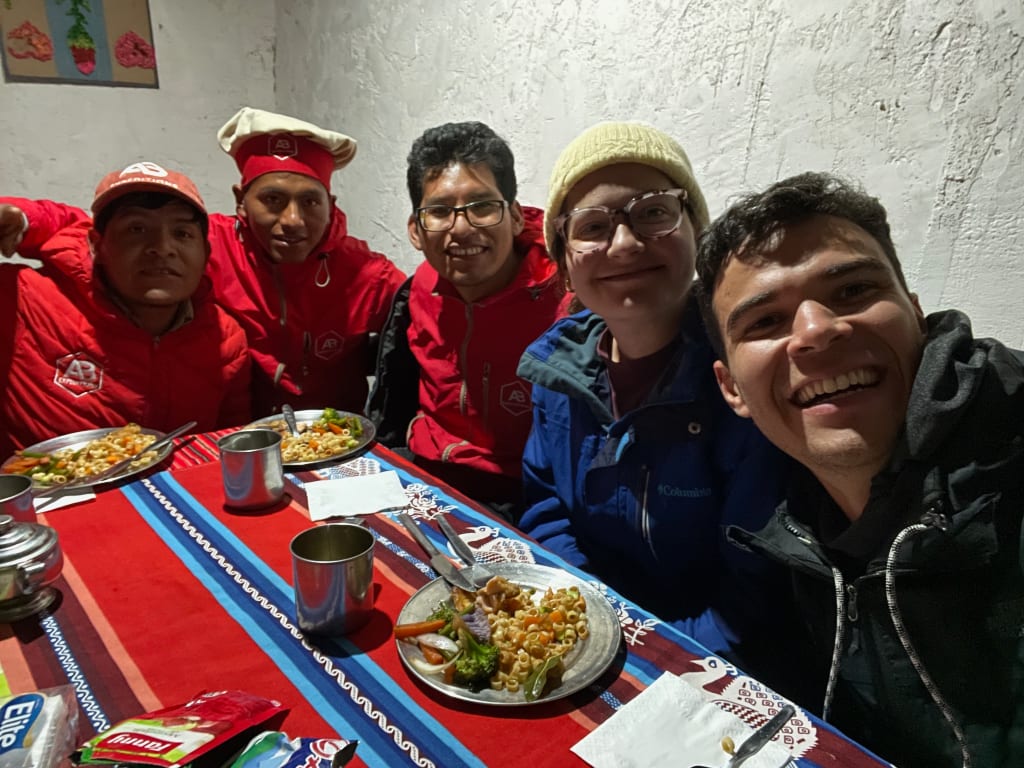
We enjoyed a delightful dinner and some hot chocolate before we headed to our tent for the night.
We had an early start the next morning, so we didn’t stay up late, but Alex did manage to snap this incredible photo of the stars outside our tent before he fell asleep. There was no light pollution in the countryside and the views of the constellations above were incredible.
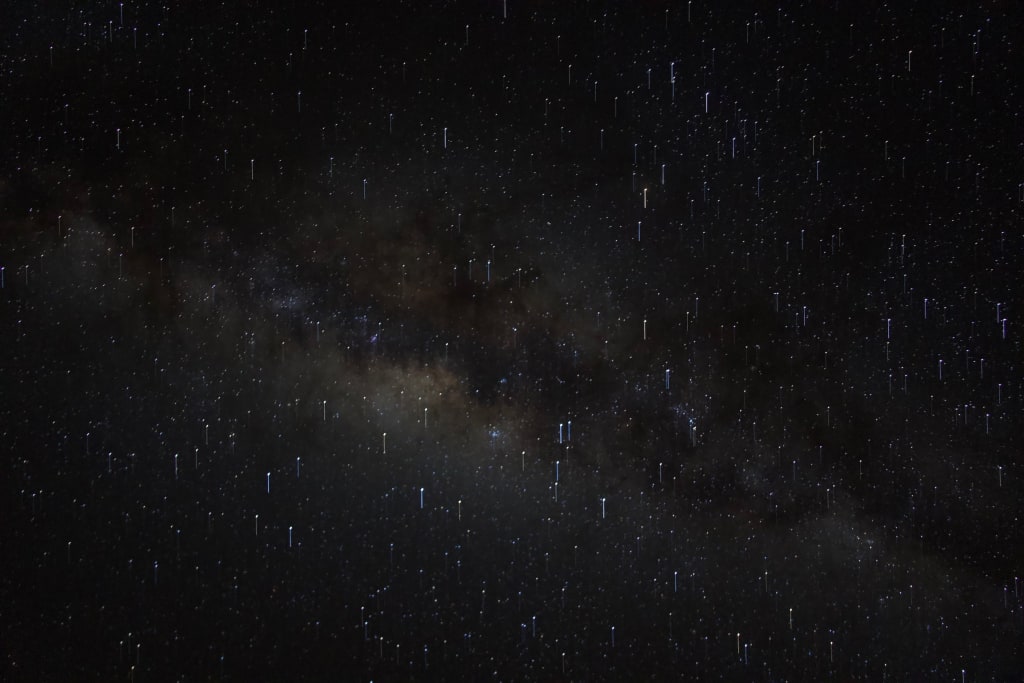
We slept better than expected, but still not that well. It was quite cold overnight, but thankfully we bundled up in our sleeping bag with many layers, blankets, a hat and gloves, and a hot water bottle nestled near our feet. We also woke up a number of times throughout the night due to the altitude, although this was nothing new. It had happened on our first few nights in Cusco as well, although now we were at ~14,500 feet instead of Cusco’s ~11,000 feet.
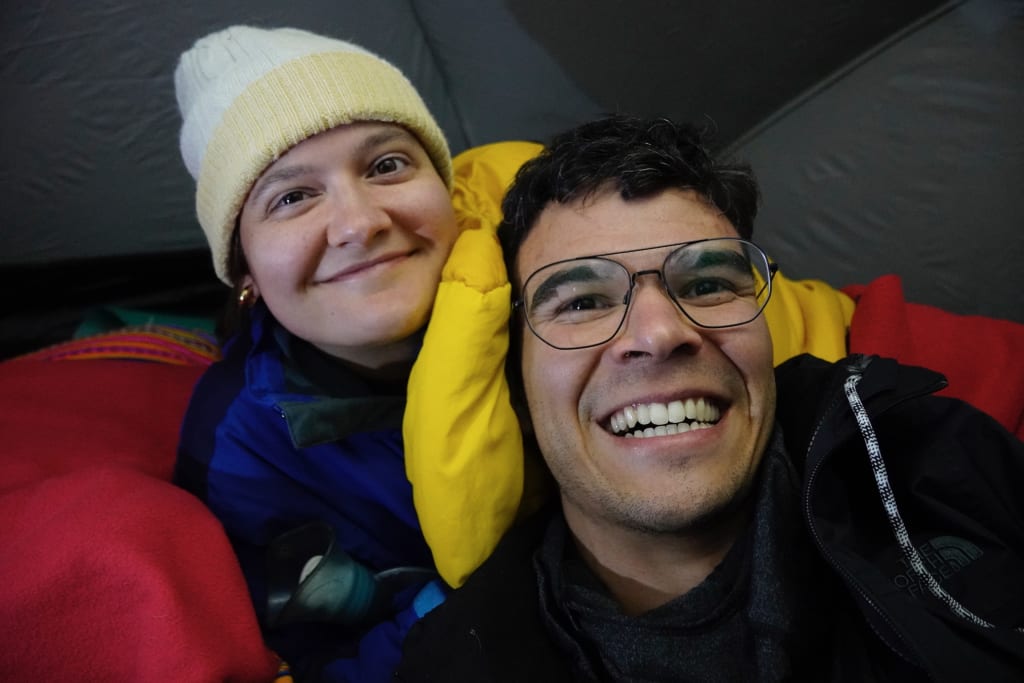
We woke up to a hot breakfast and soon afterwards made our way to the starting point of the hike. We were happy to discover that we had beat all the tour buses and were among the very first on the trail.
Before getting started, we took a bathroom break. Both of us were feeling the effects of the altitude at this point. For Alex, that meant a mild headache. For me, I had some mild stomach pains and some bloating. At elevation this high, digestion slows considerably, and I was a little uncomfortable. But it was all quite manageable and I felt good enough to start the hike.
If the hike was at sea level, I would have classified it as very easy. It’s really more of a walk than a hike.
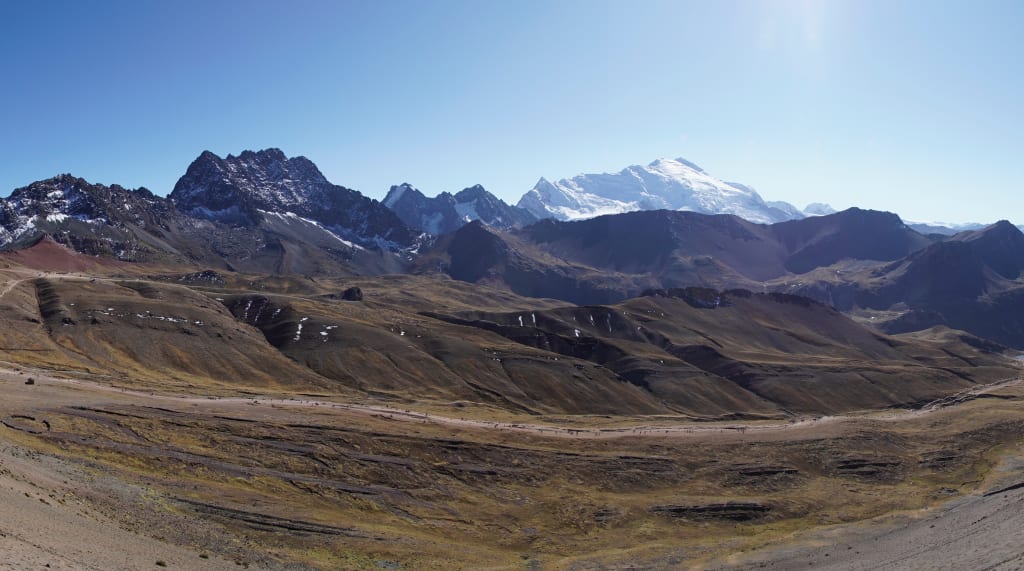
But, at elevation, this hike was a challenge. I found myself very out of breath the whole way. At one point, I stopped and stooped down to the ground for a quick break to catch my breath.
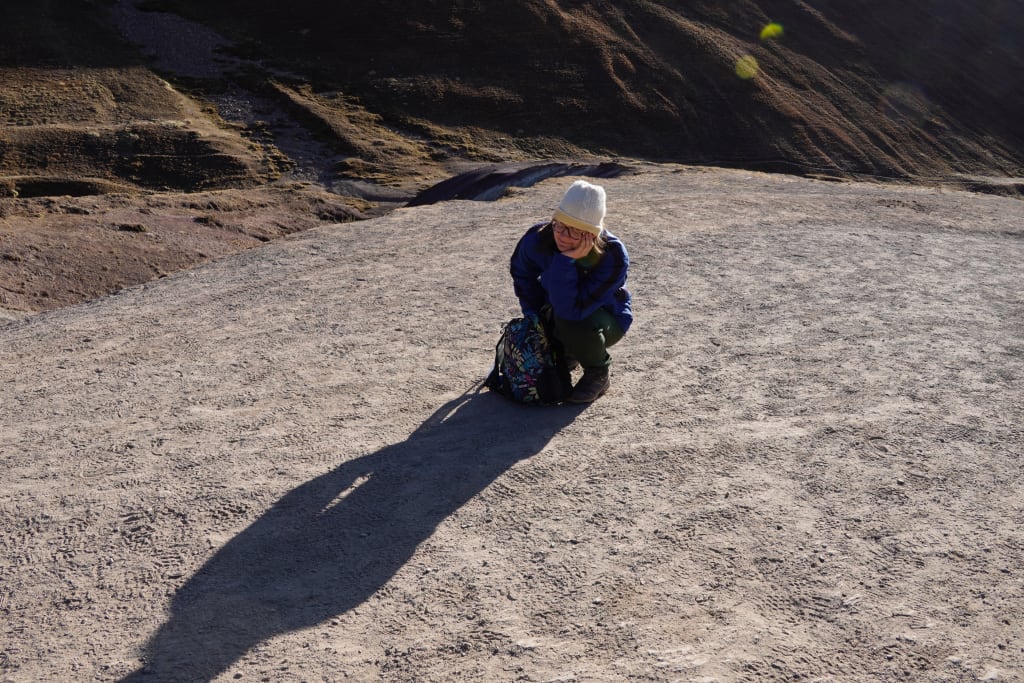
Thankfully, after my quick break, my guide Beker volunteered to hold my tiny backpack for the rest of the journey. That helped considerably and eventually we made it to the base of Vinicunca.
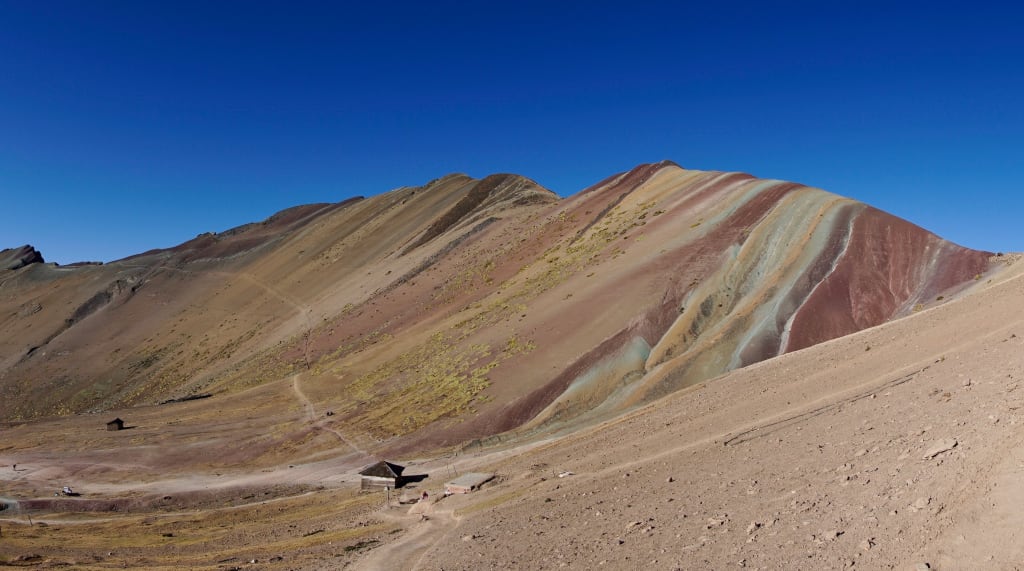
We approached it from the side. I’ll admit that my first thought was that the mountain was much smaller than I expected it to be, yet the colors made it quite striking. Perhaps a better name for it would be "Rainbow Hill," although that doesn't really have the same ring to it, now does it?
I had thought we had made it, but not so fast. We paused at the base for only a brief second before continuing up the slope for a better view from the top down.
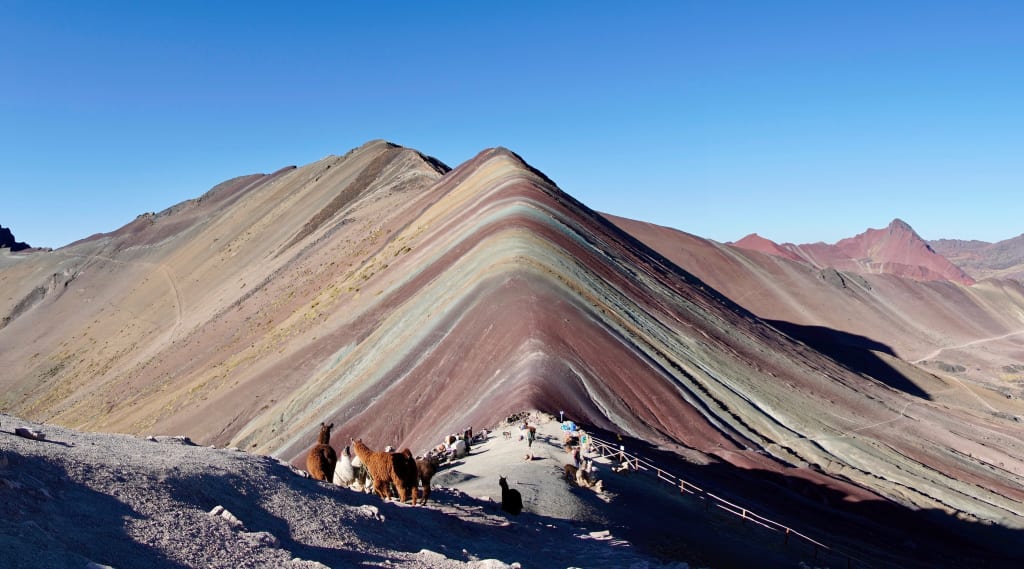
At the top, a man with his llamas offered us some photos in exchange for a few coins. I readily agreed. I was happy that the animals did not appear mistreated, unlike the horses we saw running up and down the mountain carrying travelers who were unable to walk up the slopes. I felt for poor horses. I could barely walk on my own two feet at that elevation, nevermind jog with a human on my back!
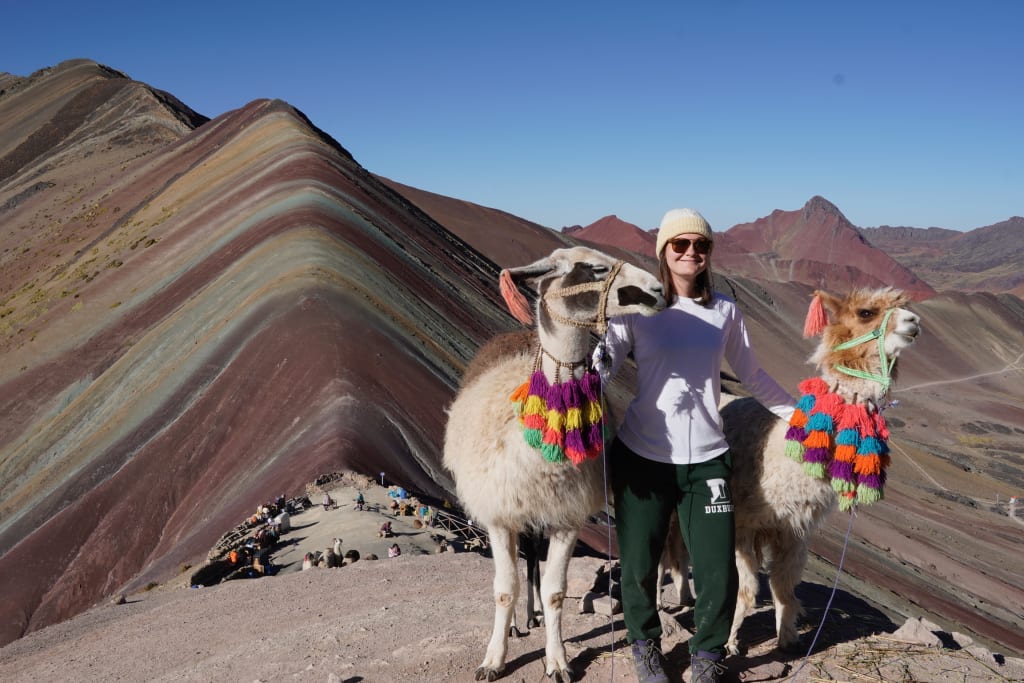
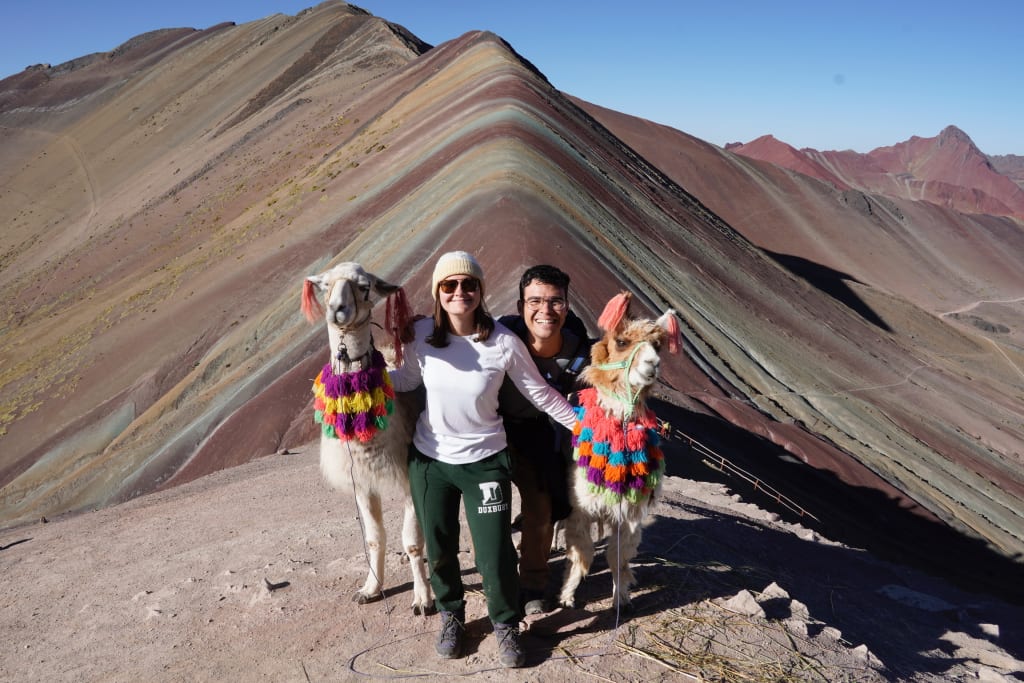
After taking the photos, we sat down to admire the view. We weren’t at the top for long, as our guide ushered us to continue onwards. He had one more thing to show us.
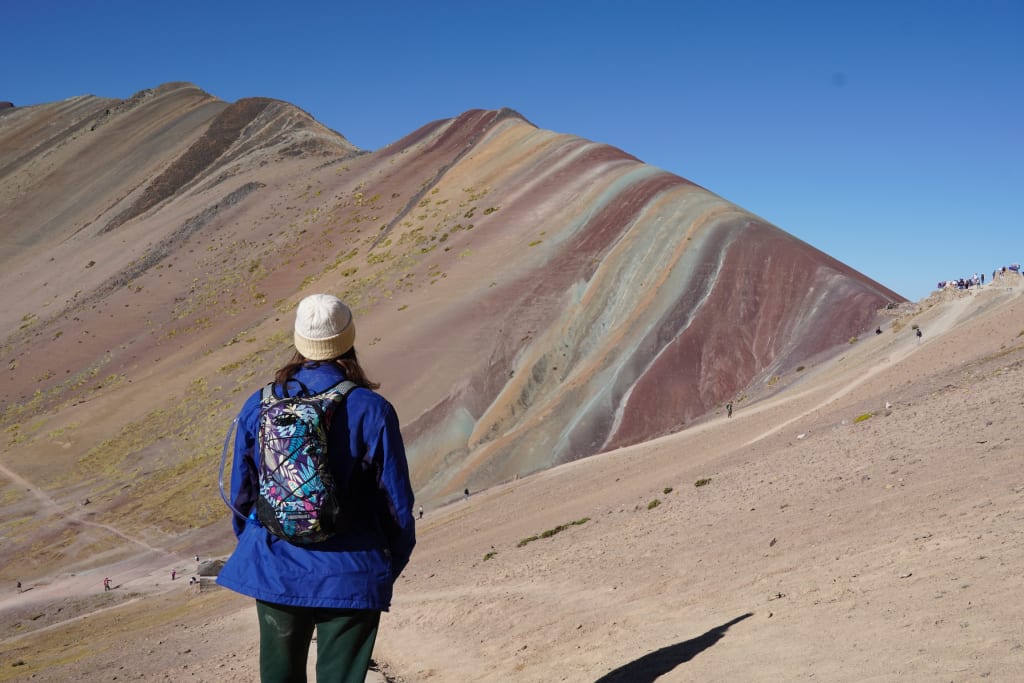
He guided us to the Red Valley next. It was just a short walk away, but most tourists skip this viewpoint for whatever reason.
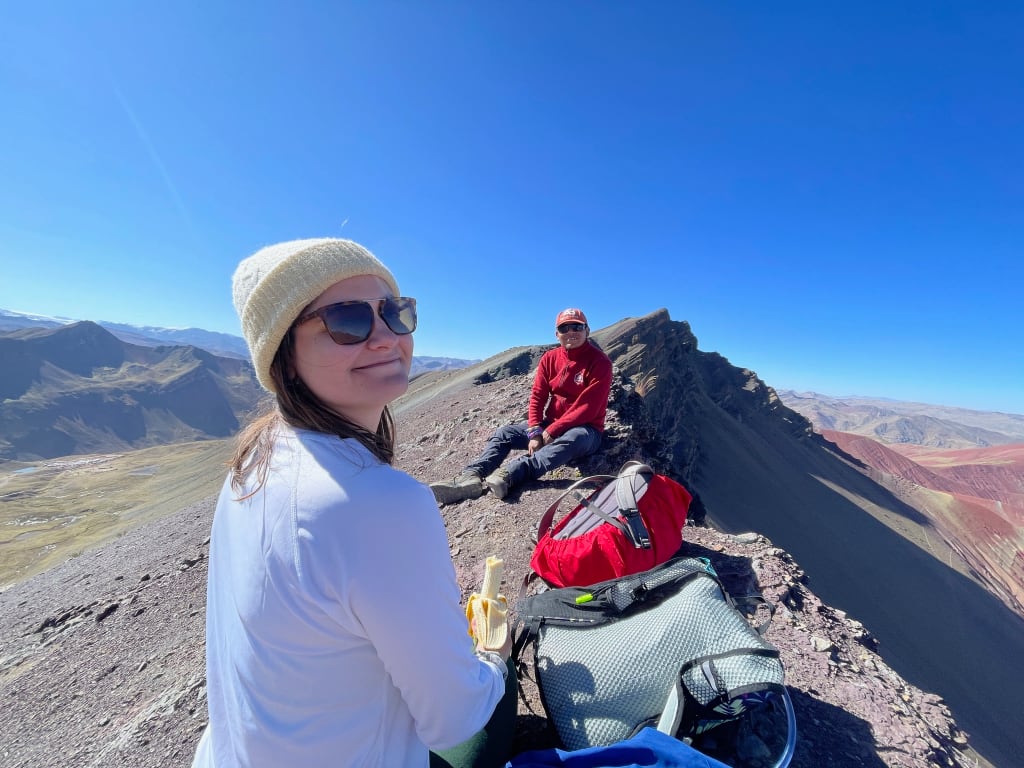
Here, we took our time, sitting on a small ridge, eating some snacks, and admiring the valley below.

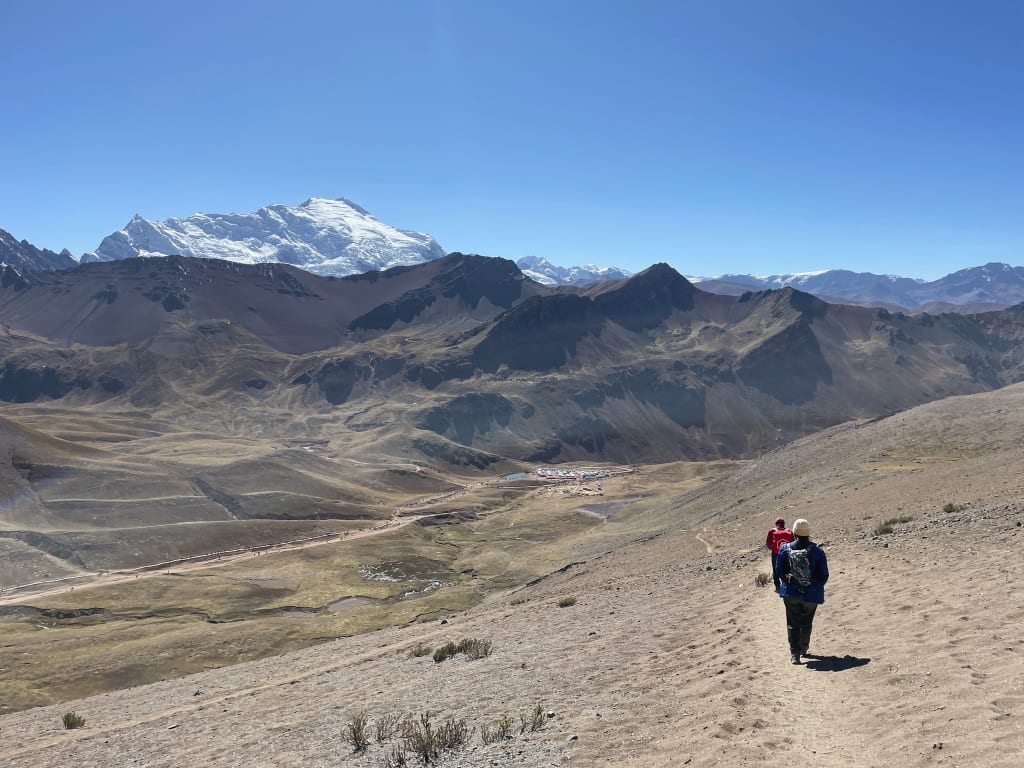
When we were finally ready to take off, we headed back down towards the parking lot in the distance, which we could see even from here was filled with cars and buses.
We made it back to the car and began the long drive down windy roads back to Cusco.
This tour marked the end of our 6 day adventure in the Cusco region. In this short amount of time, we had hiked to a world wonder, fed llamas and alpacas, laid eyes on a 2,000 year old salt mine, stood amongst towering stone behemoths at Sacsayhuaman, and so much more. Now, we would explore another Peruvian gem: the Amazon Rainforest.
Curious how that adventure turned out? Read our article.
DO YOU NEED A GUIDE?
I recommend going with a guide since Rainbow Mountain is a far drive from Cusco and it’s nice to take a nap on the way, especially since you’ll be departing very early in the morning. It’s also helpful to have someone there who can recognize the signs of altitude sickness and help you if you experience them. For example, most guides carry oxygen tanks in case you have difficulty breathing.
WHERE TO STAY
Most tours depart from Cusco, but you can opt to camp the night before in a small town called Hanchipacha if you prefer to avoid the crowds and spread the long drives over two days instead of one. We camped in Hanchipacha, but we stayed at Hotel Rumi Punku before and after our tour of Rainbow Mountain and we would recommend it.
BEST TIME OF YEAR TO GO
The best time to visit is during the dry season, which runs from March to November.
IS IT WORTH IT?
Seeing Rainbow Mountain is a unique experience. I can’t think of anything else like it.
That being said, there are some drawbacks that detracted from the experience. The biggest drawback is that we spent considerably more time traveling to and from Cusco than actually seeing the mountain. We spent less than 20 minutes with a view of Vinicunca.
Another consideration is that the hike at altitude is very challenging, even if you’re fit and you take altitude medicine. A number of tourists we saw along the way had trouble with the altitude, which often meant vomiting or turning back before completing the hike. We had mild headaches, mild stomach pains, and I was quite out of breath, but otherwise we did okay. In a strange way, being at such a high altitude was one of the most memorable parts of the experience. We felt like we were pushing our bodies to the limits.
Finally, this experience is quite tiring, both due to the early wake up call (even if you camp nearby the night before) and due to the effect the altitude has on your body.
Being totally honest, I felt that the views along the 1 Inca Trail were far more impressive than what we saw at Rainbow Mountain. But, I would still recommend the experience. It’s important to set expectations accordingly, but if you do, it’s worth the journey to see a landscape like no other.
FAQS
How much does it cost?
We paid $230 per person for a private tour, which included transportation to and from Rainbow Mountain, camping equipment, food, and a team of four people to cook, set up camp, and guide us around. We were quoted $150 for a private day tour without camping.
For a group day tour, the price is $95 for the company we went with (AB Expeditions).
What is the bathroom situation?
There are bathrooms at the trailhead. Be sure to bring cash to pay the entrance fee. I always recommend bringing toilet paper and hand sanitizer wherever you go in Peru.
How can I avoid altitude sickness at Rainbow Mountain?
My biggest tip is to acclimatize in Cusco for at least two full days before attempting this hike. While acclimatizing in Cusco, I recommend staying hydrated, taking electrolytes, taking altitude medication, and avoiding alcohol and intense exercise. Many locals also drink coca tea to reduce the effects of altitude.
Do I need to take altitude medication to visit Rainbow Mountain?
I personally would not visit Rainbow Mountain without it. We took Acetazolamide and it really helped. We experienced minimal side effects, just some occasional tingling in our hands and feet that is quite common and harmless.
Will the altitude at Rainbow Mountain make me feel worse than how I felt in Cusco?
Possibly, yes. Many people who feel perfectly fine in Cusco begin experiencing shortness of breath, fatigue, or mild altitude sickness during the hike to Rainbow Mountain. Don’t let that scare you away from this experience, though. My advice is to move more slowly than usual, take frequent breaks, and listen to your body.
What to bring to Rainbow Mountain?
I would recommend the following for a day tour:
- Hiking boots
- Waterproof jacket
- Warm layers, including hat, gloves, socks, etc
- Sun hat or baseball cap
- Sunglasses
- Camera
- Water bottle
- Snacks
- Electrolytes
- Advil (for headaches)
- Simethicone (Gas-X) (for bloating)
- Acetazolamide (Diamox) (for altitude sickness)
- Cash (small bills for snacks, bathrooms, horse rental, tips, etc)
- Bandaids for blisters
- Toilet paper and bag for trash
- Hand sanitizer
If you camp the night before, be sure to add anything you might need overnight (toothbrush, pajamas, change of clothes, etc).
How long is the hike to Rainbow Mountain?
The hike to Rainbow Mountain is about 4.3 miles (7 km) round trip and typically takes 2–3 hours total.
YOU MIGHT ALSO LIKE

Why the 1 Day Inca Trail to Machu Picchu Is My Favorite Hike Ever

Machu Picchu: My Complete Guide (+ Why You Should Go Now)

Visiting the Amazon Rainforest in Peru: My Honest Review of Tambopata

One Day in Peru's Sacred Valley: Highlights & Honest Thoughts
