
Machu Picchu: My Complete Guide (+ Why You Should Go Now)
If visiting Machu Picchu is on your bucket list, go now.
“Go now” does tend to be my philosophy on travel in general. We are never guaranteed tomorrow after all. But in this case, I say it because there’s a possibility you might not be able to visit Machu Picchu forever.
Our guide told us that he believes tourists won’t be allowed to walk through Machu Picchu at all in five years. He speculated that the government might even install a gondola over the site but would restrict foot traffic through the ruins in the near future. UNESCO has repeatedly warned the government of Peru that tourism at this volume is damaging the historical site.
This speculation is by no means definitive, but we heard it a number of times from different people. The guides don’t believe you’ll be able to tour Machu Picchu in the same way forever.
While protecting the site is important, I think it would be a real shame if future generations don’t get to experience this marvel for themselves. We loved our time at Machu Picchu.
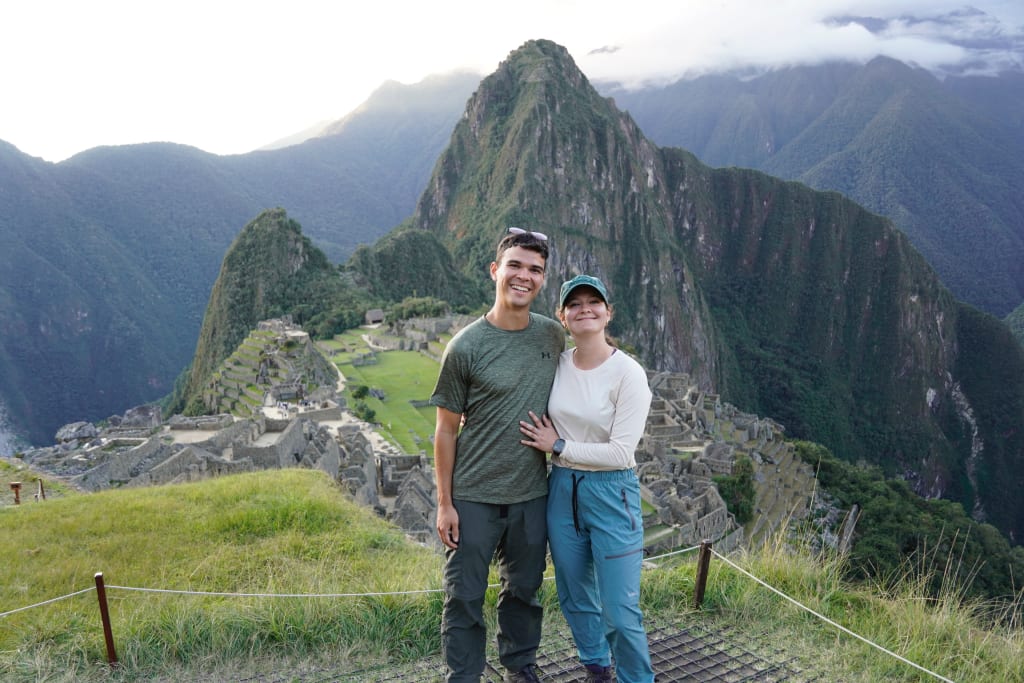
If you do decide to go, I would hike the 1 day Inca Trail to Machu Picchu, tour the ruins from the ground, and end with a short hike up Huayna Picchu, the mountain featured in the background of all the Machu Picchu photos you’ve seen online. This will allow you to see Machu Picchu from three different angles: from the ground, from the Sun Gate, and from Huayna Picchu with a perfect bird’s eye view. Each view offers something different, but every view allows you to appreciate the engineering masterpiece that is Machu Picchu, a tiny village balanced delicately on the ridge between two mountains in the Andes.
WHAT IS MACHU PICCHU?
Machu Picchu is the most famous set of Incan ruins in Peru and one of the New Seven Wonders of the World.
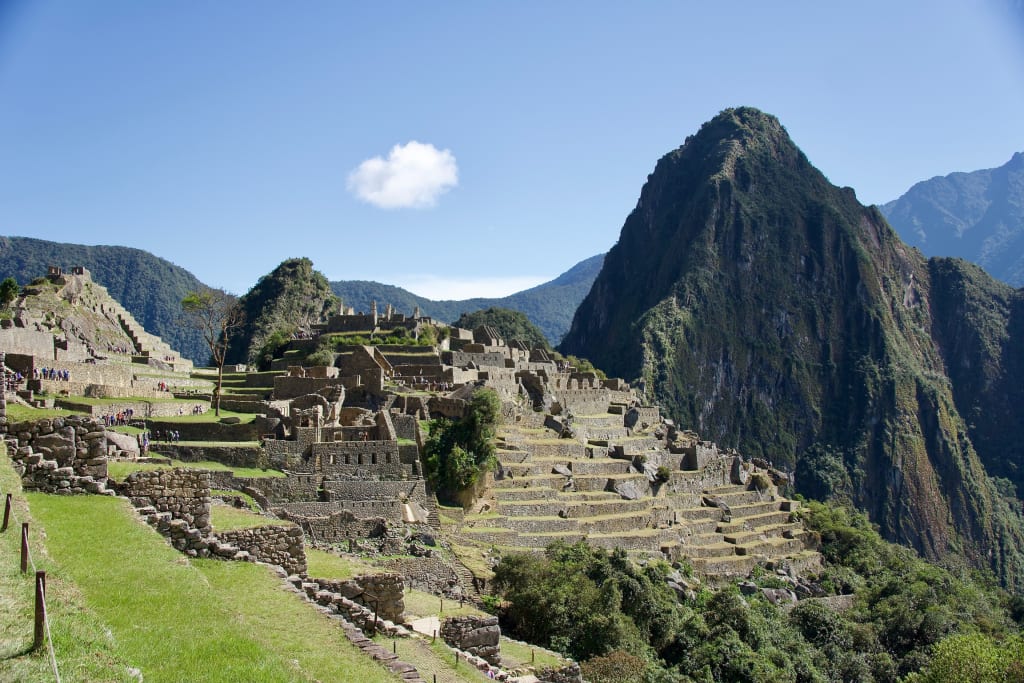
The exact purpose of the settlement is unknown, but many believe it was a summer getaway for the famous emperor Pachacuti. He is often thought of as the greatest ruler of the Incan Empire and his military conquests paved the way for the empire to become the largest in the pre-Columbian Americas.
Machu Picchu was built in the 15th century and abandoned roughly a century later, around the time of the Spanish conquest. Its “discovery” by foreigner Hiram Bingham in 1911 made international headlines. I say “discovery” in quotes because the site was previously known to local indigenous communities before Bingham arrived.
WHO WERE THE INCAS?
The Incan Empire was the largest empire in the pre-Columbian Americas. At its height in the 15th century, it stretched from present-day Colombia through Ecuador, Peru, Bolivia, Chile, and Argentina.
The Incas were master engineers. Without iron tools or the wheel, they constructed roads, bridges, and stone cities that have withstood centuries of earthquakes. Their buildings were assembled using precisely cut stones that fit together so tightly that they didn’t require mortar. One of the best examples of their engineering mastery is at Sacsayhuamán on the outskirts of Cusco. It’s definitely worth a visit.
One interesting fact about the Incas is that, unlike other pre-Columbian empires such as the Maya, they had no system of writing. Instead, they used a complex record-keeping system called quipus: knotted cords in various colors that would record numbers and other information.
Sadly, this empire existed for only about a century before the arrival of the Spanish. In 1532, Spanish conquistador Francisco Pizarro captured the Incan emperor Atahualpa, triggering the rapid collapse of the empire. Although the empire disappeared, the Incan culture is alive and well today. Millions of people still speak Quechua, the language of the Incas, and in many highland communities, traditional clothing and customs have been passed down through generations.
My favorite non-fiction book of all time is Kim MacQuarrie's The Last Days of the Incas. It provides a lot of context on the Spanish conquest of the Incan Empire and is well worth a read before a trip to Machu Picchu.
HIKING HUAYNA PICCHU
Whether or not you decide to hike to Machu Picchu, you should consider the hike up Huayna Picchu, the large mountain featured in the backdrop of all the Machu Picchu photos you see online. This is a short yet steep hike that takes between 2-3 hours and can be done on the same day as a visit to the ruins.
If you’re interested in this hike, be sure to plan ahead. Permits typically sell out months in advance.
Unlike permits for the Inca Trail, these permits are available to tourists directly and there’s no need to go through a tour operator if you’d prefer to hike alone. You can purchase your permit on the Ministry of Culture website. Huayna Picchu tickets are available under Circuit 3, Route 3A: Waynapicchu Mountain Route. If you do choose to go with a tour to Machu Picchu, they typically purchase permits on your behalf, but be sure to confirm with your operator if your ticket includes a permit to Huayna Picchu.
OUR EXPERIENCE
Neither of us woke up feeling good that day. I felt dizzy again (still experiencing some symptoms from the onset of a medical condition I was later diagnosed with called POTS) and Alex woke up to a case of food poisoning.
No mystery how that happened. We’re fairly confident yesterday’s boxed lunch was the culprit. I am a rather picky eater and skipped lunch in favor of some protein bars I packed. Alex ate the food in the lunch box. We ate the same thing for breakfast and dinner and I was fine.
This food poisoning posed a big problem. There are bathrooms at the entrance gates to Machu Picchu but there are no bathrooms inside the archeological site itself. There is no re-entry into the site once you leave, so if you need to use the restroom, your visit to Machu Picchu is over. We were worried our visit would be quite short at this rate.
Thankfully, our guide was flexible and we pushed back our visit to Machu Picchu a few hours to give Alex’s digestive system a chance to recover. And, by some miracle, it did (with the help of Pepto Bismol) and we were able to spend 7 hours inside the gates.
We got to Machu Picchu at 10am.
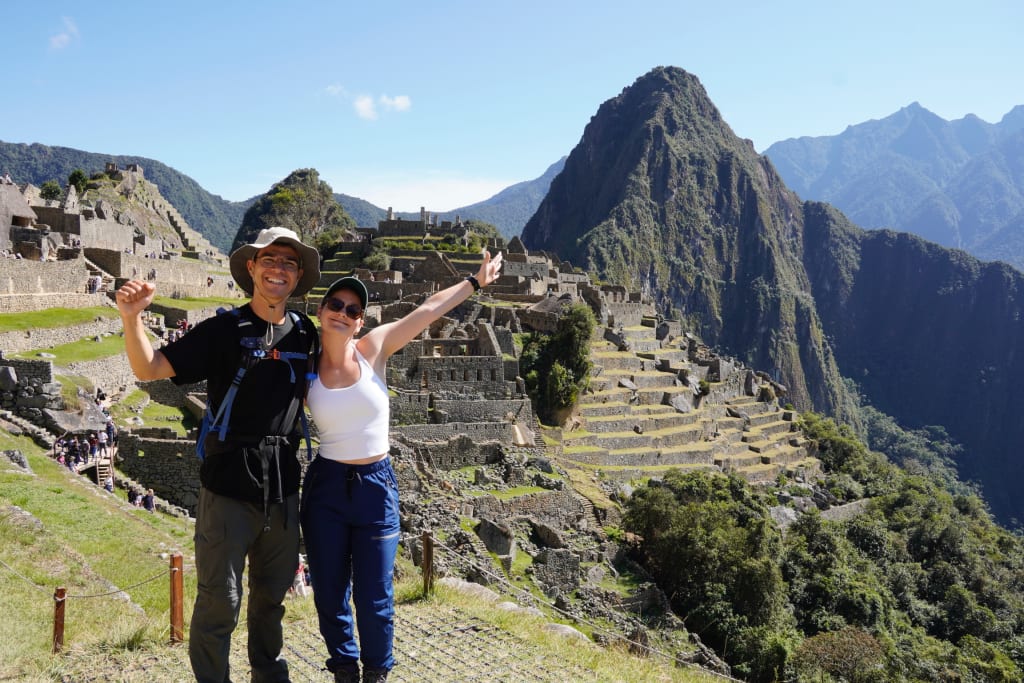
We didn’t linger long. We headed straight to Huayna Picchu, the mountain in the backdrop of all the Machu Picchu photos online.
I was a little worried about the hike. I knew it was quite short, just 45 minutes to the summit, but I still felt a little dizzy and was worried about steep dropoffs on the way up. I envisioned a hike where one wrong step would send me careening off the mountainside. Thankfully, there was some exposure but I never felt like I was inches away from tumbling down the mountain. The hardest part was the steep, uneven stone steps. They were so narrow at one point that I literally scurried up on all fours, using my hands to keep me balanced.
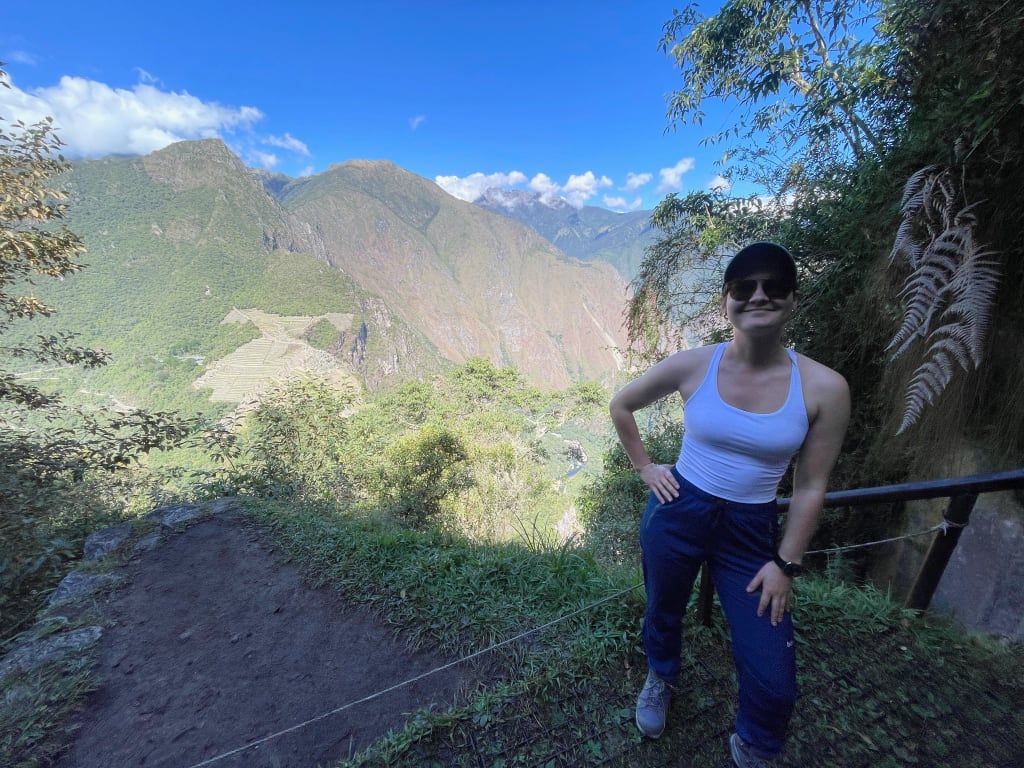
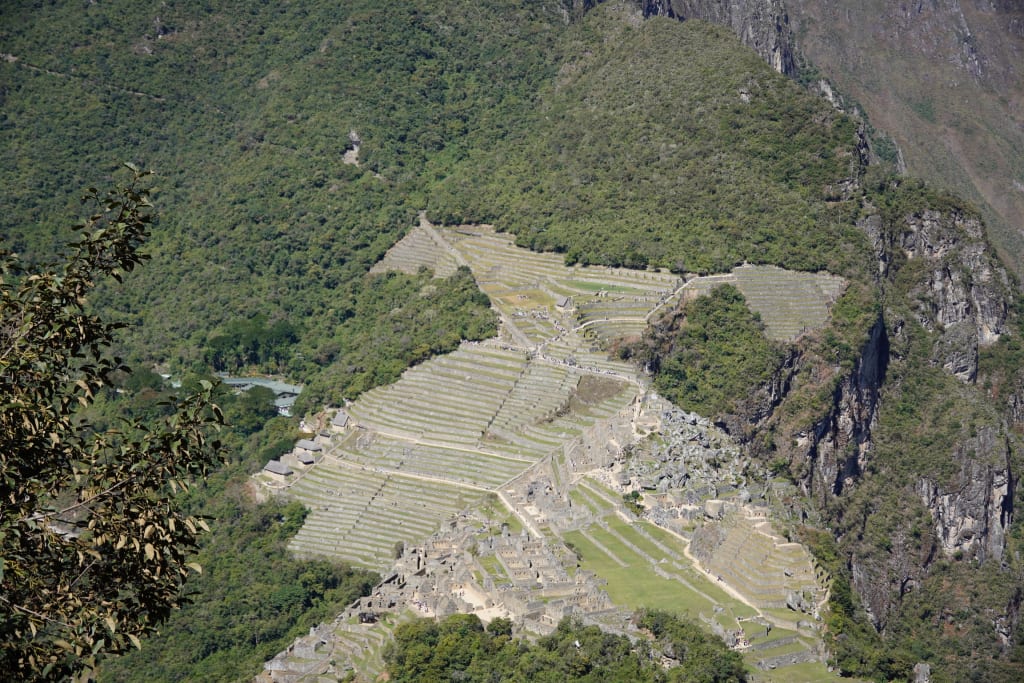
At the top, we were treated to panoramic views of the mountains around us and, of course, Machu Picchu down below.
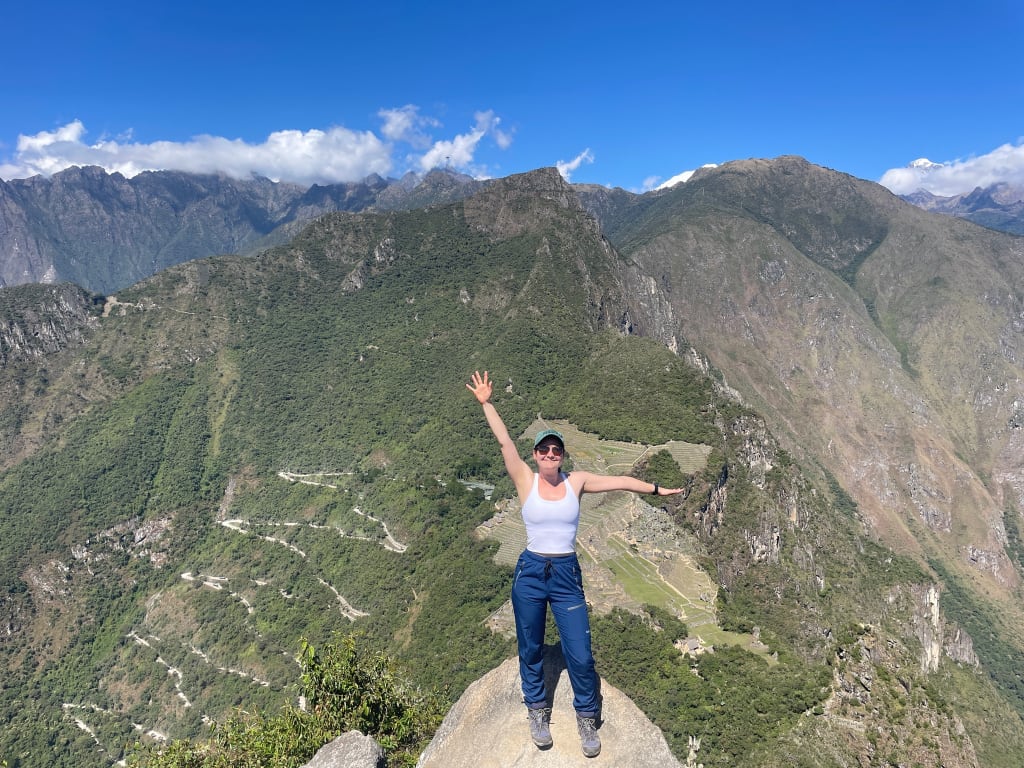
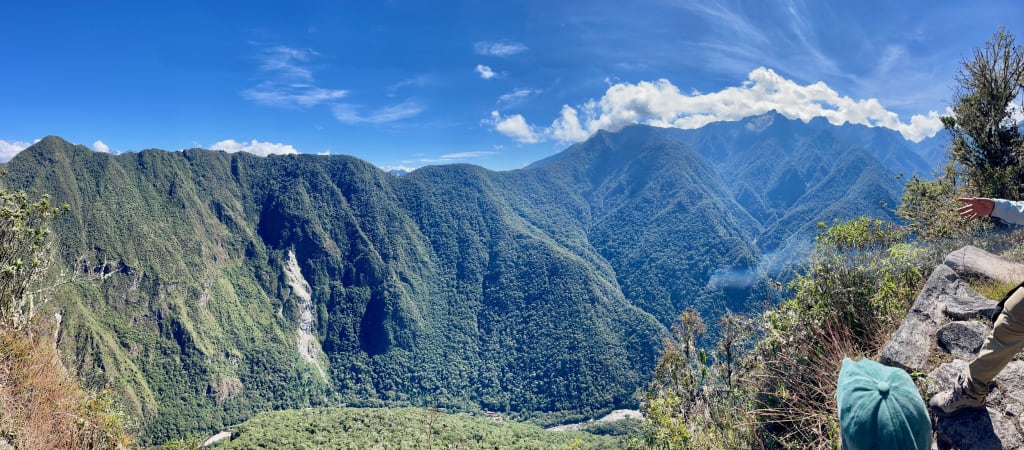
It was barely recognizable from this viewpoint. It looked nothing like it had from the ground.
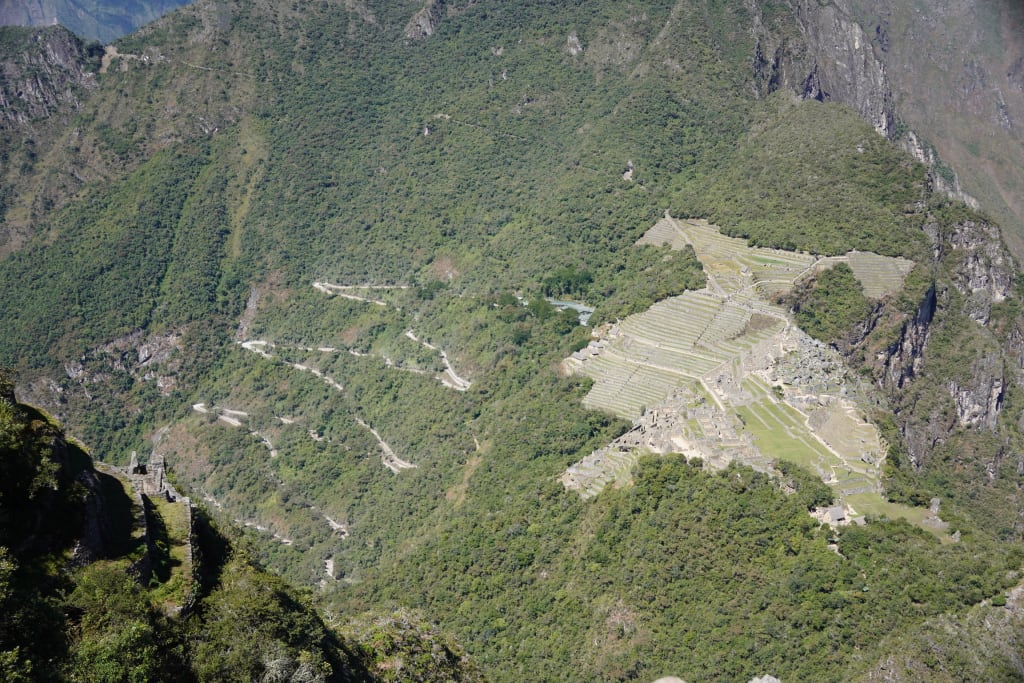
We sat around and admired the views for a while before heading back down.
Now, at last, it was time to explore the ruins. By this point, we had passed by the ruins twice, once yesterday after finishing the 1 Day Inca Trail and then again this morning on our way to Huayna Picchu. I was ready to finally explore them!
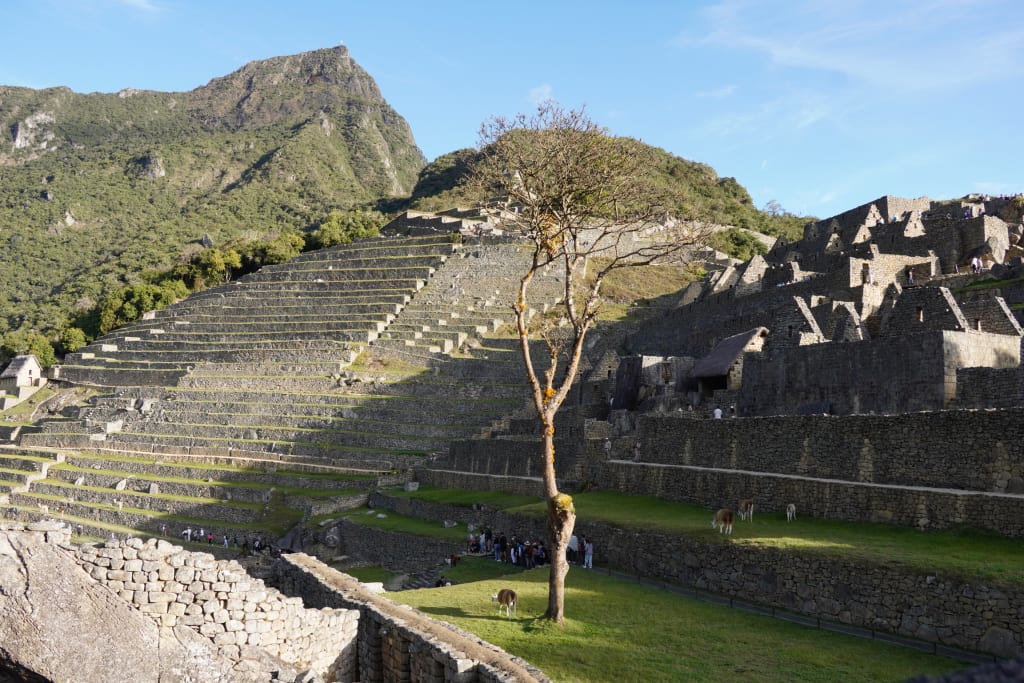
Sadly, Alex and I were left to our own devices for most of the tour of the ruins. Our guide, Domingo, had a train to catch back to Cusco. We had planned to get an earlier start and finish long before he had to leave, but alas, that plan hadn’t worked out.
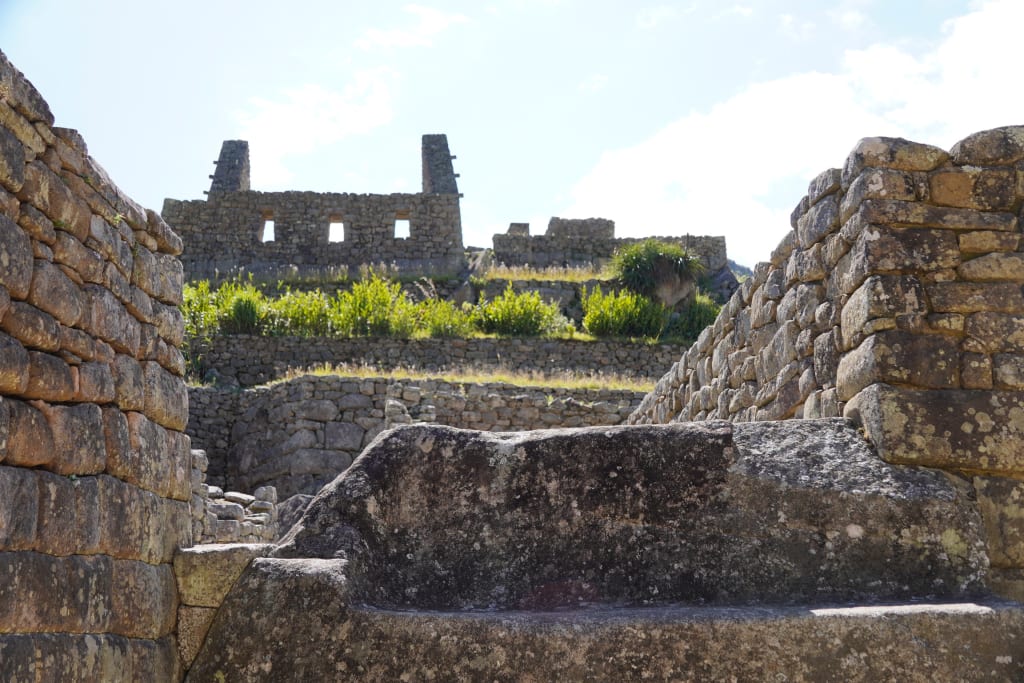
We still had a blast walking through the ruins though.
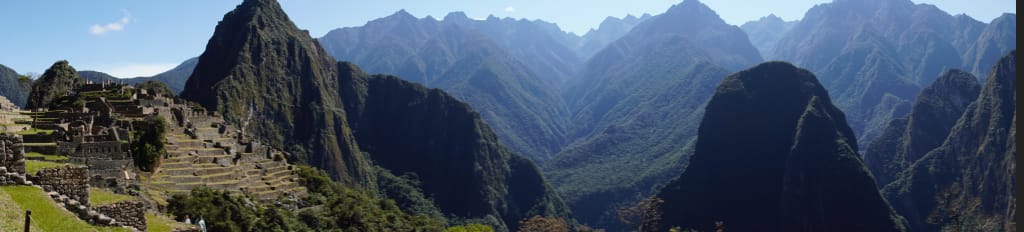
While we were wandering, we realized that the true beauty of Machu Picchu is in its surroundings, and the fact that the Incas were able to construct a city on a tiny ridge between two mountains.
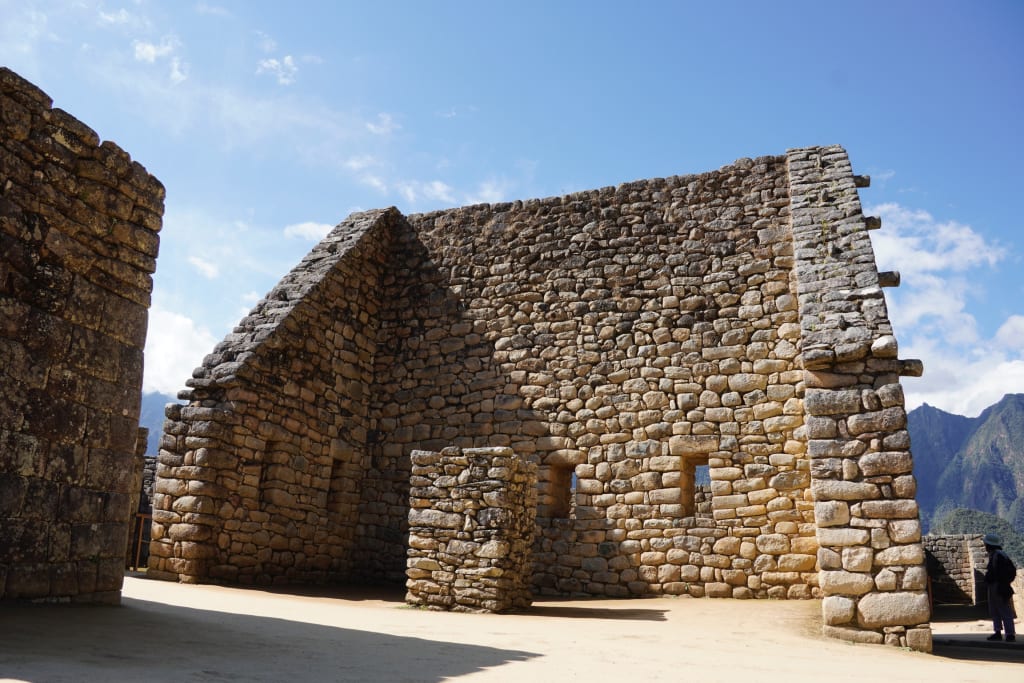
The architecture itself was quite basic compared to what we had seen in Cusco and at Sacsayhuamán.
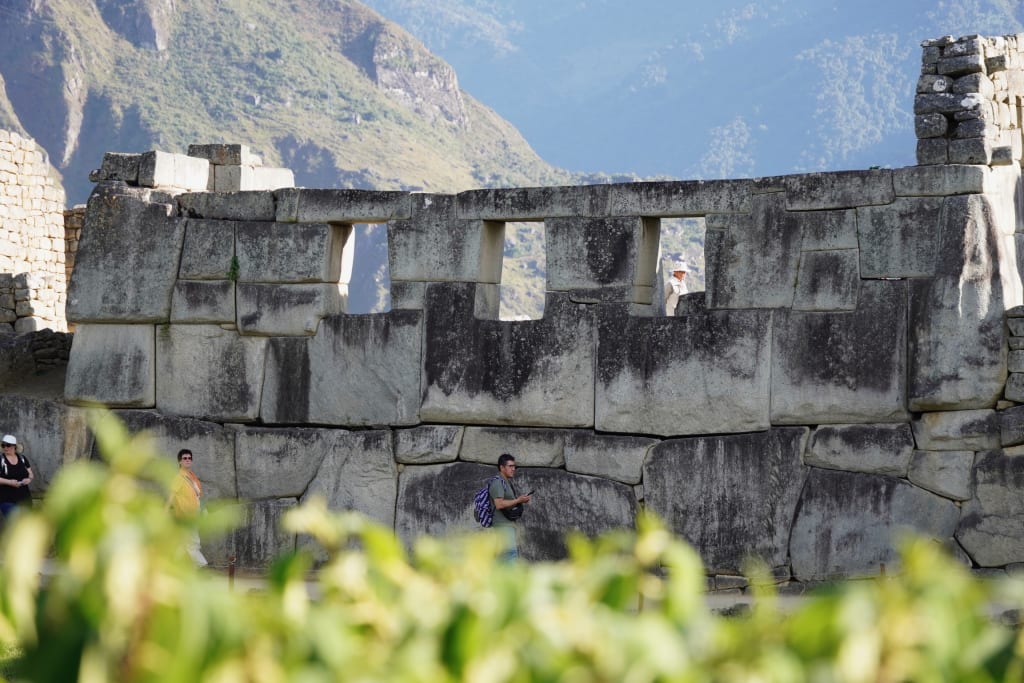
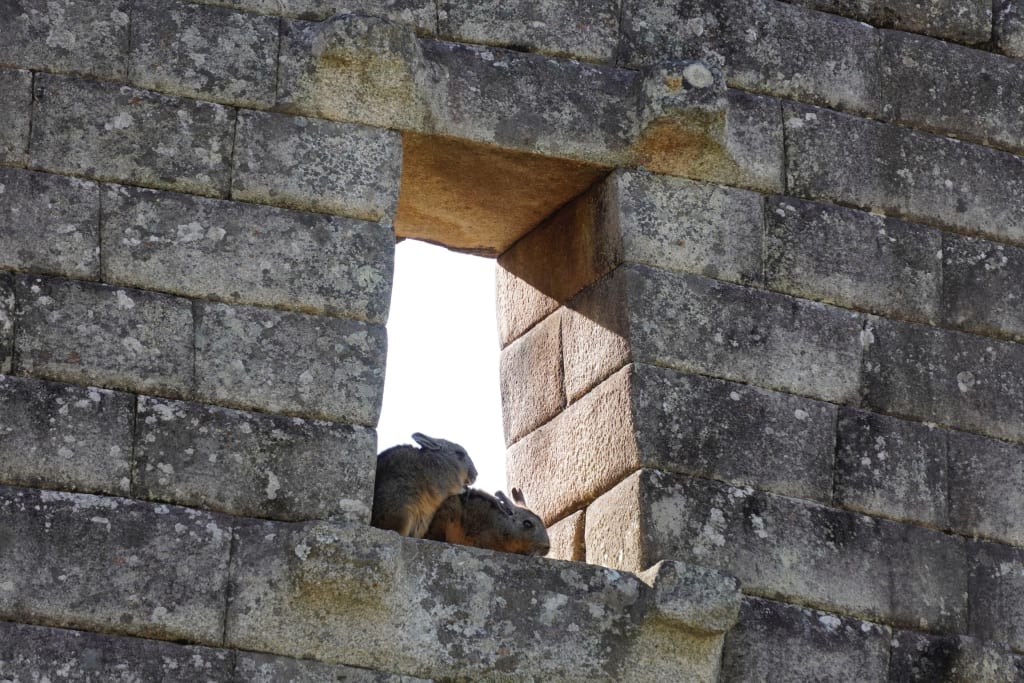
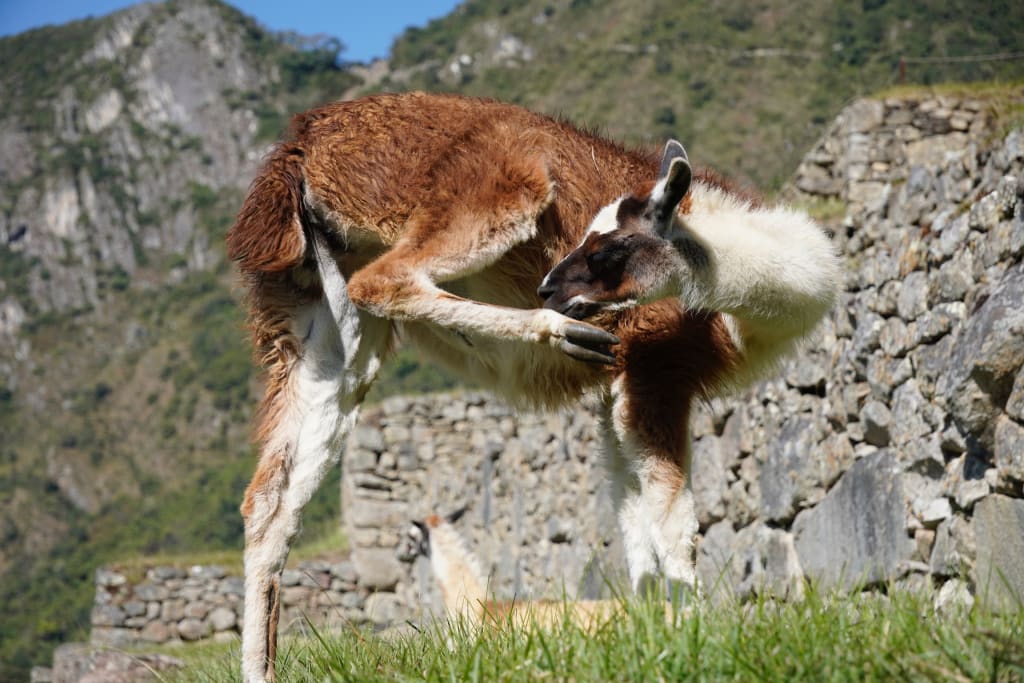
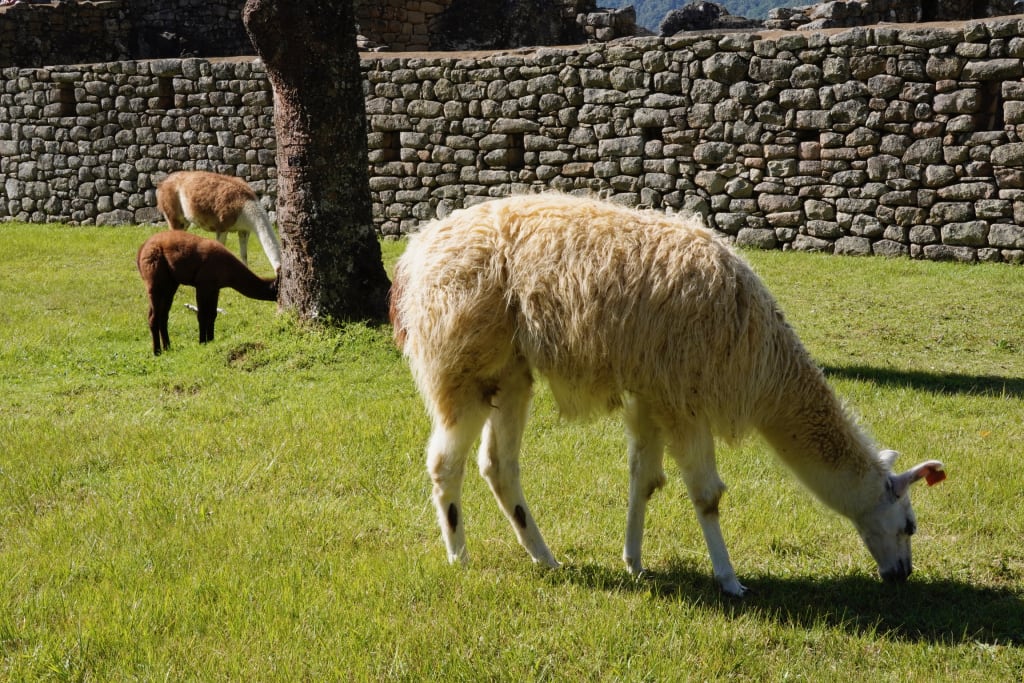
We also particularly enjoyed snapping photos of these llamas that call Machu Picchu home. They wandered freely among the ruins, seemingly unfazed by the steady stream of visitors.
We took our time and soaked in the atmosphere. We found a bench to sit on and enjoyed taking in the views of the mountains and reflecting on the crazy journey we had had over the past couple days. We ended up staying until just minutes before the last bus departed for Aguas Calientes.
It had been a bumpy road to Machu Picchu. We had a medical crisis, a delayed train, and food poisoning in just two days’ time. Despite the obstacles, we absolutely loved our time at Machu Picchu. I’m always wary of experiences that are as popular as Machu Picchu, worried that they won’t live up to the hype. But Machu Picchu actually exceeded my sky-high expectations, especially the 1 Day Inca Trail. I will rave about my time at Machu Picchu for years to come.
MACHU PICCHU TICKETING & ROUTES
There are three circuits in Machu Picchu that require different tickets. The routes are Panoramic (1), Classic (2), and Royal (3).

Our tour operator purchased our tickets on our behalf, but we figured out that we had tickets to Circuit 1 on the first day (the day we completed the 1 Day Inca Trail), which included the panoramic viewpoint over the ruins.
On the second day, we did Circuit 3A: Royalty + Huayna Picchu, which focused on the lower terraces.
The Classic Route is said to be the “most detailed” circuit. If you aren’t planning to hike the 1 Day Inca Trail nor Huayna Picchu, that would be a great choice.
Another option is to purchase multiple tickets for the same day. For example, you could do Circuit 3 in the morning and Circuit 2 in the afternoon. If you aren’t planning to hike the 1 Day Inca Trail, I would probably choose Circuit 1 in the morning and either Circuit 2 or 3 in the afternoon.
My ultimate recommendation is to hike the 1 Day Inca Trail on Day 1 (which includes Circuit 1 tickets), then on Day 2 do Circuit 3A in the morning (with the Huayna Picchu hike), followed by Circuit 2 in the afternoon. That is the most complete experience.
For more information on each of the circuits, be sure to check out this article from machupicchu.org.
HOW TO GET TO AGUAS CALIENTES (NEAREST TOWN)
You can hike to Machu Picchu or you can take the train from Ollantaytambo. We did the 1 Day Inca Trail and it was my favorite hike we’ve ever done.
Read about our experience hiking the 1 Day Inca Trail here.
The most popular hike to Machu Picchu is the 4 day Inca Trail, but recently the Salkantay Trek has become quite popular as well. Other alternatives include the Lares Trek and the Inca Jungle Trek (which includes hiking, mountain biking, rafting, and ziplining).
If you prefer a calmer journey, you can take the train from Ollantaytambo in the Sacred Valley to Aguas Calientes, the closest town to Machu Picchu.
WHERE TO STAY AND HOW TO GET TO THE RUINS
The night before your visit to Machu Picchu, you should stay in Aguas Calientes, the closest town to the ruins. We stayed at Tierra Viva Cusco Machu Picchu Hotel.
From Aguas Calientes, you can take a bus to the ruins the next morning. Shuttle buses run from 5:30 am to 3:30 pm, as the last entry time at Machu Picchu is at 3:45pm. The bus ride takes about 30 minutes. Lines for the bus can get quite long, so be prepared to wait.
The bus returns from Machu Picchu back to Aguas Calientes between 6:00 am to 6:00 pm. Machu Picchu itself closes at 5:00pm.
The night after your visit to Machu Picchu, you can either choose to spend another night in Aguas Calientes (like we did) or take the train directly back to the Sacred Valley.
DO YOU NEED A GUIDE?
You don’t need a guide to explore Machu Picchu or hike Huayna Picchu, but I recommend it. You’ll get more out of your visit if you learn about the Incas while you’re there.
BEST TIME OF YEAR TO GO
The best time of year to visit Machu Picchu is during the dry season from May to September, when you have the highest chance of clear skies.
IS MACHU PICCHU WORTH IT?
Machu Picchu is absolutely worth all the praise it receives. Part of what makes Machu Picchu so remarkable isn’t just the ruins themselves, but where they were built. The Incas somehow managed to construct an entire city on a narrow ridge high in the Andes, surrounded by steep, forested peaks on all sides.
If you do decide to visit, I highly recommend experiencing Machu Picchu from three different perspectives: arriving through the Sun Gate on the 1 Day Inca Trail, exploring the archaeological site itself, and hiking Huayna Picchu for the panoramic view from above. Each vantage point reveals something completely different, and together they gave me a much deeper appreciation for one of the world's greatest archaeological sites.
However, even if you skip both hikes, I still think Machu Picchu deserves a spot on everyone's bucket list.
IS HUAYNA PICCHU WORTH IT?
For those with a sense of adventure, I would absolutely recommend hiking Huayna Picchu. The panoramic view from the summit is spectacular, and seeing Machu Picchu from above offers a completely different perspective than the one you get exploring the ruins below. However, if you have a fear of heights or aren't comfortable navigating steep, uneven stone steps, you may be happier spending more time exploring the archaeological site instead.
FAQS
How much time do you need to explore Machu Picchu?
We spent 4 hours at a leisurely pace exploring the ruins (Circuit 3). A few times, we sat down, relaxed, and just soaked up the incredible views, so it can definitely be done on a tighter timeline. I would recommend 2 hours at a minimum. Circuits 1 and 2 take about 3 hours. There is no backtracking and all circuits are 1 way only.
If you plan to hike up Huayna Picchu, plan for an extra 2-3 hours.
Why wasn’t Machu Picchu destroyed by the Spanish?
The Spanish never found this settlement!
Can you hike Huayna Picchu if you have a fear of heights?
I wouldn’t recommend this hike to someone with a fear of heights.
What is the bathroom situation at Machu Picchu?
There are bathrooms at the entrance, but there are no bathrooms inside the archaeological site. There is a strict no re-entry policy, so once you leave Machu Picchu, you won’t be allowed back in, even if you just leave to use the restroom. Be sure to bring cash for the bathrooms at the entrance gate as well as your own toilet paper and hand sanitizer just in case.
Is Machu Picchu at a high elevation?
Yes, it sits at ~8,000 feet above sea level.
Do I need altitude medication?
You don’t need it, but I recommend it. We took Acetazolamide and it really helped. We experienced minimal side effects, just some occasional tingling in our hands and feet that is quite common and harmless. Whether or not you decide to take altitude medication, I recommend acclimatizing for a few days in Cusco before traveling to Machu Picchu, especially if you plan to hike.
How far in advance should I make reservations?
You should make your reservations at least six months in advance, especially if you plan to visit during the dry season (May to September).
YOU MIGHT ALSO LIKE

One Day in Peru's Sacred Valley: Highlights & Honest Thoughts

Why the 1 Day Inca Trail to Machu Picchu Is My Favorite Hike Ever

How to Visit Rainbow Mountain (Vinicunca) Without the Crowds

Visiting the Amazon Rainforest in Peru: My Honest Review of Tambopata

Tikal Guatemala: The Mayan Ruins That Outshine Chichén Itzá
