
5 Moments From Bear Camp I Can’t Stop Thinking About (Katmai NP)
I could have easily written an article called “20 Moments From Bear Camp I Can’t Stop Thinking About” or even “50 Moments…”. We had so many incredible encounters in the five days we spent living alongside the wild brown bears in Katmai National Park & Preserve. But there were a few moments that I replay over and over again in my head that stand out from the rest and I wanted to take the time to highlight them. So, without further ado, here are my top 5 bear encounters, in no particular order.
Wondering what Bear Camp is? Check out this article.
THE FISHING FRENZY
We were wasting no time. We had been at Bear Camp for only about an hour when our group of twelve set out to watch the Katmai brown bears fish for the very first time.
We set our gear down on the rocky riverbank near an adult male who was patrolling the river and scanning for sockeye salmon.
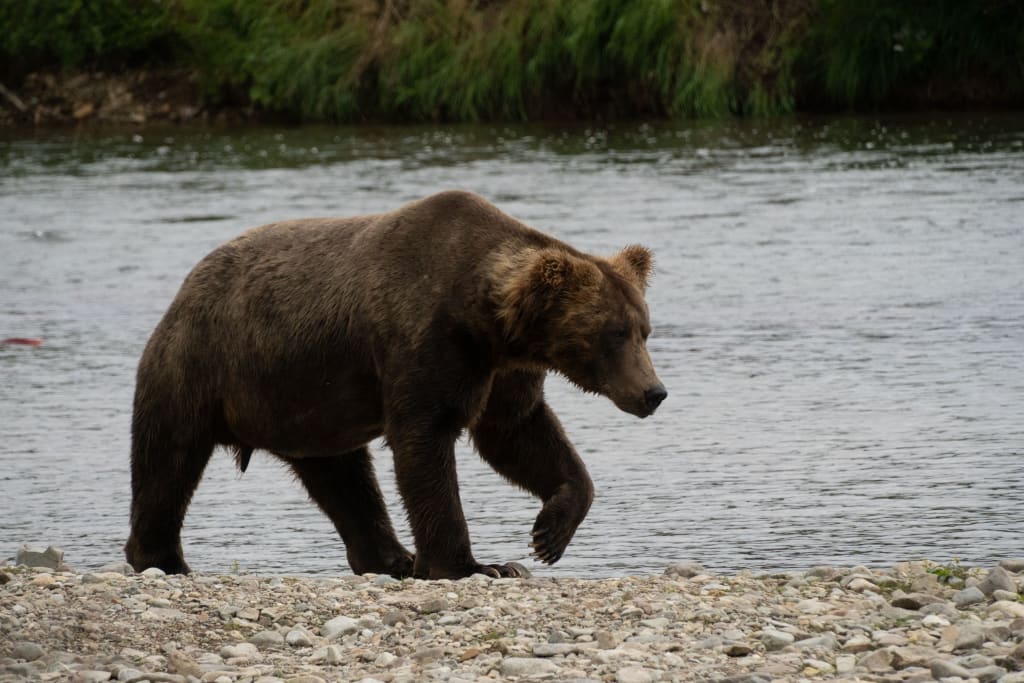
All of a sudden, the male broke into a sprint headed right in our direction. He lunged upward, claws in the air, and landed with a colossal splash just a few feet away. My heart was racing, but I wasn’t scared. I was simply thrilled. The adrenaline!
The bear surfaced again quickly. His hunt had been unsuccessful. He shook himself off and at that moment noticed that we were sitting nearby.
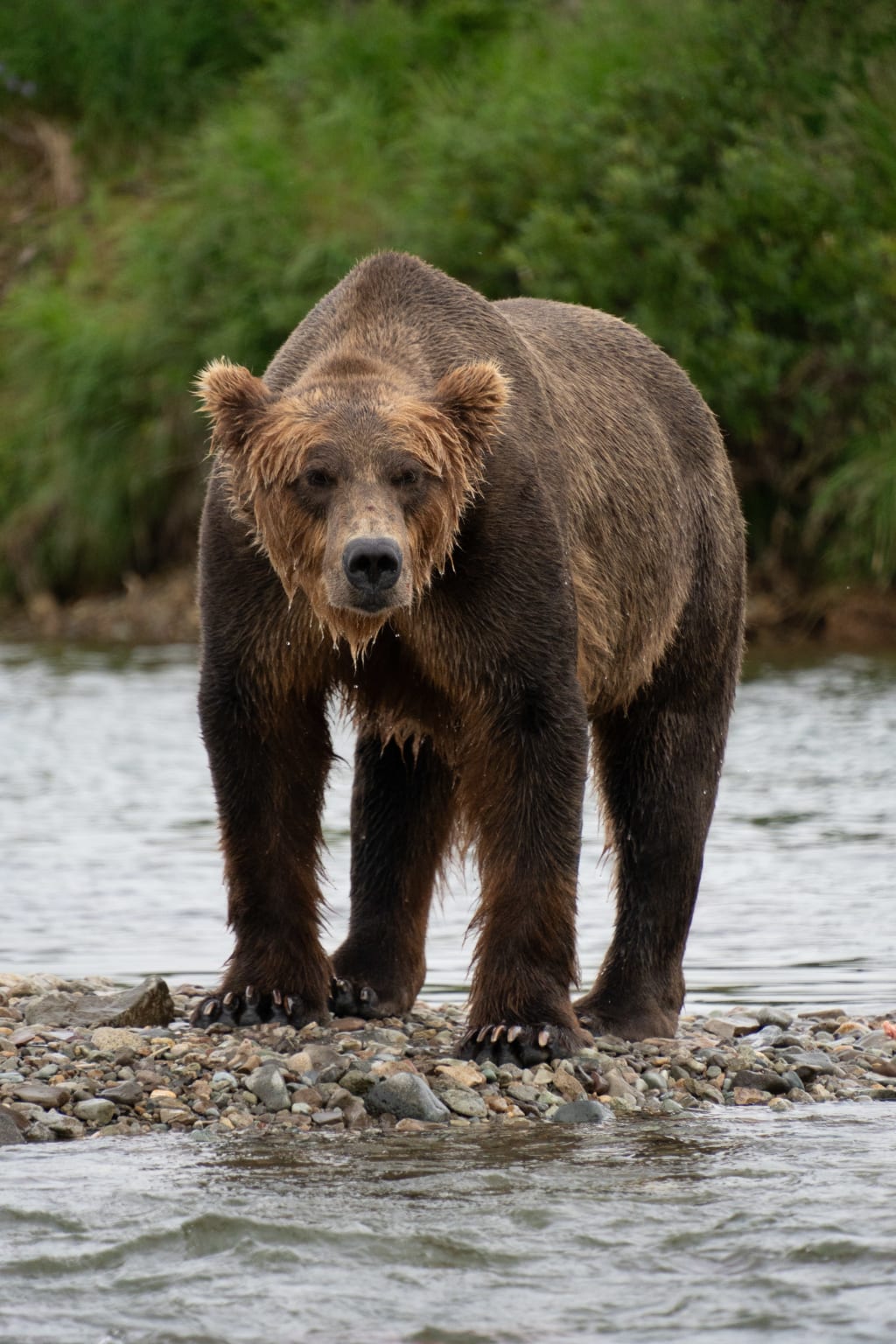
He made eye contact and then looked away, disinterestedly. He was already plotting his next dive.
It only took him a minute or two to find his next target. This time, he scored himself a snack.
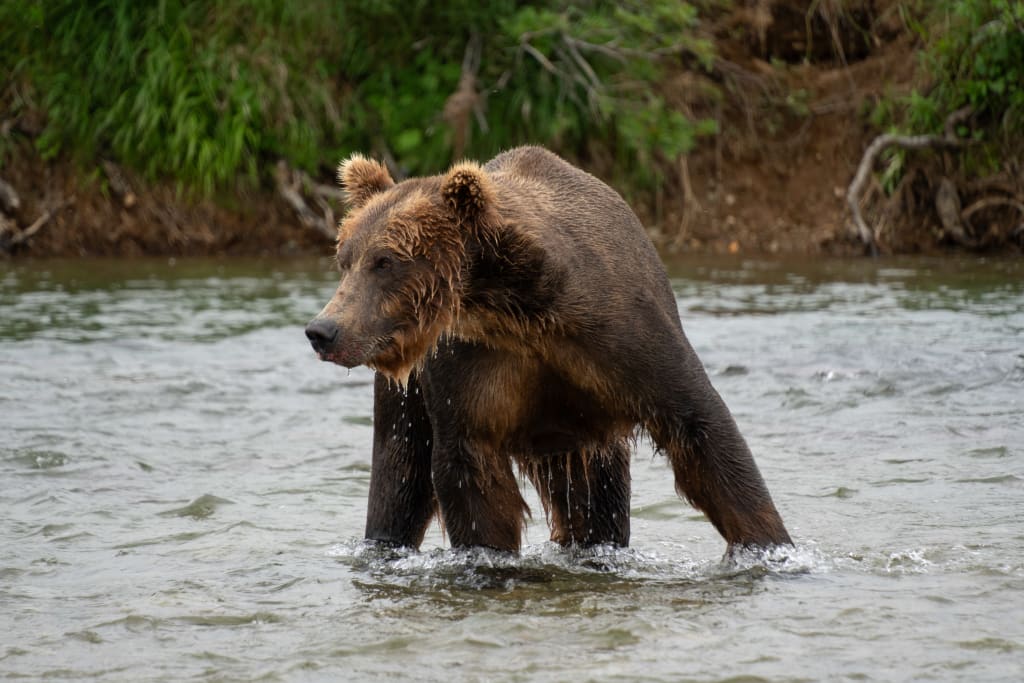
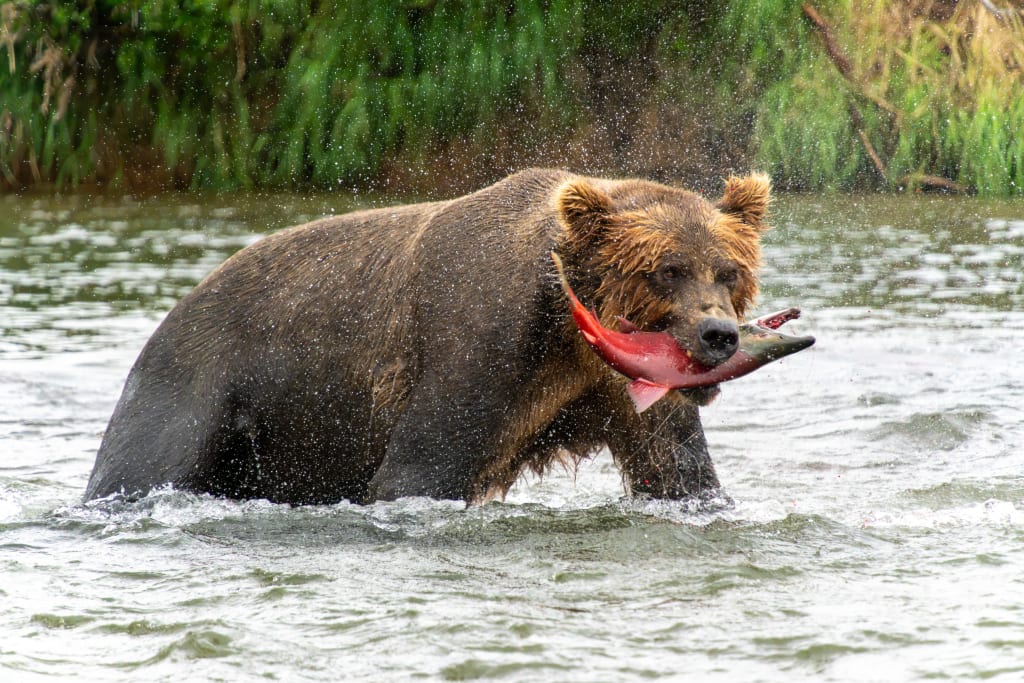
This continued for over an hour. Every few minutes, the bear would jump into the water, hoping to trap a sockeye salmon underneath his paw.
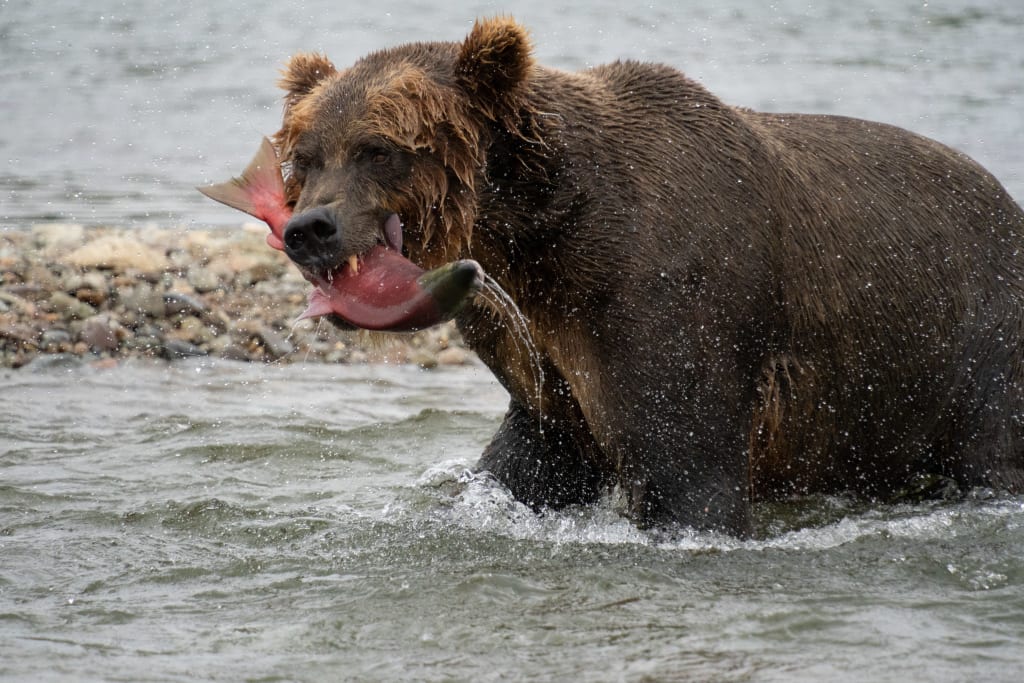
His appetite did not seem to dwindle no matter how many fish he caught.
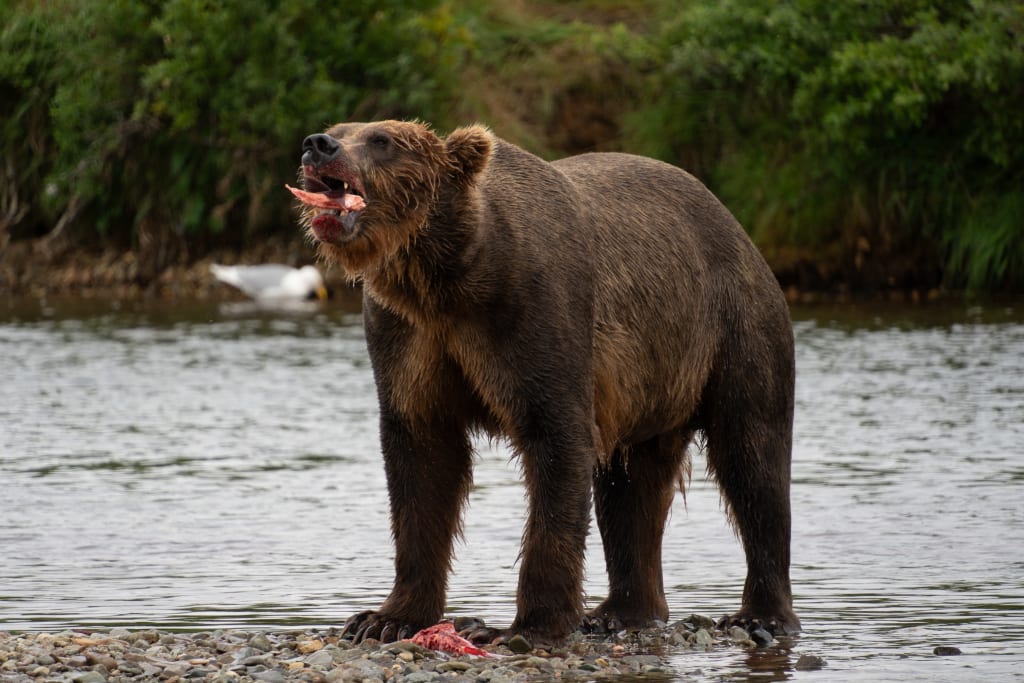
Sometimes he’d eat the whole fish. Other times he’d take a bite or two of the eggs and brains and leave the rest for an eager seagull or two that would squawk in his ear (and mine) relentlessly until it got its fill.
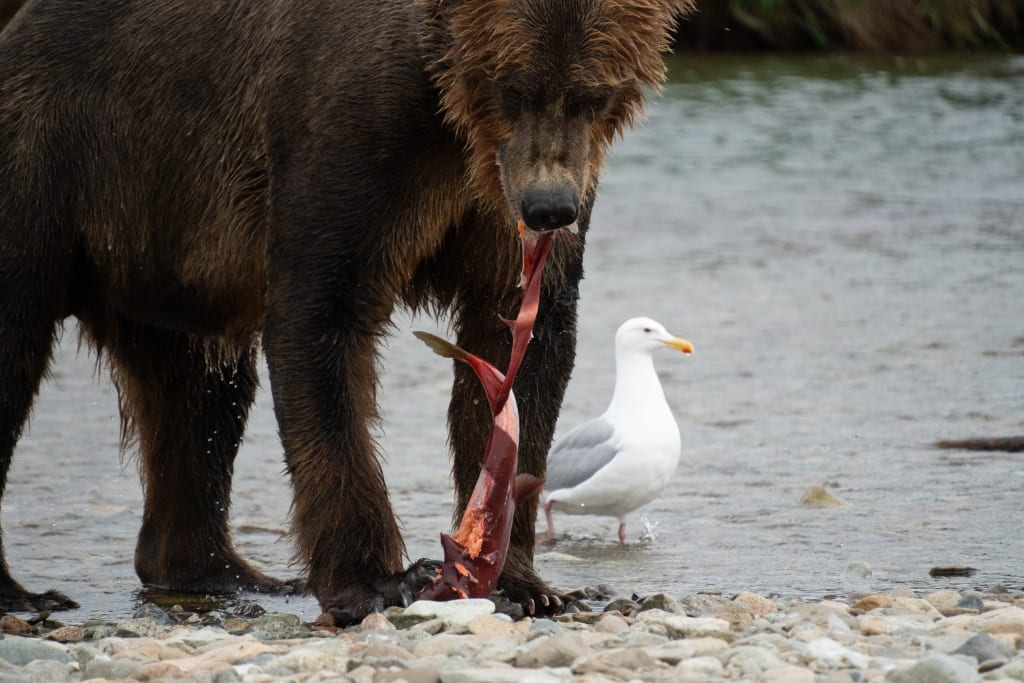
Salmon are a seasonal treat for the bears. These sockeye salmon spend most of the year in the ocean where the bears can’t reach them but migrate to shallower waters in the summer to reproduce. The bears have just 6-8 weeks to fish and fatten themselves up ahead of their long hibernation that lasts from October to April or May each year. During this time, some large bears might eat up to 35 or 40 salmon a day, which is roughly 60,000 to 100,000 calories (depending on how much of the fish the bear eats)!
We got incredibly lucky our first night at bear camp. Scott said we saw two years worth of fishing in just one night. We saw many bears, up close, catching fish after fish after fish. This was our first taste of Bear Camp. I was already hooked.
THE FAMILY RIGHT IN FRONT OF US
I didn’t notice the mama bear until she was just a few feet away. At that moment, there were almost ten bears in our line of sight and I had my eyes trained on a fishing bear instead. But I turned when I heard the rocks crunching underneath her feet nearby and I looked up just in time to see her approach us.
This was the moment I’d been waiting for. Kim, a fellow guest who attended Bear Camp last year, teased that we would get so much closer to the bears every time we got excited that they were “close” by our standards. Turns out she was right, and it was finally happening.
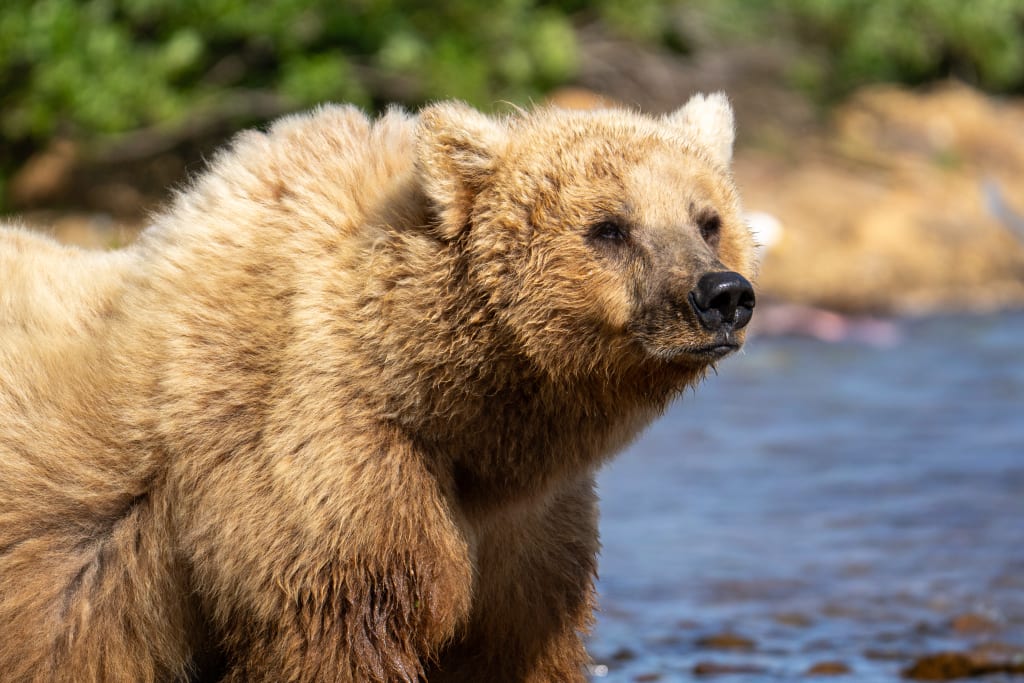
The mama bear guided her two 2.5 year old cubs and stopped within just a few feet of us. She left them on the riverbank and went to go catch her cubs a fish.
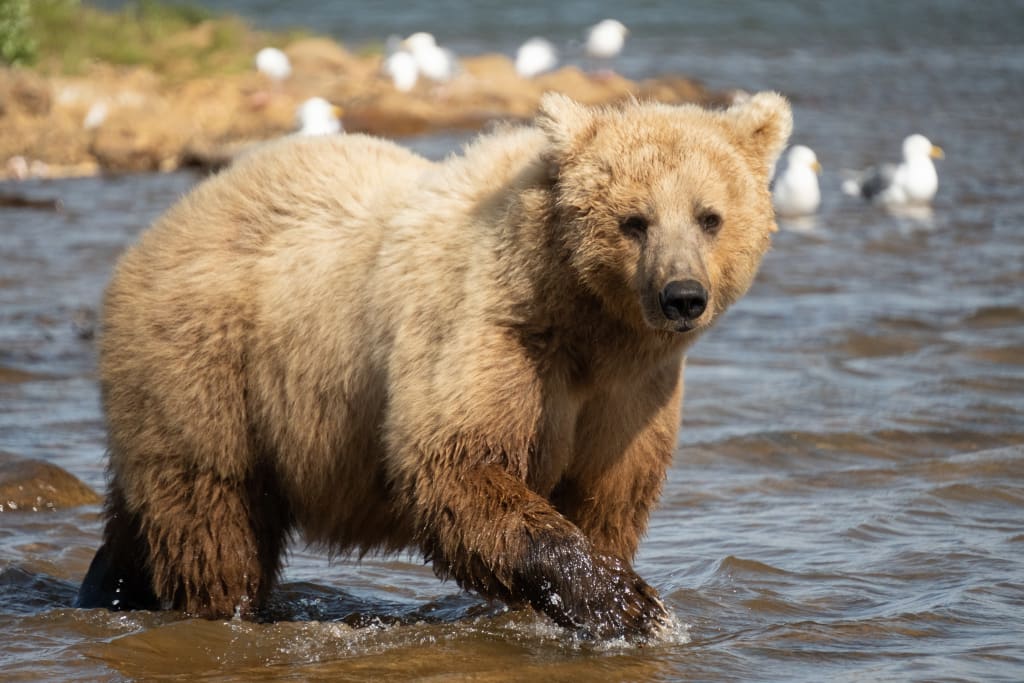
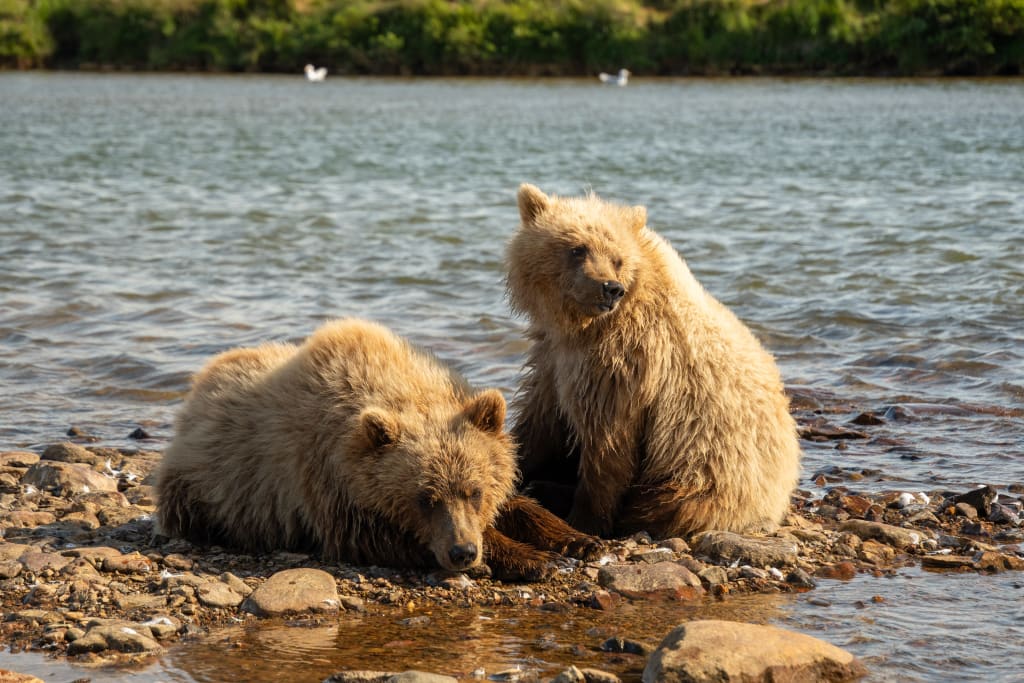
Mama wasn’t away for long. She brought her first catch straight back to her cubs. What ensued was a short battle with a series of loud grunts and groans. The cubs were battling over the fish. One emerged victorious and the other watched its sibling gulf down the entire thing.
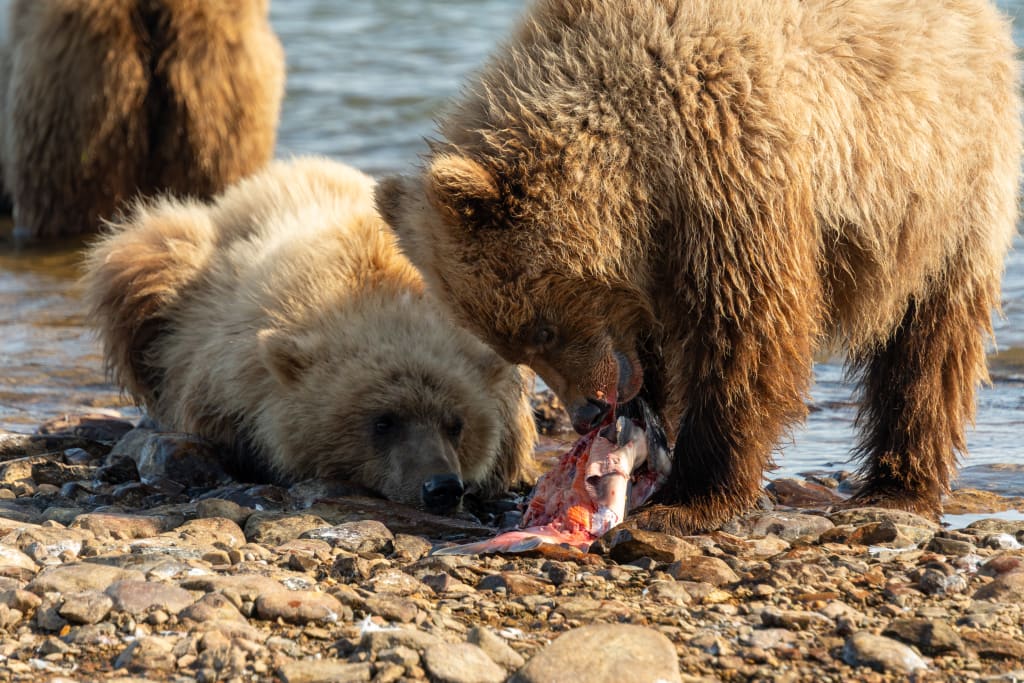
You might have noticed that the two cubs have different colored coats. Did you know that cubs from the same litter can have different fathers? Bears experience something called delayed implantation, meaning that although they mate in the spring or summer, the fertilized egg doesn’t immediately implant in the uterus. Instead, it remains dormant for several months and only implants in the fall if the mother has stored enough energy to support a pregnancy. Therefore, a female can mate with multiple males during the breeding season, and cubs from the same litter can be born at the same time but have different fathers who mated with the mother at different times.
We sat peacefully watching the cub enjoy its fish. All of a sudden, mama looked up. She was alert.
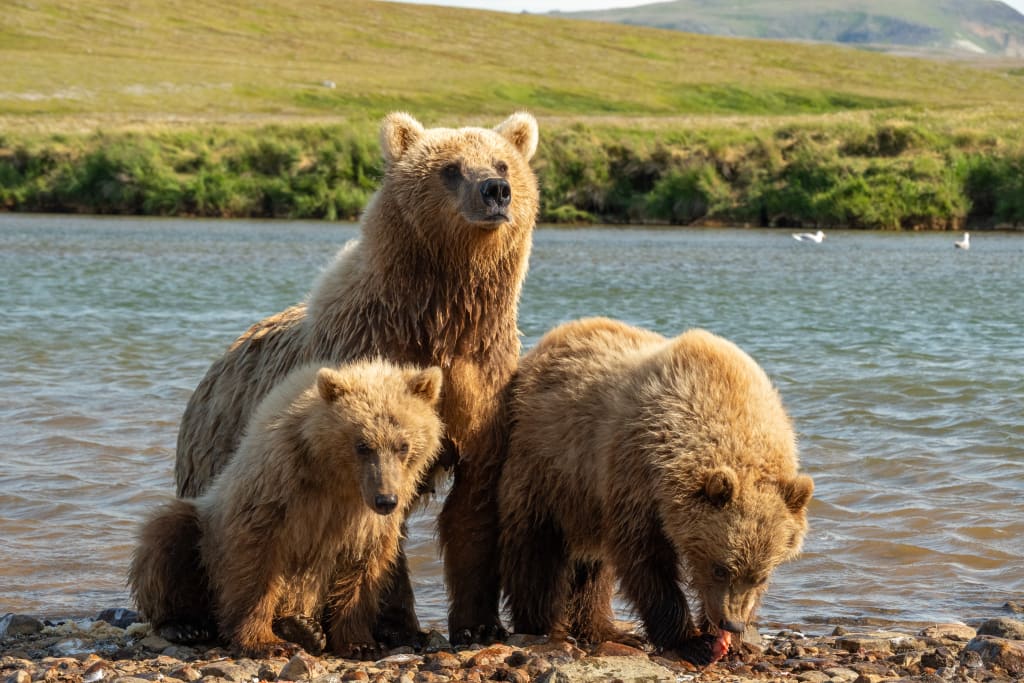
We craned our necks in the direction she was looking at. We couldn’t believe what we saw.
A giant adult male bear stood up to get a look at mama and the cubs. This was a dangerous situation for the cubs. Males often murder young bears to mate with their mother. Thankfully, the bear was deterred, likely by the presence of humans so close, and decided to move on in a different direction. Scott mentioned that this is likely why the mother chose to bring her cubs so close to us humans. We were acting as a human shield.
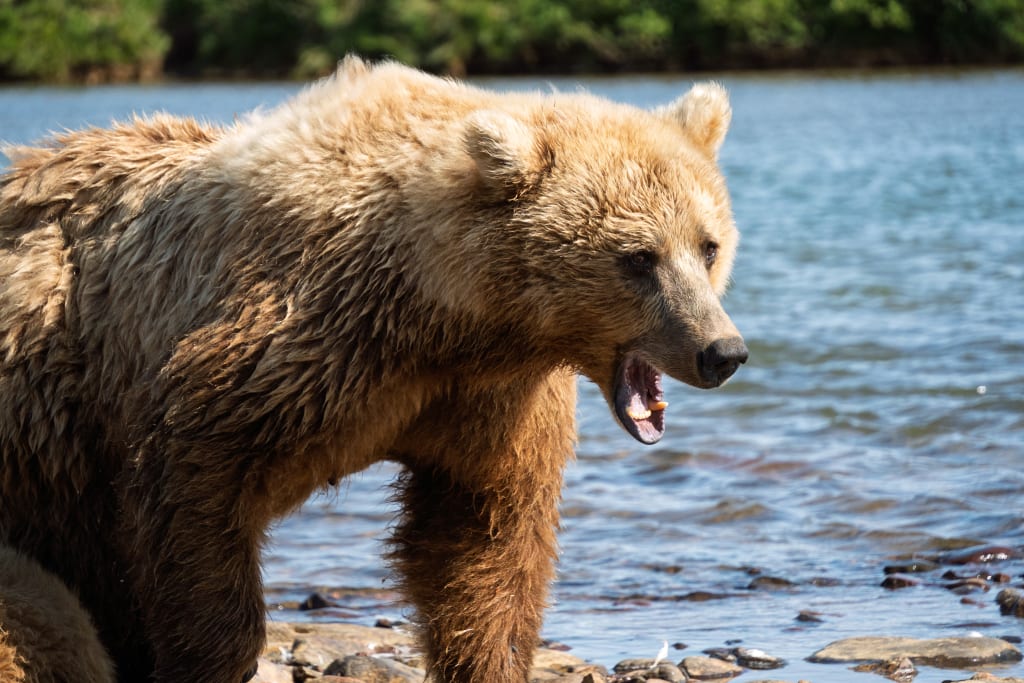
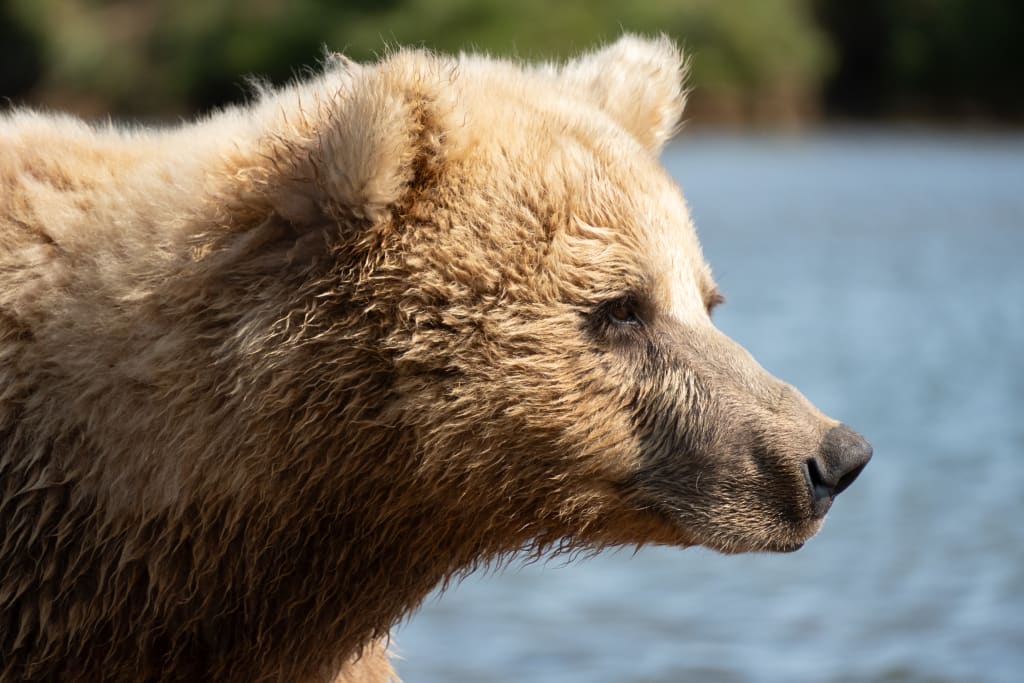
Mama remained alert for a few minutes before deciding the coast was clear and eventually settling back down with her cubs.
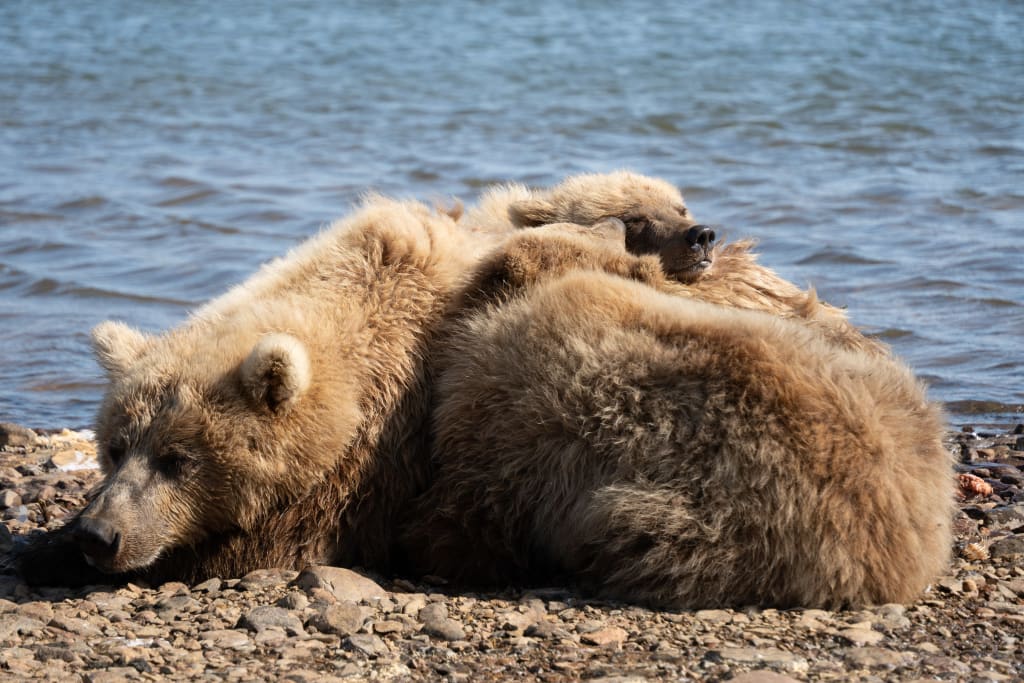
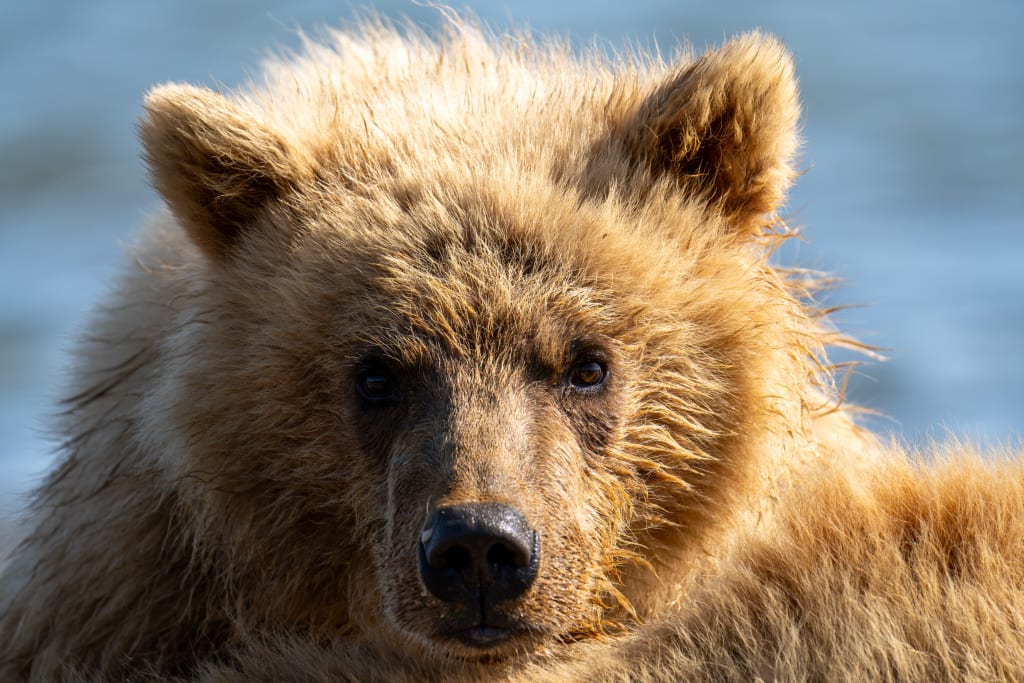
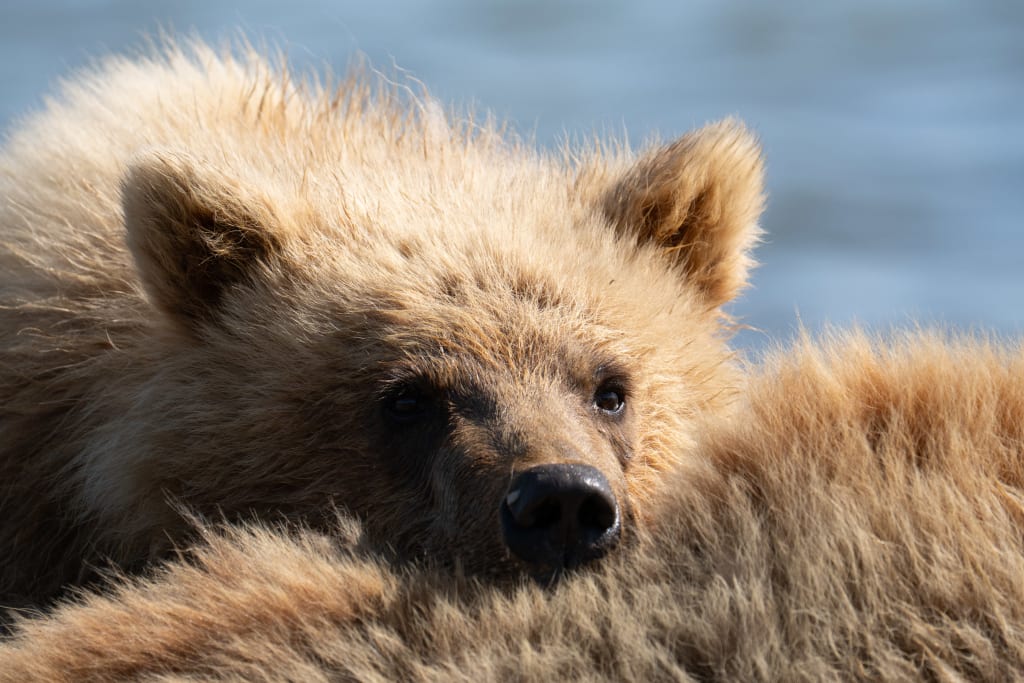
They remained snuggled up right in front of us for so long that we began to hatch a plan to slowly move away if they didn’t wake up soon. But soon enough, the cubs became restless and they decided to move on.
On their way out, one of the cubs got a little overconfident and made a halfhearted charge in our direction. Scott and another guide, Jen, calmly talked to the cub and it quickly decided to follow its mother instead of worrying about us.
I’ve said time and time again that my favorite wildlife encounters have two things in common: they’re action-packed and at a close proximity. This encounter with the mama and her cubs had it all. We watched the mother fish, the cubs battle it out for the prize, the entire family snuggle, and the mama keep her eye out for danger, all from just a few feet away.
Out of the dozens (if not hundreds) of bear encounters we had in Katmai National Park & Preserve, this one was by far my favorite.
THE CURIOUS CUB
“We have a chance to see the cubs up close, but you’ll have to be patient. It might take mama a while to feel comfortable enough to approach us,” Scott explained as we sat down a healthy distance away from a mother bear and her three 6 month old cubs.
It turns out, we were very lucky that day and patience was unnecessary.
For context, mama bears are incredibly protective of their young. It’s completely understandable: the survival rate for cubs is devastatingly low. Scott told us that only 33% of brown bear cubs in Katmai survive their first year of life.
For a long time, it has been understood that male adult bears will kill cubs in order to mate with the mother. New evidence is coming to light that other moms kill cubs just as often as adult males to protect their own cubs or reduce competition for food. But it’s not just other bears that mothers have to worry about. I was horrified to learn that ten days out of the year, it is legal to hunt brown bears in Katmai National Preserve. The sad part is, since most humans the bears encounter are tourists who simply want to photograph them, the bears learn to trust humans, making it easier for hunters to approach their prey. I’m getting sidetracked though. The point is, it’s quite common for a mother bear to keep her distance when she’s watching out for her cubs.
But for some reason, this mother instinctively trusted our group. Within minutes of seating ourselves, she approached us.
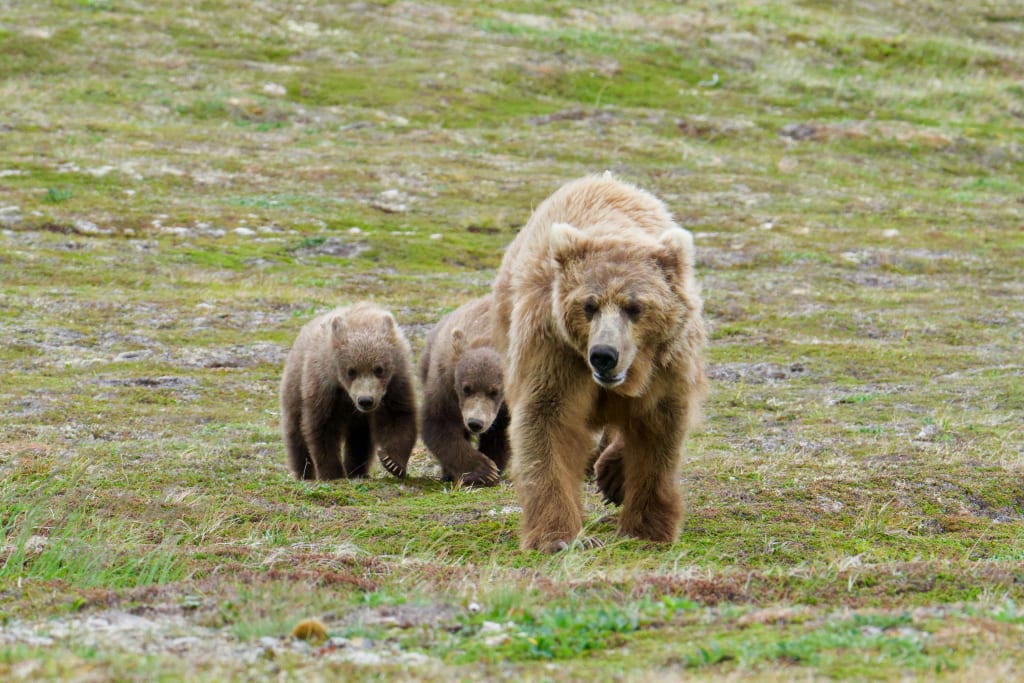
This was not a mere coincidence. We were in the open tundra. She could have headed in any direction, but decided to show off her beautiful babies.
As she walked by, a small straggler got curious and approached the humans for a sniff. It had to be shooed away so it didn’t get too far from its family.
We were fortunate enough to see many cubs during our time at Katmai, but the grand majority were older: either 1.5 or 2.5 years old. To see a COY (cub of the year, a cub that was born ~6 months ago) so close was an unbelievable experience, especially given how quickly the mother decided to trust our group. This was a moment I will not soon forget.
Brown bear cubs are born in the winter, which is why their ages are in increments of 0.5 years, as bear viewing in Katmai takes place in the summer.
THE BEARS DOWN BELOW: A BIRD’S EYE VIEW OF THE BEARS
I don’t blame the rest of the group for bailing on the Bluffs on Day 4. We had spent hours on Day 2 overlooking the river down below, waiting for a bear to get the urge to fish, to no avail. When presented with the option to return to the Bluffs or watch the fishing bears up close in another section of the river, only Alex and I chose to return to the Bluffs.
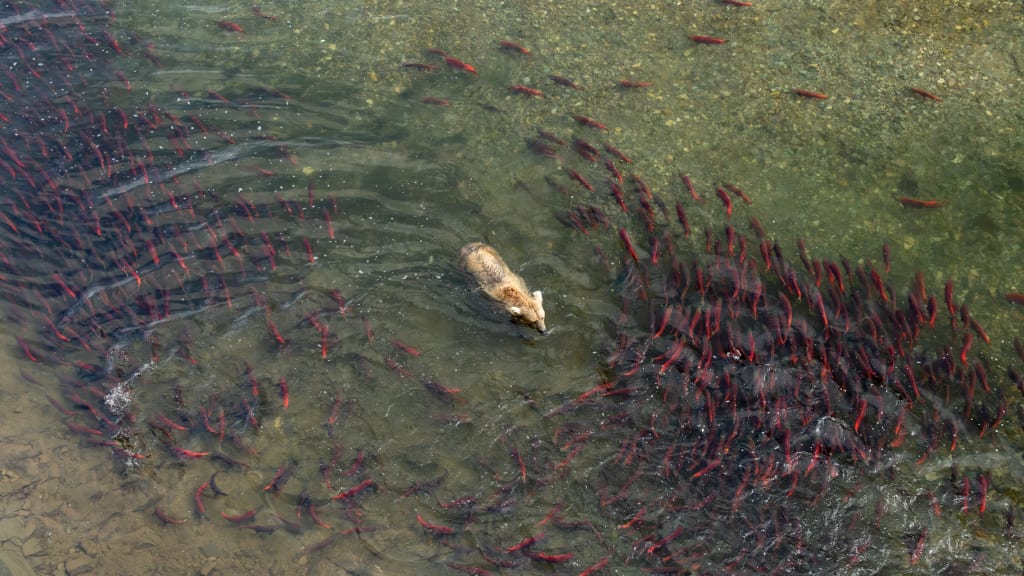
The Bluffs are cool because you get a bird’s eye view of the bears fishing in giant schools of sockeye salmon. The bears will jump, sending the fish scattering in every direction, and it’s incredible to see from above. The downside? Often you have to wait hours to watch this phenomenon.
But Alex and I were no strangers to the waiting game. This all felt very reminiscent of the three days we spent waiting in a scorching hot car in Tanzania to watch wildebeest cross the crocodile-infested Mara River. That was worth it, and we were fairly confident this would be worth it too.
But, for what felt like the seventeenth time during our Bear Camp, luck was on our side. The second we arrived at the Bluffs on Day 4, the bears awoke from their slumber and decided it was time for a meal.
They would plot their next move on the bank, staring at the bright red schools of fish swimming by. Then, all of a sudden, they would sprint and dive.
The splash would send the fish into a frenzy. They would scatter in every direction. Often, the bear was unsuccessful. The waters were deeper here, after all. But that just meant more action for us, the photographers.
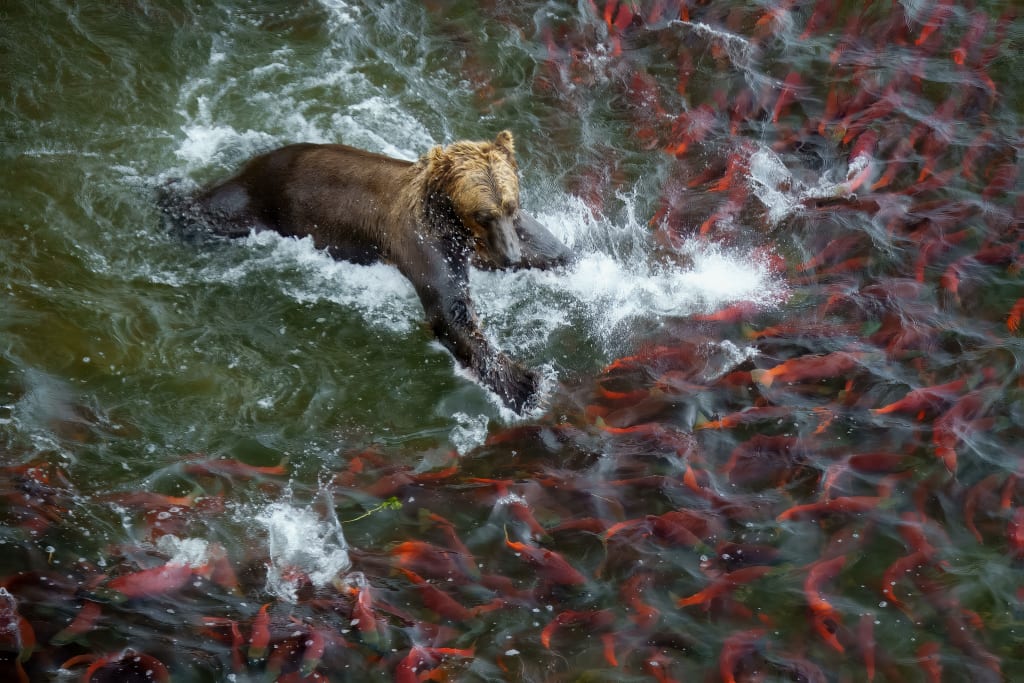
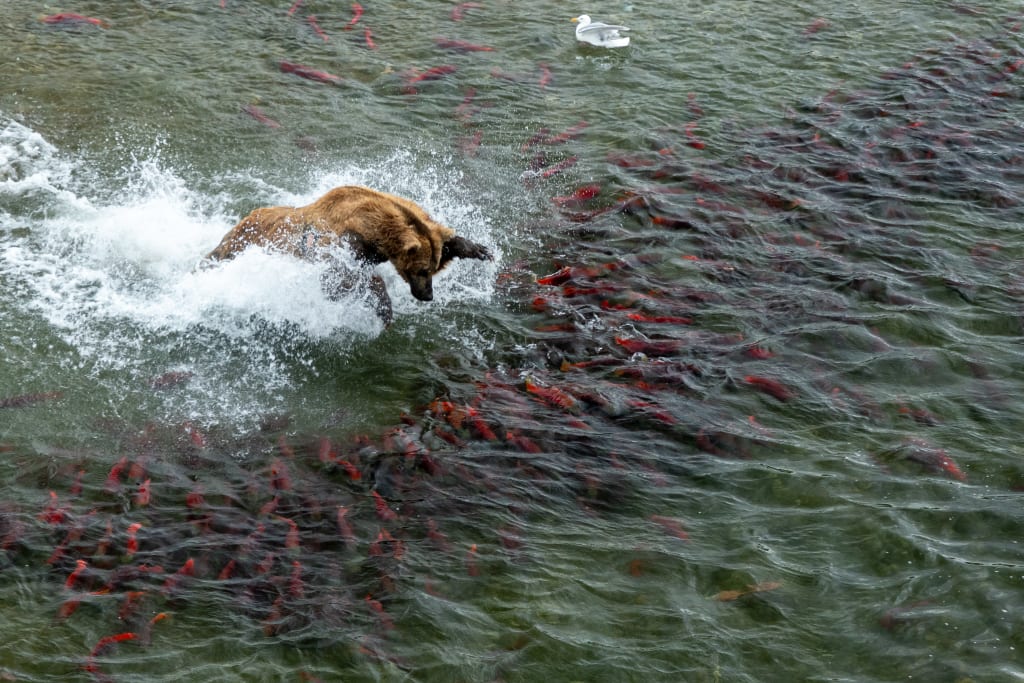
Plus, when they made a catch, it was extra exciting.
We spent hours watching the bears fish and they never let up.
We met up with the rest of our group in quite a giddy mood and were relieved to hear that they, too, had a marvelous day with incredible bear sightings. I guess there’s no such thing as a bad day at Bear Camp.
THE MISSING MAMA
I don’t know who was more terrified: myself or the cub. I can’t speak for the cub, but my heart was beating out of my chest.
Seconds earlier, a lone bear cub ascended up the steep banks of the river and practically bumped into an adult female that clearly was not its mother. Both myself and the cub were acutely aware of the danger the poor cub faced. Female bears can be very aggressive towards other mothers’ cubs and will even kill them. I sat a safe distance away, but I was worried about the poor little thing. I didn’t want to witness a disaster.
At just the right moment, the cub noticed his siblings wrestling a short distance away. He sprinted off in their direction and the other mother let him be. Phew! Crisis averted.

But there was still no sign of the cub’s mother. It was quite unusual for a mother to let her cubs out of her sight.
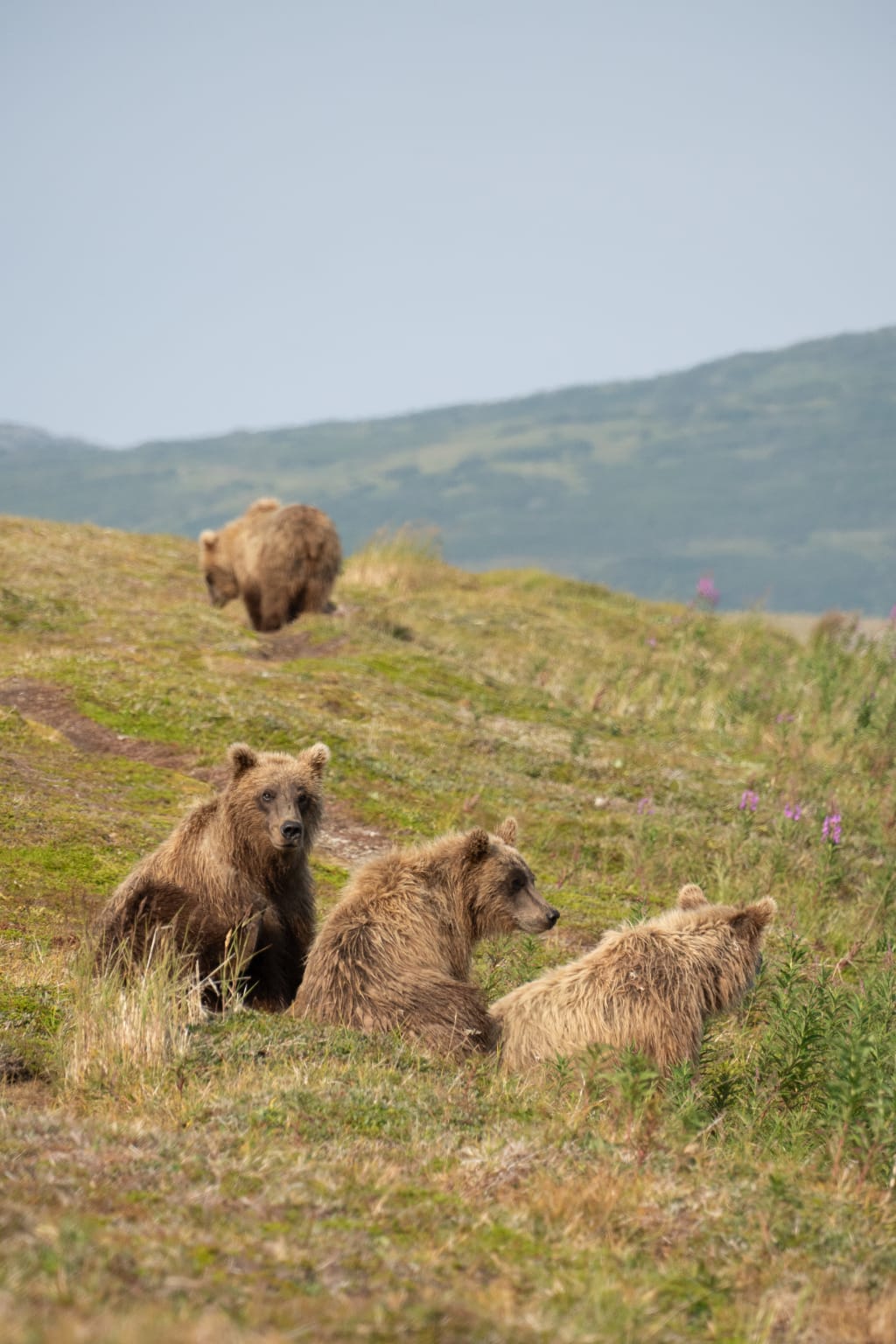
A few minutes later, the mother climbed up the steep banks. If you paid attention, you could hear her making a noise that resembled a soft snort. She was calling her cubs. The lone cub ran to her side straight away. The other two were carried away with their wrestling and were not too concerned about their mother’s request.
This encounter took place on our last morning at Fishing Bear Camp. Throughout the entire trip, Kim (a fellow guest that attended non-fishing Bear Camp last year) and Scott (our guide) told us about the major differences between the two camps (the fishing and non-fishing versions). At Fishing Bear Camp, the bears fish (duh) and at non-fishing Bear Camp, guests get closer encounters with the bears. There are fewer bears at non-fishing Bear Camp, but you get to spend time with bear families, get to know their names and personalities, and build trust with the bears that enable much closer encounters. This encounter with the lone cub and its family was special because I felt like we were getting the best of both worlds. We had been so fortunate and had a number of very close encounters with other bears, as you read about above. But this last encounter stood out to me because we could really see the personalities of each bear.
The lone cub was nervous and stuck by its mother’s side. The other two were more independent and carefree and would wander further distances away for longer stretches. The mother was far less protective than other mothers I had seen. Throughout the encounter, Scott and I started discussing his theories on survival in the wild. He believes that independent cubs have far greater chances of survival than cubs with overprotective mothers. They learn to face danger for themselves instead of relying on their mother to swoop in to help. On the other hand, the rambunctious, independent cubs often find themselves in trouble, so sometimes the cautious cubs have an advantage.
As I sit here writing this article, I’m wondering about the cubs. What are they up to today? Which ones will make it to adulthood? Will this mother’s hands-off strategy pay off?
This encounter was our very last with the wild brown bears in Alaska. It was the perfect way to end a phenomenal trip. No crazy action. No fish. No fights. No drama. Just a wholesome hour spent watching a “Day in the Life” of a family of brown bears in the wild. It was at this moment that I really appreciated just how lucky I was to have had this experience at Bear Camp. It was one of the best of my life.
EXPLORE MORE

Answering ALL Your Questions About Bear Camp (Katmai NP)

Bear Camp Archives: My Favorite Photos & Fun Facts (Katmai NP)

Comparing Alaska Bear Camp to an African Safari

The Ultimate 2 Week Alaska Itinerary: Glaciers, Bears & More

Flying Over Glaciers: A Helicopter Tour Over Prince William Sound

Dog Sledding on a Glacier in Alaska: Is It Worth It?

The Best Things To Do in Kenai Fjords National Park

Northwestern Fjord Boat Tour Review (Kenai Fjords National Park)

Kayaking to Aialik Glacier in Kenai Fjords National Park

Hiking the Harding Icefield Trail: Is It Worth the Climb?

Hiking Lost Lake Trail: Seward's Most Underrated Hike

How to Witness the Great Migration in Tanzania
