
Answering ALL Your Questions About Bear Camp (Katmai NP)
The phrase "Bear Camp" invites a lot of questions. You cannot casually mention it in a sentence without a barrage of follow up questions. And I totally get why. It's not something many people have done or talked about. I'll admit I was a little nervous going into this experience myself. Would I feel safe? Would I sleep well? Would I have enough to eat? Would I absolutely hate camping by the end of my fourth night and regret all my life choices?
Aside from the Kara and Nate video that turned me on to Scott Stone's Bear Camp, there were limited resources online to help answer my questions, and they did a different tour than I did (they did Bear Camp and I did Fishing Bear Camp). So, I took the time to write down all the questions I had before I went and answer them for your benefit.
Hopefully, I will assuage your concerns and convince you to sign up for Bear Camp. It was the most incredible experience I've had in all my travels, and I've been lucky enough to do some pretty awesome stuff.
THE BASICS
What is Bear Camp?
Bear Camp is exactly what it sounds like: watching wild brown bears during the day and camping through the night.
What company did you go with?
We went with Scott Stone Photography and had a phenomenal time. Scott, his wife Jackie, and his team made us feel very safe and their love for the bears really shone through.
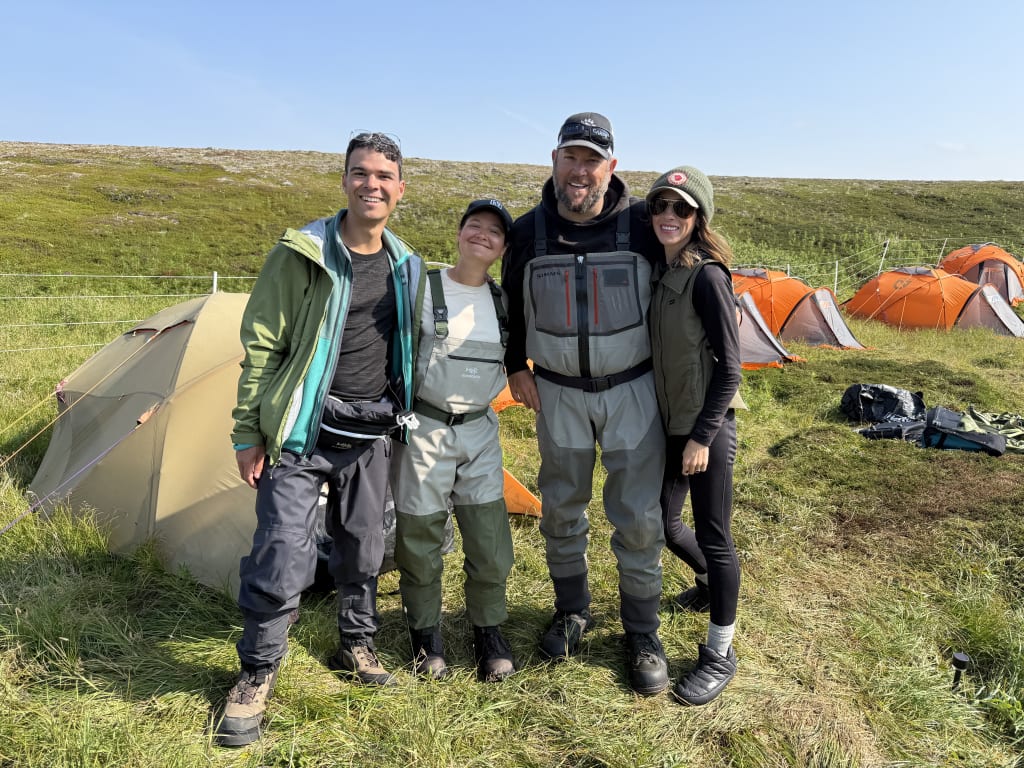
Was this review sponsored by Scott Stone?
No! We paid for this experience in full ourselves.
Where is Bear Camp?
Scott Stone runs bear camp in two different locations in Katmai National Park & Preserve. For Bear Camp, you'll fly into Kodiak and take a float plane from there. For Fishing Bear Camp (which is what we did), you'll fly into King Salmon and take a float plane from there.
Can you visit Katmai without a guide?
Nope. You'll want a guide with you to keep you safe, plus you'll need supplies: tents, food, bear spray, etc.
How many days do you spend at Bear Camp?
We spent 5 days at Fishing Bear Camp. Non-fishing Bear Camp is 4 days.
What time of year does Bear Camp run?
(Non-fishing) Bear Camp runs from mid-June through the end of July. Fishing Bear Camp runs in the beginning of August only.
What factors make or break the experience at Bear Camp?
The bear sightings at Bear Camp are practically guaranteed to be awesome. There are many bears and you will spend a lot of time watching them, so you will see a lot of action.
So, whether or not you have a great time comes down to three things, in my opinion.
The first is the people. Do you trust your guide? Do you like the other people in your group? We got incredibly lucky on both counts. We had a fantastic group of people with us.
The second factor is the weather. Here again we got incredibly lucky and had sunshine for the grand majority of camp, aside from a couple hours the first day where it rained. Past groups have not been so lucky. Kim, a repeat Bear Camper, said her first experience involved a deluge. Rain does not inherently mean disaster, but it's certainly more uncomfortable.
The final, and most important, factor is your attitude. Bear Camp is not a luxurious experience. You need to be comfortable standing in the cold or in the rain. You need to have patience. Not every second of Bear Camp will be action-packed. If you go in with the right attitude, you'll have a wonderful time.
THE BEARS
What kind of bears are you viewing?
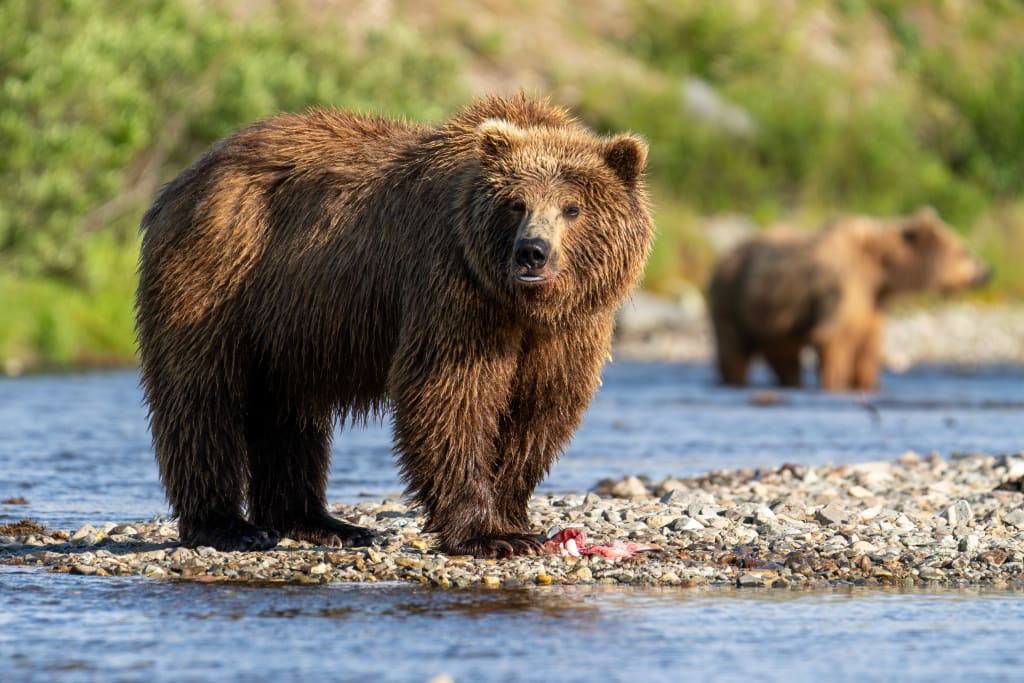
In Katmai, there are coastal brown bears (not to be confused with inland grizzly bears).
Do you see bears every day? How many bears did you see each day?
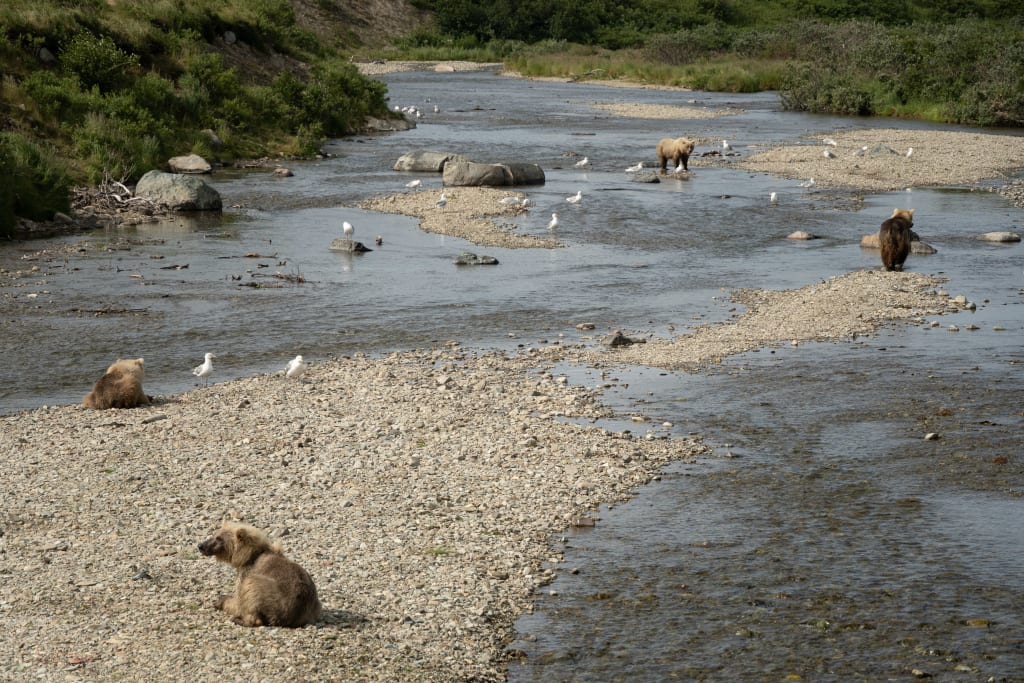
We saw dozens of bears (no exaggeration) every single day! Hardly a moment went by without bears in our line of sight and sometimes we would look around and see ten to twelve bears at the same time.
How close did you get to the bears?
We got pretty close to the bears a number of times, much closer than I thought possible! However, we NEVER approached the bears closely. Often we would sit down and set up in a particular spot, and a calm bear would approach us to fish or relax near us.
Did you see cubs?
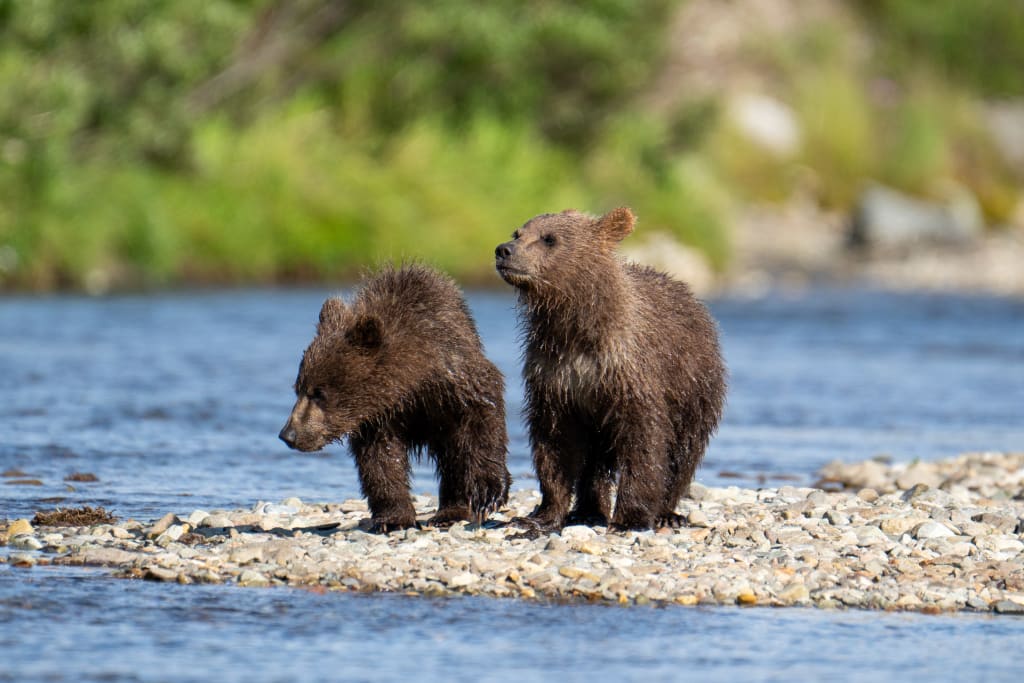
Yes! We saw COY (cubs of the year, born less than six months ago) as well as more mature cubs that were 1.5, 2.5, or 3.5 years old. We even got a close up sighting with 3 COY and another close up sighting with 2 2.5 year old cubs. All cubs are born in the winter, which is why their ages are in increments of 0.5 years, as bear viewing in Katmai takes place in the summer only.
Are the bears active or lazy? What are the bears doing?
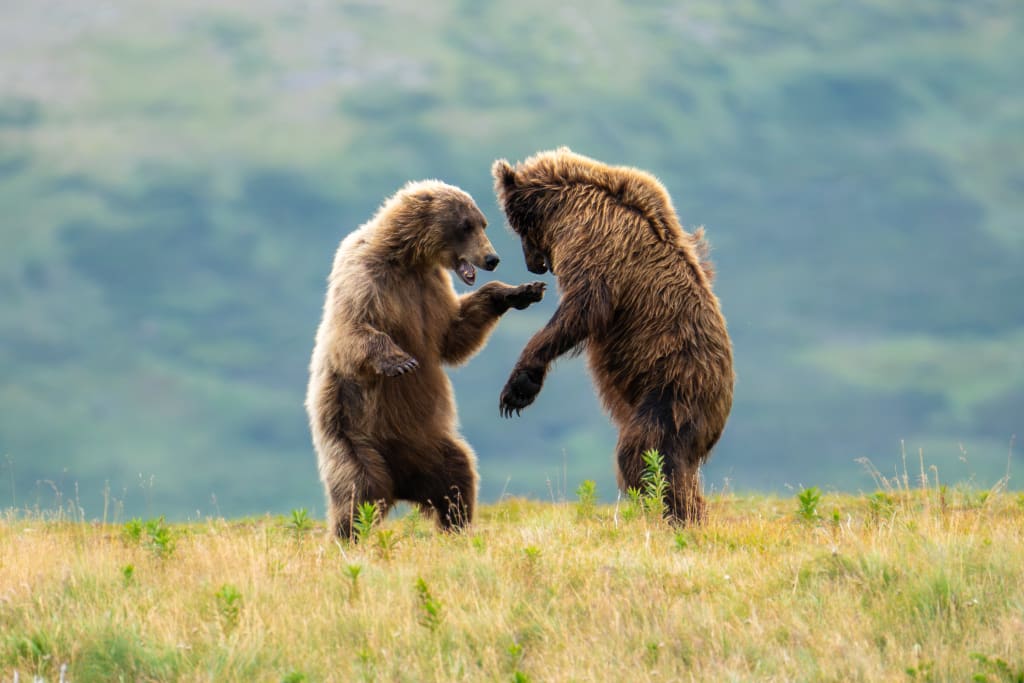
They can be both, although most of the time they were active. The older bears would fish and the younger bears would spar with their siblings, although a couple of mature 8 or 9 year old brothers also wrestled with each other for fun.
What other wildlife might you see?
You can see caribou, eagles, wolves, wolverines, and lynxes, although all of these animals except caribou are said to be elusive. Out of everything I listed, we only saw eagles (three times though, which is apparently uncommon).
SAFETY
Are brown bears aggressive towards humans?
Unlike polar bears (who actively hunt humans), brown bears are not aggressive towards humans if you maintain a safe distance. It's important to avoid approaching a brown bear too closely and never put yourself between a mama bear and her cubs. I would also avoid walking alone in bear country.
Does Scott Stone carry a gun?
He does not carry a gun, as he believes it changes the way humans interact with the bears and can lead to injuries for humans as well. He carries bear spray, and he has never had to use it.
Did you feel safe?
I felt safe the entire time. Scott handled close bear encounters with confidence and grace. Often, bears would approach us. Sometimes, a cub would get excited or curious and approach too closely, and Scott calmly ushered it away. He did not panic, prematurely reach for bear spray, or run away. He made sure to give us instructions before and during close encounters so we always knew what to do. Never once was I nervous that something bad was about to happen. I have full confidence in Scott's ability to keep his guests safe.
Do I need to buy bear spray?
Nope! Scott and the other guides will carry bear spray. You don't need to worry about it (plus, you can't fly with it). If you are planning to go hiking in Alaska, though, I would recommend it. We bought it for our hikes in Kenai Fjords National Park and we did encounter a black bear on the trail (at a safe distance, so we didn't have to use it).
What behaviors can I practice to stay safe?
There are a few rules you should follow while at Bear Camp to stay safe:
- Do not go anywhere (outside of camp) by yourself.
- NEVER approach a bear at a close distance, especially a mama bear with her cubs. They can approach you, but you should never approach them.
- If you're sitting when a bear approaches, avoid standing up. Remain seated and move slowly. Avoid any quick movement in general.
- Avoid eating when you are close to a bear.
What do you do if a bear approaches you?
Remain calm, stay seated if you are already seated, and look to your guide for guidance. Don't worry though. Our close encounters with bears were peaceful and stress-free. The bears moved slowly and calmly, as did we. We were excited to see the bear so close, especially when a mama bear brought cubs over (which happened twice!).
Can the bears come into camp?
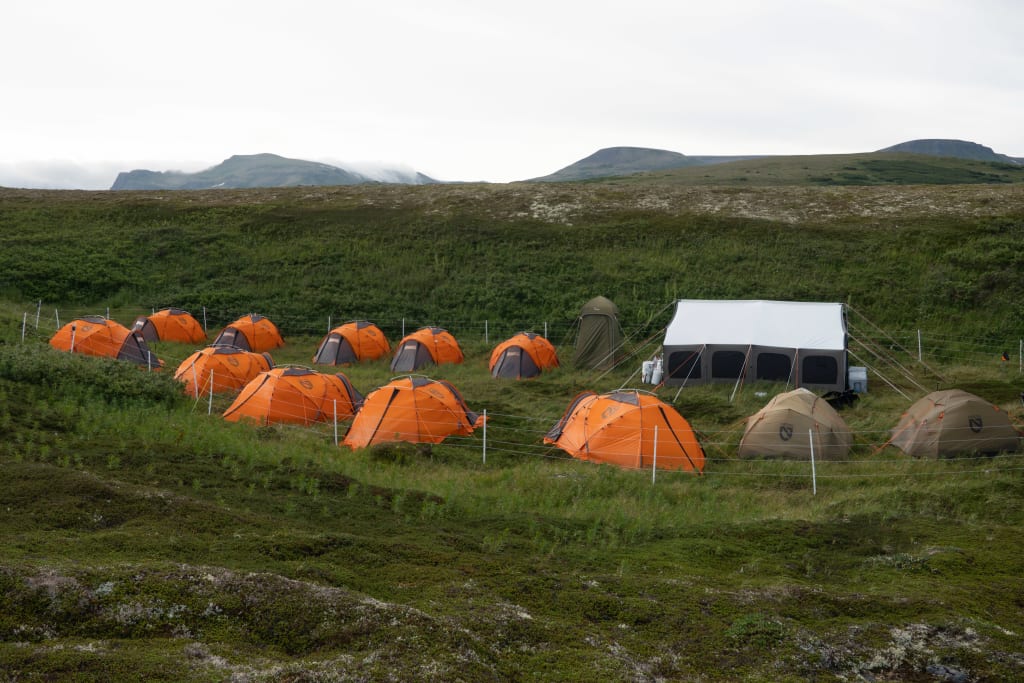
There is a fence deterring the bears from entering camp. Your guide should also take measures to reduce the bear's interest in camp, such as locking up food in coolers. However, you are in the wild, and the bears will often approach the camp. This is not a cause for concern!
LIFE AT CAMP
What does "camp" look like?
Camp consists of a main tent, bathroom tent, and a collection of personal tents (one for each person) surrounded by a bear fence. In the main tent, you will find snacks, eat meals, hang your waders to dry each night, charge your camera batteries, and socialize.
What did you eat? Was the food good?
For breakfast and dinner, we ate dehydrated meals from Peak Refuel or Gastro Gnome.
This was one of the areas I was most concerned about before arriving at camp. I would consider myself a moderately picky eater, so I was nervous about the taste of the bagged food. However, I was pleasantly surprised and I liked every meal I tried!
For lunch, we ate dried snacks provided by Scott: granola bars, bags of chips, Astronaut freeze-dried fruit, etc.
Can they accommodate dietary restrictions?
Yes, I don't eat meat and there were plenty of options for vegans/vegetarians. I personally liked the Peak Refuel Three Bean Chili Mac and Butternut Dal Bhat for dinner and the Mountain Berry Granola for breakfast.
Are snacks provided?
Yes, Scott has a giant bin of snacks you can grab from, including granola bars, bags of chips, and Astronaut freeze-dried fruit.
Can you bring your own snacks to Bear Camp?
Scott advises against this on his website, but we did (we read the guidance on the app only, and the "no snack" policy wasn't mentioned there). We brought sealed, dried snacks only (dry roasted edamame and chickpeas, granola bars, etc) and that was totally fine. You do not want to bring snacks with a strong scent to Bear Camp. We did have to leave the snacks in the main tent overnight, though, as there is a strict no-food policy in the tents. We wouldn't want to attract bears, after all.
Is there plenty of drinking water?
Yes, they have plenty of bottled drinking water at camp. Scott Stone provided a refillable water bottle to take with you into the field, but I recommend bringing a 2-3L water bladder with you from home as you can be away from camp for up to 12 hours at a time and it's important to stay hydrated.
What was the sleeping situation like? Do you sleep in a tent or cabin?
Each person gets their own tent, but Alex and I moved our sleeping bags into the same tent so we could sleep together and we put our gear in the spare tent.
We were provided with an air mattress and sleeping bag and I was impressed by how comfortable it was.
I highly recommend bringing an eyemask with you to camp, since the sun sets late in Alaska in the summer and you'll go to bed when the sun is still shining.
Scott provided ear plugs if you're a light sleeper. We did have some snorers in our group, but it didn't keep me up as the tents were pretty well spaced out.
Scott also mentioned that guests typically sleep poorly their first night. There are nerves and excitement about being at camp. I couldn't get to sleep for a couple hours that first night either, so of course I was nervous about being overtired. But, every night thereafter I slept like a log and didn't wake up once throughout the night. I was also happy that we had plenty of time to sleep each night. I need my eight hours!
What was the bathroom situation at camp?
At camp, there is a bathroom tent. The "toilet" is a large bucket with a toilet seat on top. I went in expecting the worst but I have seen much less ideal bathroom situations so I was pleasantly surprised. We were provided with wet wipes and hand sanitizer in the bathroom tent. I was also wondering if you could use the bathroom in the middle of the night (was it safe to walk in the dark by ourselves, even within the bear fence?). The answer was yes, it's safe.
Are there showers?
There are no showers at camp. Each day, Scott provides guests with 1 body wipe, but I'd recommend bringing an extra pack in case you want to use more than 1 per day (perhaps one at night and one in the morning). I bought these on Amazon and liked them.
I definitely recommend bringing deodorant and enough clean clothes (1 fresh shirt, pair of socks, and underwear for each day). I purchased dry shampoo for this trip as I was worried about how greasy my hair would get, but didn't bother to use it. I just wore a hat the whole time.
How do you brush your teeth?
It's always a challenge brushing teeth while camping. We used drinking water to wet the toothbrush and made sure to spit our toothpaste outside the fence to ensure bears weren't attracted by the smell.
Is there Wi-Fi?
Yes, there is Wi-Fi at camp.
Is there a place to charge devices?
Yes, you can charge camera batteries in the main tent each night. You're also given a portable charger for your tent to charge your phone. Scott explicitly calls out that there should be no laptops at camp as they require too much energy to charge, plus they could get damaged in the case of heavy rain.
What are the evenings like at camp?
Everyone, guests and guides alike, gather in the main tent immediately upon return from the fields to eat dinner. You can pick a dehydrated meal from the cooler and someone on Scott's team will boil water to prepare your meal. We usually socialized for about an hour and then went to our tents to go to sleep. I had a blast getting to know everyone and sharing funny stories and photos from the day.
DAILY SCHEDULE
What time do you wake up?
That depends on the day, but Scott will tell you the night before. We usually woke up at 7:30am and left camp an hour later at 8:30am.
What does a typical day at bear camp look like?
I woke up at 7:30am most days and went immediately to the main tent, where I'd pick out my breakfast. We then got ready to leave camp and would take off by 8:30am. We were out in the field for the majority of the day, usually returning to camp between 6 and 9pm, depending on the weather and how the group was feeling.
How long did you spend out watching bears each day?
We spent between 10 and 12 hours each day watching bears. We would move around every few hours or so to a new location.
What was the bathroom situation like when you were away from camp?
Since you are out for a long time each day, you will inevitably need to use the "bathroom" out in the fields. For a #1, since there are no facilities, you'll ask Scott if it's okay to go to the bushes (you can't just wander around on your own without telling anyone in bear country). Sometimes he'll send a guide to accompany you and other times he'll let you head to a bush nearby on your own if he deems it safe. I recommend bringing the following in your day pack each day: toilet paper (bring this from home; Scott only provides wet wipes at camp), ziploc bags for trash, and hand sanitizer. If you need to go #2, you'll need to make your way back to camp with a guide.
Is it strenuous? Do you walk a lot each day?
You walk a few miles each day, usually in increments of 30 minutes or less on relatively flat ground. Scott is very accommodating to the group and made sure everyone was comfortable with the pace. We had a 71 year old guest in the group and he did great!
Can you sit while watching bears?
Yes, in fact that is safer, especially when they are very close by.
Do you return to camp for lunch?
We did not return to camp for lunch and just had snack breaks every few hours. Most people in our group didn't mind, but Alex (who has a high metabolism with all the running he does) got quite hungry by the time the evening rolled around.
Can you eat or drink while watching the bears?
You can eat or drink when the bears are at a safe distance away. Scott will provide guidance on when you can snack.
TOURS
Which tour should I pick: Bear Camp or Fishing Bear Camp?
The major difference between the two is, as is undoubtedly obvious from the name, in Fishing Bear Camp, the bears fish. The other difference is that encounters with bears tend to be more intimate at non-fishing Bear Camp. You get to know the names and personalities of individual bears, and, as they learn to trust you, get much closer to the bears as well. That being said, we got incredibly lucky with some intimate encounters at Fishing Bear Camp.
One of the guests in our group, Kim, had done Bear Camp the previous year and Fishing Bear Camp with us this year. She preferred Fishing Bear Camp, although she absolutely loved both experiences. You honestly can't go wrong. There is a lot more availability each year for non-fishing Bear Camp, so it's easier to secure a spot.
Does it get boring after 4 or 5 days?
I was worried about this. My other wildlife experiences were either much shorter (only one hour spent with gorillas and chimpanzees in Uganda) or diversified (there were so many species of animals in the Galápagos and in Kenya and Tanzania), so I wasn't sure how I'd feel about 5 days with brown bears. But I absolutely loved it. The bears are so active and dynamic, and every day offered something different so it didn't feel repetitive.
Where else can you see brown bears in Alaska?
The two most accessible alternative locations to see wild brown bears in Alaska are Brooks Falls in Katmai National Park and Lake Clark National Park.
Brooks Falls is a small waterfall with elevated viewing platforms nearby that overlook the spot where bears congregate to catch fish. You'll view bears from a further distance here and with more people, but it's easier to access and can be done as a day trip.
In Lake Clark, brown bears gather along the coast to dig for clams and fish for salmon. Most visitors fly in for a guided day trip. The experience is generally less crowded and more immersive than Brooks Falls, although the bears are more spread out and you won't necessarily see the same concentration of fishing bears here.
How does Bear Camp compare to a day tour experience?
Bear Camp is a much more immersive experience than a day tour. At Bear Camp you spend several full days in bear habitat, giving you more time to observe different behaviors, photograph the bears, and have those incredible close encounters without feeling rushed.
I personally was nervous about getting bad weather if we opted for a day trip and missing out on the bear sightings altogether, so I opted for the 5 day Bear Camp. I have no regrets!
How much does Bear Camp with Scott Stone cost?
We paid $5,799 per person for Fishing Bear Camp in 2026. Prices for 2028 (the next available camps as 2027 is already sold out) are $5,699 for Bear Camp and $5,999 for Fishing Bear Camp. This is an expensive experience, but it makes sense that the price is high as it's incredibly remote and costs a lot to transport people and supplies to the camp sites (around $5,000 per chartered float plane, which can transport only 3 guests). Scott also limits the number of guests on each tour.
How far in advance do you need to book Bear Camp with Scott Stone?
We booked one full year in advance and secured the last couple spots. Already (as of August 2026), 2027 camps are sold out and 2028 camps are available to book. Scott Stone does have a waitlist if you have your heart set on trying to camp in 2027.
PEOPLE
How many guests were there?
We had six guests at our camp, ourselves included. Scott's website advertises 4-8 guests.
How many guides were there?
We had six guides/staff members, including Scott.
Does the group stick together?
The grand majority of the time, the group of 12 (6 guests and 6 guides) stuck together. Once, we split into two groups because some guests wanted to do one thing and the other group another, but both groups were accompanied by multiple guides.
Is there enough room for everyone to get good photos?
Yes! We would position ourselves in a line and everyone had a perfect view at all times. Everyone in our group was very conscious to make sure they weren't blocking other people's shots as well.
What's the vibe like? Was it relaxing or serious?
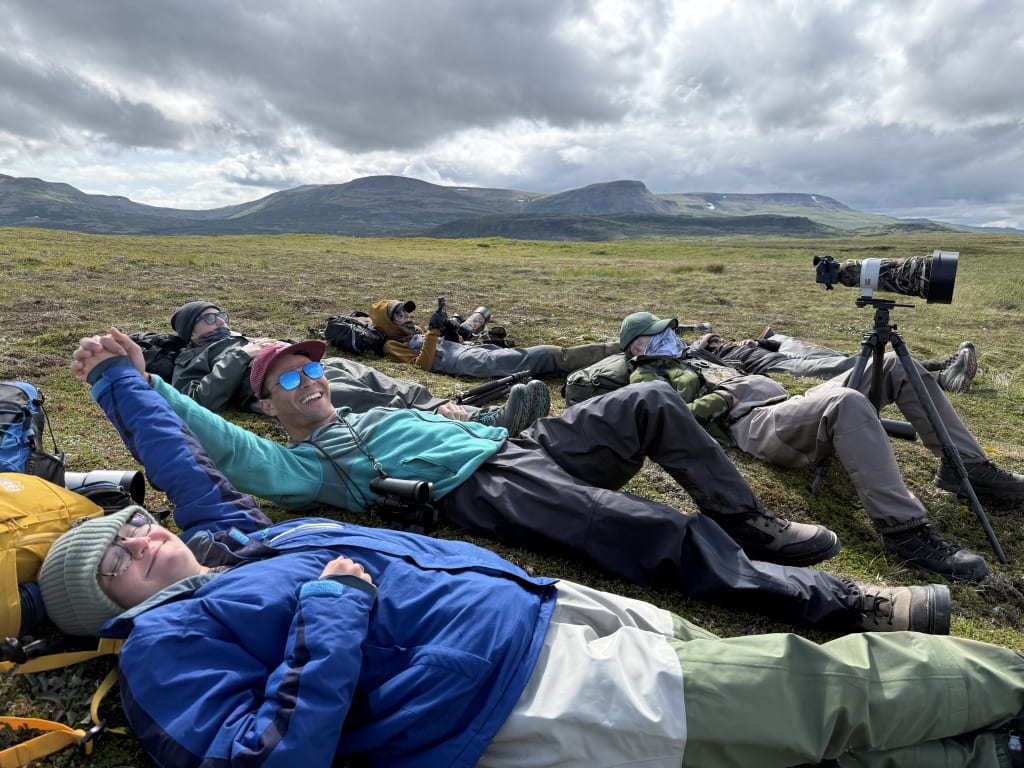
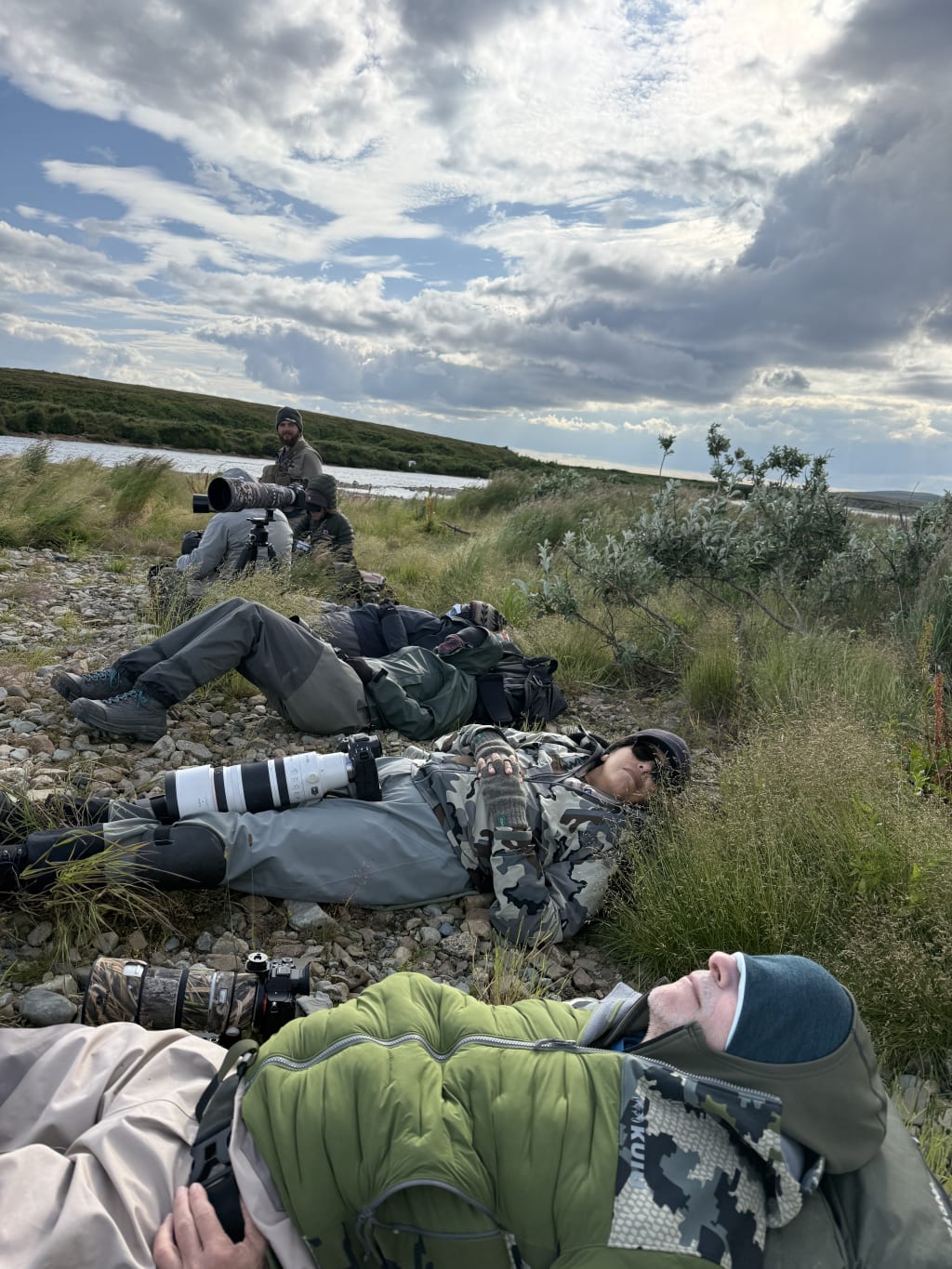
I was worried it would be very intense and serious because everyone else in our group were semi-professional photographers! But it was chill. Everyone was so friendly, and you were welcome to take naps when you got tired.
Is Bear Camp a good idea for non-photographers?
Alex and I had different answers to this question.
I am not a serious photographer by any means, although Alex is quite a skilled photographer (as you all know by checking out these awesome photos!). I am a wildlife enthusiast, though, and I had a marvelous time, so I would say yes.
Alex, on the other hand, believes day trips are better for non-photographers, as it is a large investment of time and money to do Bear Camp for 4 or 5 days if you're not taking photos.
Is Bear Camp suitable for kids?
It is not. Scott requires a minimum age of 16 years old to participate in Bear Camp.
Who would enjoy the Bear Camp experience?
You need to meet all the following criteria in my opinion to enjoy bear camp:
- You're a wildlife enthusiast who loves animals.
- You're patient.
- You don't need luxury accommodations, you're comfortable camping, and you're okay being in the rain. You don't mind being uncomfortable sometimes in exchange for extraordinary experiences.
- Ideally, you have an interest in photography.
GETTING TO BEAR CAMP
How do you get to Fishing Bear Camp?
You will take a float plane from King Salmon, Alaska, to Bear Camp in Katmai National Park.
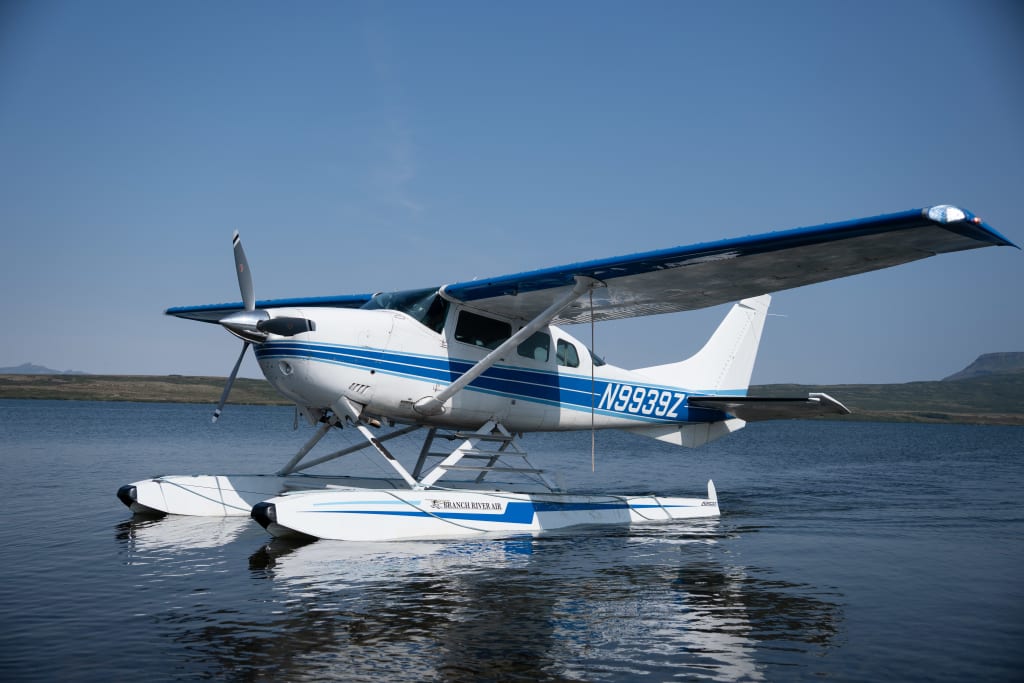
What is it like flying in a float plane?
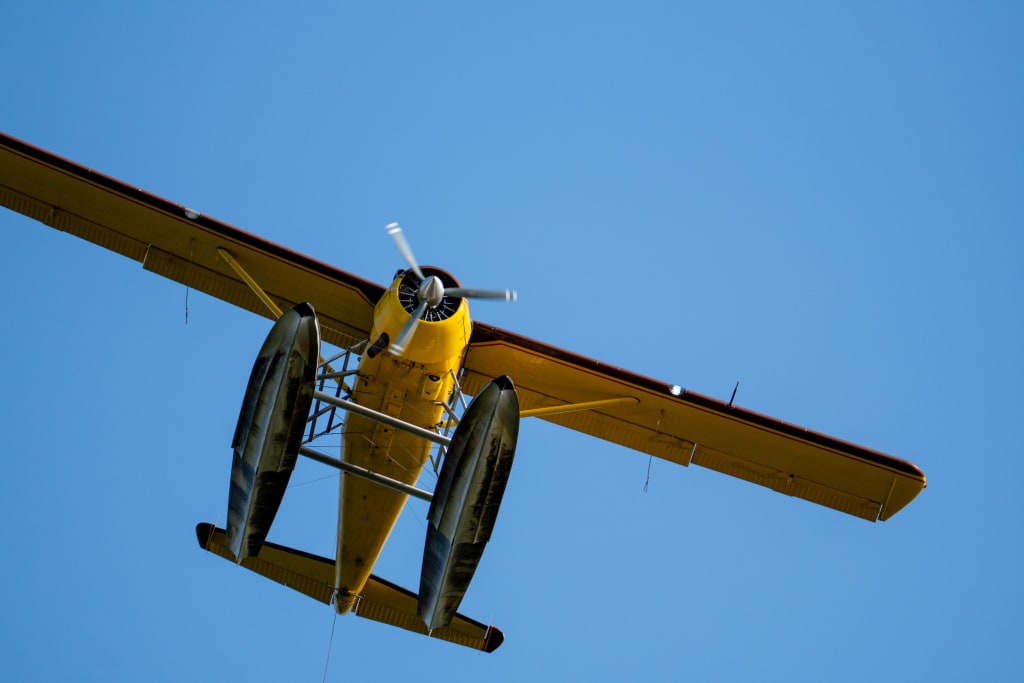
I thought it was pretty cool. It's a very small aircraft. We flew with 3 passengers and one pilot. The biggest difference between a float plane and a regular plane is that a float plane can land on the water. Water landings are incredibly smooth compared to land landings. You hardly notice you've landed. For those who have never been on a small aircraft before, they can be a little bumpier than regular planes, but I still felt safe. They also fly much lower to the ground than commercial airplanes.
Where should I stay in King Salmon before Bear Camp?
We stayed at Sockeye Cabins. I can't say I was too impressed. The cabins are quite outdated and small and the food is just alright. But, I'd still recommend it, because the location was fantastic (a 2 minute walk from the King Salmon airport) and there are limited options in King Salmon.
When should I arrive in King Salmon?
I would arrive in King Salmon the day before Bear Camp starts, which is what we did. You can also arrive a few days earlier and either go fishing or take a day trip to Brooks Falls, which is what the other guests in our group did before Bear Camp.
When should I book flights out of King Salmon?
We booked the evening flight (6pm) out of King Salmon on the day Bear Camp ended. We didn't have a chance to shower or eat before hopping on that flight. If you want a more relaxing evening, you could plan to get a room in King Salmon for a night instead.
How long is the flight from King Salmon to and from Bear Camp?
The flight lasted 40 minutes.
What is the schedule like on the day you arrive?
I'll admit, the start of Day 1 felt a little disorganized. The night before Bear Camp, we received a phone call from Scott's admin who asked where we were staying in King Salmon and mentioned she would send an update that evening on the departure time the next morning. We were told 11am, but a representative showed up at our hotel at 10:15 and asked that we be ready to depart in 10 minutes. Thankfully we had already packed and eaten. We were then transported to Antlers Inn & Branch Service "Airport". There were very limited facilities, just one building and a porta potty. We waited there for three hours for the float planes to depart. The float plane schedules change frequently due to the weather conditions, so be prepared to wait.
What is the schedule like on the day you depart?
We woke up early on the last day (6:30am) to get one last bear viewing session in and returned to camp by 11am. We spent a few hours relaxing before we got the message that our plane would arrive at 3pm to take us back to King Salmon. The weather changes rapidly, so the flight plans change quite frequently.
WEATHER & CONDITIONS
What's the weather like in Katmai National Park?
The weather in Katmai National Park is unpredictable and rain is common. During bear-viewing season, you should be prepared for rain, wind, sunshine, and significant temperature swings, potentially all in the same day.
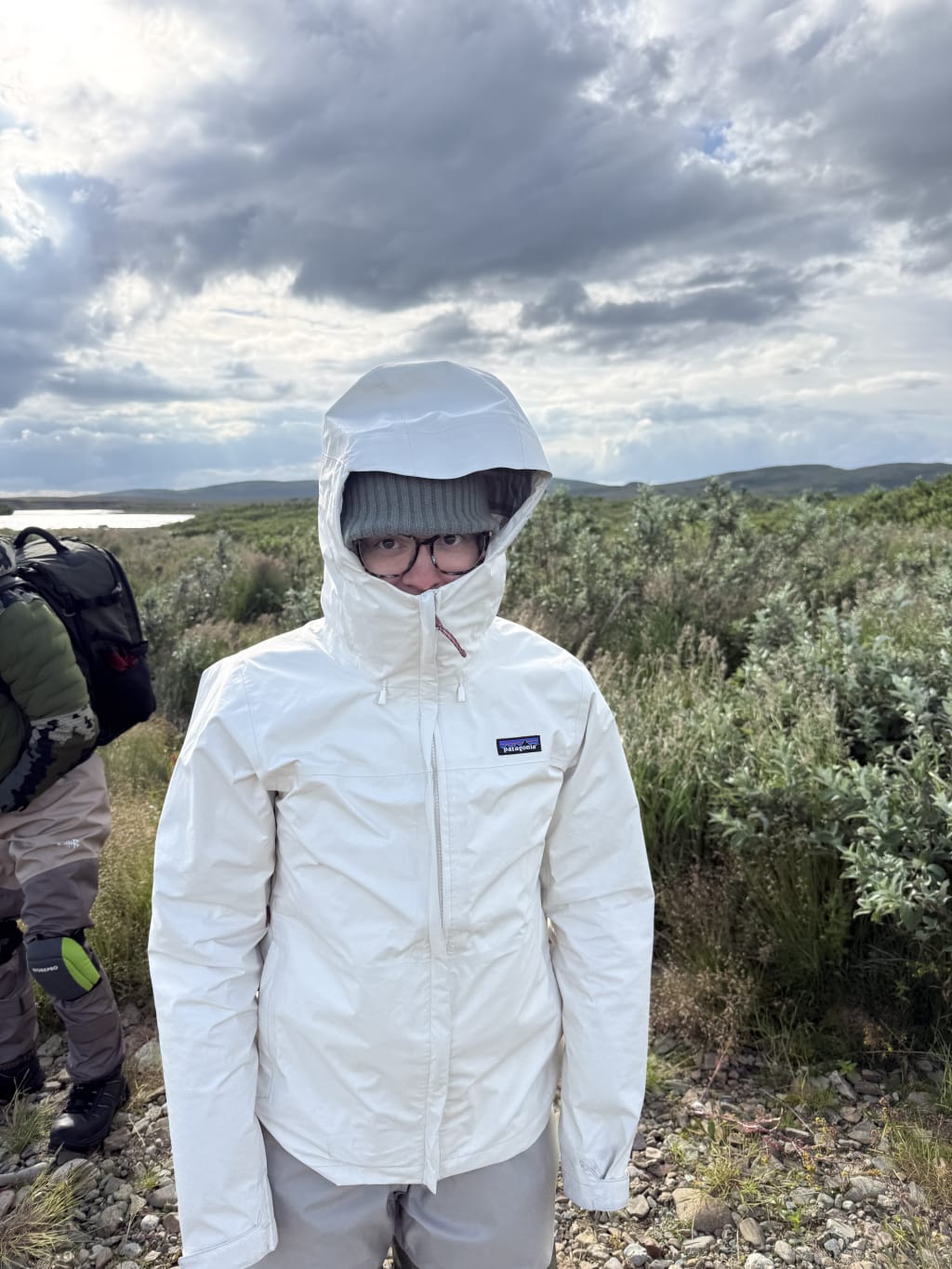
The biggest thing we learned is not to trust the weather forecast too much. Weather can change quickly in this part of Alaska and conditions at a remote coastal bear camp may be very different from what your weather app shows for King Salmon. Our forecast called for rain every day and it only rained once for a couple hours on one day. My advice is to pack as though you're going to encounter cold, rain, and wind even if the forecast looks beautiful. Layers and high quality waterproof jackets are essential!
Do you still go bear viewing if it rains?
Yes, come prepared with high quality rain gear and rain covers for your camera.
How bad are the bugs?
I was pleasantly surprised: there were hardly any bugs! A nice breeze kept most of them at bay. I only used my bug spray once the entire trip.
Note: I do NOT recommend DEET, as it destroys camera gear and clothing. I recommend Picaridin instead, as it's just as effective and will not ruin your gear. Scott Stone also has bug spray at camp that you can borrow.
PACKING
What should I pack?
I'll start by saying: pack light. You have a strict 40 lb weight limit for gear, as you'll be flying in a small float plane. I would avoid bringing a roller suitcase at all costs, as it's going to be difficult to transport to camp. I would bring a small backpack or day pack that you can bring into the field, as well as a larger backpack or duffel bag for everything you'll need. I brought a 25L daypack and a 40L hiking pack.
Below, I've included a list of what I think you should bring to camp:
Clothing
- Waders
- Wading boots
- Rain jacket
- Baseball cap
- Warm beanie
- Waterproof gloves
- Socks (1 pair per day + 1 or 2 spare pairs)
- Merino wool long-sleeve shirt or quick-dry athletic shirt (1 per day)
- Hiking pants or leggings (I brought 2 and re-wore them. They didn't get muddy underneath my waders)
- Sports bras
- Underwear (at least 1 per day)
- Warm layers: down jacket, fleece, etc.
- T-shirt and PJ pants for sleeping (I brought but I'll be honest, after night 1 I ended up just sleeping in my other clothes I had worn that day. I'll note that it was usually warm when we went to bed but colder throughout the night so I wanted my jacket and warm hat right next to my bed)
- Rain pants (helpful to have if it rains at night while you're at camp walking between tents and not wearing waders)
- "Camp shoes" like Flip Flops that you can wear around camp at night
Toiletries
- Deodorant
- Hand sanitizer
- Toilet paper & ziploc bags (Scott only supplies wet wipes, and doesn't bring them out in the field)
- Body wipes (Scott supplies but it's nice to have more than 1 per day)
- Toothbrush & toothpaste
- Hairbrush
- Sunscreen (especially for face)
- Bug spray
- Dry shampoo (I brought but didn't bother with this honestly)
- Lip balm
Camera Gear
- Camera (we had a Sony a6400 and a Sony a6700)
- Lenses (we brought a Tamron 18-300mm and a Sony 200-600mm)
- Spare batteries
- Spare memory cards
- Tripod (we didn't bring it and desperately wish we did)
- Rain cover for camera
- Polarizer (helps capture the bright red color of the salmon)
- Dry bag for camera (in case of heavy downpour)
- Binoculars
- Lens wipes
Medicine
- Personal medications
- Advil
- Pepto Bismol
- Digestive medicine like Gas-X
- Benadryl
- Melatonin
- Bandaids
Miscellaneous
- Eye Mask
- Glasses and sunglasses
- Rain ponchos
- 2-3L water bladder (so you can bring extra water out into the field each day)
- Charging cables for phone, camera, etc.
- Face Gaiter (I wish I had one - the high wind on day 1 left my nasal passages a little irritated the next day)
- Feminine Supplies you might need
- Hiking snacks (optional, Scott has plenty. If you bring, remember to store them in the main tent and bring dry, low-scented foods only)
What should I NOT pack?
Do NOT bring roller suitcases. Also, do not bring bear spray (you can't fly with it, plus the guides will have it, so you don't need to worry). Bear bells are also completely unnecessary.
Scott also recommends leaving laptops at home (they take too much energy to charge, plus they could get damaged in a downpour).
I would also personally leave the makeup at home. I usually wear it daily but couldn't be bothered at camp (plus, there's no mirror so it's hard to apply and I was so tired at the end of the day the last thing I wanted to do was scrub makeup off). This should probably go without saying, but I'd also leave the hair styling tools (hair dryer, straightening iron, etc) at home.
I also don't think you need a headlamp. It's light out late in Alaska in the summer, so you won't be walking around camp in the dark unless you get up to use the restroom in the middle of the night.
Another thing I'd leave at home is an umbrella. It will be useless with the wind in Katmai.
Lastly, drones are strictly prohibited.
What camera gear did you bring?
We brought two cameras: a Sony a6400 and an a6700 (much better for wildlife photography).
We also brought two lenses: a Tamron 18-300mm and a Sony 200-600mm. We used the Sony 200-600mm more often but found the Tamron to be particularly useful in certain moments, such as close encounters, or watching the bears fish from above at the Bluffs.
We really wish we brought a tripod. We also wish we brought a polarizer, which is helpful for being able to see the bright red fish in the camera, although Scott provided one that we borrowed.
It's also critical to bring rain covers for your camera as well as a dry bag to keep it protected in the case of heavy rain (which we thankfully had none of during our time).
Do I need binoculars?
You don't need them, but I highly recommend them! We were really surprised that no other guests brought them. Often, you get so close to the bears that you don't need them, but it's nice for when something interesting (such as breastfeeding or sparring) is happening a short distance away.
Alex bought Vortex Diamondback binoculars and we loved them. They're small, compact, and of excellent quality.
What waders did you buy?
I bought BassDash waders off Amazon and they worked great. They were the cheapest I could find that were highly reviewed and they held up very well on my trip. I highly recommend.
I bought Frogg Toggs wading boots as well. They worked just fine and were affordable, but they showed small signs of wear after just five days. I'd still recommend them.
My biggest tip is to size up on the wading boots, as you have the stockings on the waders in your boot that take up a lot of space. Buy early, and try everything on exactly as you plan to wear it at camp (boots, socks, layers underneath, etc) and make sure everything is comfortable.
Note: Scott recommends against the waders that come with boots, as they are not comfortable. Buy separately.
Do I need rain gear?
Yes, you need very high quality rain gear, as rain is extremely common in Katmai. We bought Patagonia Torrentshell rain jackets and they worked great.
I would also recommend bringing rain pants if you have them in case it rains at night when you are at camp (the only time you won't be wearing your waders, which are waterproof). That will ensure your pants don't get wet as you walk from the main tent, bathroom tent, and your personal tent.
What do I need to pack in my day pack?
When you leave camp each day to watch bears, I recommend bringing the following in your day bag:
Day Pack
- Layers: fleece, coat, warm hat, waterproof gloves, etc.
- Baseball cap
- Waterproof rain jacket (non-negotiable) and rain poncho (optional)
- Camera gear (including lenses, spare batteries and memory cards, tripod, waterproof rain cover, dry bag, polarizer, and lens wipes)
- Binoculars
- Toilet paper, ziploc bag, and hand sanitizer
- Snacks
- Plenty of water (2L minimum)
- Medicine (Advil, Bandaids, etc)
- Sunscreen
- Sunglasses
- Bug Spray
- Face Gaiter
What did you wear every day?
I wore hiking pants, a Merino wool long-sleeve shirt, and socks underneath my waders and wading boots. I also brought layers: fleece, down jacket, raincoat, warm beanie, and gloves.
Are there facilities near camp (pharmacy, etc)?
There are no facilities near camp. No roads, no buildings. Bring what you need in terms of medications or supplies!
What should I do with my spare luggage that I don't need for bear camp?
The Antlers Inn & Branch Service stored our suitcases at the "airport" for us. They were locked in a storage room and safely returned to us when we made it back to King Salmon.
HAVE A QUESTION I DIDN'T ANSWER?
Feel free to shoot me an email at kathryn@wherethenelsonswent.com.
EXPLORE MORE

5 Moments From Bear Camp I Can’t Stop Thinking About (Katmai NP)

Bear Camp Archives: My Favorite Photos & Fun Facts (Katmai NP)

Comparing Alaska Bear Camp to an African Safari

The Ultimate 2 Week Alaska Itinerary: Glaciers, Bears & More

Flying Over Glaciers: A Helicopter Tour Over Prince William Sound

Dog Sledding on a Glacier in Alaska: Is It Worth It?

The Best Things To Do in Kenai Fjords National Park

Northwestern Fjord Boat Tour Review (Kenai Fjords National Park)

Kayaking to Aialik Glacier in Kenai Fjords National Park

Hiking the Harding Icefield Trail: Is It Worth the Climb?

Hiking Lost Lake Trail: Seward's Most Underrated Hike
