
Dog Sledding on a Glacier in Alaska: Is It Worth It?
High up in the mountains above the village of Girdwood, a team of Alaskan huskies spend the summer on a snow-covered glacier.
These aren't just any dogs. They are champion sled dogs.
The glacier is impossible to reach by road. It can only be accessed by helicopter.
And the good news is, there are helicopters that travel there daily to take tourists to meet these incredible creatures.
As a lifelong dog lover, this was one Alaska experience I couldn't pass up. Alex and I flew to Punchbowl Glacier to ride on a dog sled pulled by a team that formerly won the prestigious Iditarod race. It was a fantastic experience seeing the enthusiasm these dogs have for racing and playing with their fluffy pups.
Below, I'll tell you all about the afternoon I spent with these gorgeous dogs on a snow covered glacier in Alaska, as well as all the details you need to know if you're considering it for yourself.
THE DOG SLEDDING TOUR
We booked Alpine Air Alaska's most spectacular adventure, the Ultimate Summer tour, which included Dog Sledding and Flightseeing from a Helicopter over Prince William Sound. The tour departed from Girdwood, Alaska, which is 45 minutes to an hour from Anchorage, the closest city with a major airport.
The dog sledding tour lasts for ~90 minutes. You'll take a short helicopter flight to Punchbowl Glacier, where 50 Alaskan huskies live for the summer alongside Alpine Air Alaska staff. During the tour, you'll ride on the dog sled, chat with the staff about the dogs, and hold adorable puppies. Alpine Air Alaska claims to be the only operator that doesn't have to share a glacier with other dog sledding operators in the entire state of Alaska.
THE DOGS
Many of the dogs who run at Punchbowl Glacier are current or former members of Mitch Seavey's dog sled team. Seavey is a 3-time Iditarod Champion. The Iditarod is a famous, 1,039 mile winter dogsled race in Alaska that typically takes 10 to 15 days to complete. Seavey's team completed the race in 8 days and 4 hours.
The tours that operate during the summer help keep the dogs in shape. When they're operating tours, the dogs will typically run anywhere from 8 to 16 miles per day. When they're in peak training for the Iditarod, they'll run ~80.
These Alaskan huskies eat up to 10,000 calories per day to give them enough energy to run as much as they do!
OUR EXPERIENCE
Alex and I had spent the last 90 minutes on a flightseeing helicopter tour. We had seen glaciers, bright blue glacier ponds, the Prince William Sound, a bear, two moose, and many other incredible things. Now, as we flew past yet another snow capped mountain, something new came into view: the Punchbowl Glacier dog camp. It was time for the second half of our excursion with Alpine Air Alaska: dog sledding with Alaskan huskies.
A series of pens were set up on top of the snow that blanketed Punchbowl Glacier. Fifty energetic dogs ran to and fro, excited from the buzz of the helicopter overhead.
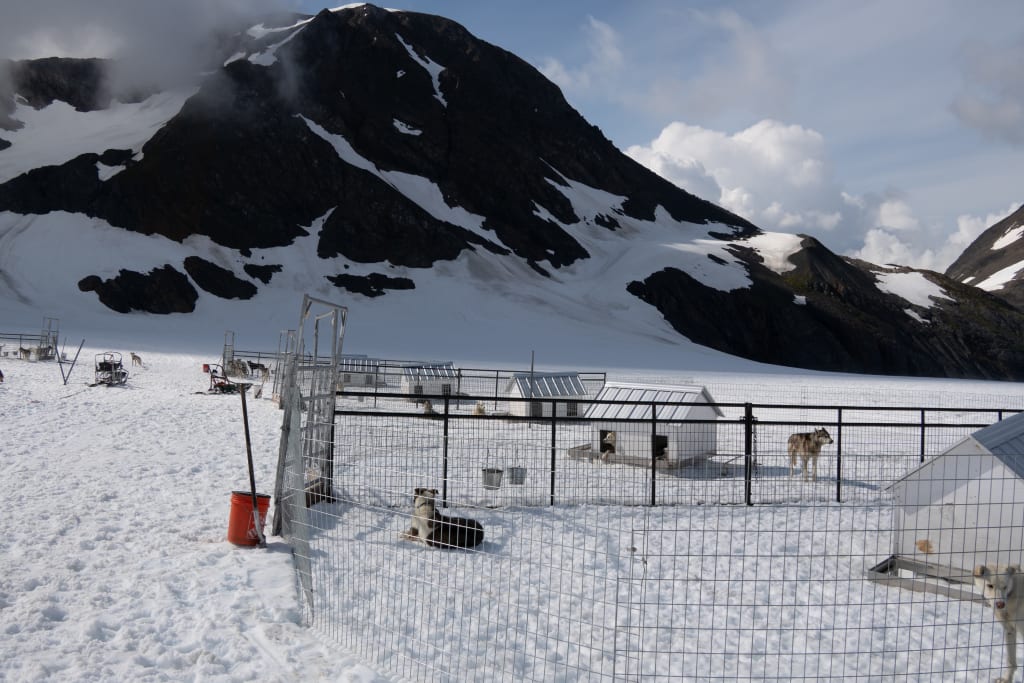
We were handed an outfit to throw on over our clothes. These outfits would keep us warm and dry. We then proceeded to the briefing and introductions.
Alex and I were selected to be in the second group on the sleds. The staff attached the dogs to the harnesses while we got settled in and greeted our team.
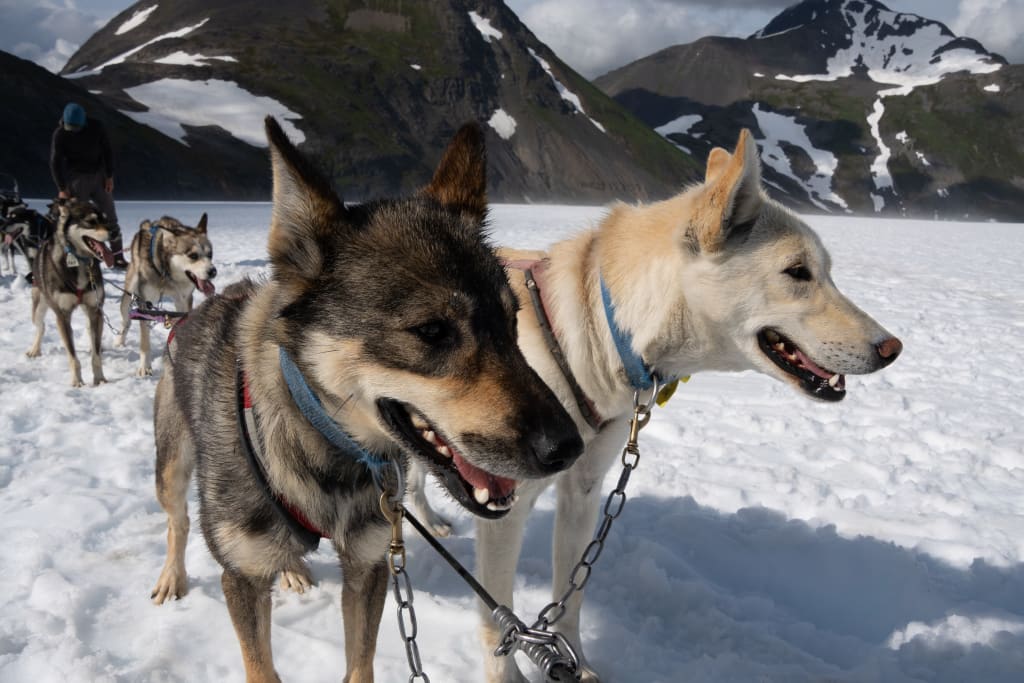
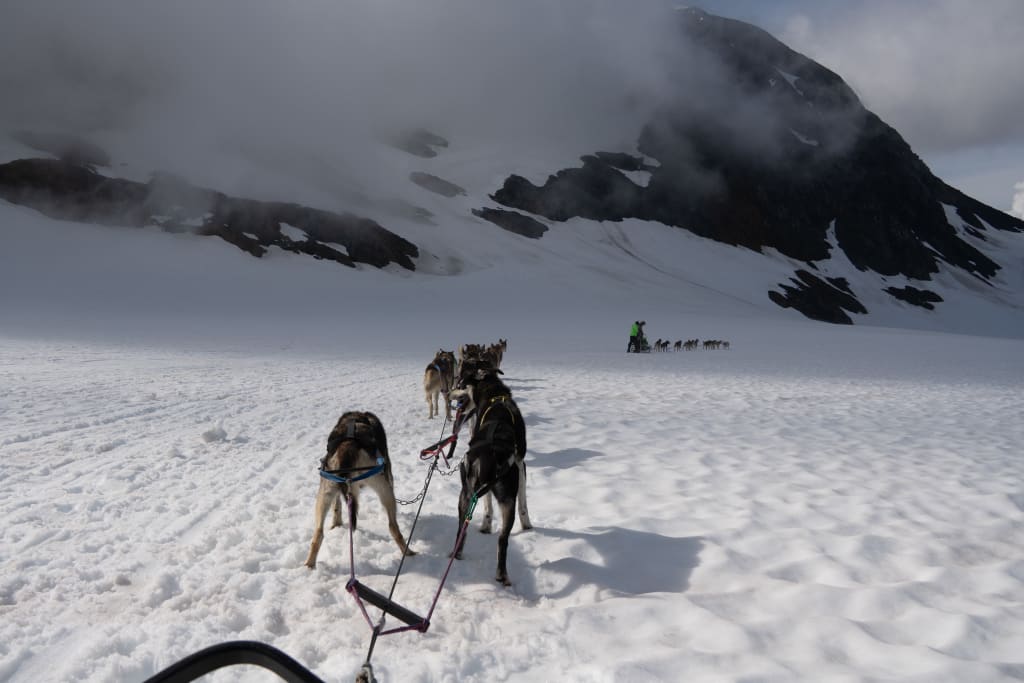
I gave Alex the "princess seat" at the front of the sled so he could snap photos as we went. I stood up at the back of the sled alongside the musher.
I was told to hold on tight with both hands, especially as the dogs set off. They took off with a burst, excited to finally get the go-ahead to run.
Within a minute, they settled into a relaxed pace, trotting along the snow.
Halfway through the ride, we gave them a chance to catch their breath. Seeing the group ahead get started again made them antsy, and we took off again after just a few minutes.
Roughly ten minutes after setting off, we made it back to camp. We got to pet each of the dogs and thank them for the ride.
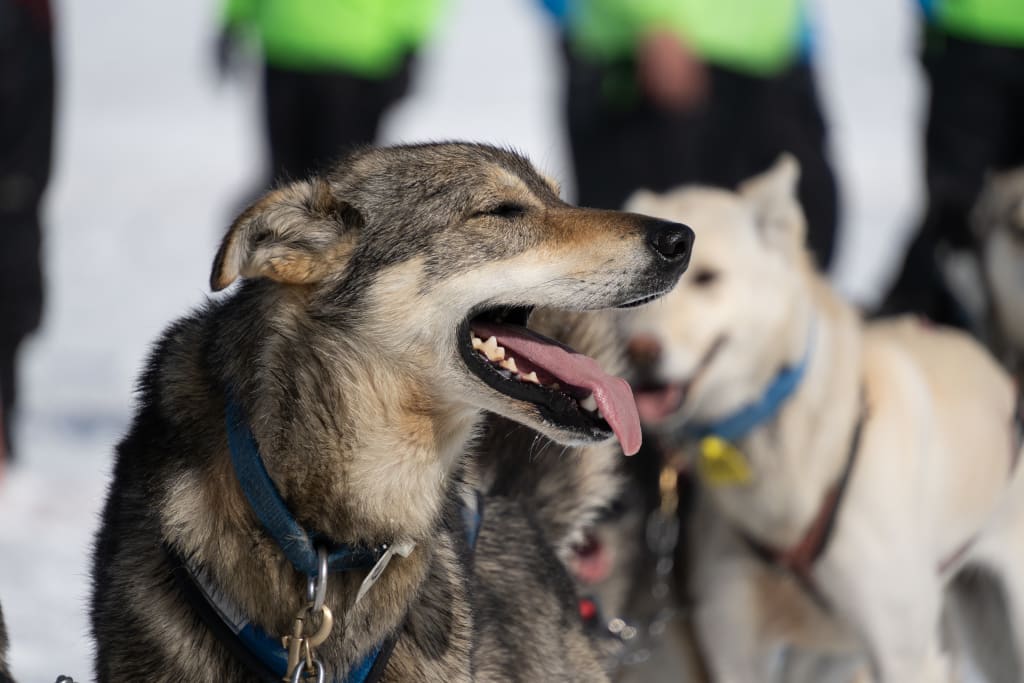
One of the team leads, Reggae, loved belly rubs.
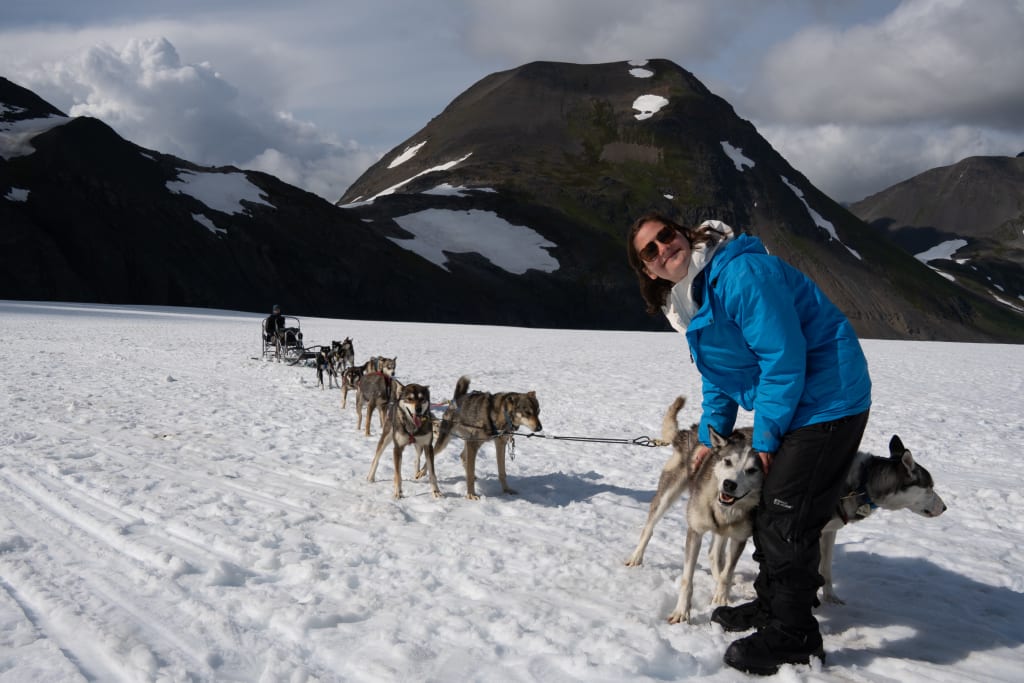
Margaret was the most playful. I was warned that sometimes she'll mouth hands when she plays. That didn't bother me. My dog, Rocky, does that all the time. She got a scolding from her musher though.
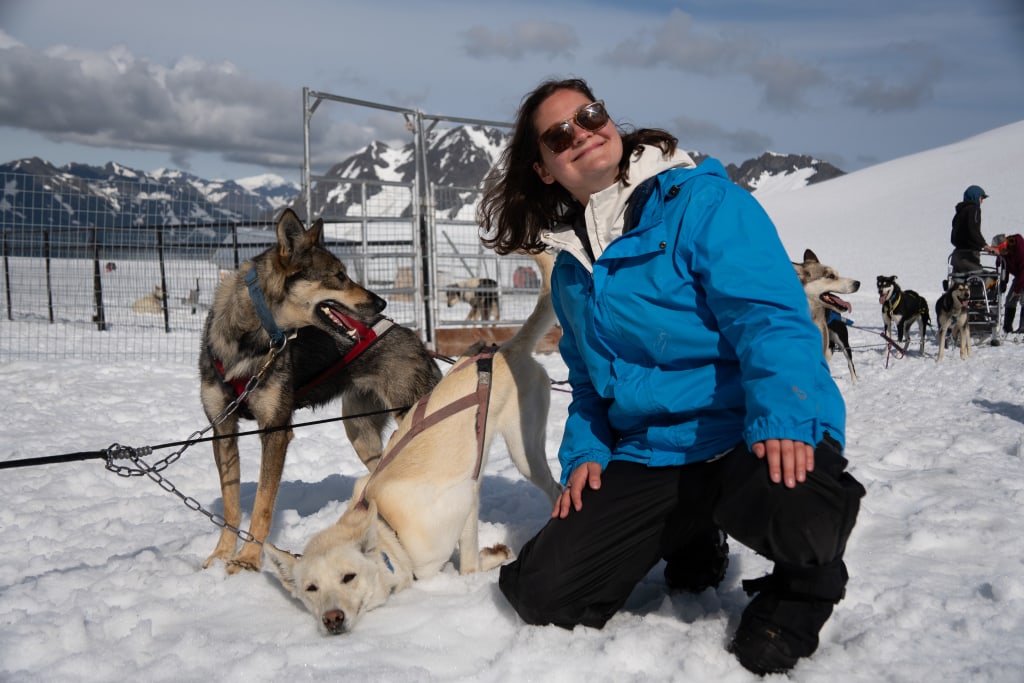
After a few minutes, the other dog sled team geared up to leave again with the next group of tourists, which of course excited all the dogs on our team. They already wanted to run again!
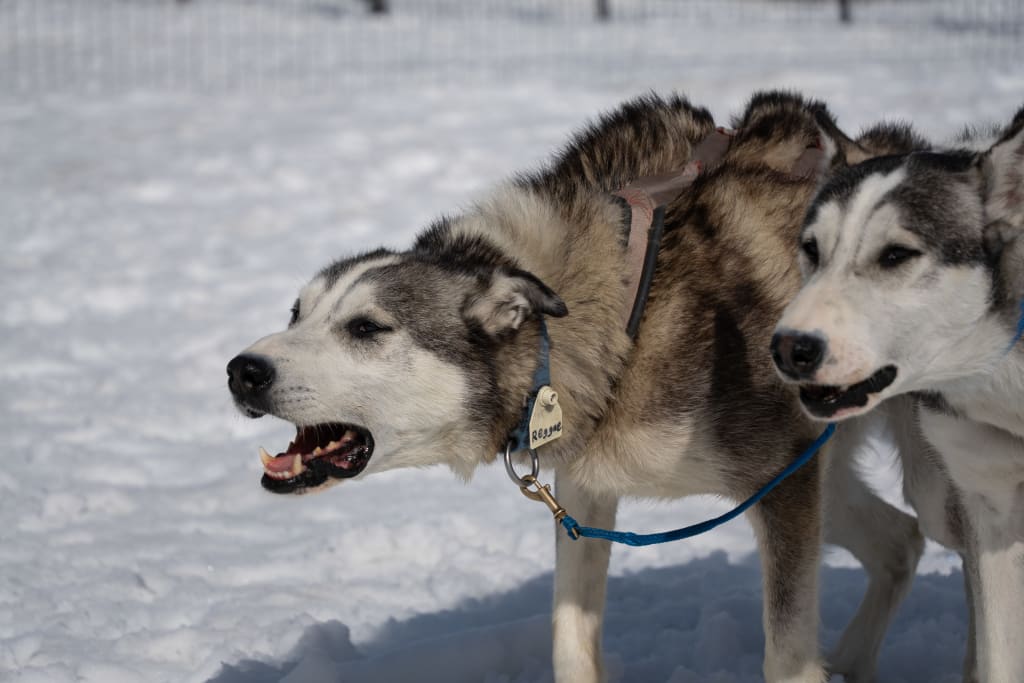
Reggae, in particular, was ready to roll.
After briefing the next group, the dogs were finally allowed to run again.
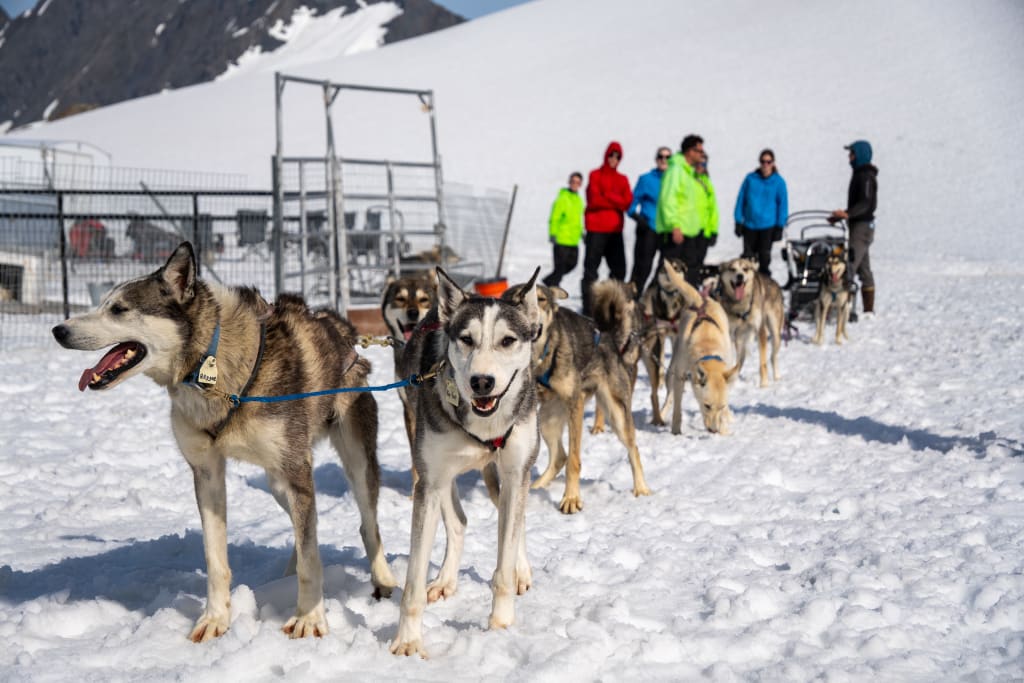
At this point, a staff member came over to teach us more about the dogs. We learned that they start racing at 2 years old. The leaders in our group, Reggae and Hip Hop, were 9 years old. They were too old to compete in the Iditarod now, but they still loved to run.
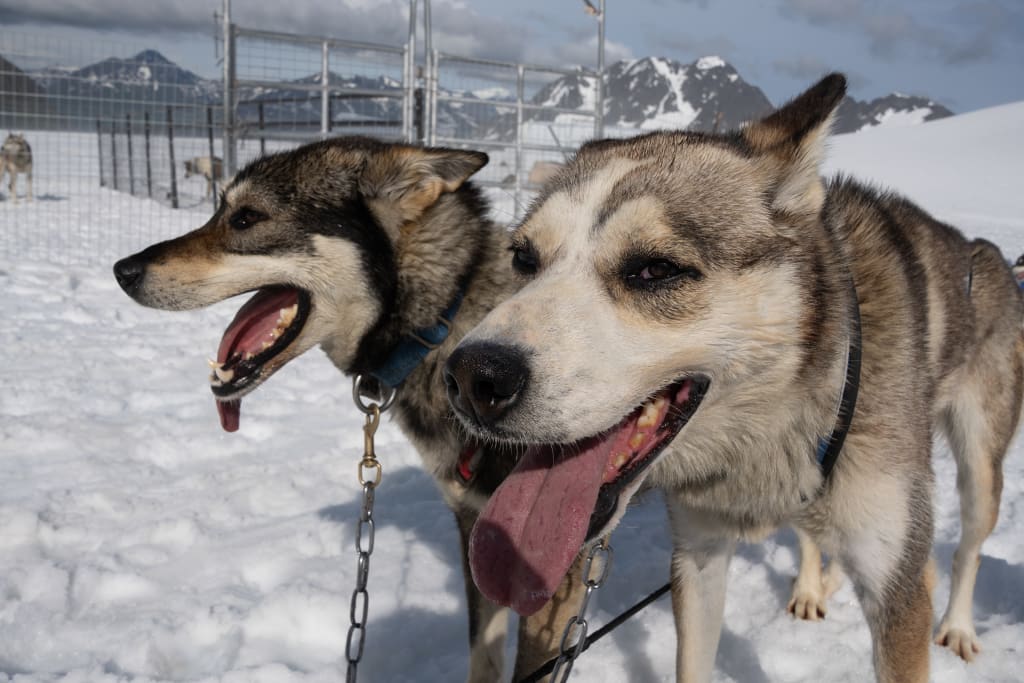
We also learned that the teams were a mix of males and females. The males had more strength, but the females listened better and would keep the dogs on the trail. Sounds about right.
We then went to meet the puppies. I have never met a fluffier creature in my life.
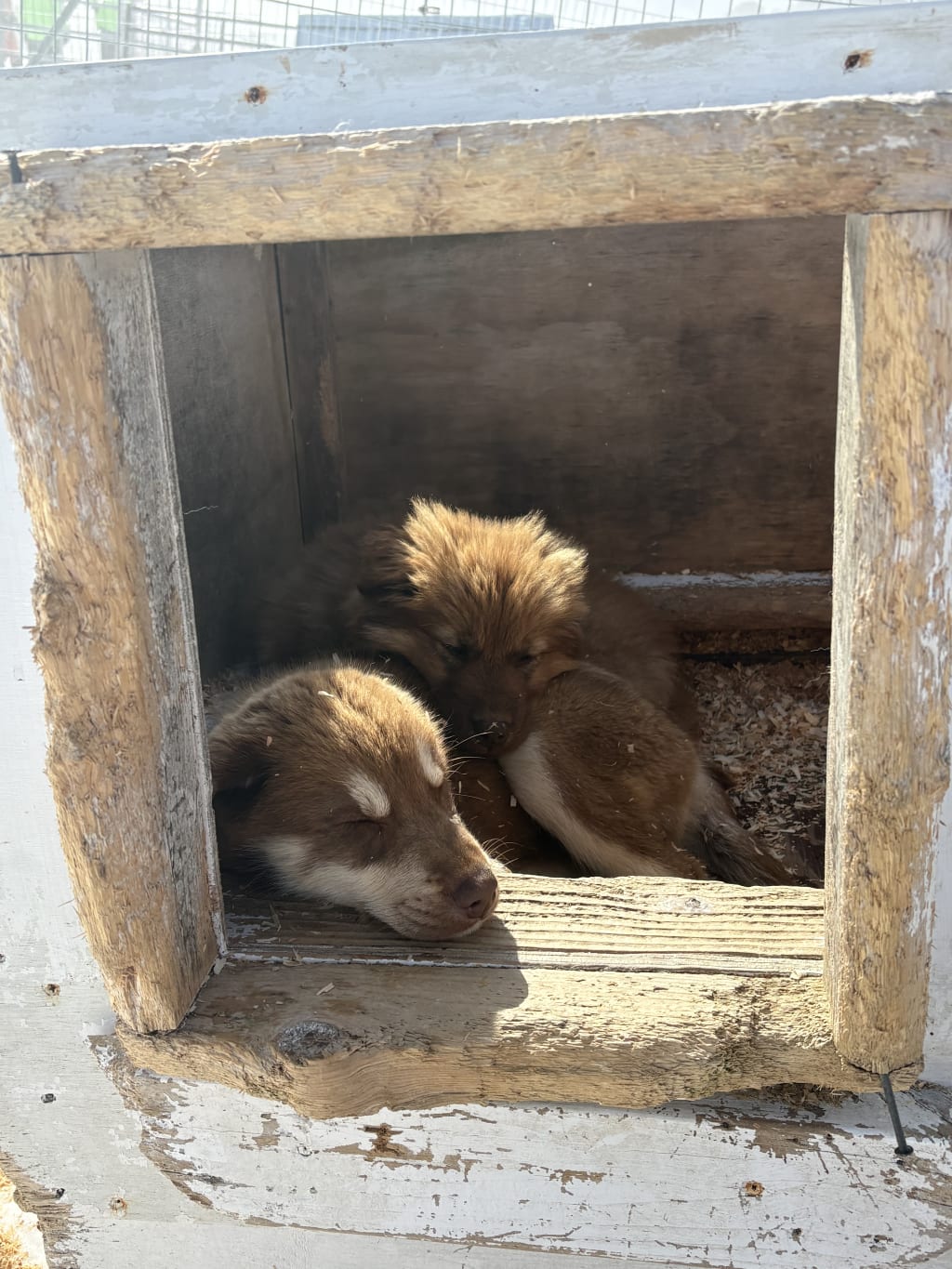
They were so incredibly friendly and relaxed with humans. This one even fell asleep in Alex's arms!
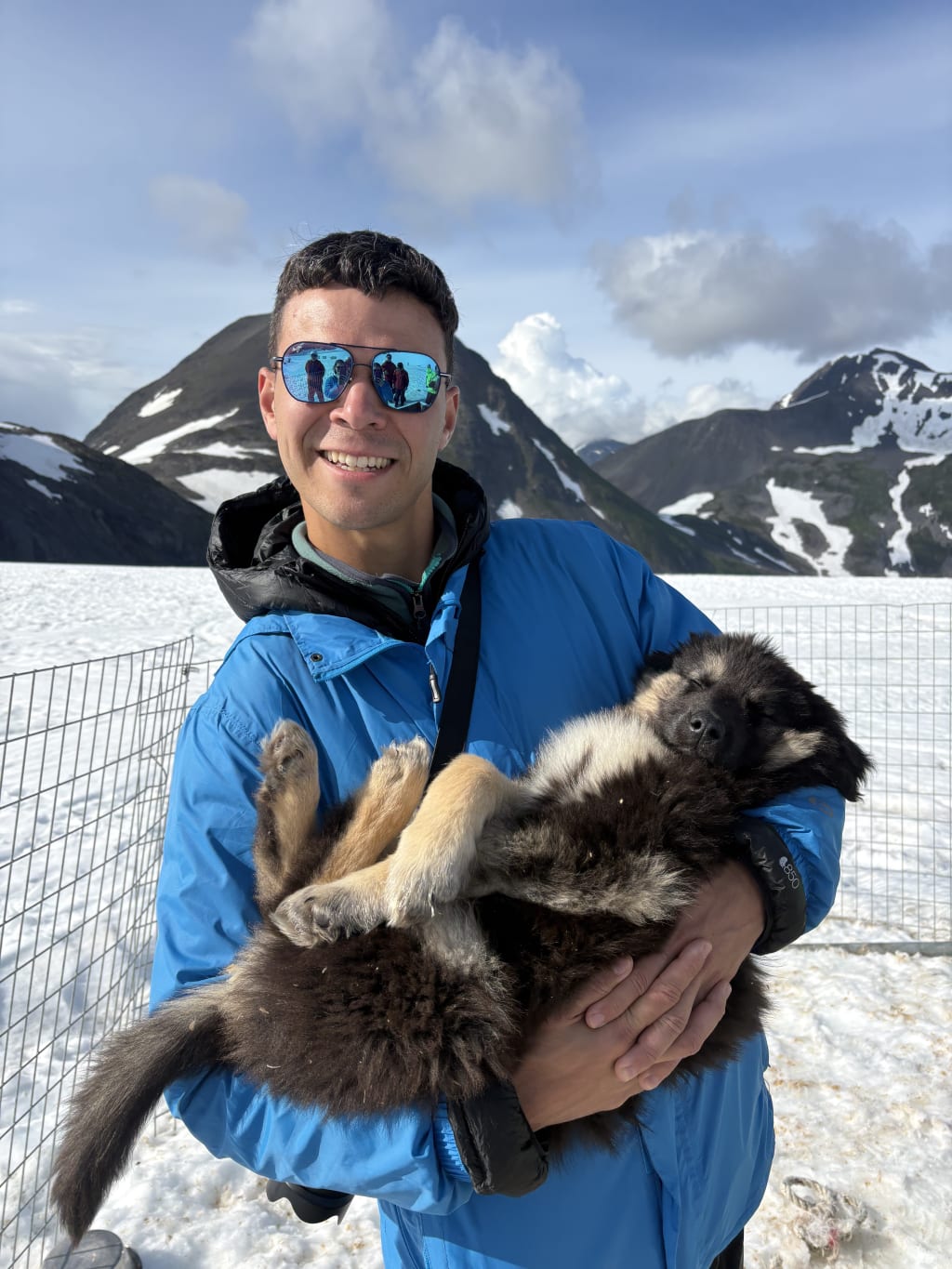
Let me tell you, though, holding these dogs was an arm workout! These 3 month old puppies were already heavier than my fully grown mini poodle.
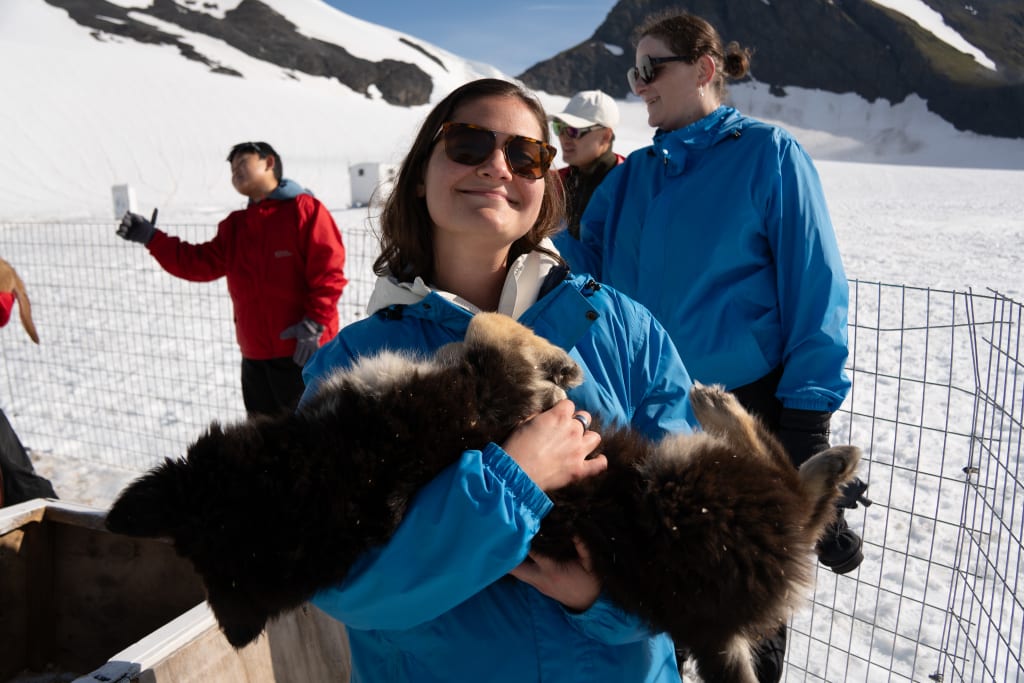
While we played with the pups, one of the staff members explained why it was so important to start the socialization process early with the dogs. They need to be comfortable with humans if they want to compete in the Iditarod. This resonated. Alex and I regret not being able to socialize our dog, Rocky, early enough. To be fair, it was largely out of our hands. We got Rocky in 2020, when the COVID pandemic was at its height.
Not long afterwards, we saw the helicopter reappear. It landed on the snow, ready to pick us up and take us back to the Alpine Air Alaska office. I was all smiles. It had been a fantastic afternoon spent with the energetic Alaskan huskies. I'm so glad we had the chance to do it.
IS DOG SLEDDING ETHICAL?
When people ask this question, they usually have two concerns.
The first is: is it ethical to force the dogs to pull the sleds?
I chatted with the guides about this. They told me that any dogs who do not appear excited to run will be allowed to retire. There is no pressure on the dogs to perform.
I noticed firsthand how excited the dogs were to run. As I mentioned, if another group of dogs got to head out of camp, the group that was left behind would cry, bark, and yelp with enthusiasm until they, too, were permitted to run.
That really assuaged all concerns I had. It genuinely felt like every dog who was running was enjoying it immensely.
The second question I often hear is: is it ethical to keep the dogs outside? Don't they get cold?
They do not. These dogs are remarkably well adapted to cold environments. Alaskan huskies have thick coats that provide insulation. Their bodies are much better equipped for cold temperatures than ours are. In fact, overheating can be a greater concern than getting too cold for working sled dogs. A number of times, the dogs would drop their bodies down into the snow and roll around just to cool down.
We also learned that their paws are specially adapted to the cold, with a unique network of blood vessels that helps regulate temperature and prevent their feet from freezing. Fun fact: penguins use a similar mechanism to keep their feet warm.
All that to say, after spending an hour and a half with these dogs, I had no concerns for their welfare. Based on what I saw, I believe that dog sledding with a reputable tour operator like Alpine Air Alaska is ethical.
IS IT WORTH IT?
Yes, I believe it is. It is such a unique experience and I was smiling the entire time.
My only criticism with the tour is that the amount of time actually spent dog sledding was pretty short. We did a lap around the glacier that lasted roughly ~10 minutes and then spent the rest of the time at camp learning about the dogs and playing with the puppies, which was also awesome. I wish they advertised the amount of time you would spend dog sledding on the website.
FAQS
What time of year can you dog sled?
The glacier dog sledding tour typically operates from mid-May through the end of August.
Alpine Air offers both helicopter rides and dog sledding. Which do you recommend?
I did both and loved both experiences, so I recommend both! But, if I had to choose one, I'd say the helicopter tour. My jaw was on the floor the entire flight, plus the experience lasts a little longer. On the dog sledding tour, you only sled for a short time, and spend the rest of the time hanging out with the puppies and learning about the dogs.
Is it worth it to also book the helicopter tour if we are already taking a helicopter ride to Punchbowl Glacier?
Absolutely. The flight to and from Punchbowl Glacier lasts just a few minutes. If you want to fly over other glaciers, especially ones less covered in snow than Punchbowl, you'll want to book a flightseeing tour as well.
What should you wear?
Wear comfortable, warm clothing and closed toed shoes such as sneakers. They will provide glacier overboots, windproof pants, and a jacket to keep you warm and dry.
What should you bring?
You don't need much. I'd bring a camera or phone, sunglasses, and a water bottle.
How long is the Alpine Air dog sledding tour?
The tour lasts ~90 minutes.
How long are you actually on the sled?
We were sledding for ~10 minutes.
Can you drive the sled?
No, there will be a musher on the sled driving it for you.
Can you pet the dogs?
Yes! They're very friendly. You can even pet puppies.
Is it suitable for kids?
Yes, I think kids would really enjoy the experience.
Do you need to be physically fit to dog sled?
No. There is a seat on the dog sled if you need one.
What is the bathroom situation?
There is a porta-potty at the office and also one on Punchbowl.
EXPLORE MORE

Flying Over Glaciers: A Helicopter Tour Over Prince William Sound

The Ultimate 2 Week Alaska Itinerary: Glaciers, Bears & More

The Best Things To Do in Kenai Fjords National Park

Hiking the Harding Icefield Trail: Is It Worth the Climb?

Northwestern Fjord Boat Tour Review (Kenai Fjords National Park)

Kayaking to Aialik Glacier in Kenai Fjords National Park

Hiking Lost Lake Trail: Seward's Most Underrated Hike

Answering ALL Your Questions About Bear Camp (Katmai NP)

5 Moments From Bear Camp I Can’t Stop Thinking About (Katmai NP)

Bear Camp Archives: My Favorite Photos & Fun Facts (Katmai NP)

Comparing Alaska Bear Camp to an African Safari

Ice Climbing in Norway: Our Experience on Jostedalsbreen Glacier

Skydiving in Interlaken: Adrenaline to the Max
