
Hiking the Harding Icefield Trail: Is It Worth the Climb?
I had convinced myself that this hike wouldn't be that hard. I had done other hikes before with 3000+ feet of elevation gain and had lived to tell the tale. This would be no different, right?
The problem was the elevation gain took place over a relatively short distance, just 4.5 miles. It was a steep uphill climb for the majority of the hike. I did it, but it was tiring. I would go as far to say that this hike was "grueling" at times, especially in the beginning.
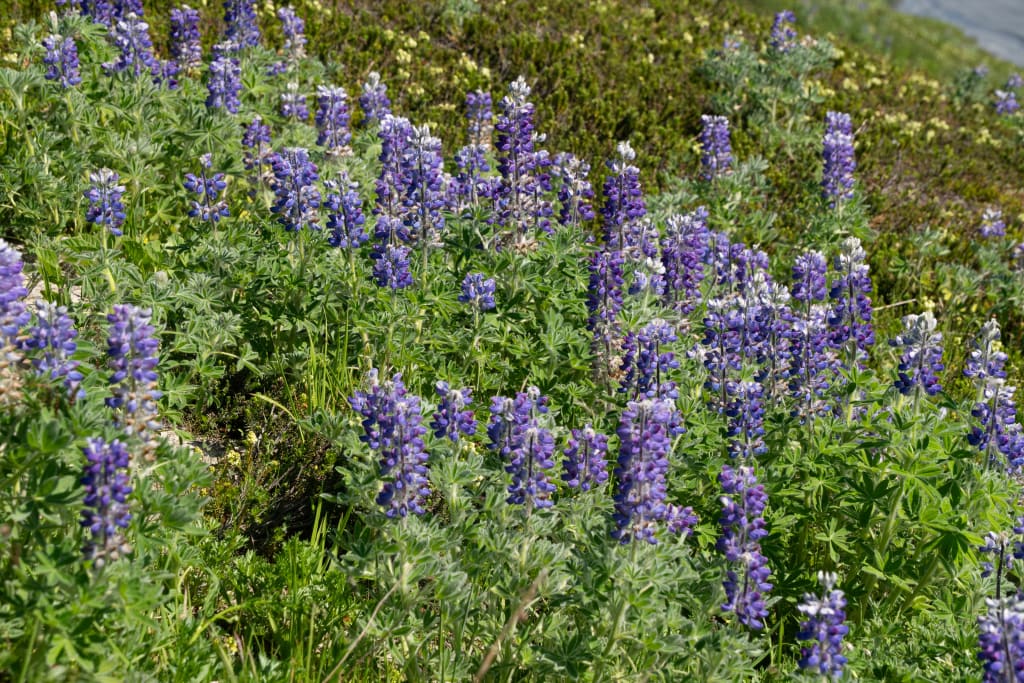
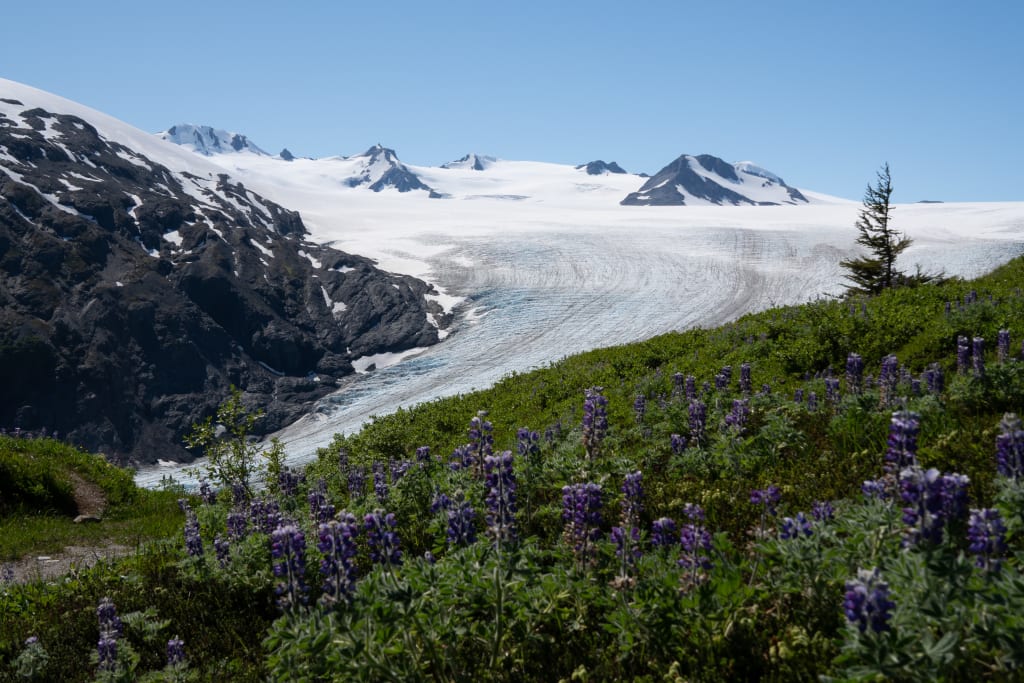
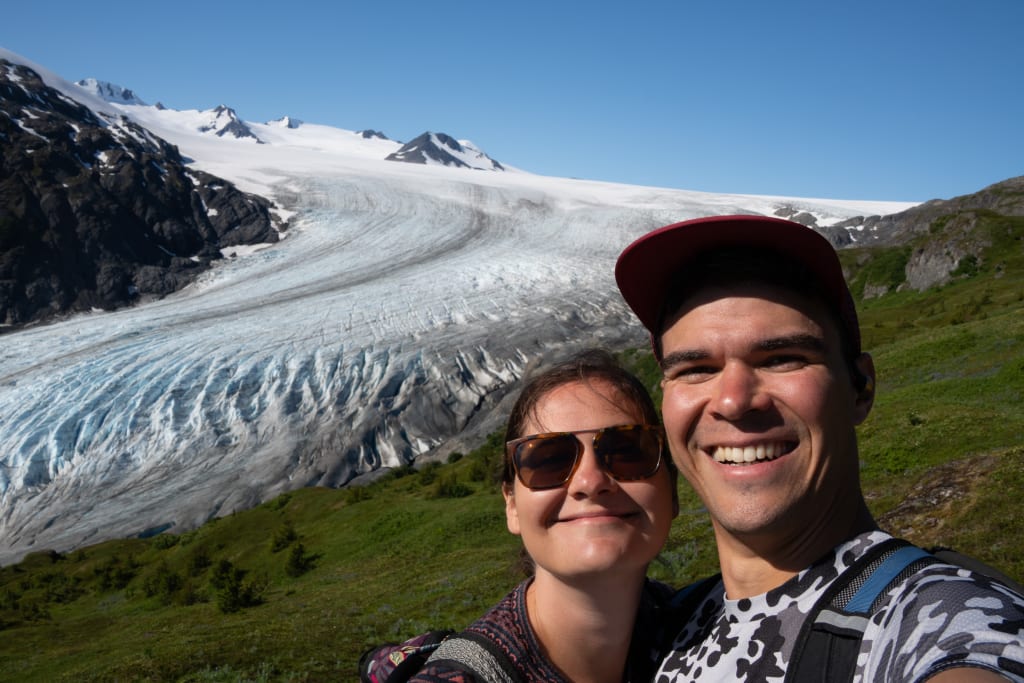
The good news is that it was worth the effort. In particular, Alex and I really enjoyed the views of Exit Glacier surrounded by purple Nootka lupine flowers.
Keep reading to learn about our experience hiking to the Harding Icefield, plus our opinion on whether the hike is worth it and what to do if you're worried this hike will be too challenging for you.
WHAT IS THE HARDING ICEFIELD?
The Harding Icefield is the largest icefield located entirely within the United States. It spans over 700 square miles and feeds more than 30 outlet glaciers, including Exit Glacier, which you'll hike alongside on the Harding Icefield Trail before reaching the panoramic views over the icefield at the top.
WHERE IS THE HARDING ICEFIELD?
The Harding Icefield is in Kenai Fjords National Park in Southern Alaska, near the town of Seward.
It takes about 2 hours 15 minutes to drive to Seward from Anchorage, the city with the nearest airport. Or, if you prefer not to rent a car, you can take the train.
HIKING STATS
AllTrails lists the hike as an 8.9 mile out-and-back hike with about 3,200 feet of elevation gain. It has an estimated time to complete of 6-7 hours.
My Oura ring recorded 8.7 miles and we completed the hike in 7 hours exactly (to the minute!). We started the hike around 8:20am, before the crowds arrived at midday. By 11:50am, we made it to the Harding Icefield at the end of the trail. We spent an hour eating, relaxing, and taking photos at the top before heading back down. We were back in the parking lot by 3:20pm.
OUR EXPERIENCE
The climb to the Top of the Cliffs was unrelenting. Of course, my marathon-running husband, Alex, had no trouble with the incline, hopping up the stone steps like a mountain goat. I, on the other hand, trudged slowly behind him.
For the first mile, we were hidden beneath the canopy of the trees. Finally, after about a half hour, there was a break in the dense vegetation and we got a glimpse of just how far we had already climbed. I asked Alex if we could stop so I could snap a photo. Not only would it be helpful for my blog article, but more importantly this would give me the chance to catch my breath.
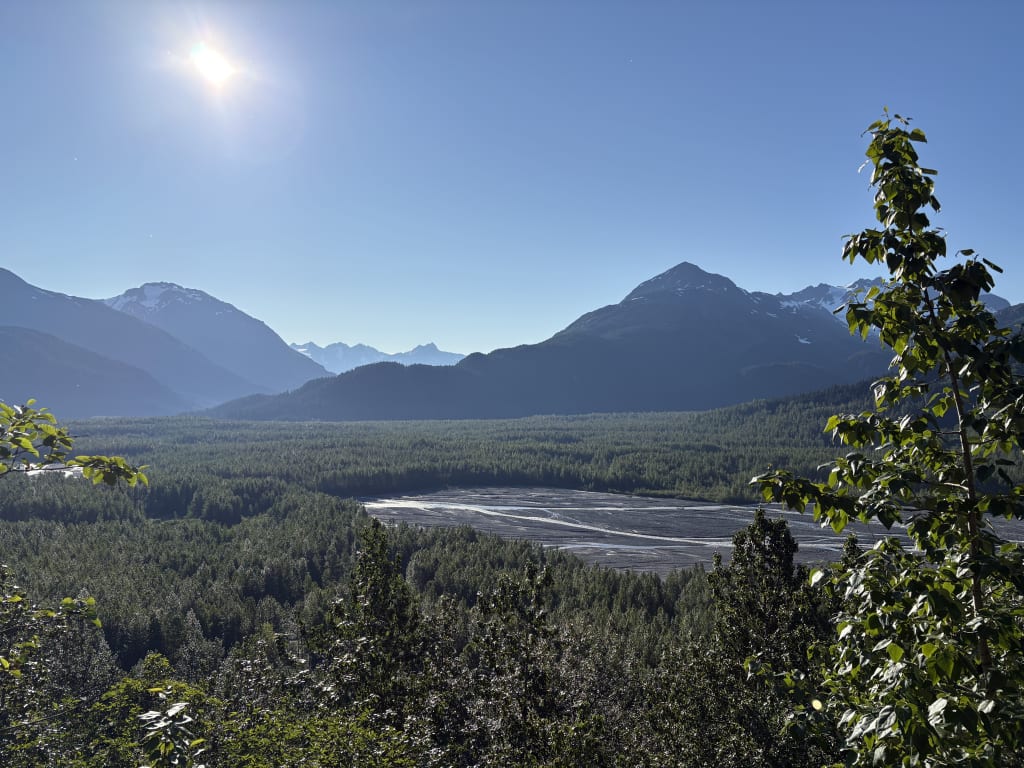
We continued on. For just a brief moment, we could see Exit Glacier through a gap in the trees. We must be getting close!
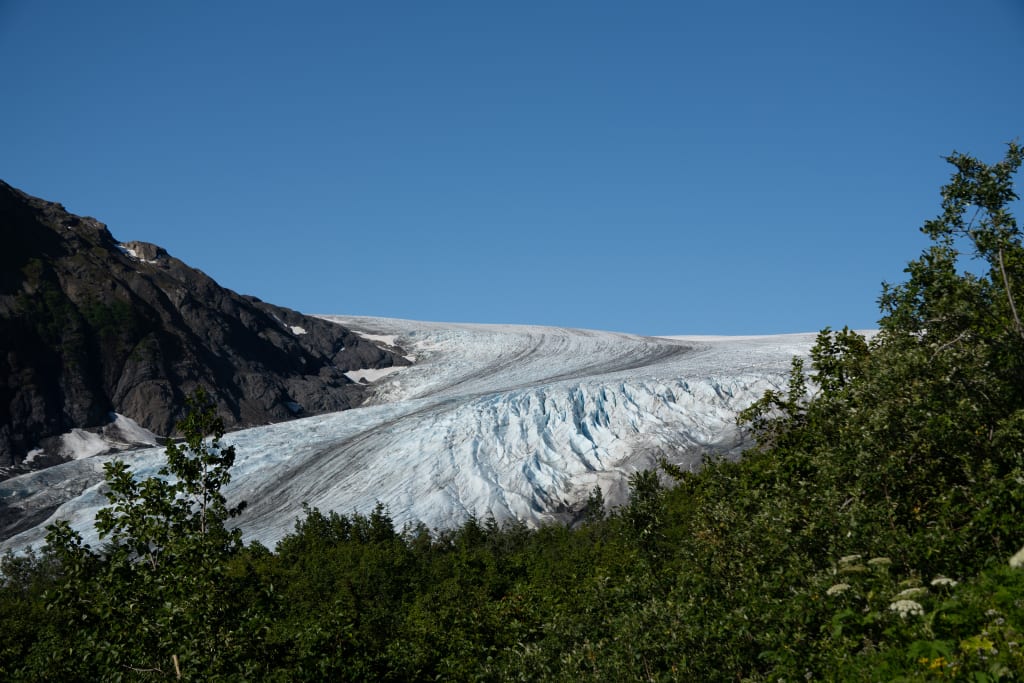
Eventually, we emerged from the trees for good and into the meadows.
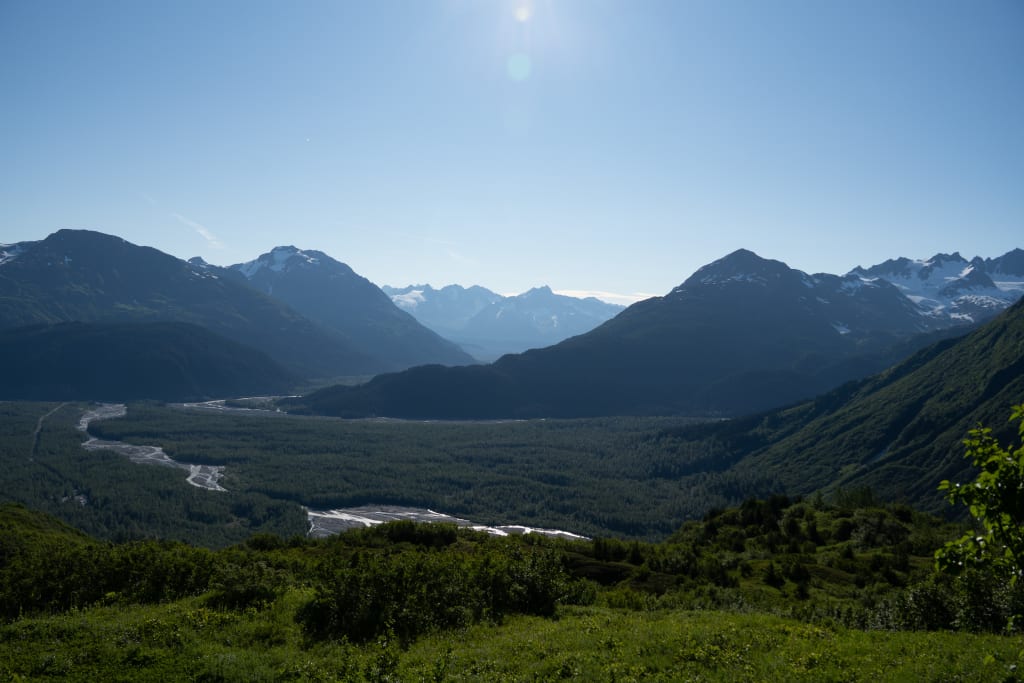
Now, we walked alongside Nootka lupine, a gorgeous purple flower that blooms in the grass beside the trail in the summer.
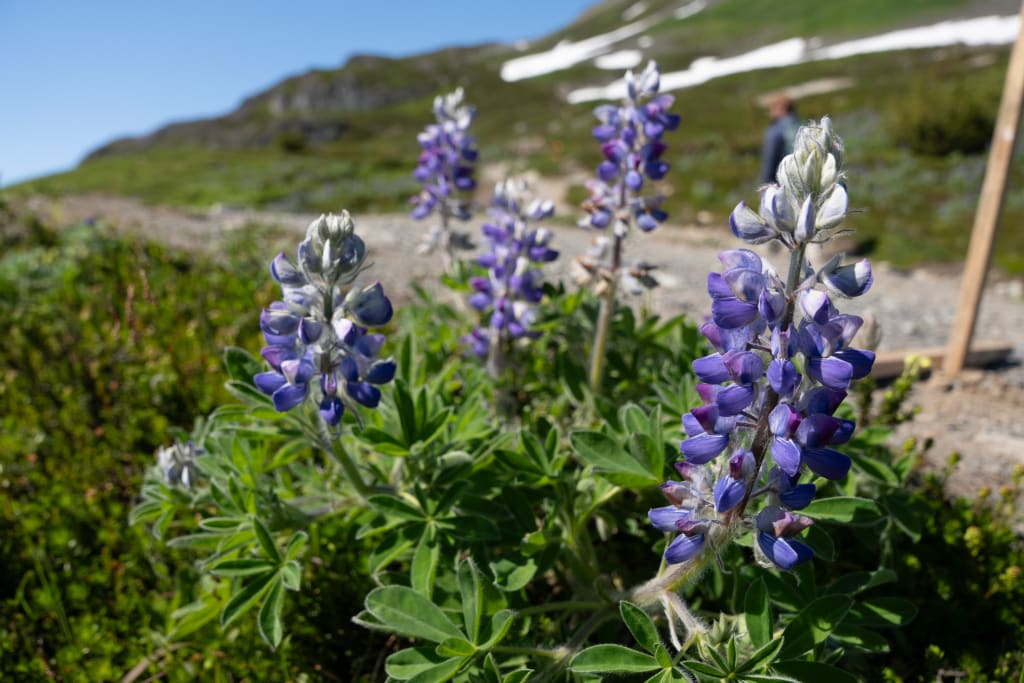
As I walked through these meadows, I scanned the horizon constantly for bears. I had read many AllTrails reviews and spotting a bear seemed to be quite a common occurrence. This was my first time hiking in bear territory. I wasn't nervous, per se, but the bears were on my mind.
I was so mentally prepared to see a bear that I wondered if my mind was playing tricks on me when I looked up and saw one. Thankfully, it was far ahead, at a safe distance from both ourselves and the trail. He (or she) was minding his or her own business, snacking on some salmonberries.
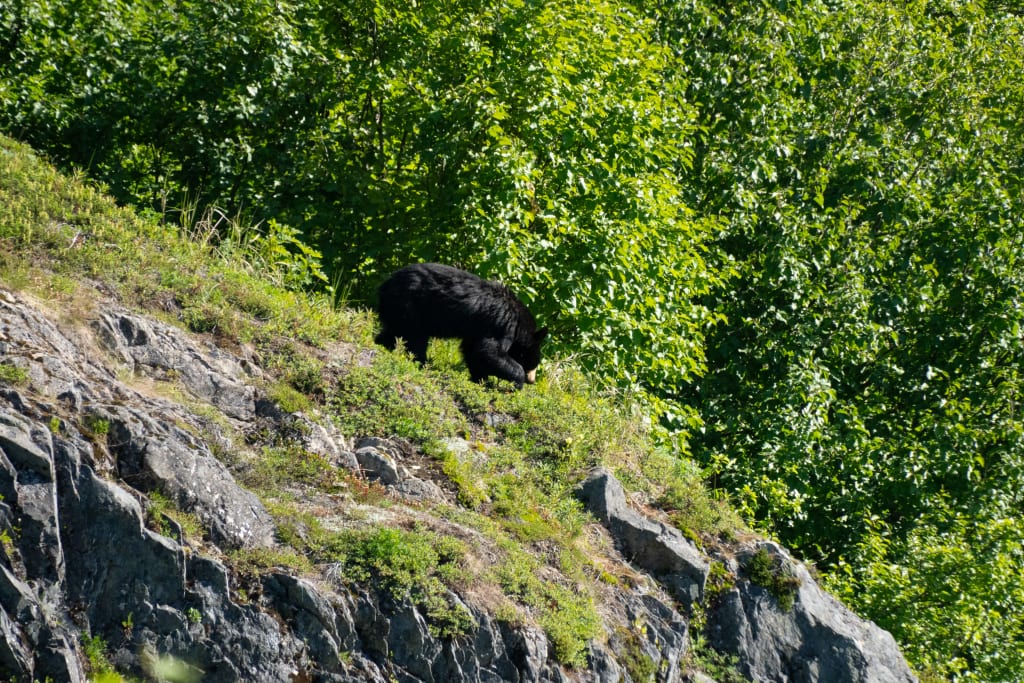
We carried on, reassured by the fact that the bear was not close to the trail, headed in the opposite direction, and clearly unperturbed by our presence.
By the end of the second hour of the hike, we made it to the Top of the Cliffs and were treated to excellent views of Exit Glacier, one of the 30+ outlet glaciers (also known as glacier tongues) that stem from the Harding Icefield. This, in our opinion, was the best view along the entire trail by far.
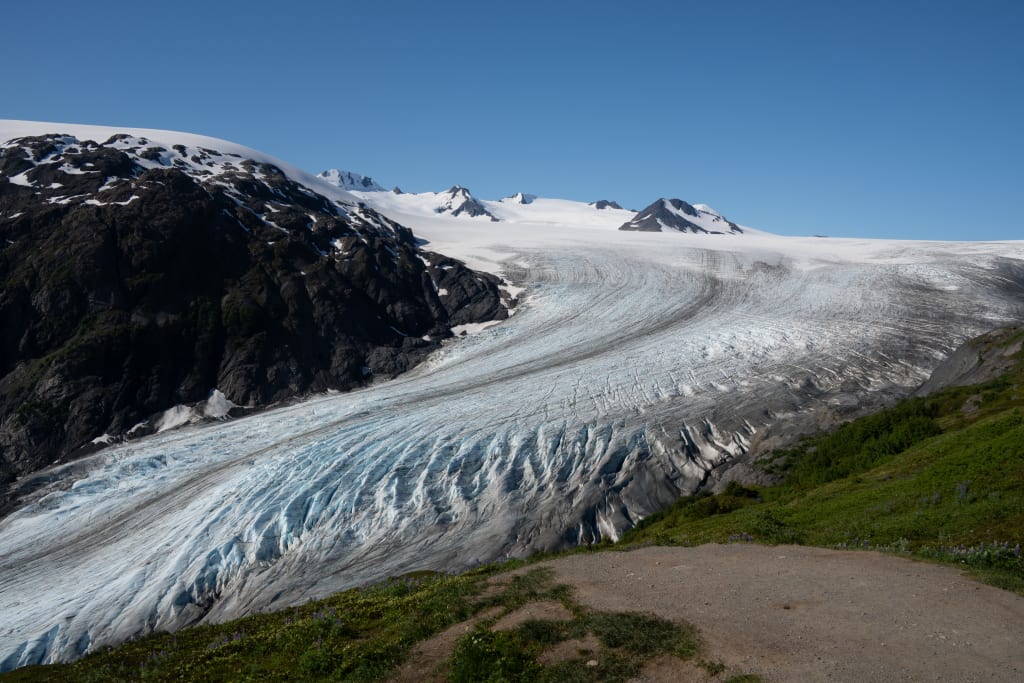
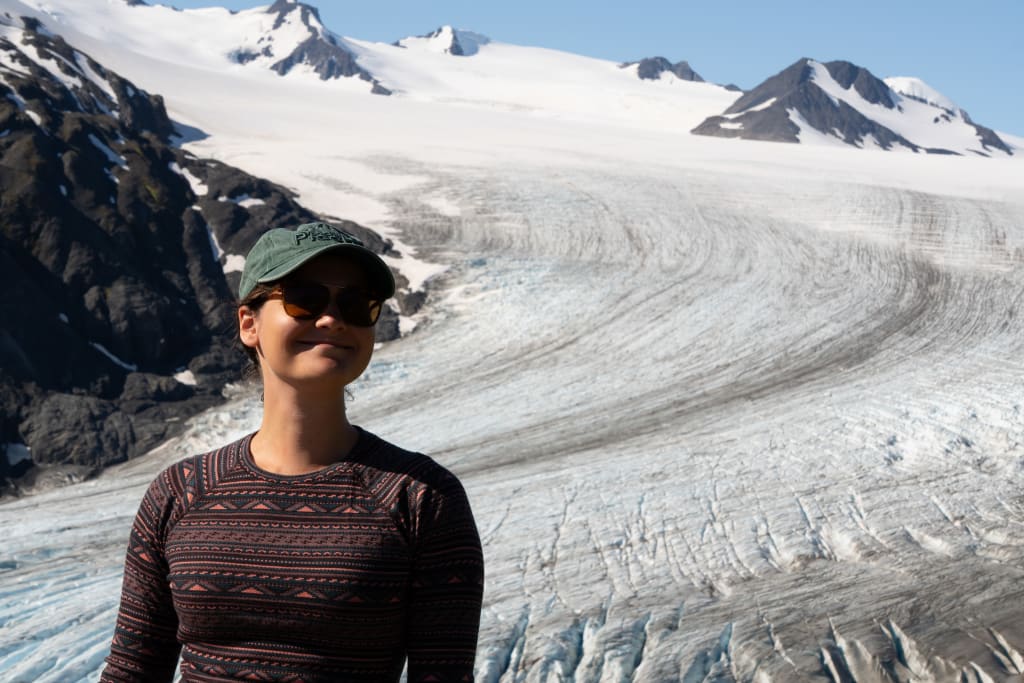
We didn't end up spending much time here at this point, because we knew we had an excellent view waiting for us at the end of the trail: the Harding Icefield. We were eager to get there.
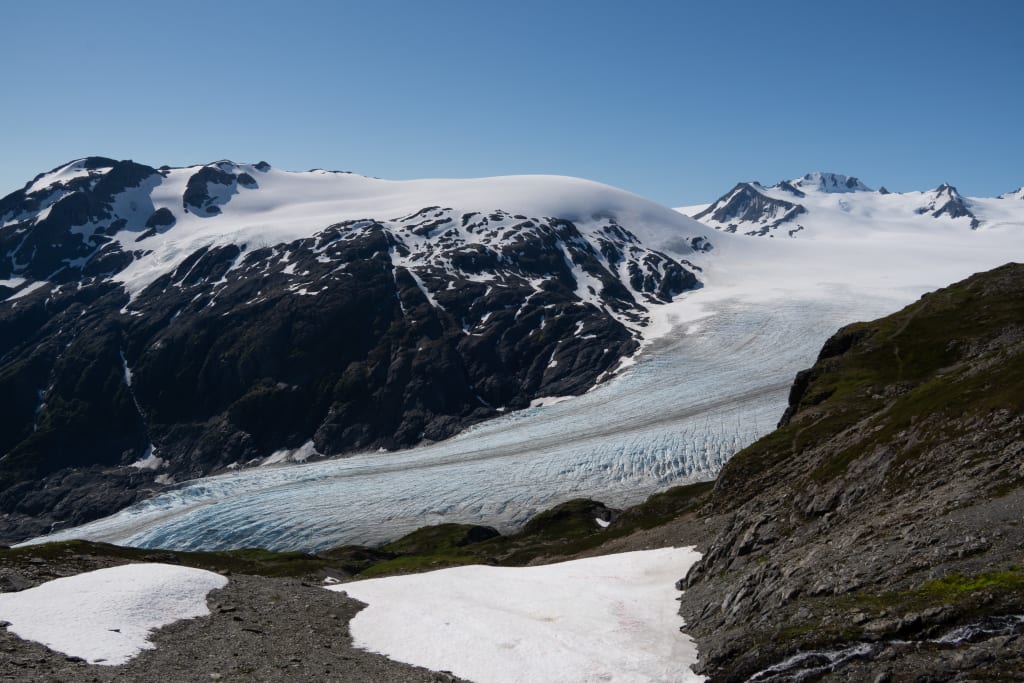
The terrain changed dramatically past the Top of the Cliffs. Even at the end of July (we hiked on July 31st), the trail was covered in a blanket of snow. We would walk a few steps through the snow, then onto the gravel, then back on the snow, in an endless pattern until we made it to the top.
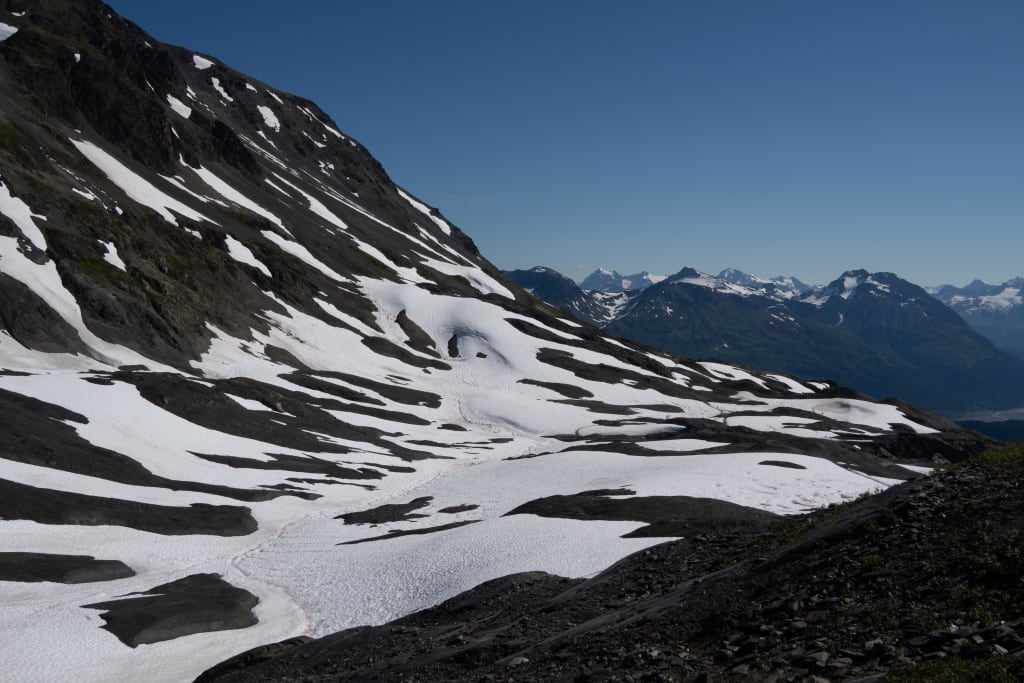
But the good news was, the incline felt significantly less steep. It could be that we were just moving slower as we trekked through the snow, making it feel easier than the first two-thirds of the hike, but either way, it was a welcome reprieve.
Three and a half hours into the hike, we made it to the end of the trail and were greeted with views of the Harding Icefield. It was blanketed with a deep layer of snow.
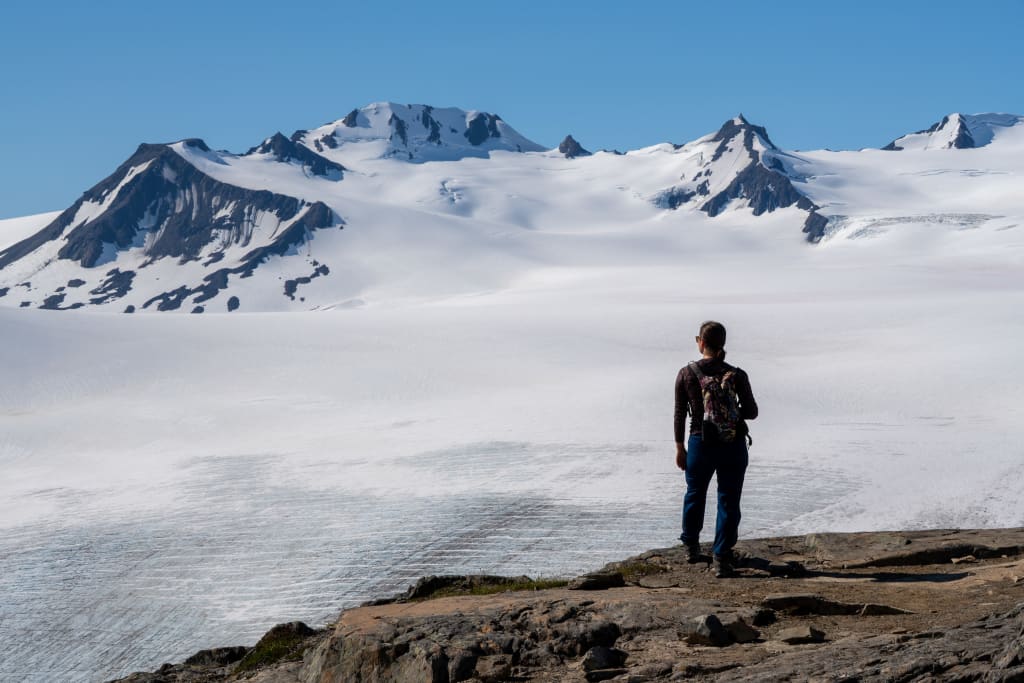
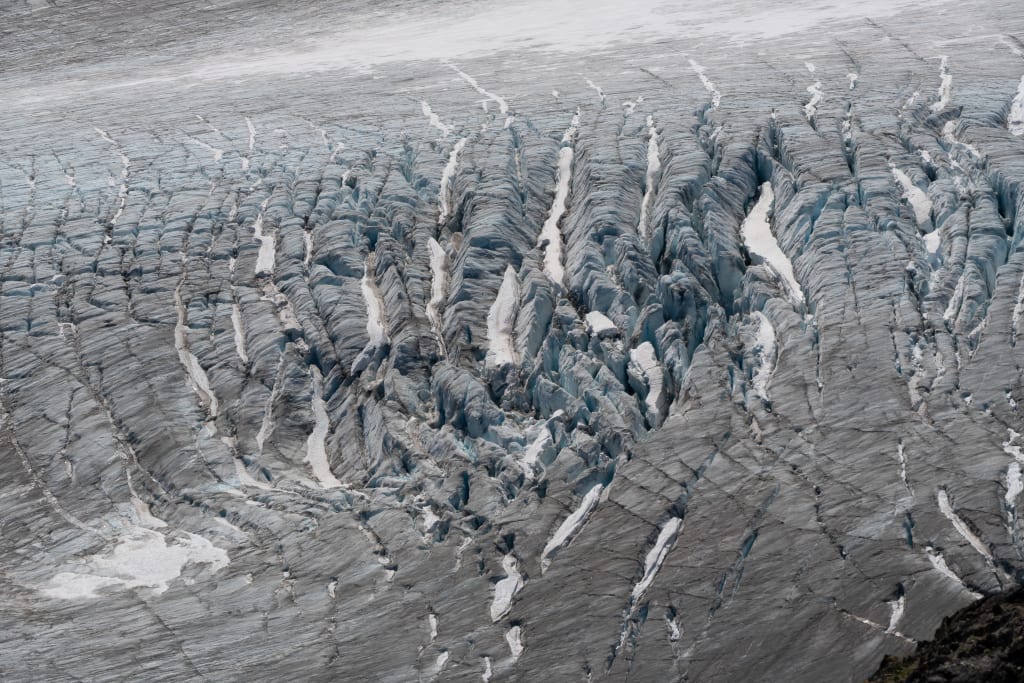
We spent an hour at the top, soaking in the views, eating a snack, and even FaceTiming Alex's mom, before heading back down the way we came.
The photos of the icefield turned out nicely, but Alex and I both felt that this view was less dramatic and interesting than the view of Exit Glacier from the Top of the Cliffs. We feel it was worth the effort going all the way to the icefield, but it would still be a fantastic day if you turned around at the Top of the Cliffs and didn't make it all the way to the end to see the Harding Icefield.
On the way back down, we paused at the Top of the Cliffs again to eat another snack (you work up quite the appetite on this hike so pack plenty of snacks accordingly!).
It was time to get moving again, though. Our water supply was waning (bring at least 3L of water per person!), so we moved with extra urgency back towards the parking lot. We had also hit that inevitable point in the hike where our exhaustion caught up with us and we couldn't wait to be back at our car.
We made it back to the parking lot exactly 7 hours after setting off. Not too shabby, considering how long we spent relaxing at both Exit Glacier at the Top of the Cliffs and at the Harding Icefield at the end of the trail. From there, we headed straight to Lone Chicharron to scarf down a well-deserved burrito.
The Harding Icefield was a fantastic hike, one that felt different from many of the other hikes we had done to date. It was high effort, but high reward as well. If you're planning a visit to Kenai Fjords National Park and love a good challenge, add the Harding Icefield Trail to your bucket list.
A NOTE ON THE WEATHER
I won't beat around the bush: a typical day in Kenai Fjords National Park is cloudy, gray, and wet. Even in the middle of summer, gray skies, drizzle, and passing showers are completely normal. You might get lucky with a beautiful sunny day, but I wouldn't plan your trip assuming you will. You need to come prepared for rain.
Given the prevalence of rain in the area, you should bring a high quality rain jacket on this hike even if the forecast doesn't call for rain.
I also highly recommend building at least one buffer day into your itinerary so that you have flexibility if the weather refuses to cooperate.
GETTING TO THE TRAILHEAD
You can access the trailhead by driving along the only road in Kenai Fjords National Park: the Herman Leirer Road. The trailhead is listed on Google Maps and it's pretty easy to find.
Parking is free and entrance to Kenai Fjords National Park is free as well.
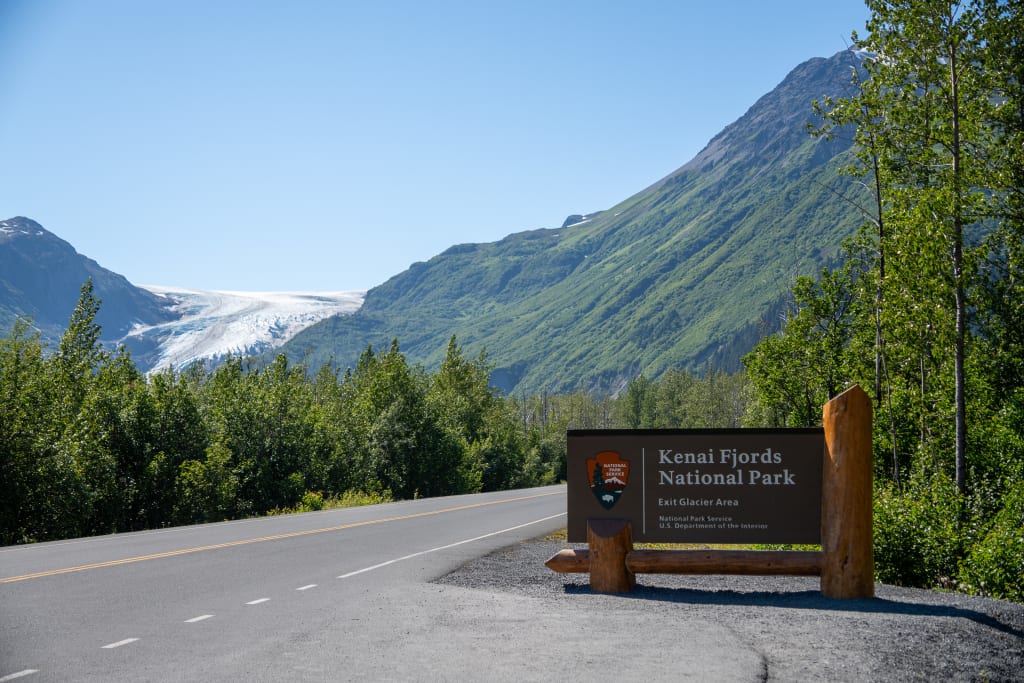
Keep your eyes peeled for signs as you drive down Herman Leirer Road. These signs mark the ending point of Exit Glacier in the year listed on the sign. It's shocking how far the glacier has receded over the past two centuries.
WHEN CAN YOU HIKE THE HARDING ICEFIELD?
You can only hike to the Harding Icefield in the summer, as the Herman Leirer Road leading to the trailhead is closed in the winter.
I would recommend waiting until July to attempt this hike. We hiked on the last day of July and there was still snow covering the trail past the Top of the Cliffs, although it was very manageable to pass through, even without hiking poles, as it wasn't too deep. From reading reviews on AllTrails, the snow can pose a major challenge earlier in the season. The absolute best time to hike is July, August, and September.
If you are hiking earlier in the season, it's helpful to read through a few recent AllTrails reviews to see what the conditions on the trail are like. Alternatively, you can stop by the Exit Glacier Nature Center and ask the park rangers.
SAFETY CONSIDERATIONS: BEARS ALONG THE TRAIL
The Harding Icefield Trail is in bear country and black bears are spotted almost daily. We saw a black bear near the trail munching on salmonberries. Thankfully we were a safe distance away and did not need to use our bear spray.
That being said, it's imperative that you bring bear spray if you plan to hike this trail (or any other trail in Alaska). Keep the spray accessible (not buried in a backpack) and test it out at home before you hike so you know how to use it if necessary. Don't hike alone and talk constantly to let the bear be aware of your presence, especially as you round corners. You can also bring bear bells, although frankly I found those to be quite annoying when other hikers had them.
If you start the hike by midday, the crowds should be heavy enough to deter the bears from hanging out near the trail. Our bear sighting took place in the morning, when the crowds were much lighter. There is obviously a tradeoff to be weighed here. We still recommend starting early, but you just have to be vigilant if you do so. Also, larger crowds do not guarantee that you won't see a bear, so bring bear spray regardless.
I was nervous about the idea of hiking in bear country before the trip. However, I came prepared and felt much safer when I saw the bear knowing I had the spray to keep me safe should the bear get too close. Don't let the fear stop you from tackling this epic hike! Just make sure to come prepared with bear spray.
IS IT WORTH IT?
We thought the hike was well worth the effort and enjoyed the views of Exit Glacier and the Harding Icefield.
However, we thought the best views, by far, were of the Exit Glacier from the Top of the Cliffs, roughly two-thirds of the way through the hike. If the full hike sounds daunting, I would recommend making it to this point and turning around to conserve your energy. Admittedly, the hardest part of the hike is the part leading up to the Top of the Cliffs, but you can still shave a couple hours off the time by turning around at this point. You can also avoid the snow-covered sections of the trail.
FAQS
How hard is the hike?
It is strenuous but doable. You ascend 3,200 feet+ in less than 5 miles, making it steep in some sections.
What is the best time of day to do the hike?
If you want to avoid the crowds, start the hike before 10am. However, there are tradeoffs. If you go midday, the crowds pick up and it's less likely that bears will choose to hang out near the trail. Ultimately, we still recommend going in the morning to avoid the crowds, and either way, you should be prepared with bear spray no matter what time you decide to go.
What should you bring?
I would bring the following:
- Bear spray
- Bug spray
- Rain jacket
- Layers, including a jacket and a beanie (it tends to be much chillier as you approach the icefield, so I would pack layers even if it's warm and sunny in Seward)
- Sunglasses
- Sunscreen
- Hiking boots (you want good footwear with traction for the snow-covered section of the trail past the Top of the Cliffs)
- Water (I recommend 3L+)
- Snacks
- Bandaids
- Advil
- Toilet paper, hand sanitizer, and trash bag, just in case
- Hiking poles (especially helpful if you complete this hike before mid-July when the snow is still deeper. We didn't use them and we were fine on July 31st)
Do you need hiking poles for the Harding Icefield Trail?
Hiking poles would come in handy so you can steady yourself on the snowy sections of the trail, especially when the snow is deeper in the beginning of the season. However, we did the hike without poles and we were fine.
Are there bathrooms on the Harding Icefield Trail?
There are bathrooms at the trailhead, but no bathrooms along the trail.
Is there a lot of exposure along the Harding Icefield Trail?
No, there are no giant dropoffs along the trail.
Can you walk on Exit Glacier?
No. Walking on a glacier requires specialized equipment and knowledge because of hazards such as crevasses and unstable ice. If you want to actually walk on a glacier in Alaska, you'll need to book a guided glacier hiking or ice climbing tour.
Do you need a guide for this hike?
No. The trail is easy to follow and well maintained, so you do not need a guide. We briefly considered hiring a guide because we were nervous about the presence of bears, but as long as you come prepared (bring bear spray, hike with a buddy, talk frequently to announce your presence, etc.) you shouldn't need a guide.
Which hike would you pick: Harding Icefield or Lost Lake?
Where did you stay in Seward?
We stayed in this small AirBnB and really liked it! The location was perfect, just 5 minutes' drive away from the town center.
How far in advance do you need to plan a visit to Seward?
I would book at least six months in advance. I was stressing out because I was looking for hotels with availability in Seward at the end of July/beginning of August in February and every hotel I checked was sold out. I ended up snagging a reservation on AirBnB and it worked out great, but to maximize your options, book earlier.
Is there cell service on the hike?
We didn't have cell service for the majority of the hike. Oddly enough, we had cell service at the top of the hike once we reached the Harding Icefield (we even FaceTimed Alex's mom!) but otherwise we didn't have cell service.
EXPLORE MORE

The Best Things To Do in Kenai Fjords National Park

Hiking Lost Lake Trail: Seward's Most Underrated Hike

Northwestern Fjord Boat Tour Review (Kenai Fjords National Park)

Kayaking to Aialik Glacier in Kenai Fjords National Park

The Ultimate 2 Week Alaska Itinerary: Glaciers, Bears & More

Flying Over Glaciers: A Helicopter Tour Over Prince William Sound

Dog Sledding on a Glacier in Alaska: Is It Worth It?

Answering ALL Your Questions About Bear Camp (Katmai NP)

5 Moments From Bear Camp I Can’t Stop Thinking About (Katmai NP)

Bear Camp Archives: My Favorite Photos & Fun Facts (Katmai NP)

Comparing Alaska Bear Camp to an African Safari

Ice Climbing in Norway: Our Experience on Jostedalsbreen Glacier
