
Northwestern Fjord Boat Tour Review (Kenai Fjords National Park)
The Northwestern Fjord boat tour is exactly the kind of adventure Alex and I gravitate towards. It offered us the chance to explore the remote corners of Kenai Fjords National Park, far away from other boats and much closer to the wildlife that calls this park home.
There were many other boat tours we could have picked that lasted fewer hours, traversed shorter distances, and, of course, cost less money. But we wanted to go deep into the park, explore the most remote corners, and get the chance to see wildlife in its natural habitat.
Ultimately, the long journey paid off. We saw an orca, humpback whales, sea otters, puffins, seals, sea lions, and a bald eagle. In this guide, I’ll share exactly what our 8 hour Northwestern Fjord tour was like, what we saw, what I’d recommend bringing, and whether I think traveling this deep into Kenai Fjords National Park is worth it.
By the way, only ~600,000 people have had the privilege of traveling to the Northwestern Glacier. That might sound like a lot, but considering this is the total count throughout thousands of years of human history, it represents a tiny fraction of the people who have ever lived. If you’re considering being the 600,001st person, keep reading. I hope this article will prove to be helpful in making your decision.
THE TOUR
Alex and I signed up for the Northwestern Fjord tour with Kenai Fjords Tours. This boat ride takes you on an 8 hour journey spanning 120 miles as you travel to and from the magnificent and remote Northwestern Glacier, stopping many times along the way to spot wildlife.
Here’s the timeline for the day:
7:30 AM
8:00 AM
8:30 AM
11:30 AM
12:30 PM
4:30 PM
THE LOCATION: KENAI FJORDS NATIONAL PARK
The tour departs from Seward, Alaska, the gateway town to Kenai Fjords National Park. Kenai Fjords is one of only 3 Alaskan national parks that can be accessed by road. It takes ~2 hours 15 minutes’ to drive to Seward from Anchorage, the city with the nearest airport.
WHAT WILDLIFE CAN YOU EXPECT TO SEE?
You have the opportunity to see humpback whales, orcas, fin whales, Dall’s porpoises, otters, Steller sea lions, harbor seals, eagles, and puffins. Between our Northwestern Fjord cruise and our boat ride on the way to Aialik Glacier (where we went glacier kayaking), we saw all of these animals.
OUR EXPERIENCE
“A dorsal fin!” a fellow passenger called out. Could it be? We all ran to the railing.
Sure enough, moments later, a lone orca surfaced for air. This was an incredible moment. They’re one of the hardest creatures to spot in Kenai Fjords National Park.
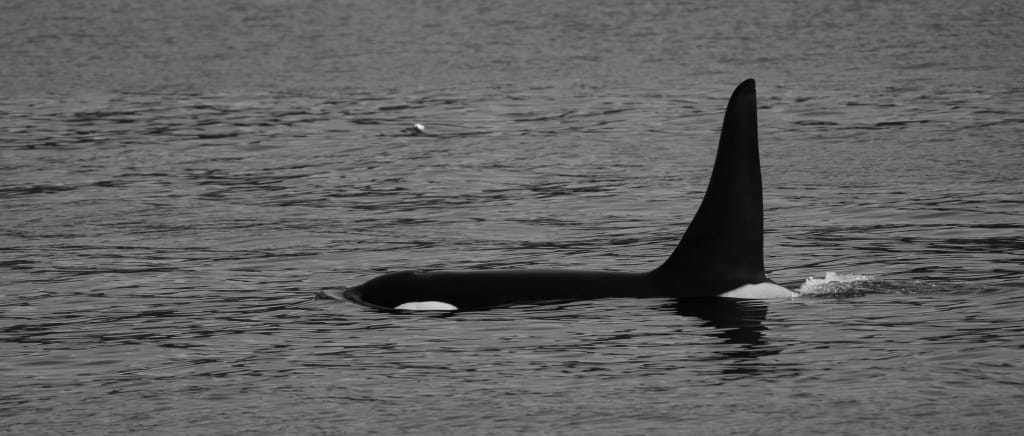
He was a lone bull, which meant he was a transient killer whale. Transient killer whales travel solo and hunt for mammals such as seals and sea lions. Resident orcas, on the other hand, travel in big pods and eat fish such as salmon and halibut instead.
Orcas, while commonly referred to as killer whales, are not whales. They are actually the largest members of the dolphin family.
We kept our eyes glued to the water, waiting for the orca to surface again and again. As if the orca wasn’t interesting enough, we had a circus of puffins nearby that we could watch as well.
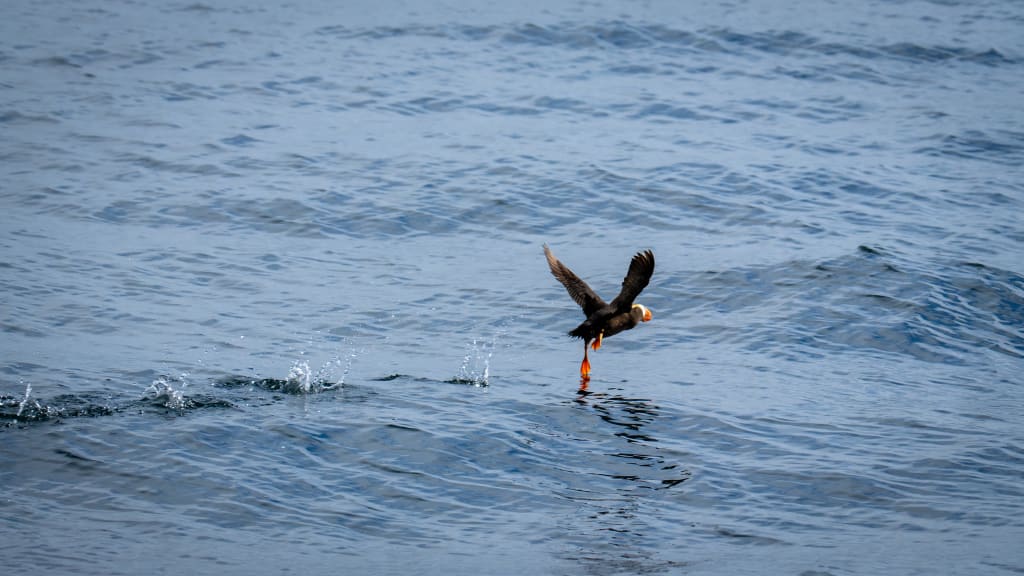
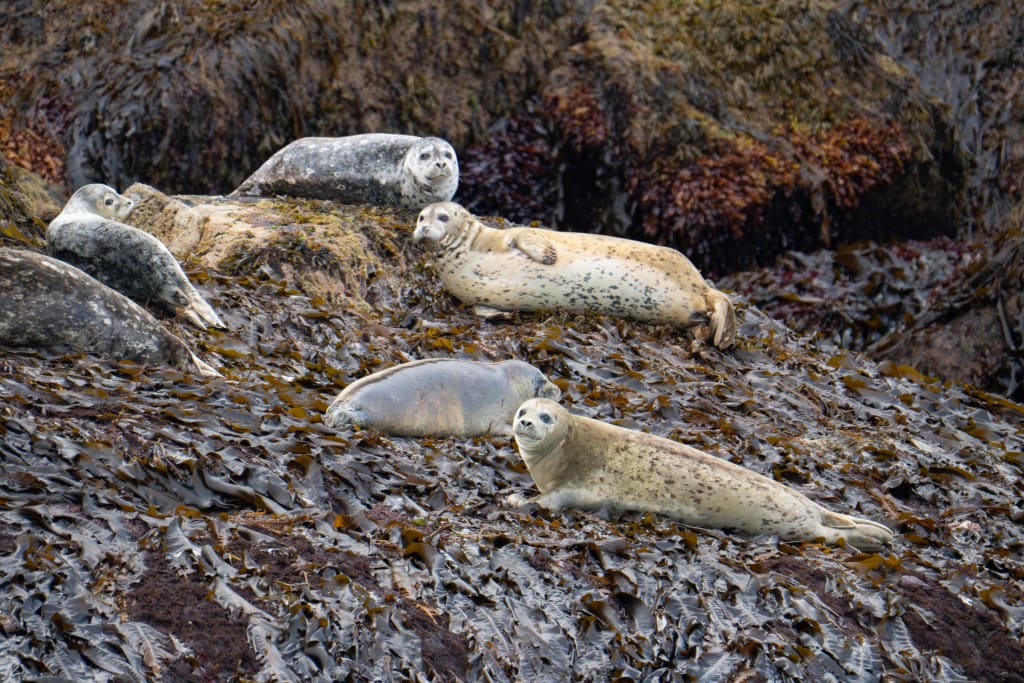
After ten minutes or so, we decided to move on. Not a bad start to the day! We were 3 hours into the cruise and we had already seen a colony of harbor seals, a colony of Steller sea lions, a circus of puffins, and an orca.
The harbor seals had been our very first sighting. While we watched them sleep on the rocks, our captain, Mark, told us that harbor seals can dive up to 1,300 feet below the surface and hold their breath for 30 minutes.
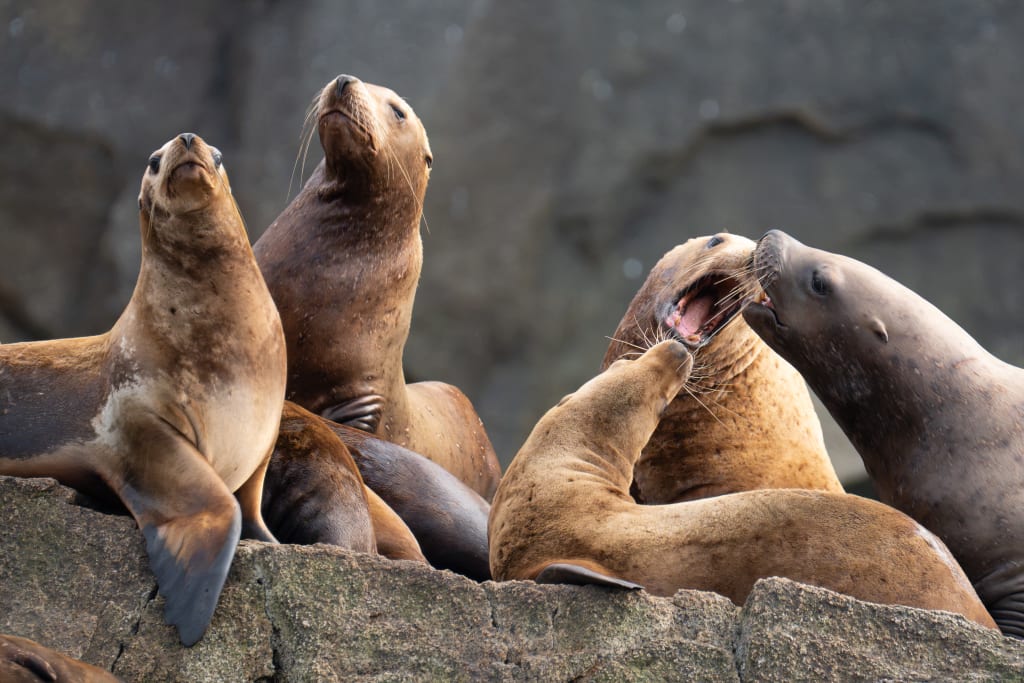
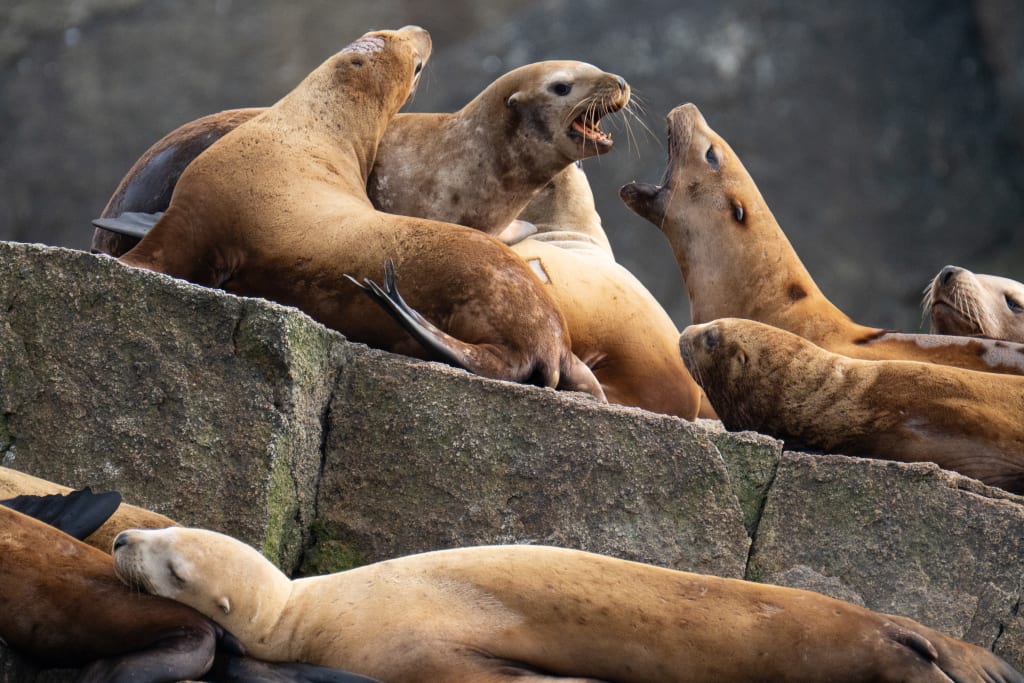
We saw the Steller sea lions next. Alex and I had been fortunate enough to spend a week in the Galápagos the year before, where we saw more sea lions than you could ever wish to see in a lifetime. These Steller sea lions were significantly larger than the ones we saw there, though.
I googled the different species after the fact for more information. Apparently the Steller sea lion is a massive, cold-water northern species weighing up to 2,500 pounds, whereas the Galápagos sea lion is a small, tropical animal maxing out near 600 pounds. That’s a big difference in size!
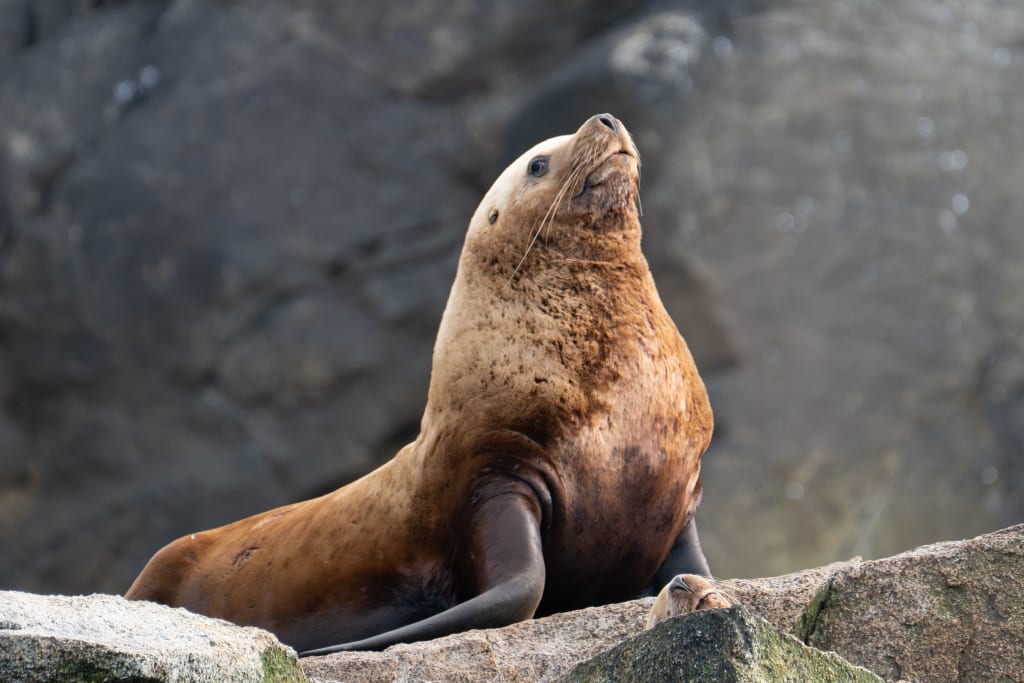
These sea lions were clearly agitated. The males were bickering with one another, grunting, groaning, and even pushing a fellow sea lion off the rocks.
We left the sea lions to resolve the issues amongst themselves. We had places to be.
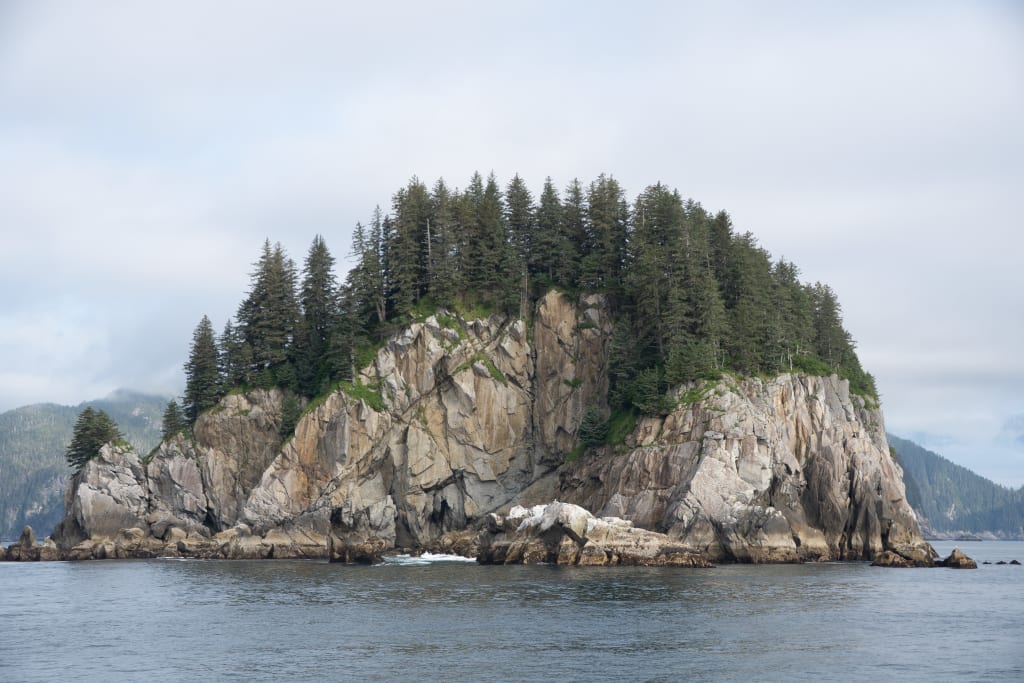
After the orca sighting, the rest of the ride towards Northwestern Glacier was pretty uneventful. We glided past islands covered with trees and saw a few glaciers from a distance, but otherwise didn’t see much.
We had an early lunch at ~11:30am, which consisted of burritos and a bag of tortilla chips. The burritos were delicious and both Alex and I went back for seconds.
As I was wrapping up the last few bites of my burrito, the captain came over the intercom to make the announcement that we were approaching Northwestern Glacier. We all rushed outside to snap some photos.
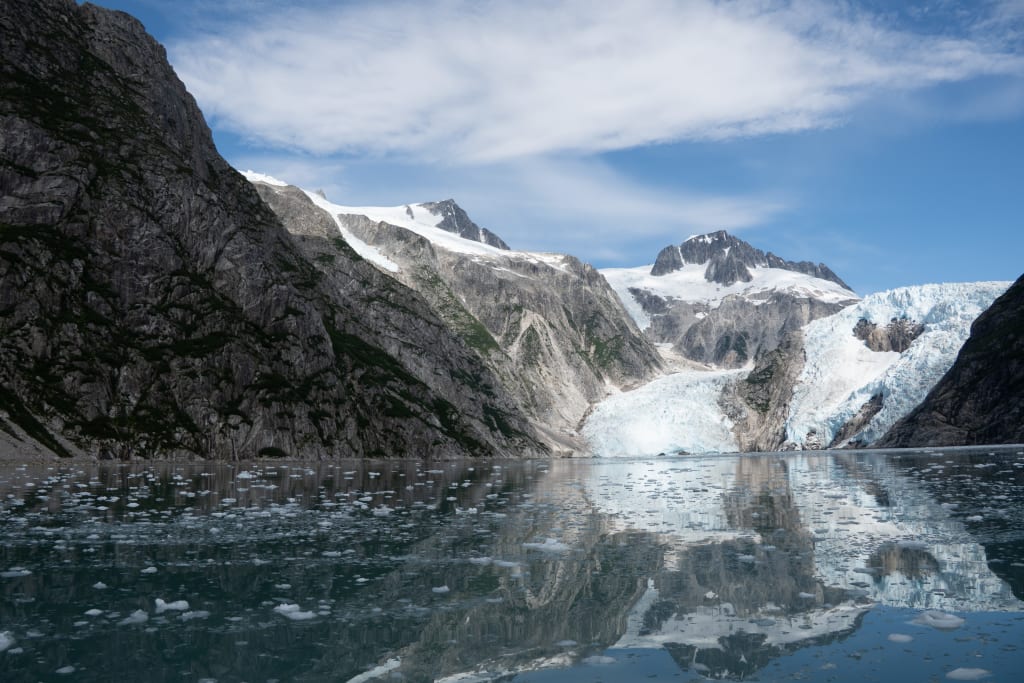
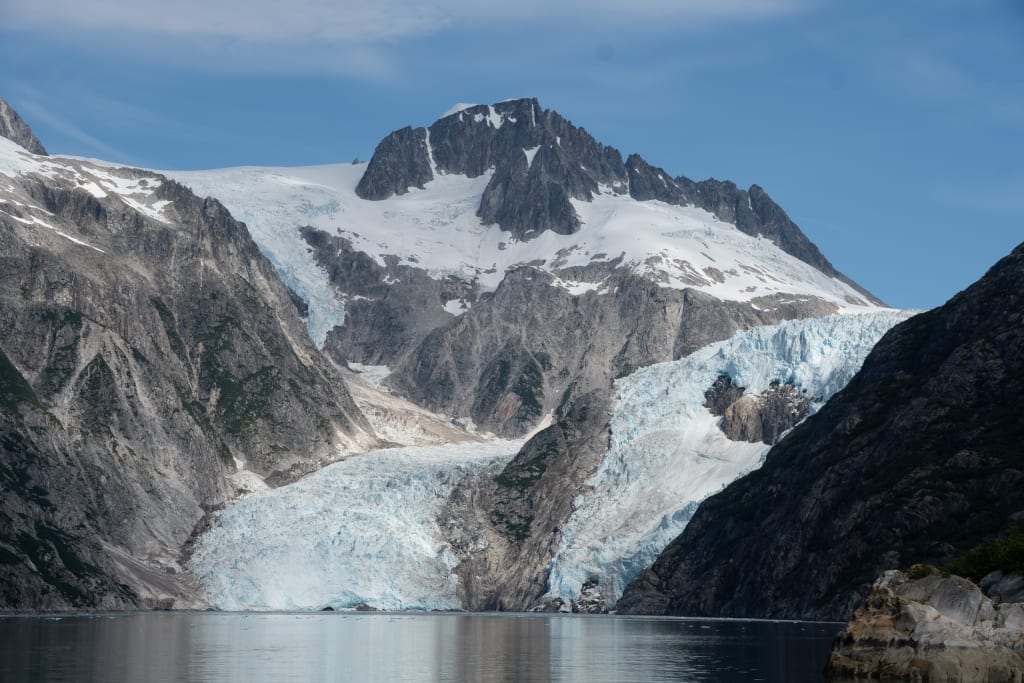
As we approached the glacier, we passed seals that were hanging out on the giant icebergs floating in the bay. We maintained a safe distance so it was hard to capture them on camera, but it was cool to see. I was surprised they found the ice to be a comfortable spot for a nap.
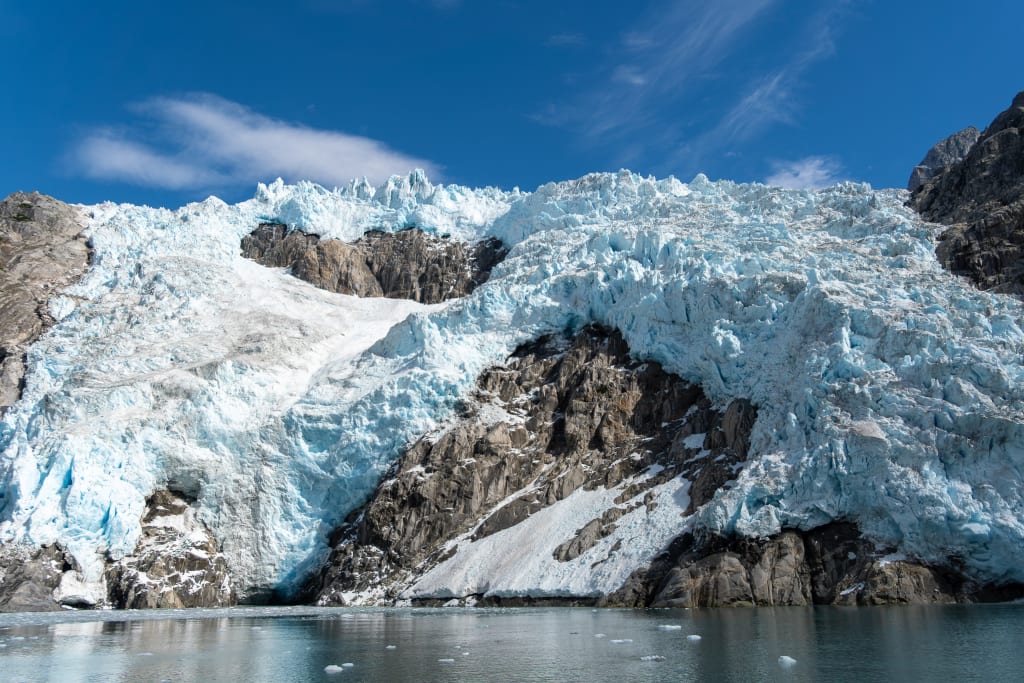
Since we were on a boat, we were able to approach the glacier quite closely (much closer than we would get to Aialik Glacier on the kayaks a few days later).
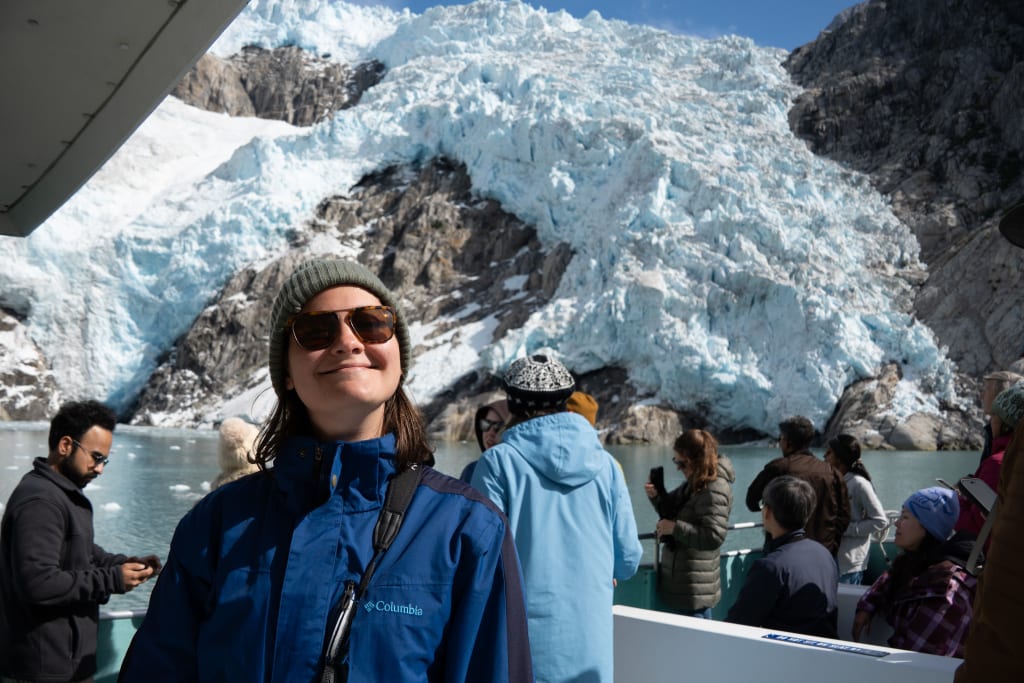

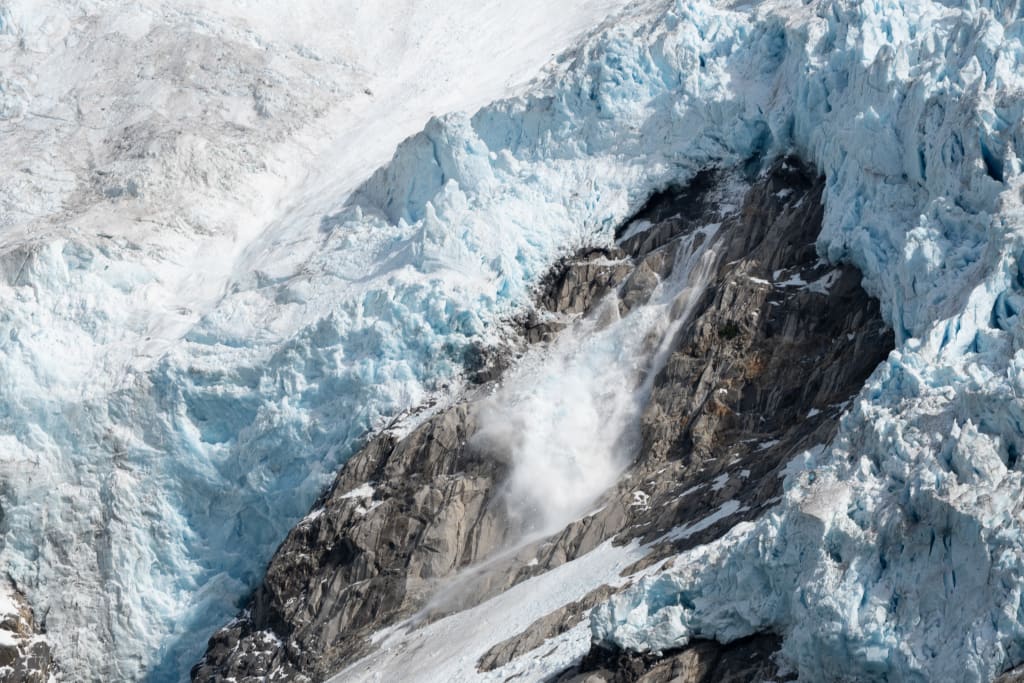
We spent a good bit of time parked at the glacier, snapping photos and scanning for signs of calving. It was hard to catch the calving on camera, because the thunderous roar that announces a calving event would come after the ice had already careened down the side of the glacier. Thankfully, I had an excellent photographer on my team.
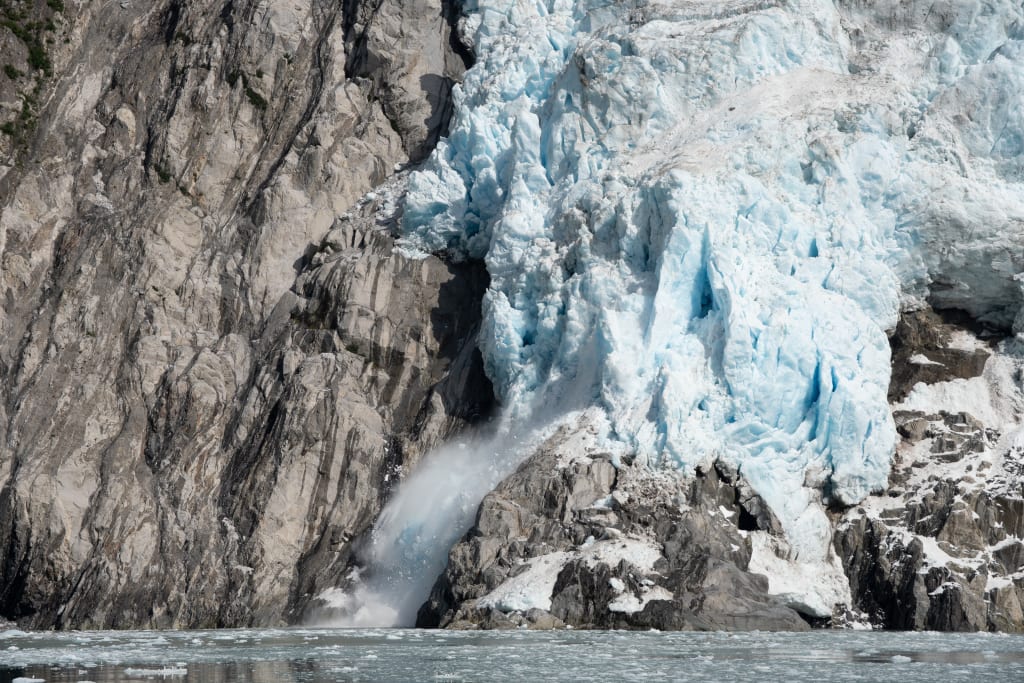
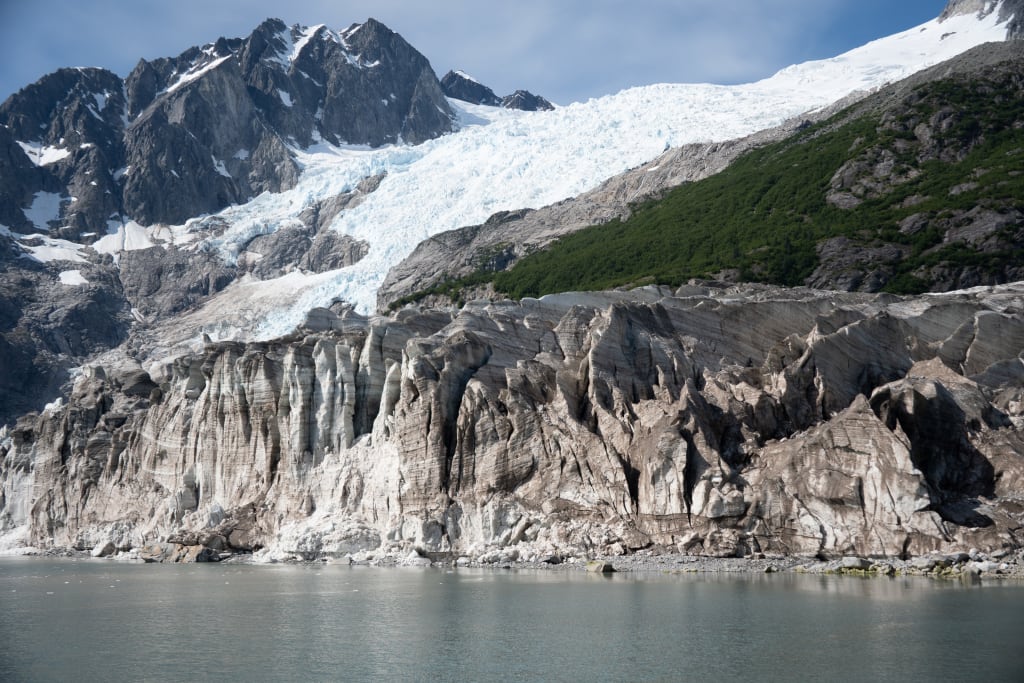
We spent roughly 30 minutes at Northwestern Glacier before heading to a neighboring glacier. This glacier had receded significantly in the past few decades. The spiky rocks used to be covered in ice not so long ago.
At this particular spot where we parked ourselves, you could see 3 glaciers at the same time: Northwestern, Ogive, and Anchor.
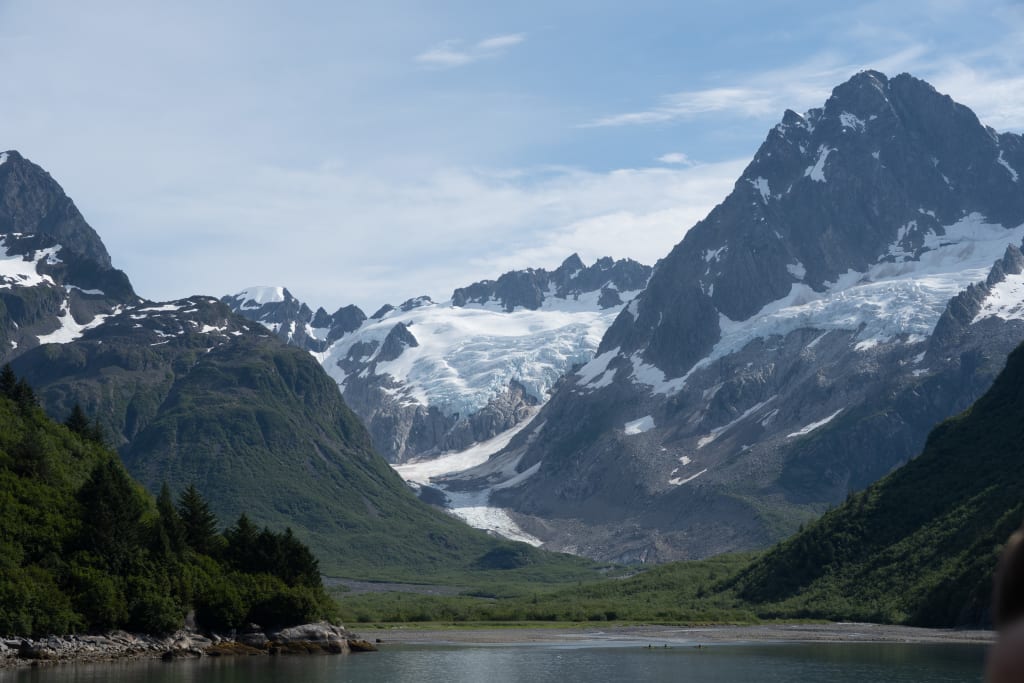
It was at this point that I decided I officially liked this cruise. The glaciers were stunning and the wildlife really made this place feel raw and real.
Not far away from the trio of glaciers, we got a glimpse of a humpback whale. The whale was very close to the beach, in shallow waters, so he didn’t need to dive down low. This meant we didn’t get to see his tail, only his back.
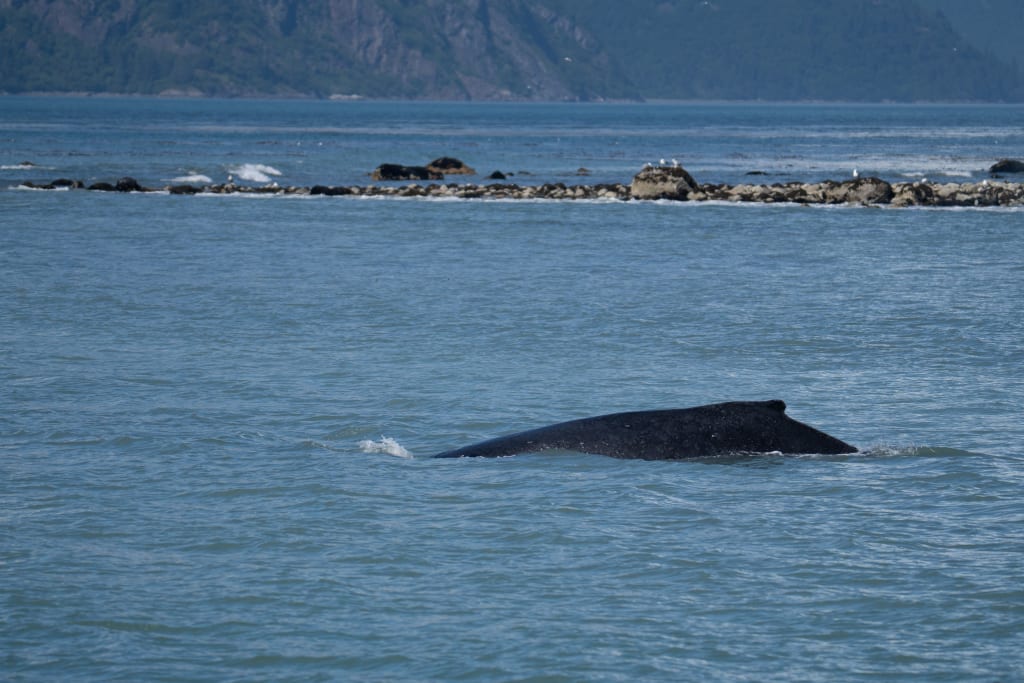
This happened not just once, but twice that day, where we saw humpbacks but didn’t get a good view. Thankfully, a few days later on a boat ride to Aialik Bay, we finally saw a humpback’s tail.
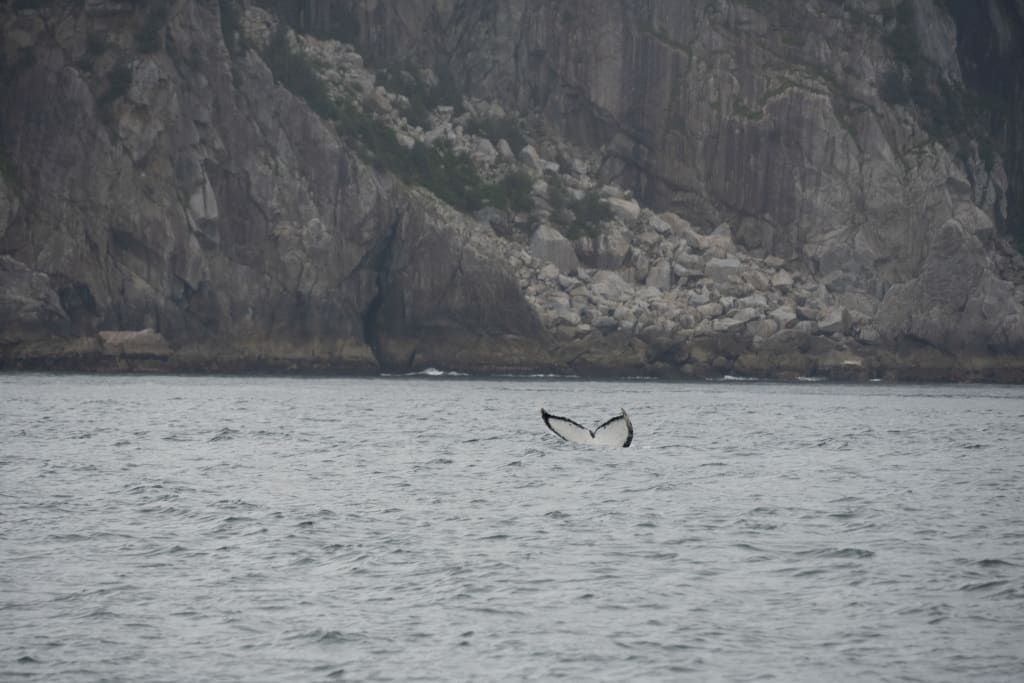
While we watched the whale, we learned that humpbacks can be identified by the unique pattern on the underside of its tail. We also learned that they don’t have teeth, but they eat up to 1 ton of fish per day!
This next hour would be one of the best on the trip. We had sighting after sighting of every animal I had on my Kenai Fjords wish list.
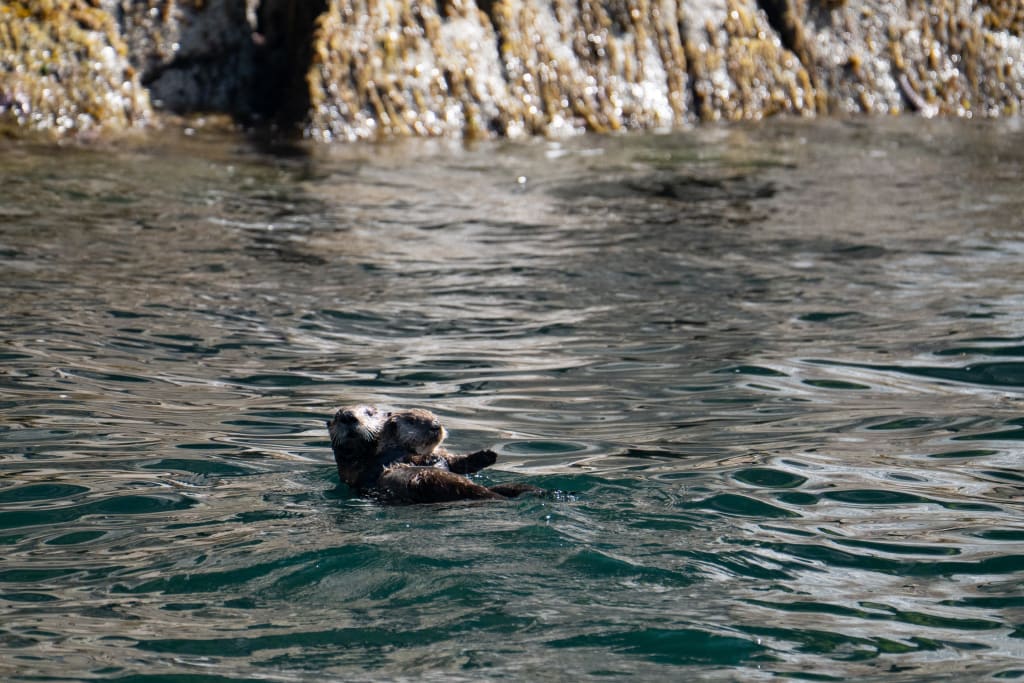
We saw these cute little otters. I was shocked to learn that otters don’t have blubber, unlike many marine mammals such as seals and whales. They just have a very dense concentration of hair. In fact, otters have the densest fur of any mammal, with up to one million hairs per square inch.
The next stop was Beehive Island. Countless birds flew over the island in every direction. Our captain said in the decades he’s spent in Kenai Fjords, he has never once seen the birds collide. Pretty impressive.
Chiswell Island was the next stop. A colony of Steller sea lions made Chiswell their home for the summer. The baby sea lions kept hurling themselves into the water, practicing their skills climbing back up the slippery rocks to safety. This is an important skill they’ll need to survive. They might need to navigate the rocks quickly in the event of a chase by a predator. Captain Mark mentioned that transient orcas will likely be drawn to the area over the next few days on the hunt for their next meal and sadly, baby sea lions make an easy target.
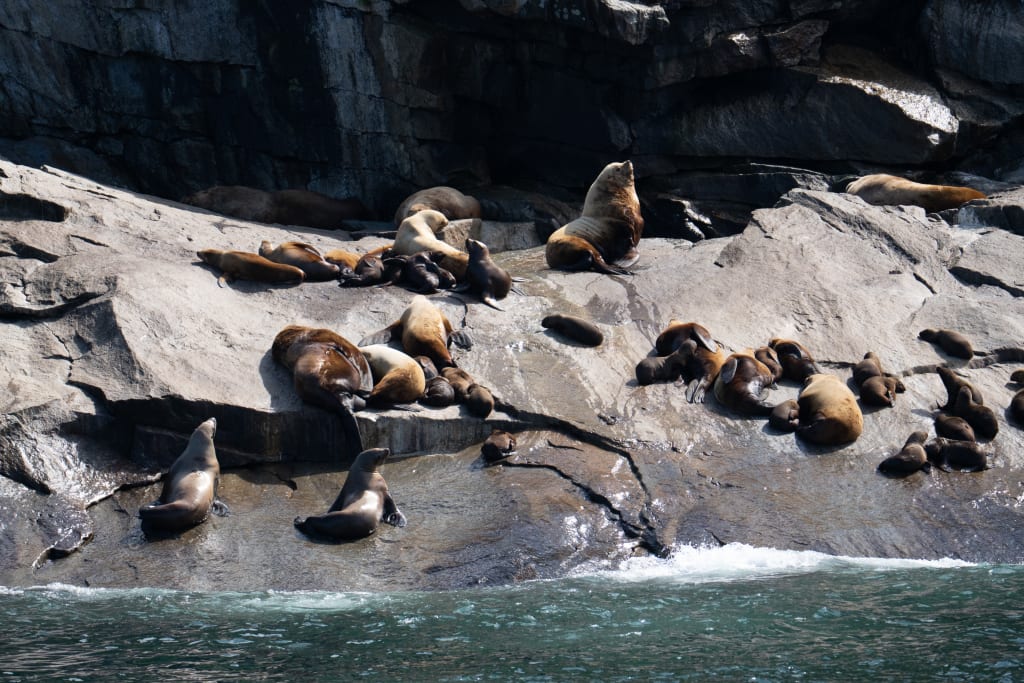
While Alex took photos, I furiously scribbled down some notes on sea lions. Our captain told us that sea lions have something called delayed implantation. After an egg is fertilized during mating, the embryo doesn’t attach to the uterus until several months later. This ensures that pups are born during the optimal season the following year, when food is in plentiful supply. The added benefit is that all sea lion pups in the colony are born at the same time, which optimizes the chances for survival as there is safety in numbers.
I had never heard of delayed implantation before this trip, but a few days later, I would hear about it again. While I was at bear camp, I learned that brown bears, too, have delayed implantation.
The last stop before the long ride back to Seward was to Spider Cove, where we saw the famous sea stacks. If you google “Kenai Fjords,” this is likely the first photo that will come up in your search results.
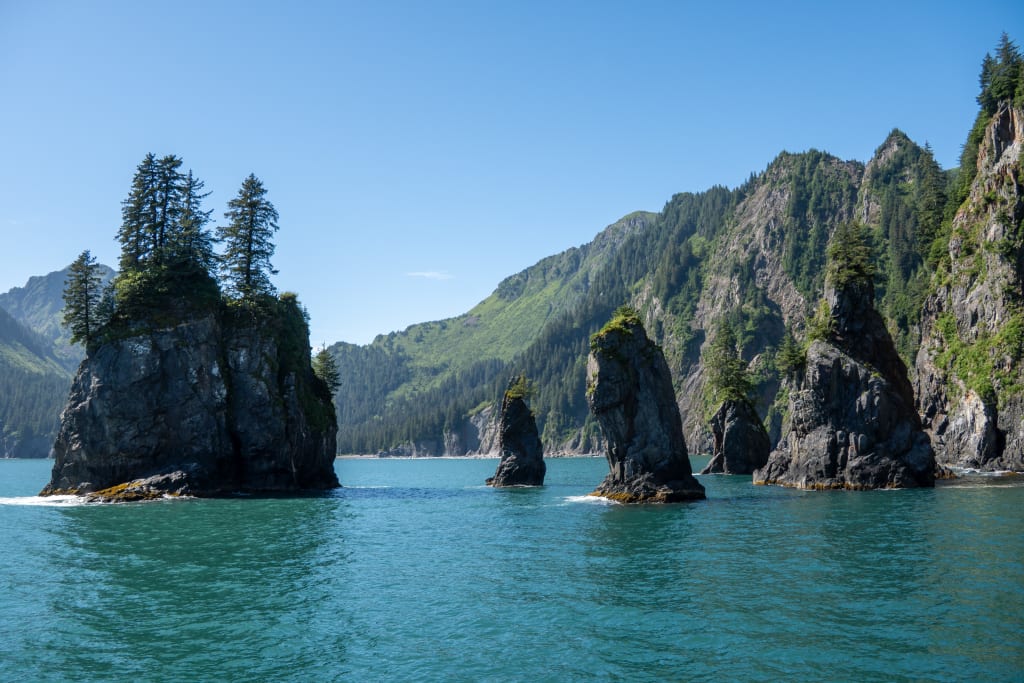
It was here that we saw a bald eagle perched on the top of a tree.
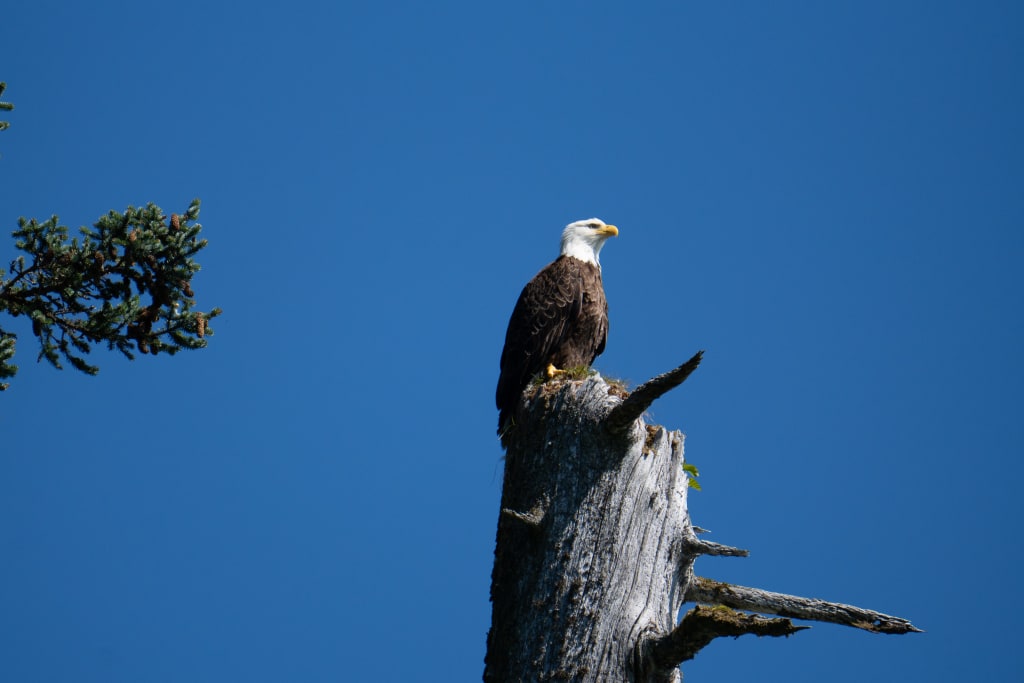
As usual, Mark came in over the intercom to teach us about what we were seeing. We learned eagle nests can weigh up to a ton. We also learned that eagles have down feathers until they’re 5 years old, so juveniles can actually look bigger than adults because their extra fluff gives them a bulkier appearance.
After the eagle sighting, we didn’t see much else until the Seward boat dock came into view a few hours later. The morning had started off slow, with minimal sightings for the first couple hours, and we had a lot of lulls on the way back to Seward as well. Ultimately, this is why we selected the longest boat tour in Kenai Fjords though. The best wildlife lives deep in the park, in the remote, untouched corners. To see it, you have to travel long distances, which means a long boat ride with some quieter moments. But in my opinion, it was worth it for what we saw once we got there.
A NOTE ON THE WEATHER
I won’t beat around the bush: a typical day in Kenai Fjords National Park is cloudy, gray, and wet. Even in the middle of summer, gray skies, drizzle, and passing showers are completely normal. You might get lucky with a beautiful sunny day, but I wouldn’t plan your trip assuming you will. You need to come prepared for rain. This means that it’s important to invest in high quality rain gear and bring lots of layers for cold, damp conditions.
Given the prevalence of rain, your tour operator likely won’t cancel your tour unless the wind or rain is very heavy or the seas are rough. That being said, I highly recommend building at least one buffer day into your itinerary so that you have flexibility if the weather refuses to cooperate and the tour is cancelled.
We got incredibly lucky with the weather. We had two gray but dry days and two very sunny days and were able to do activities on all four days. However, the weather was a major topic of discussion amongst every single local we encountered. They constantly thanked us for bringing the good weather and told us just how lucky we were. I even met one guy from Anchorage who said he had been to Seward ten times and this was the first time he saw the sun here.
All that to say, be prepared for the rain. Don’t let the drizzle scare you off. Give yourself enough flexibility that one truly miserable weather day doesn’t derail your entire visit.
IS IT WORTH IT?
The answer is yes, but I want to be honest about the downsides of this experience.
The first 2-3 hours of the cruise is quiet. There were not many wildlife sightings. Same goes for the last 2-3 hours (as we passed through the same area on our way back to Seward). This is because the wildlife sightings are more common in the remote areas of the park further away.
There is a lot of wildlife to see, but sightings are from a distance. It’s hard to spot a lot of the wildlife, especially the whales and orcas, where 90%+ of their bodies are hidden below the surface of the water. Birds, such as eagles and puffins, are also very far away. It helps to have a zoom lens and binoculars to get a better view of the animals.
Lastly, it’s cold, even when you’re wearing layers. There is indoor seating, but we wanted to be prepared with our camera at the ready in case we spotted something cool. So I guess that’s on us.

All that being said, we had a nice time on the cruise. I would not opt for a shorter cruise if I had it to do over, mostly because all the best wildlife encounters were in the remote parts of the park, 2-3 hours by boat away from Seward near the Northwestern Glacier.
I would recommend this experience, but make sure you come prepared with layers, binoculars, and a camera and a zoom lens, and be patient for the first few hours.
FAQS
What time of year can you do a boat cruise in Kenai Fjords?
Kenai Fjords Tours runs boat cruises from the very end of May through the end of August. We went at the end of July.
What should I wear?
Bring LOTS of layers. I wore hiking pants, a long sleeve shirt, a heavy jacket, and a beanie. In retrospect, my pants were too thin and I wish I wore something that was more windproof. I also recommend bringing gloves.
What should I bring?
I recommend bringing:
- Lots of layers, including a rain jacket
- A beanie (don’t bring a baseball cap, it’s too windy!)
- Gloves
- Binoculars
- A camera with a zoom lens
- Dramamine (if you are prone to seasickness) and Advil
- A water bottle
- Snacks (they have some for sale on board but the options are limited)
- Sunglasses
- Sunscreen
What camera gear did you bring?
We brought a Sony a6700 camera with a Sony 200-600mm lens (used to photograph all the wildlife) plus a Sony a6400 camera with a Tamron 18-300mm lens (used for a few landscape shots).
Fair warning, it was very challenging to capture good photos on the cruise, between the less than ideal weather, distance we maintained from the wildlife, and the rocking boat. Shout out to my husband, Alex, who captured excellent shots, as he always does. If you want wildlife shots like the ones he got, you’re definitely going to want to pack a zoom lens with excellent range.
How does Northwestern Glacier compare to other glaciers in Kenai Fjords National Park?
During my four days in Kenai Fjords National Park, I visited two other glaciers: Aialik (via a kayaking tour) and Exit Glacier (via the Harding Icefield hike). Aialik was the largest and most impressive in my opinion, but I was also pretty impressed with Northwestern. Holgate and Bear Glaciers are also popular to visit.
Are there other boat tours? How do those compare?
Yes, there are many shorter boat tours if the idea of 8 hours stuck on a boat scares you. The tradeoff is that you won’t be able to travel as deep into Kenai Fjords National Park, so there may be fewer wildlife encounters and more boat traffic.
Is there indoor seating on the boat?
Yes, there is. If you want to sit inside, I recommend arriving early to stand in line, as seats are first come, first serve. We spent the majority of the time outdoors, though, as we wanted to keep our eyes peeled for wildlife.
Are there assigned seats?
No, seats are first come, first serve, so I recommend arriving early to pick your seats if you want a seat near a window or you have a larger group that you want to sit with.
Is the water rough?
We found the water to be pretty calm, but it can get choppy depending on the weather. I recommend bringing Dramamine if you’re prone to seasickness.
What is the bathroom situation?
There is a bathroom onboard!
Is food included?
Yes, a light breakfast (a yogurt and a small piece of cinnamon roll) and lunch (a delicious burrito) is included. We found the breakfast to be a little disappointing and the lunch to be wonderful. They have vegetarian burritos available if you don’t eat meat like me. They also have beverages (coffee, hot chocolate, etc) and snacks available for purchase. I recommend eating breakfast before you get onboard.
What happens if it rains?
Tours operate rain or shine. Come prepared with a rain jacket! There is also indoor seating if you prefer to stay indoors. However, if weather conditions are sufficiently bad, the tour will be cancelled and a refund issued.
Did you have cell service?
No, after the first 45 minutes, we lost cell service. Alex was very disappointed. He was trying to book IMAX tickets for Christopher Nolan’s The Odyssey and lost reception just as a new batch of tickets became available!
How do you get to Seward, Alaska?
Fly into Anchorage, Alaska. Drive (~2 hours 15 minutes) or take the train to Seward, Alaska.
EXPLORE MORE

The Best Things To Do in Kenai Fjords National Park

Kayaking to Aialik Glacier in Kenai Fjords National Park

Hiking the Harding Icefield Trail: Is It Worth the Climb?

Hiking Lost Lake Trail: Seward's Most Underrated Hike

The Ultimate 2 Week Alaska Itinerary: Glaciers, Bears & More

Flying Over Glaciers: A Helicopter Tour Over Prince William Sound

Dog Sledding on a Glacier in Alaska: Is It Worth It?

Answering ALL Your Questions About Bear Camp (Katmai NP)

5 Moments From Bear Camp I Can’t Stop Thinking About (Katmai NP)

Bear Camp Archives: My Favorite Photos & Fun Facts (Katmai NP)

Comparing Alaska Bear Camp to an African Safari

Snorkeling in the Galápagos with Sea Lions, Sharks, & More

First Impressions of the Galápagos in San Cristóbal

Wildlife in the Galápagos: What You’ll See and Where to Find It

Ice Climbing in Norway: Our Experience on Jostedalsbreen Glacier
