
Ice Climbing in Norway: Our Experience on Jostedalsbreen Glacier
Alex and I had no idea what ice climbing actually was when we showed up for the tour. The tour description said we would walk on a glacier and be "lowered down into a crevasse." Sounds cool, right? We saw a sea of 5 star reviews and decided to give it a chance without further investigation. What was not clear at the time was that we would be climbing back out of the crevasse ourselves. Perhaps that should have been obvious from the name of the tour.
All that to say, we had no idea what to expect walking into the tour, but it ended up being one of the most memorable, exciting, adventurous, and unique things we've ever done. It was by far my favorite thing we did in Norway.
Are you up for a challenge? I'll tell you everything you need to know about ice climbing on Jostedalsbreen Glacier so you can decide if this adventure is for you.
WHAT IS ICE CLIMBING?
Ice climbing is a sport that involves using crampons (on your feet) and ice axes (in your hands) to scale up glaciers or frozen waterfalls.
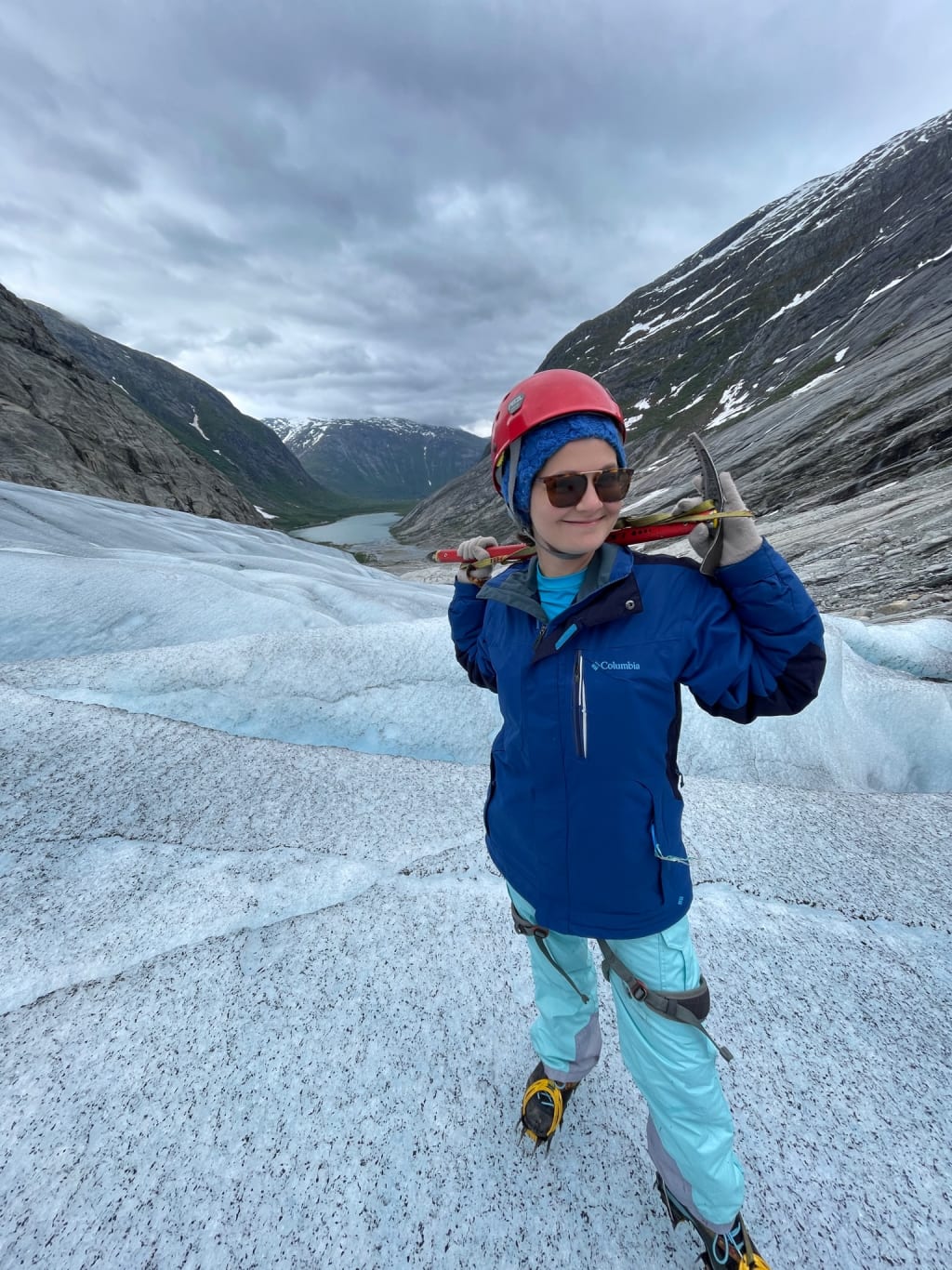
JOSTEDALSBREEN GLACIER
Jostedalsbreen is the largest glacier in continental Europe. (If you're wondering, Vatnajokull in Iceland is the largest glacier in all of Europe.)
It's a ginormous ice cap with more than 50 outlet glaciers, also known as glacier tongues, including Nigardsbreen, which is the one we explored.
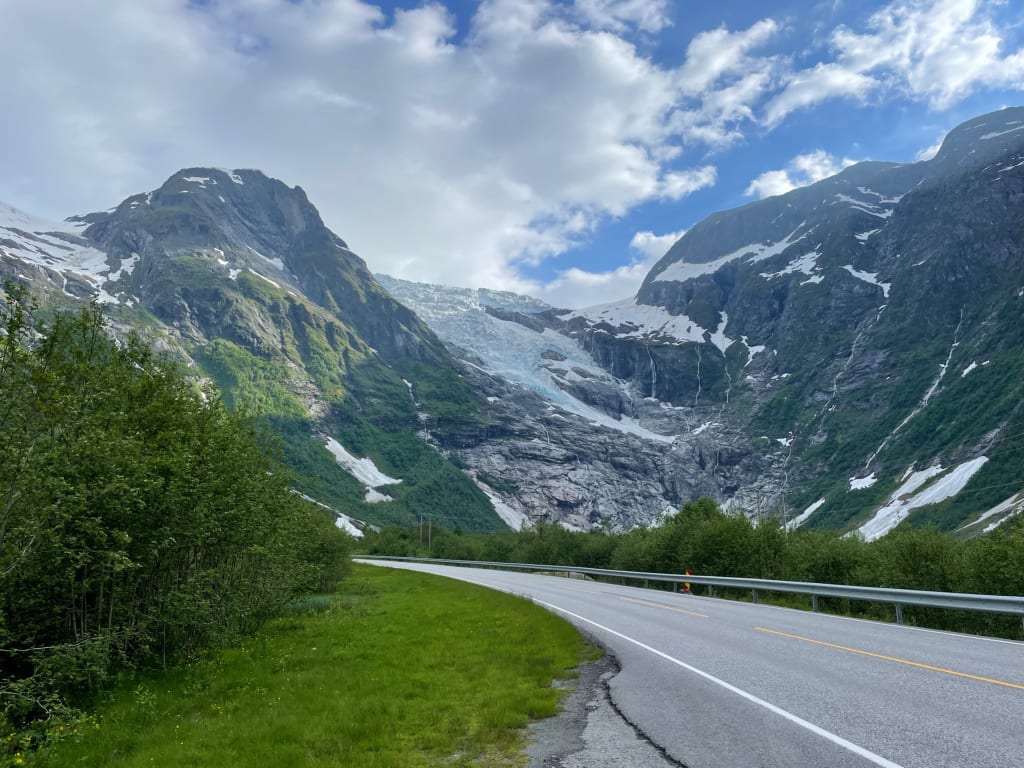
Exploring the glacier with a guide is a must, as they have all the necessary equipment and can help you safely navigate hidden crevasses and unstable ice. We explored with Ice Troll and had a fantastic experience. We really loved the small group size on the ice climbing tour, a maximum of 4 people, but we lucked out with a private tour.
If ice climbing sounds too intimidating, you can try glacier kayaking or glacier hiking instead. But, if you're even remotely interested in ice climbing, I recommend you give it a shot! It's really cool.
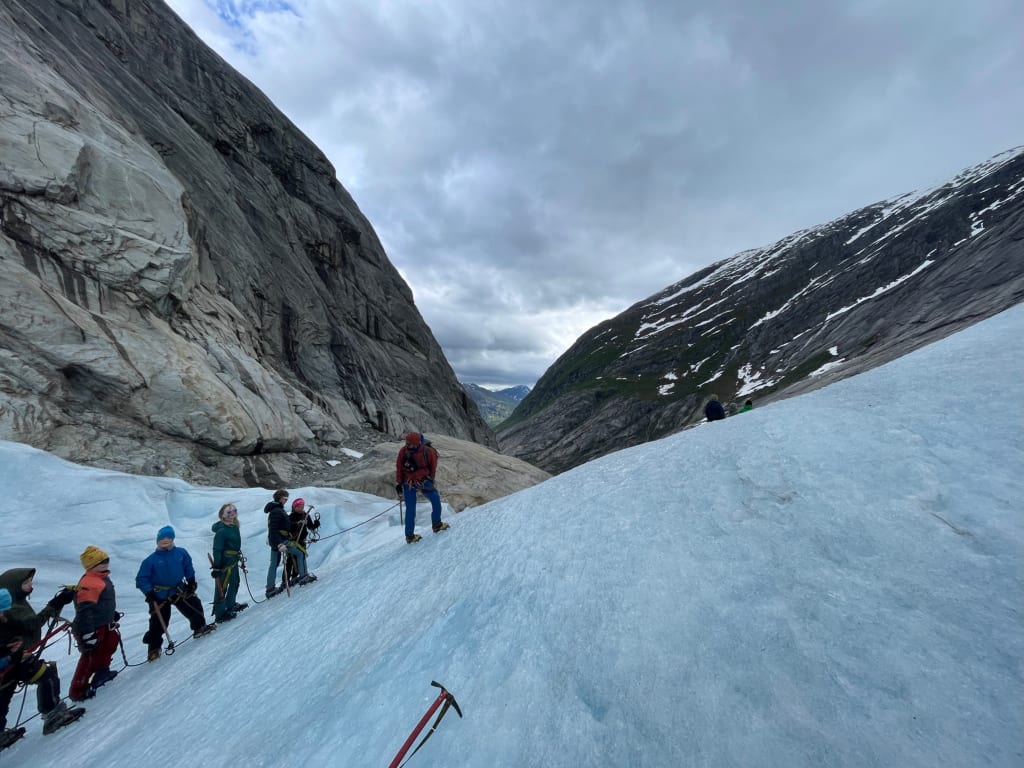
Ice Troll also offers an overnight tour, so if you want to try both glacier kayaking and ice climbing, that's a great option.
OUR EXPERIENCE
We were just about to step foot onto the glacier when we heard an ominous rumble in the distance, followed by the sound of ice tumbling down the mountainside. We looked up just in time to see a giant chunk of ice fall from the cliff in the distance. We had just witnessed our first glacier calving. What a great way to start the day!
As the rumbling subsided, our guide started one final equipment check. We finished tightening our crampons, grabbed our ice axes, and took our first step onto the sea of blue ice.
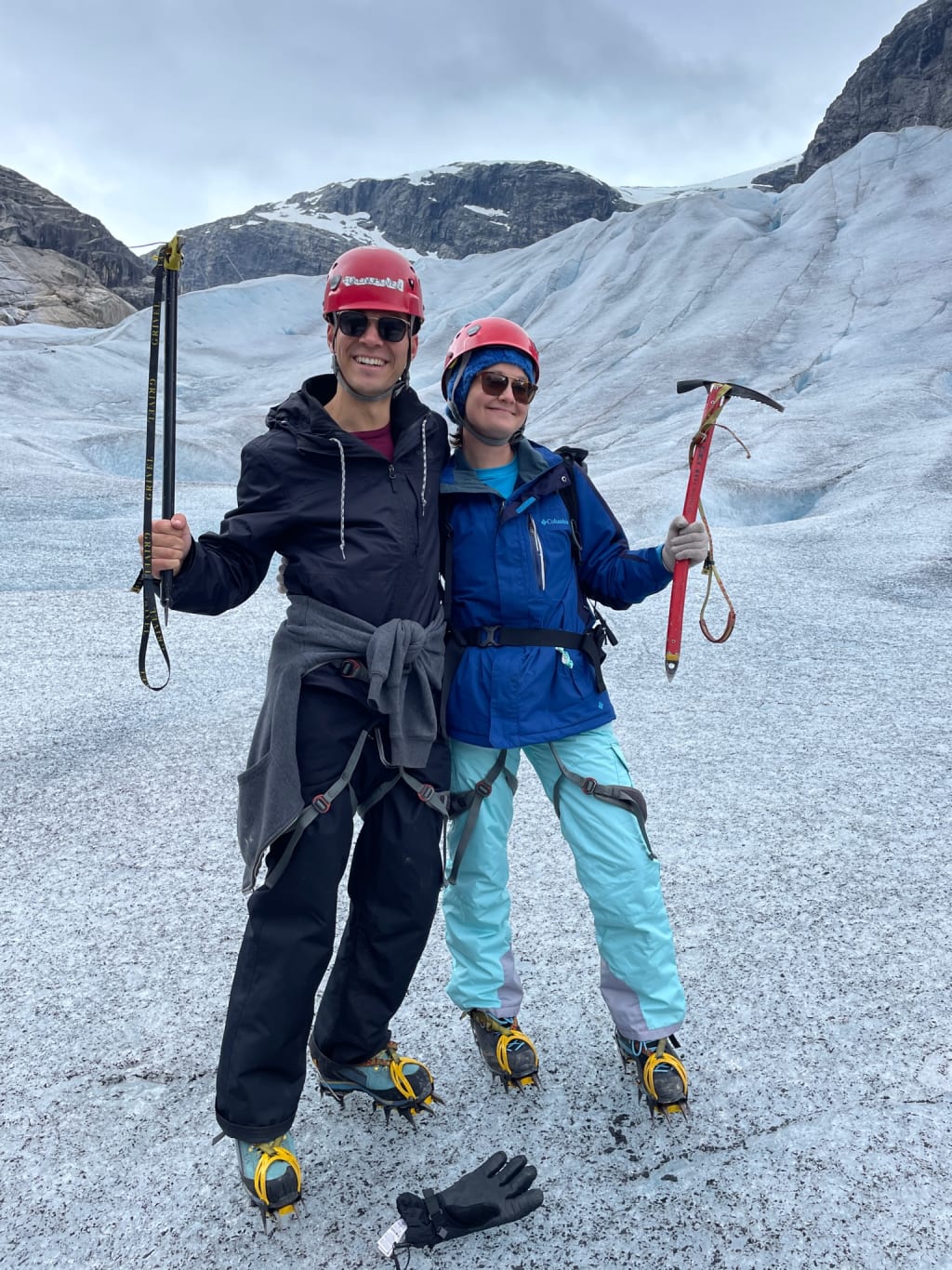
My first thought as we ventured further onto the glacier was "why is it black?" A thick layer of grime covered the surface of the glacier. Our guide explained that the glacier grinds the surrounding rock into fine dust that accumulates on its surface. That same dust accumulated on my pants throughout the day. They needed a good wash after this excursion.
My second surprise was the sheer number of crevasses and moulins on the glacier. In my mind I had imagined a relatively flat sheet of ice, but it was nothing like that in reality.
A crevasse is a deep crack in the glacier. A moulin is a hole formed when meltwater drills its way through the ice.
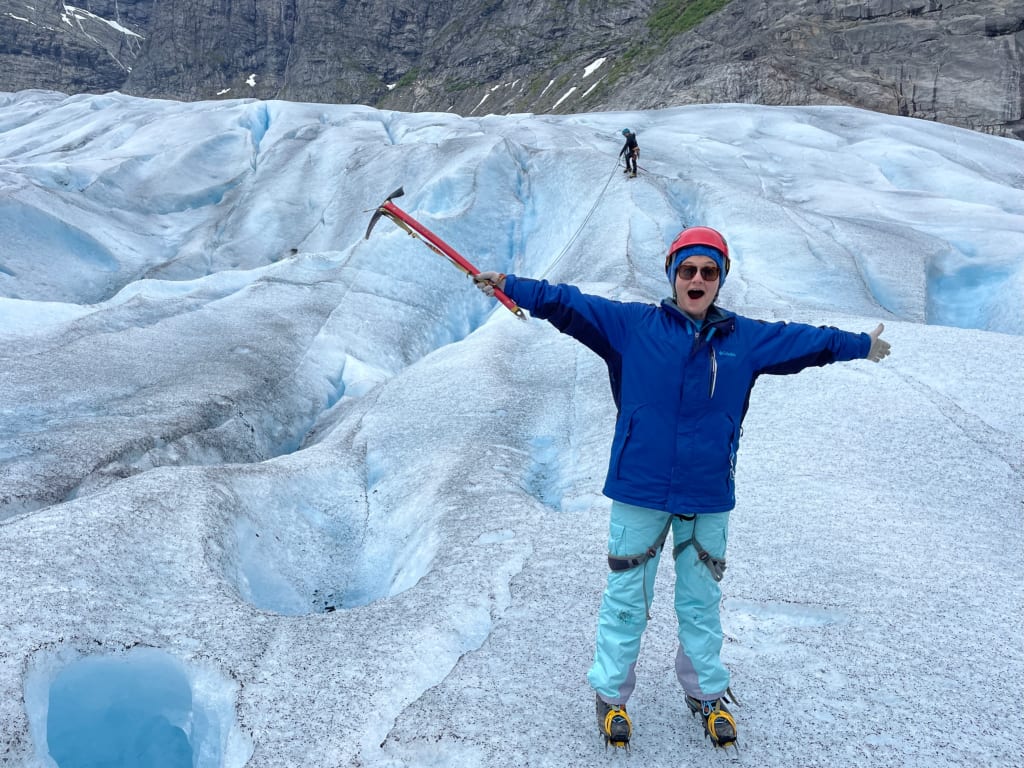
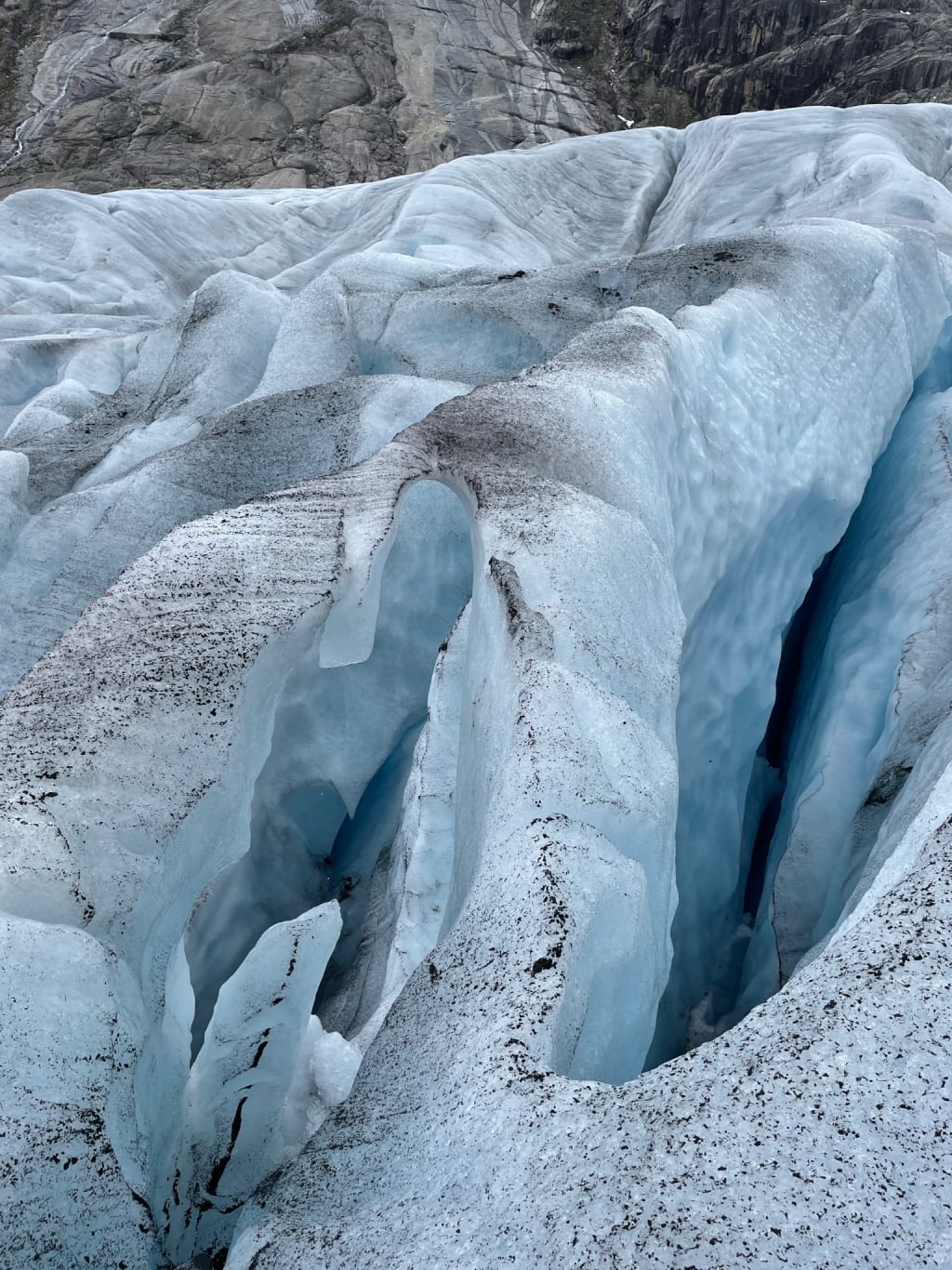
As Alex adjusted to the uneven surface, his long pants caught on the spike of his crampon and sent him lunging forward onto the ice. It gave him a scare, but thankfully he wasn't injured and he quickly recovered. From that point on, we made a conscious effort to keep our feet farther apart so our crampons wouldn't snag our pants.
Once we had gotten used to walking on the glacier, it was time to begin the ice climbing lessons. Neither Alex nor I had ever stepped foot onto a glacier before, nevermind climbed on it, but thankfully our guide was fantastic and she taught us everything we needed to know.
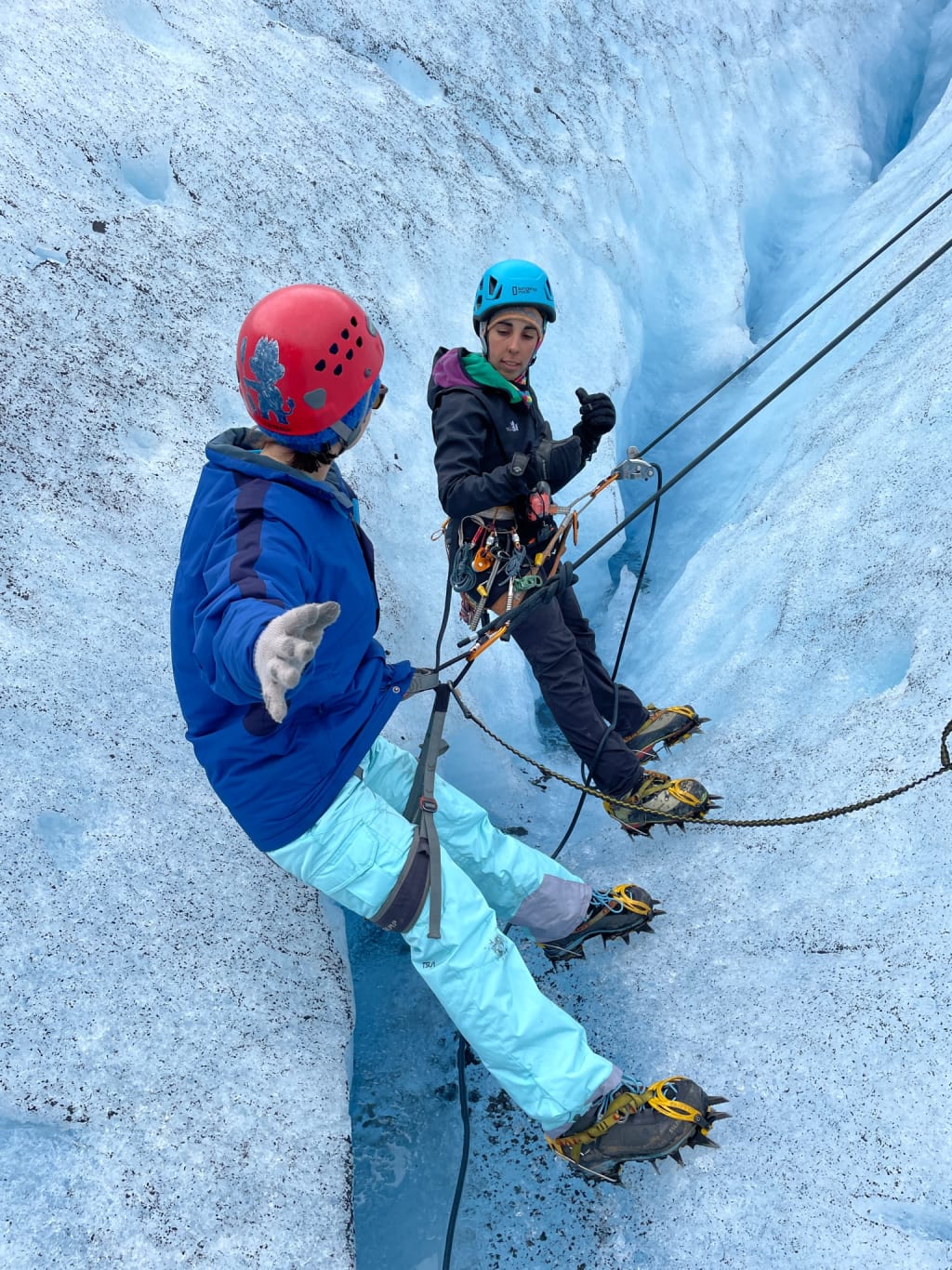
After a quick demonstration on the proper technique, it was our turn to give it a try. After all, there's no better way to learn how to ice climb than to simply start climbing! Our guide picked a relatively short wall and Alex and I took turns scaling up its surface.
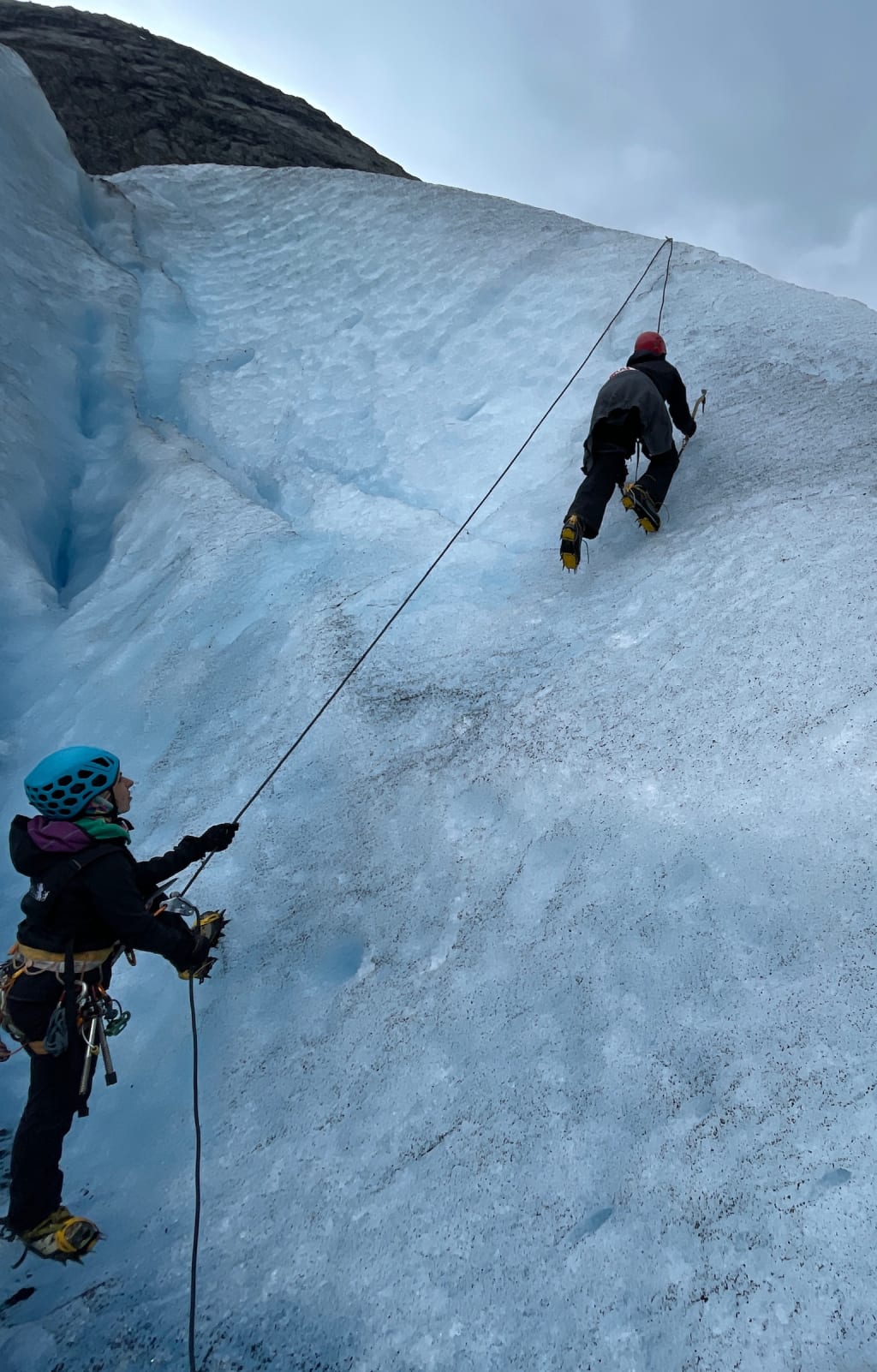
We got the hang of it pretty quickly, so we moved on to a nearby wall that had an overhang at the top.
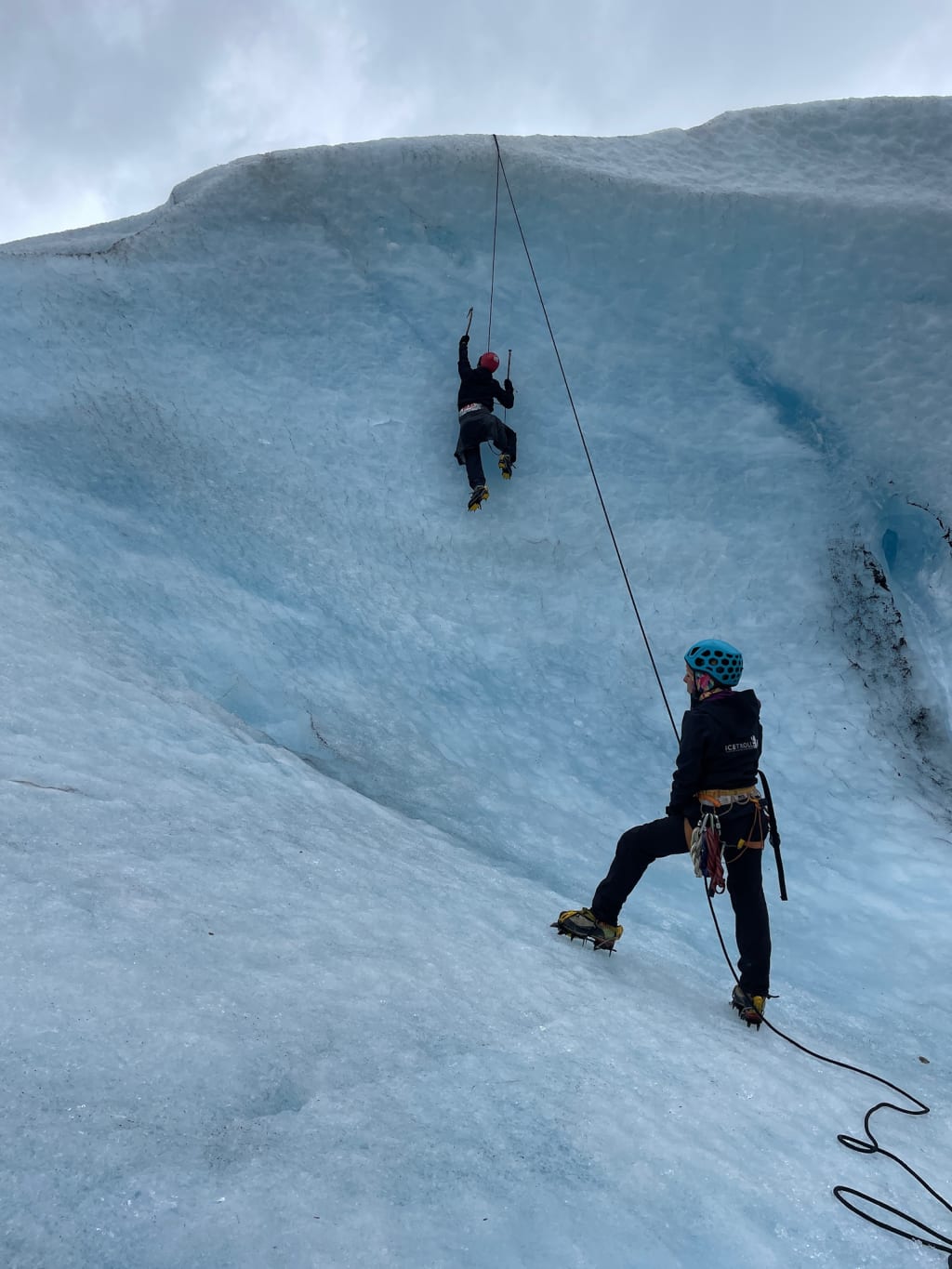
The photo doesn't really do it justice, but this climb was much harder. Near the top, the wall curved to less than a 90-degree angle, forcing me to rely almost entirely on my arms and core to pull myself up. I lost my grip and slipped off the ice a few times, but it was no big deal. I just swung from the rope, regrouped, and tried again.
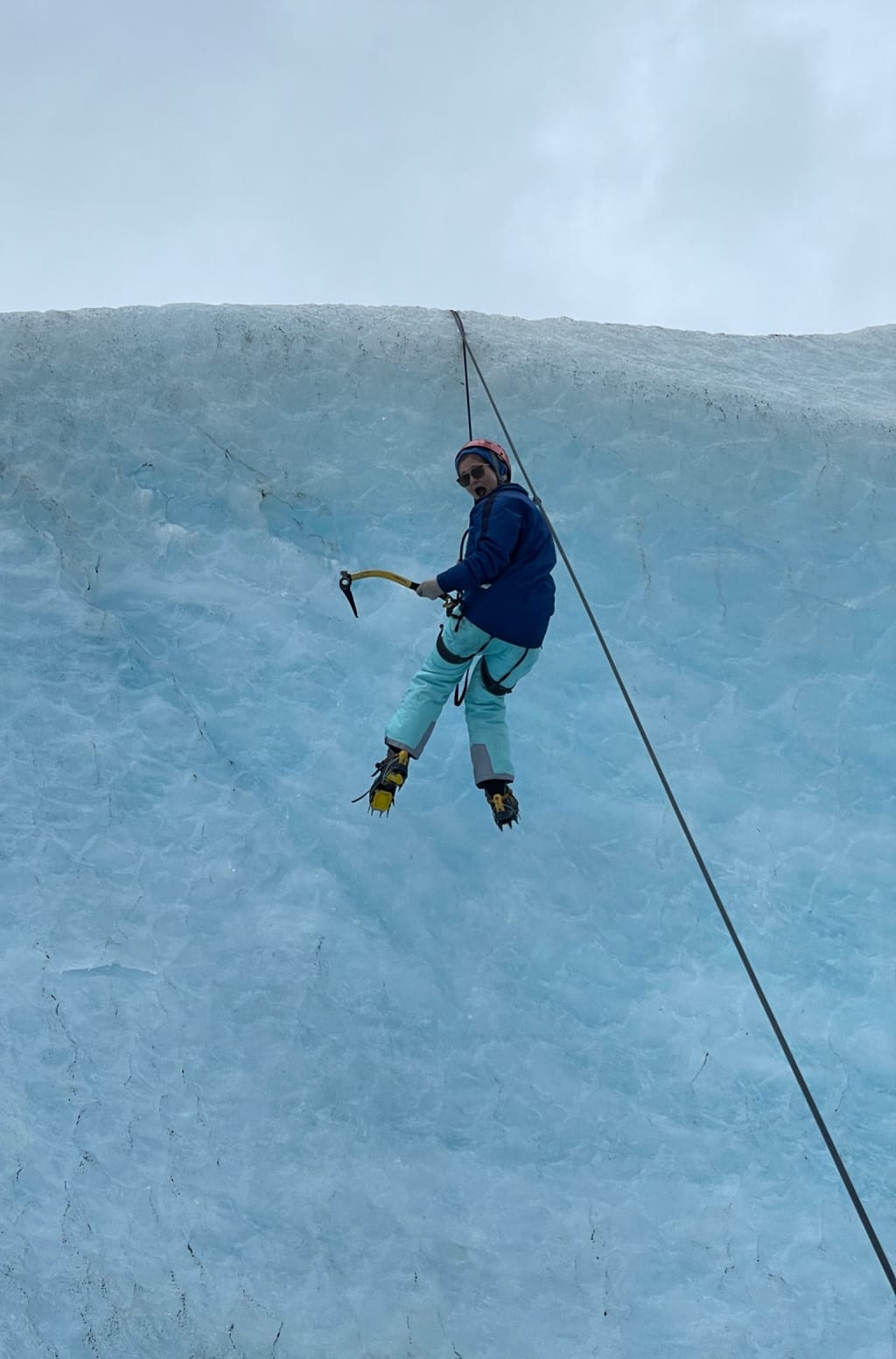
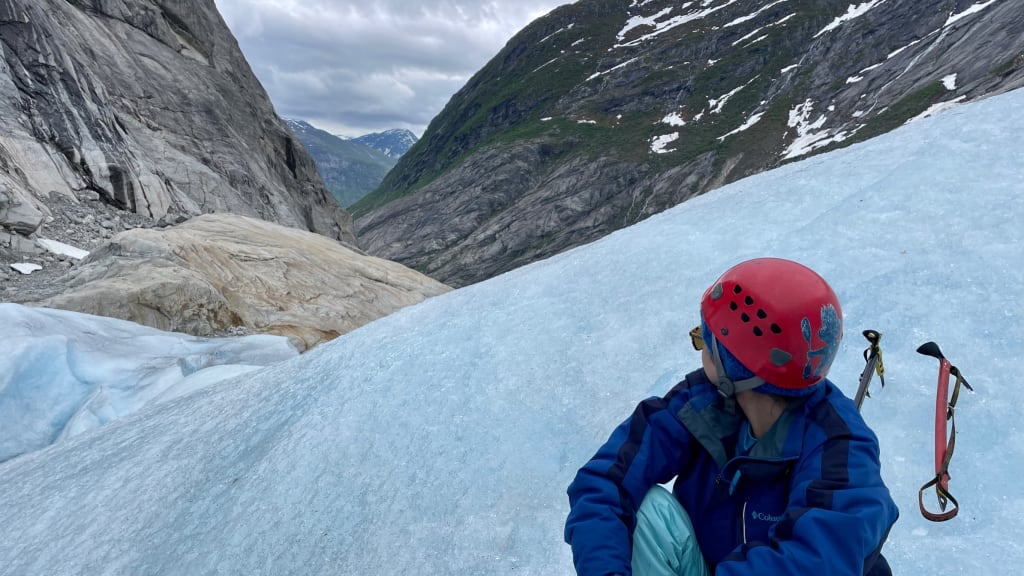
We would climb each wall a couple times each and then wander around the glacier in search of our next challenge. In between climbs, we snapped some incredible photos of the glacier.
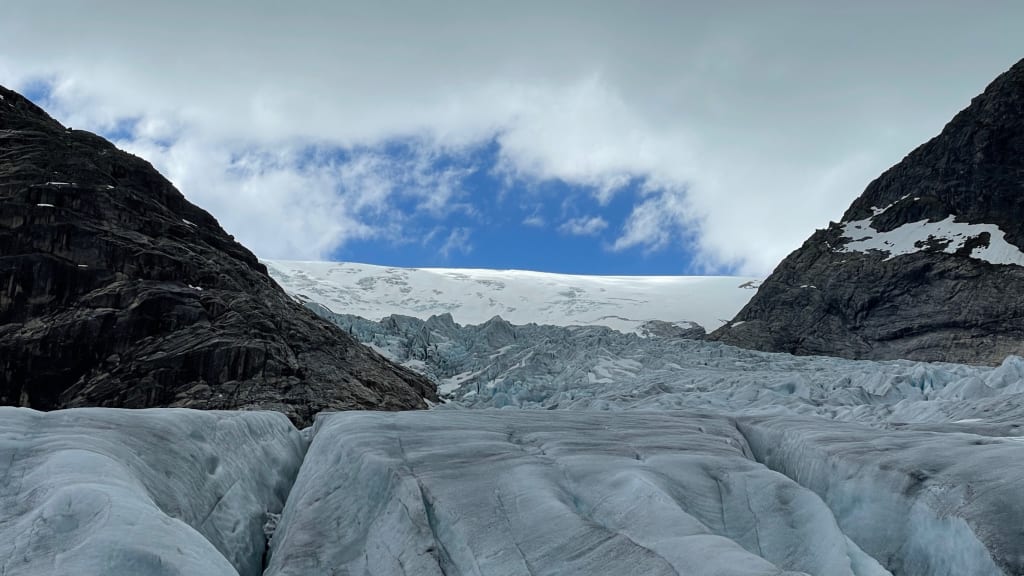
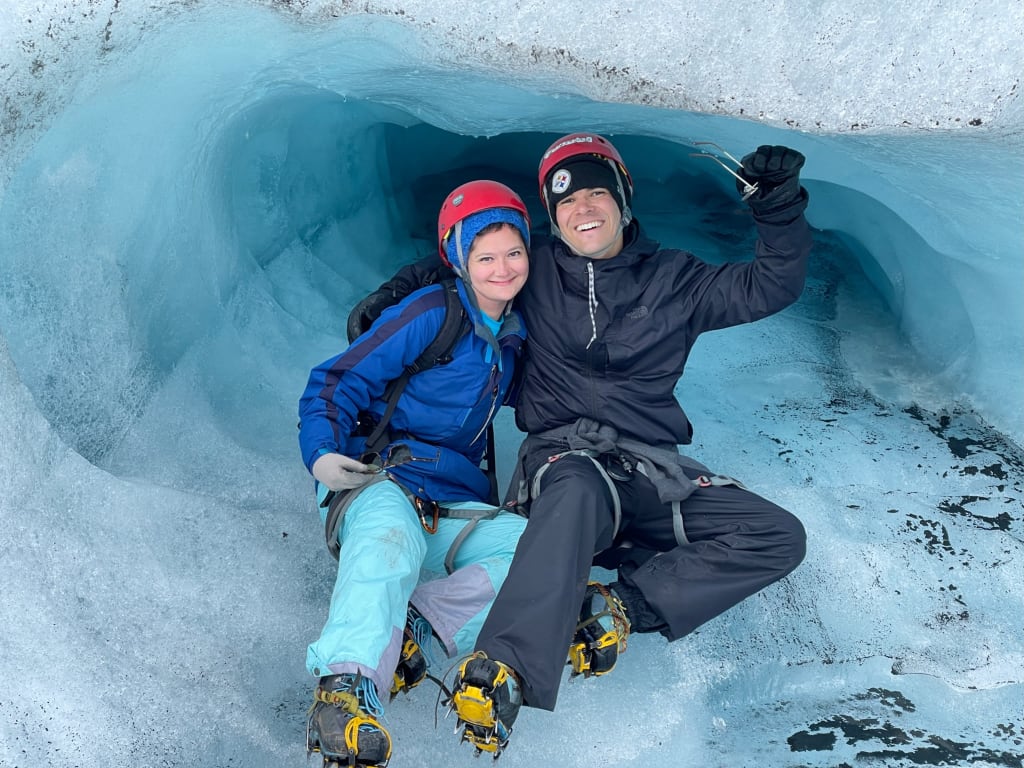
At one point, our guide stopped in her tracks and turned to us. "Are you up for a challenge?"
"We spent the morning scaling up walls of ice. That was the challenge!" I thought. I was almost scared to see what she had in mind, but of course I accepted.
We made our way over to a giant crevasse. Previously we had only climbed ice walls, which had involved starting from the bottom, climbing to the top, and letting the rope bring us back down to the starting point. This time, we would be lowered into the bottom of a crevasse and would climb our way out.
I felt the butterflies in my stomach go wild as I stood at the ledge of the crevasse, facing away, and leaning back into the abyss. "Goodbye, Katy!" my guide called out as I leaned further and further back. It was the perfect thing to say and I laughed despite my nerves. I felt better just a few seconds later when the rope became taut and I was lowered in a controlled manner deeper and deeper into the crevasse. That wasn't so bad.
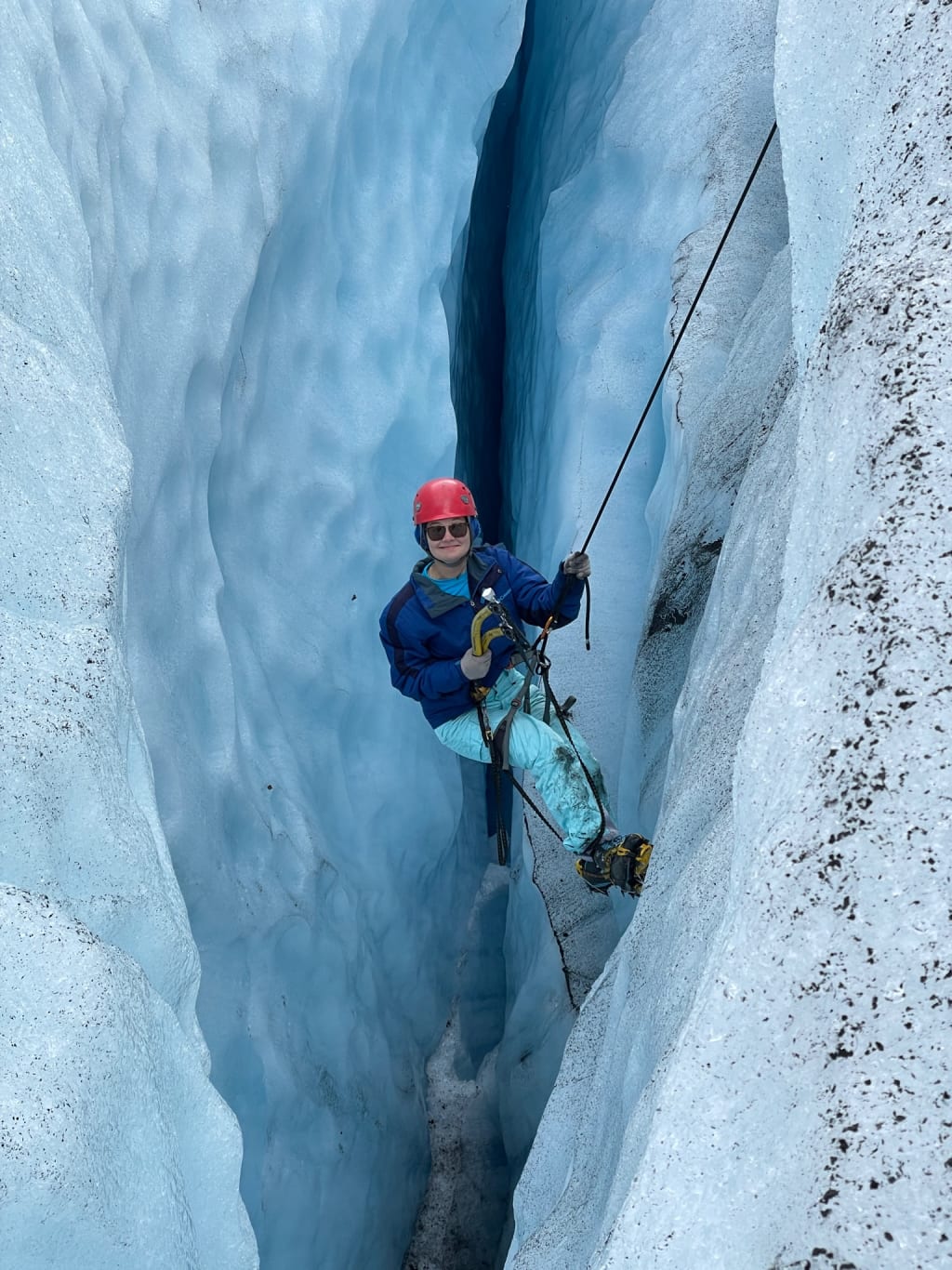
I took a few seconds to catch my breath once I reached the bottom and analyzed the route I would take back up to the top.
Sometimes it took a few hits with the ice axe to get it to stick. At this point, we had been climbing for hours and I was undoubtedly exhausted, but having way too much fun to sit out the best climb of the day.
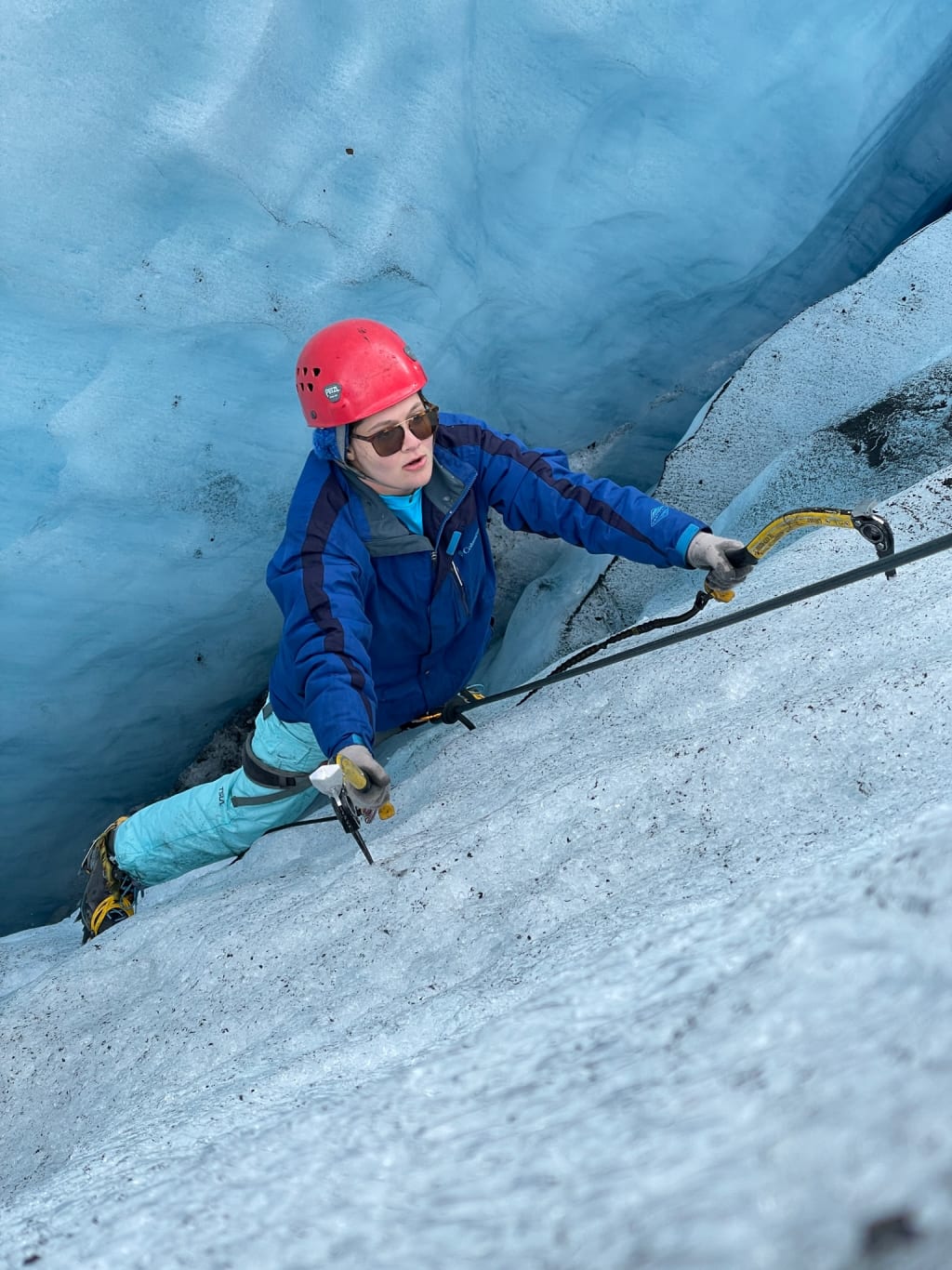
It was no easy feat, but somehow I made it back up in one piece.
Now I could sit back and cheer Alex on.
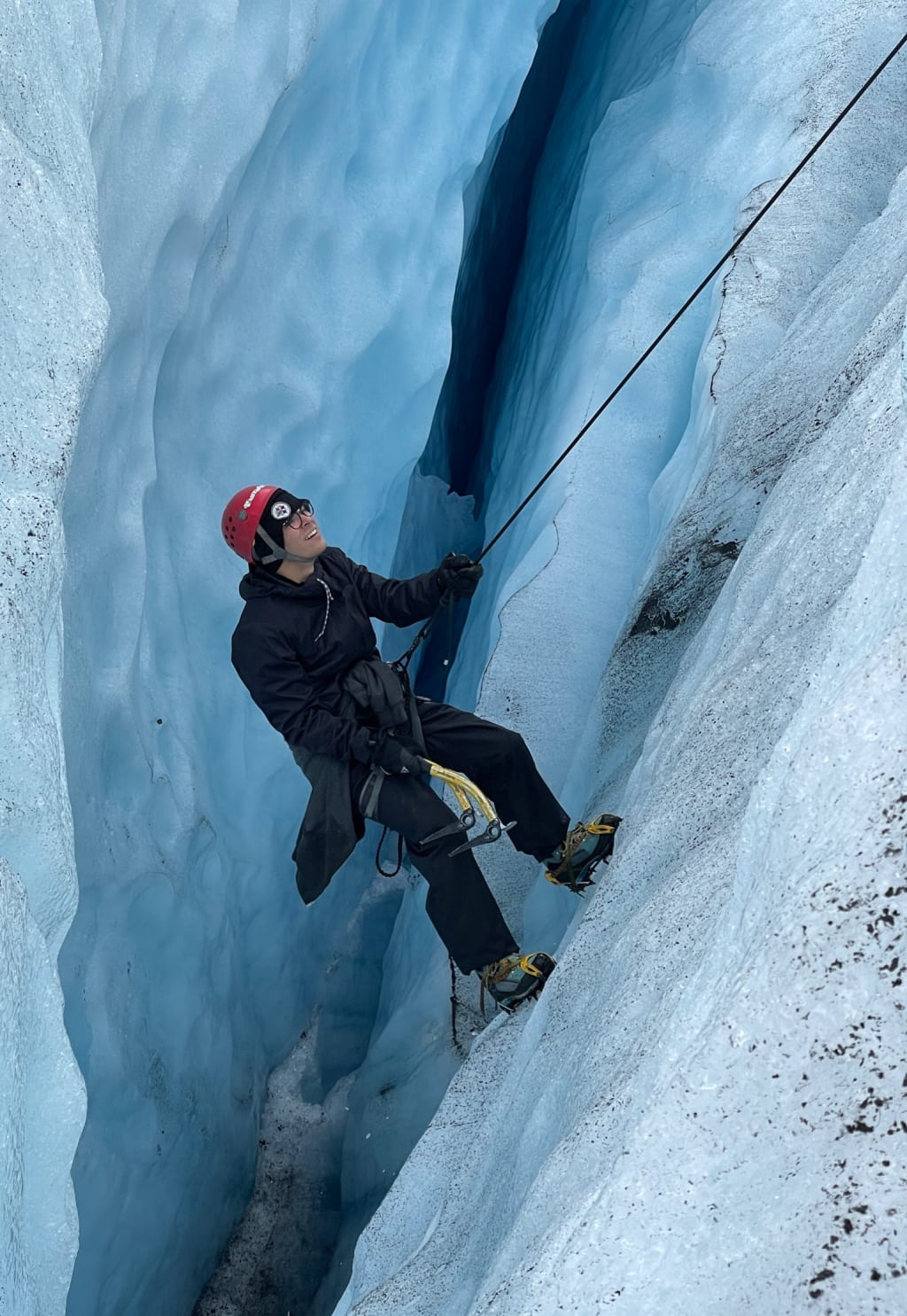
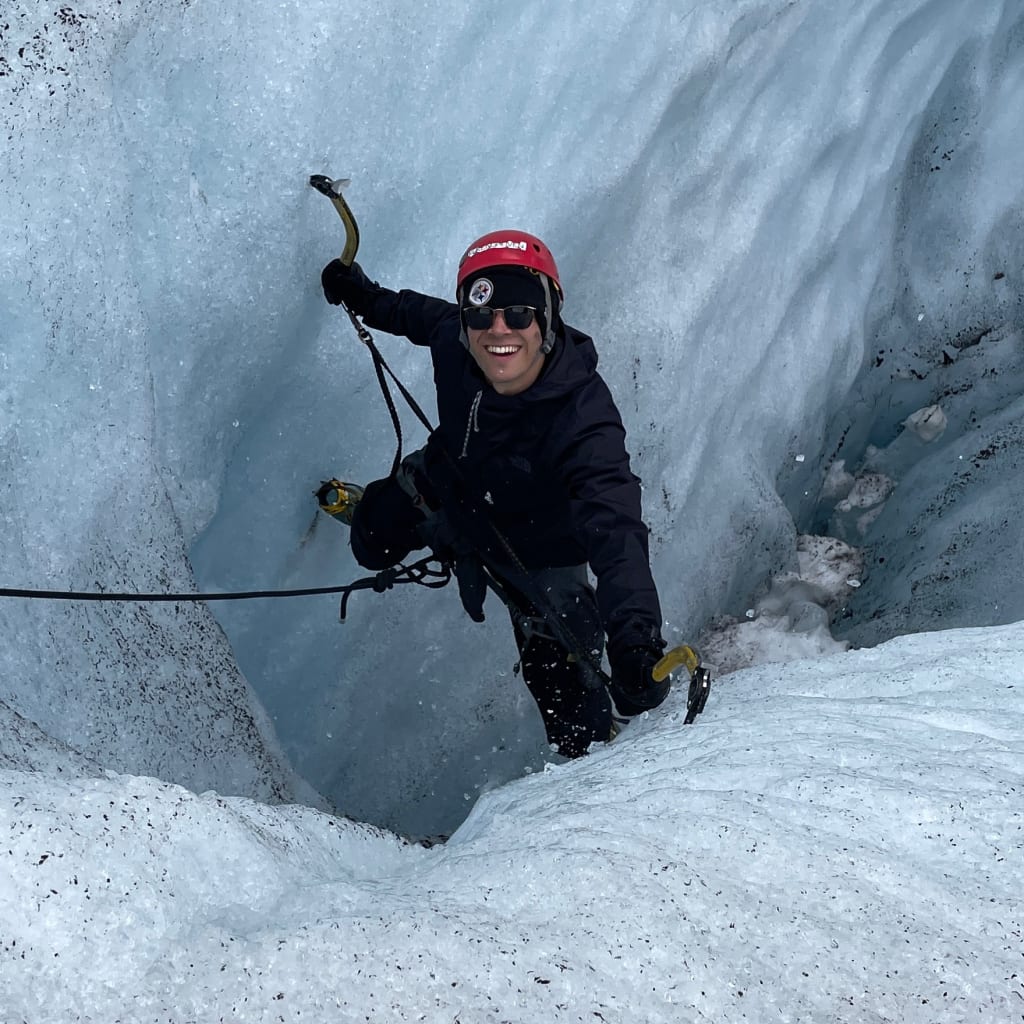
We each did that climb a couple more times before we had to leave. We were supposed to have left hours ago, but everyone was having such a blast and we stayed on the glacier until 5:45pm. We had been climbing for six full hours!
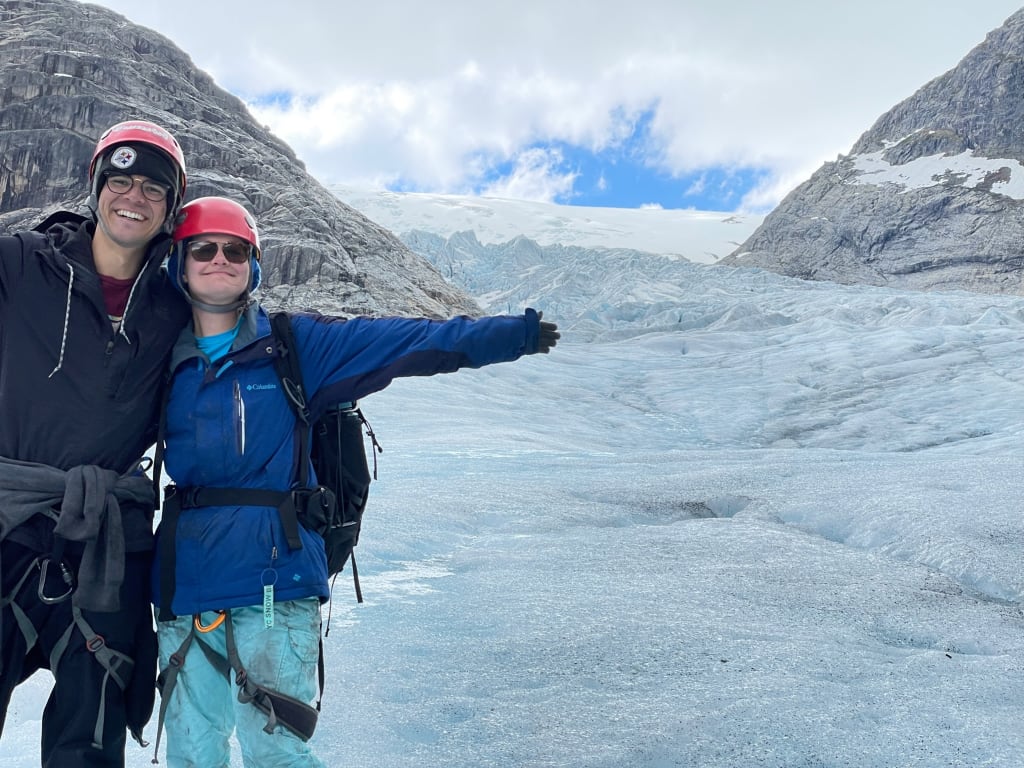
But sadly, all good things must come to an end. We made our way back down off the glacier, stripped off the crampons, and started the walk back to the Ice Troll office.
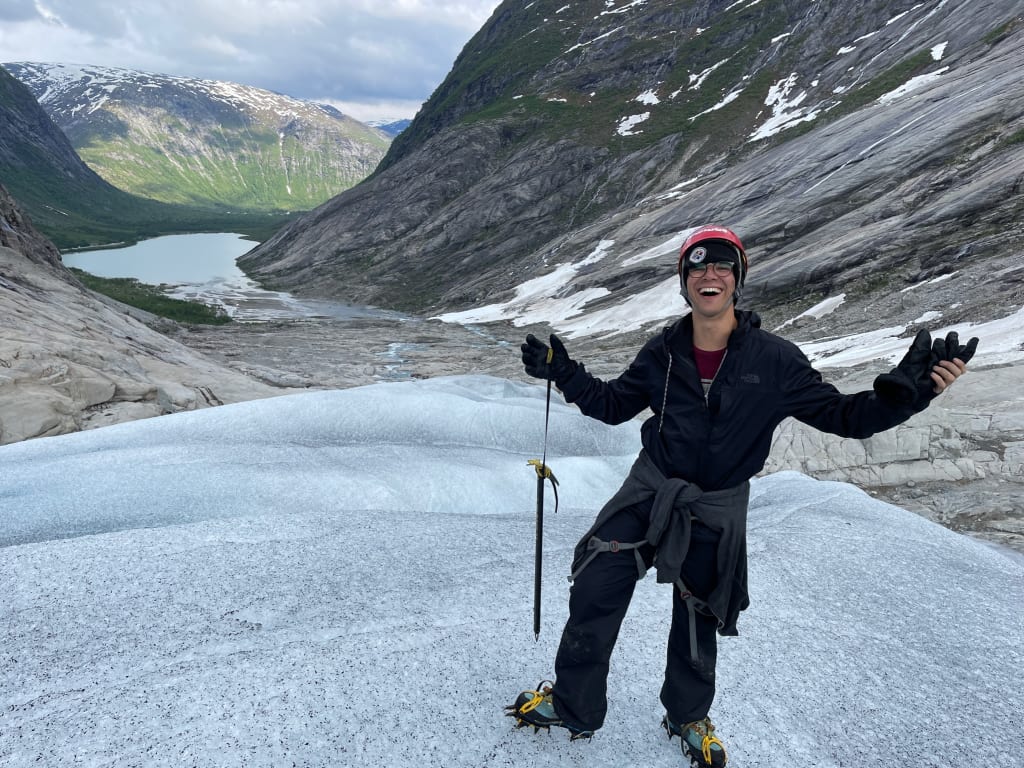
As we were walking, our guide pointed to the rocks beneath our feet and explained that just a few years ago, they were still covered by ice. Nigardsbreen has been receding at a rapid pace over the past century. In fact, since measurements began in 1899, Nigardsbreen has retreated more than 1.6 miles (2.5 kilometers). Scientists believe this is due to rising temperatures caused by global warming. It's a sobering thought.
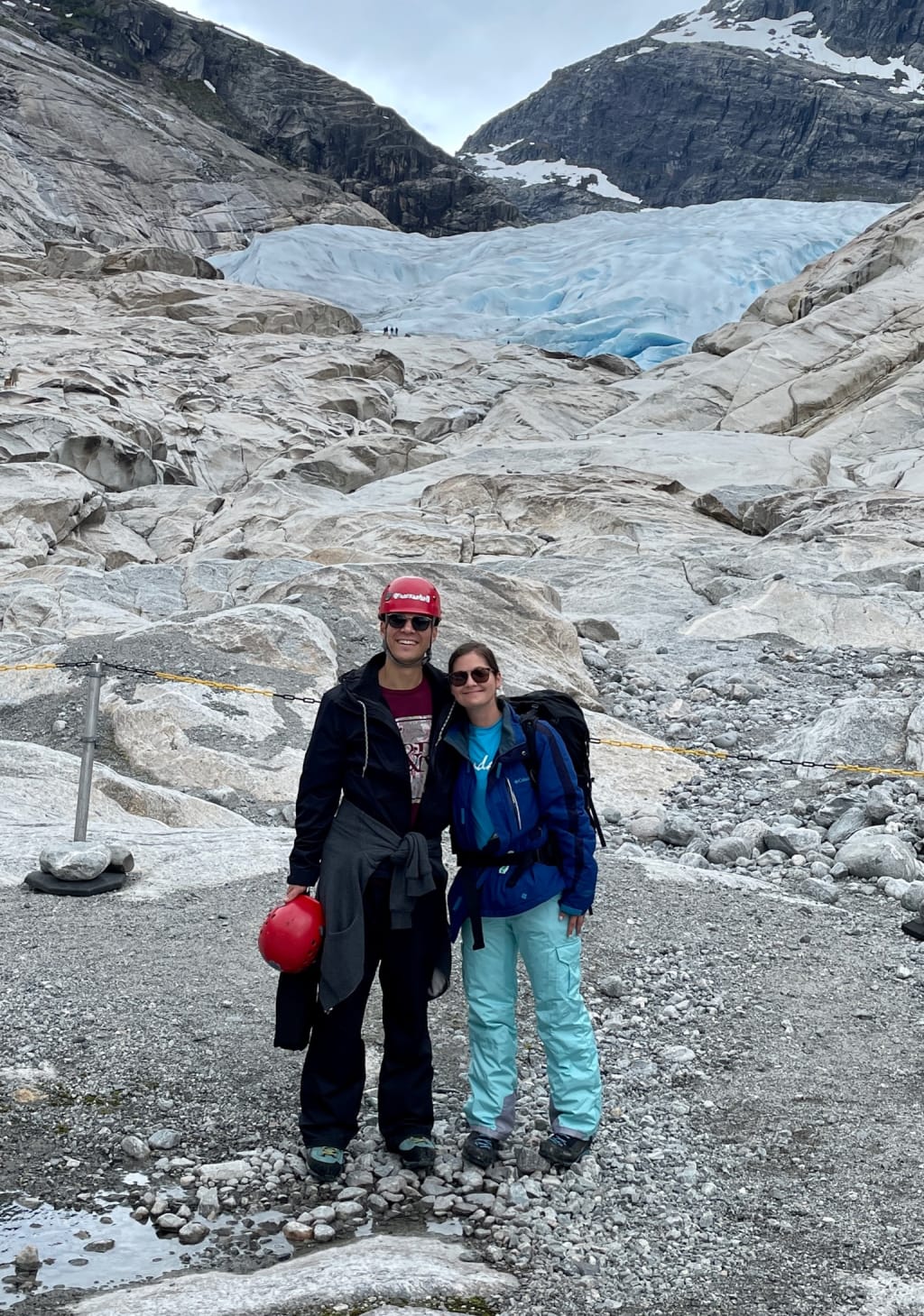
By the time we made it back to our car, we were exhausted and starving, yet so profoundly grateful for the experience we had on Jostedalsbreen Glacier. What a thrill it had been, ascending up the walls of ice! It was an addicting experience, one I was still enjoying after six full hours. I can't wait to go ice climbing again someday.
HOW TO GET THERE
We rented a car in Stavanger and drove to Jostedalen Valley. We made stops along the way so we could do the Kjeragbolten and Trolltunga hikes. After ice climbing, we continued on to Loen, where we did our first via ferrata, and dropped the car off in Alesund on our way out of the country.
WHERE TO STAY
We stayed at Jostedal Hotell in the tiny village of Gjerde in the Jostedalen Valley. Gjerde is a very small, remote settlement and there are just a couple options for food nearby: a little grocery store or the hotel's restaurant.
That being said, the hotel is a 3 minute drive from the Ice Troll office and it has a beautiful view of the valley. I recommend making reservations in advance as there are few choices in Gjerde and they fill up fast. We secured our reservation 3 months out.
IS IT WORTH IT?
For thrill seekers like me, it's absolutely worth it. There are few experiences on Earth like stepping foot onto a glacier, and with the added challenge of ice climbing, it became one of the most unforgettable days I've had in all my travels. But, it's important to keep the following in mind: it's not cheap, it's quite remote, and reservations need to be made in advance. If you have the capital to try ice climbing and you don't mind driving a little out of the way, give it a shot! You won't regret it.
FAQ
What should I wear?
I wore a long-sleeve athletic shirt, ski pants, and a ski jacket with a warm hat, gloves, merino wool socks, and hiking boots.
What should I bring?
Ice Troll provided all the climbing equipment: crampons, ice axes, helmets, and harnesses.
We brought the following:
- Warm hat
- Gloves
- Sunglasses
- Waterproof pants (I wore ski pants, but rain pants work too)
- Waterproof jacket
- Long-sleeve athletic or wool shirt
- Hiking boots
- Merino wool socks
- Camera
- Water bottle
- Snacks
What's the bathroom situation?
There is a bathroom on the hike leading up to the glacier, but there are no facilities past this point.
Can you sign up for this tour if you've never been ice climbing before?
Absolutely! We had never been ice climbing before and learned on the tour. Our instructor was fabulous and taught us everything we needed to know.
How fit do I need to be?
You need enough strength to kick your crampons into the ice and pull yourself up with your arms and core, but I don't think you need to have an elite level of fitness to participate in the tour. Even the hardest climb lasted less than 15 minutes and there are plenty of breaks in between as the other climbers take turns ascending the ice wall.
How much does it cost?
When we did the tour, it was $390 USD per person. Now, it's 5000 NOK (~$515 USD). The cost is steep, but you do need specialized equipment and expert guides, not to mention the fact that this location is remote and the ice climbing season is short. Although it's a splurge, we thought it was worth the price.
Can I ice climb year-round?
No, the ice climbing season is relatively short, from the end of May to beginning of September.
Is ice climbing safe?
Yes, as long as you go with a qualified guide. Glaciers contain hidden crevasses and unstable ice, so they should never be explored independently. On our tour, we were equipped with helmets, harnesses, crampons, ropes, and ice axes, and our guide taught us everything we needed to know before we started climbing. Even when I slipped several times, the rope caught me immediately and I always felt secure.
What happens if you slip while ice climbing?
There's a rope attached to your harness which will catch you if you slip. It happened to me a number of times and I felt safe and secure the entire time.
How long is the experience and how long do you spend on the glacier?
The website advertises 7 hours total for the tour (10am - 5pm), but we were having so much fun and our guide let us climb a little longer! We arrived at the glacier around 11:30am and we were climbing until 5:45pm (~6 hours).


