
Comparing Alaska Bear Camp to an African Safari
I became hooked on wildlife travel after my first visit to Africa. I traveled all the way to Uganda to hang out with primates and go on safari and my mind was absolutely blown. Two years later, I did my second safari, this time in Kenya and Tanzania.
Ever since that first trip to Uganda, I made it my mission to find the world’s best wildlife experiences, which eventually brought me to Alaska to hang out with brown bears in the wild.
Throughout Bear Camp, I found myself constantly comparing the experience to an African safari. They’re surprisingly similar in some ways and completely different in others.
If you’ve already been on safari and are considering Bear Camp, this article will give you a sense of how the two experiences compare. Or, if you’re simply looking for your next wildlife adventure and trying to decide which one is right for you, I’ve got you covered.
Below, I’ll break down the biggest differences between Bear Camp and an African safari and help you decide which experience might be the better fit for you.
DIVERSITY OF SIGHTINGS
I’ll start with the obvious. On a safari, you’ll encounter a much larger number of unique animals: lions, leopards, elephants, cheetahs, hippos, hyenas, giraffes, crocodiles, antelope, and many species of bird, just to name a few.
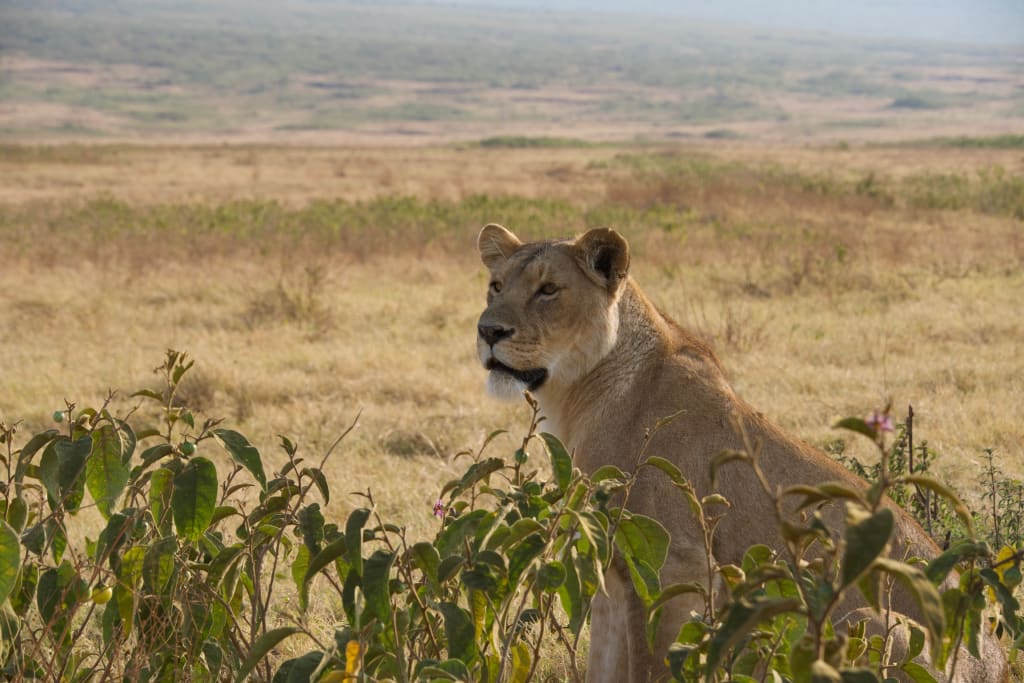
At Bear Camp, you’re there to see the bears. You have a chance of spotting other rare predators, such as the wolf, wolverine, or lynx, but most likely you will not see them.
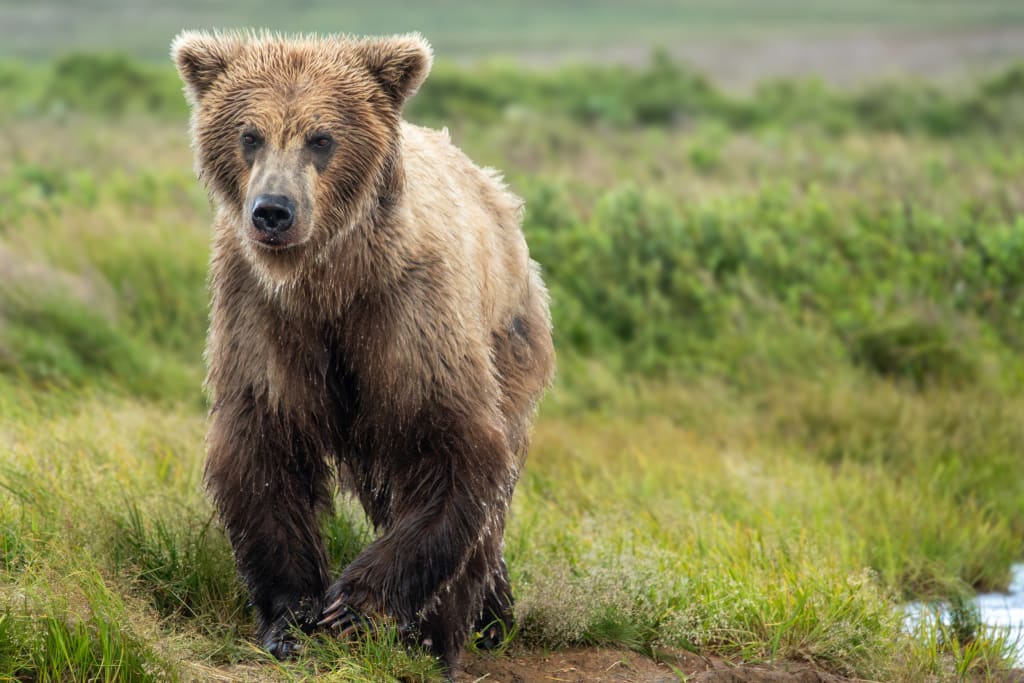
Before Bear Camp, I was worried about getting bored of seeing only bears, but they are so active that each day felt different as we were witnessing different behaviors. That leads me to my next point.
ACTION
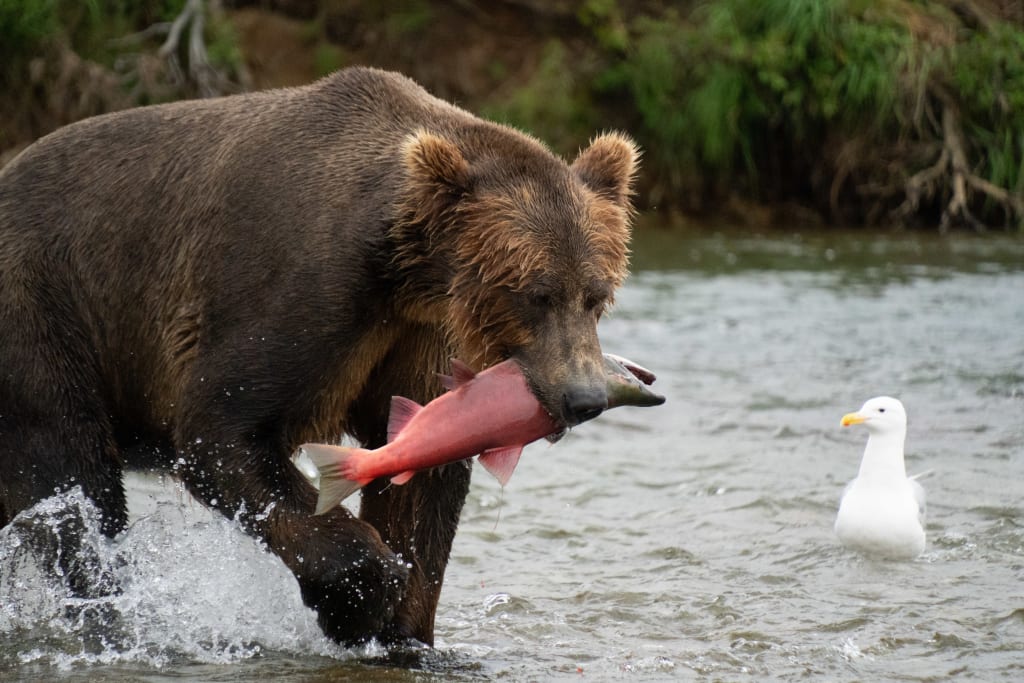
Bear Camp is action-packed. Over the course of five days, we saw bears fishing, sparring, chasing each other, and breastfeeding. The bears were active throughout the day and we rarely saw them resting. This is in large part due to the fact that they have such a short window to fish. The fish are only in these shallow waters where the bears can access them for 6-8 weeks out of the year, so the bears must put on a lot of weight to be able to survive the winter in hibernation. During this time, they are pretty much fishing around the clock.
The action varies a little more on a safari. On our safari in Uganda, the animals we saw on classic safaris (excluding our primate encounters) were often resting.
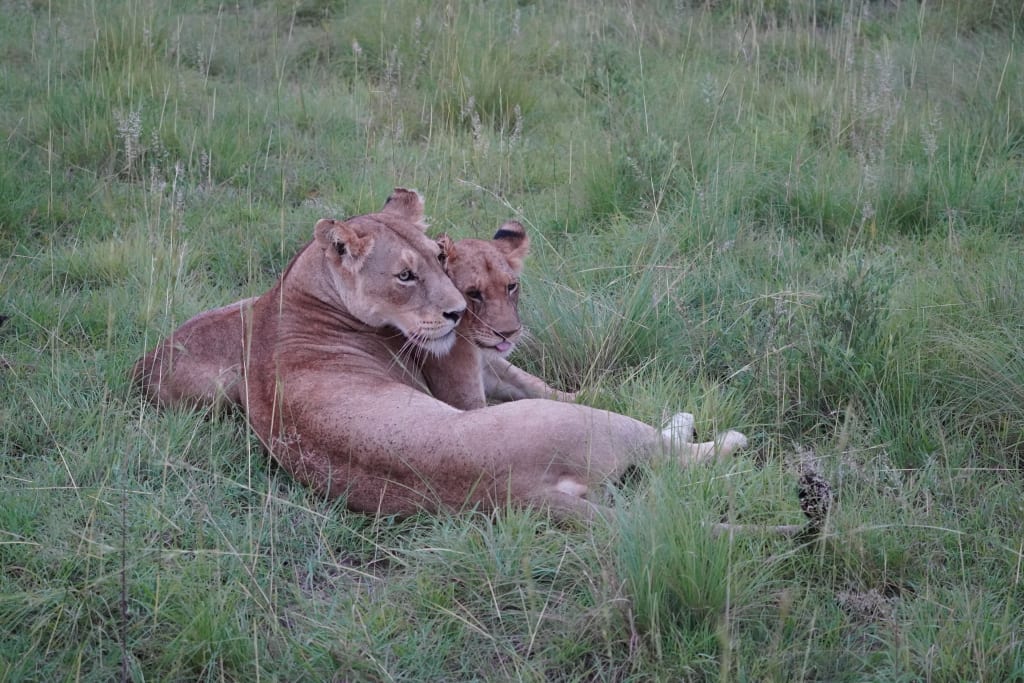
In Tanzania and Kenya, there was more predator-prey interaction, but many encounters were with resting animals, especially when we saw the big cats.
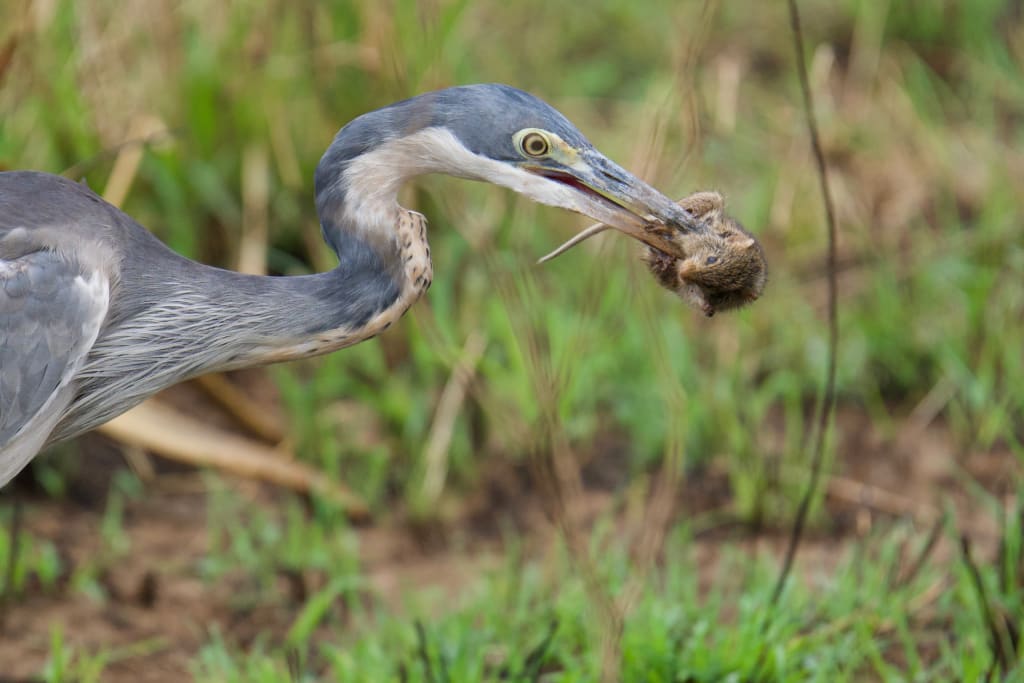
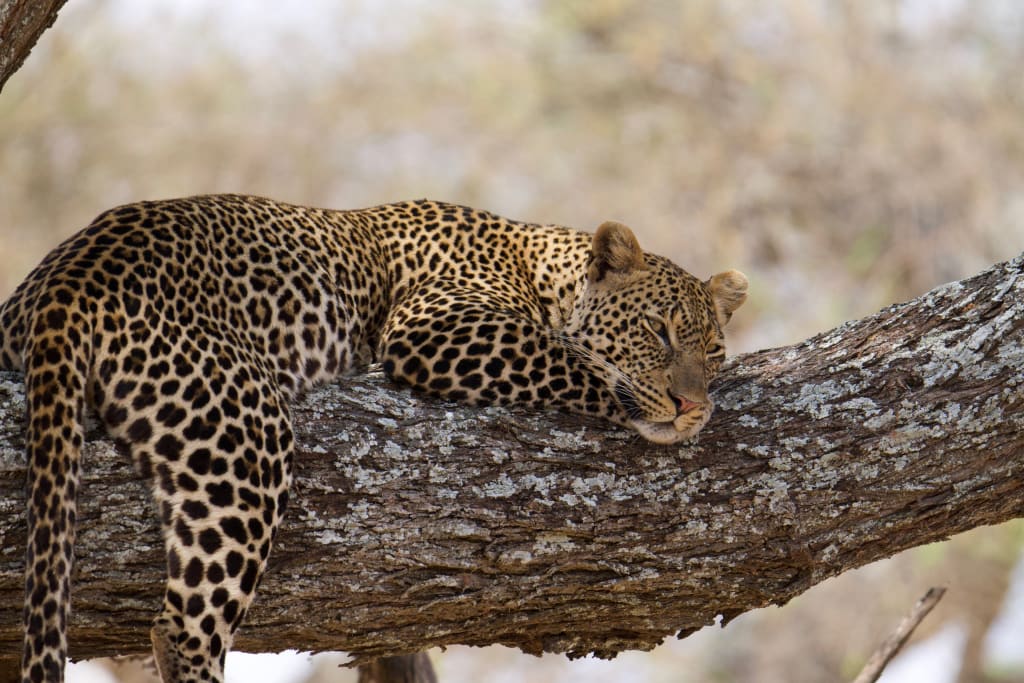
Overall, I’d say that both have many action-packed moments, but Bear Camp offers more consistent action whereas a safari offers less predictable but potentially more dramatic action.
PROXIMITY
If you’ve read any of my other wildlife articles, you’ve probably already heard my philosophy on what makes the best wildlife encounters: action and proximity. As I already mentioned above, both a safari and Bear Camp will have action-packed moments.
Bear Camp, however, clearly wins on proximity. First of all, there’s no barrier between you and the wildlife. You are not sitting in a vehicle. You’re walking on the tundra alongside the bears.
I was worried that I would spend the entire Bear Camp squinting through my binoculars, so I was pretty shocked by how close we were able to get to the bears in select encounters. Of course, you should never approach a bear, but often the bears would approach us calmly, and we got to watch their behavior up close. It was incredible. Bear Camp clearly wins on proximity.
DENSITY OF ANIMALS
The density of wildlife at Bear Camp is unparalleled. Our Bear Camp guide, Scott, told us that in the 2 mile stretch of river where we hung out in Katmai National Park & Preserve, there were an estimated 150-220 bears. Often throughout the trip, I would see 10-12 bears in my line of sight at the same time. It was awesome!
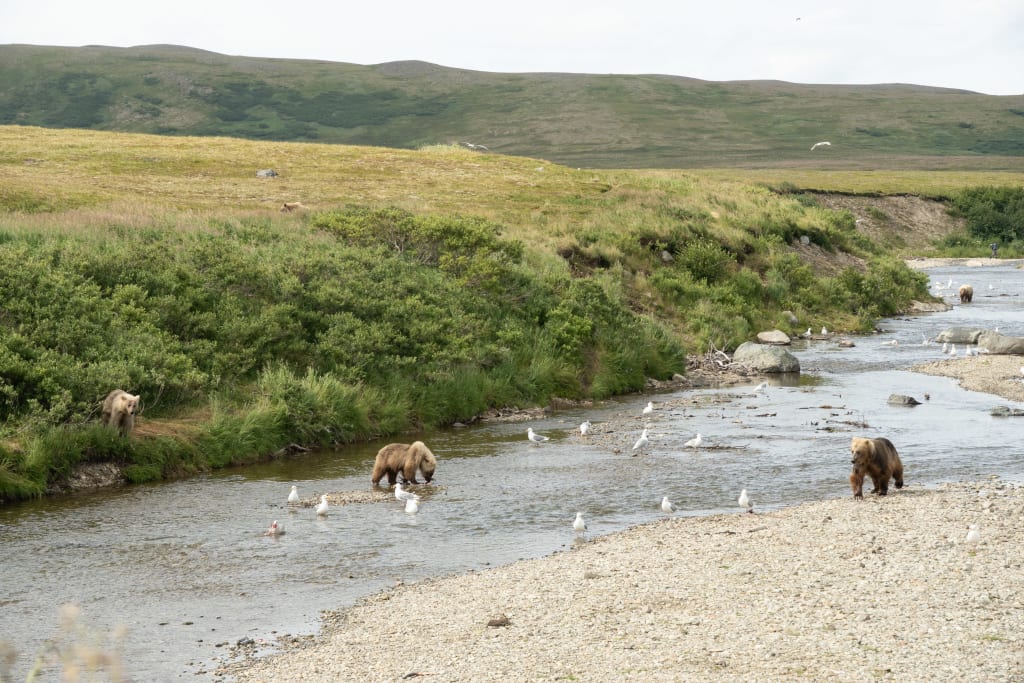
The wildlife is much more spread out on a safari. The national parks in East Africa are much larger and animals don’t all congregate along the river as they do in Katmai.
DOWNTIME
Because the wildlife is much more spread out on a safari, there will be a lot more downtime between sightings. Typically, we would spend anywhere from a few minutes to an hour at a particular sighting, and then drive on to look for the next one. Sometimes we would encounter another animal quickly. Other times it would take up to a couple hours to find something worth stopping for.
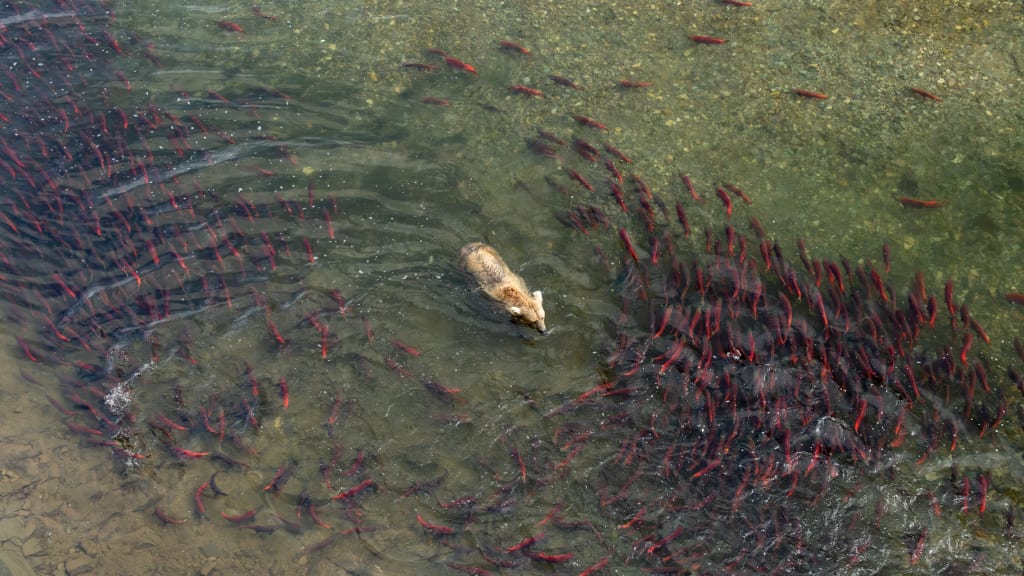
At Bear Camp, there was significantly less downtime. We would head to the same 5-10 spots each day and never went long periods of time without a bear encounter. The only downtime we experienced was at the Bluffs, where you get a bird’s eye view of the bears fishing in giant schools of sockeye salmon. We waited a few hours for the bears hanging out in this section of the river to decide to fish, but it was worth waiting to get that aerial shot.
TIME SPENT AT EACH SIGHTING
Because the bears were so active and the density of bears was so high, we would spend a lot in one spot at Bear Camp. It wasn’t uncommon to spend 3 or 4 hours in one area before moving onto the next.
On safari, by contrast, you were competing with other vehicles for space, and the animals were usually much less active, so you would spend anywhere from just a few minutes to up to an hour (for an exceptional sighting) with one animal or group of animals before moving to the next spot. Since we were in a vehicle on safari, it was much less cumbersome to move around often though.

PREDICTABILITY
With Bear Camp, especially the Fishing version, you have a pretty good idea of what you might see. You’ll see bears fish, cubs play, and mothers care for their babies. If you’re lucky, you’ll see a mama bear breastfeed her cubs or two boars fighting it out (actually, maybe if you’re unlucky. That sounds gruesome). There likely won’t be too many surprises.
On a safari, however, anything could happen. We got incredibly lucky and saw an entire pride of lions eat a buffalo carcass. We also saw cubs for all three big cats (lions, leopards, and cheetahs), which is very rare. There are so many inter-species interactions that could take place, that it feels much harder to predict. That’s part of the excitement about going on safari.
CROWDS
I was absolutely delighted by the lack of crowds in Katmai. Alex and I were cracking up because our guides at Bear Camp were complaining about how crowded the park has become over the last few years, but we only saw a couple other tour groups the entire time! Most of the time, we were the only people around with private viewings of the gorgeous brown bears of Alaska.
Depending on where you go in East Africa, on the other hand, the crowds can be crazy or they can be quite manageable. In Tanzania, it was overwhelming at times. When we were waiting for the wildebeest to cross the Mara River, we counted 163 other cars. Of course, vehicles are concentrated in the one spot where the wildebeest are in that particular scenario.
Our other sightings in Tanzania and in Kenya had a cluster of vehicles. It wasn’t uncommon for there to be 30 cars gathered around, especially if there was a big cat nearby that we were all looking at. However, there were often times when we escaped the crowds and got a sighting all to ourselves. As you can see, it really varies.
In Uganda, the crowds were considerably lighter. We never had more than 5 other vehicles hanging around, even when we saw a leopard.
SEASONALITY
One real downside about Bear Camp is its seasonality. You can only really view bears in Katmai between June and August each year. If you want to see the bears fish, the availability is even further limited. Scott Stone only runs Fishing Bear Camp for two weeks out of the year, for example.
On safari in East Africa, there are two dry seasons: between January and February and between June and October. You can also view the same animals during the wet season. You just have to be prepared for the challenges that come along with it, including muddy roads and reduced visibility. That being said, an East African safari is much more of a year-round adventure.
COMFORT
This one is not a close contest. Safaris win by a mile.
On safari, you’re seated in a vehicle all day. The infrastructure in the most popular national parks is quite well developed, so you can stay in lodges with beds, showers, and even pools. The food is also quite delicious.
At Bear Camp, you have to make a few sacrifices. You are in a remote national park with no roads and no infrastructure. Your bed is a sleeping bag and an air mattress in a tent. Your shower is a body wipe. Your food comes in a bag. There are certainly no pools or other luxurious amenities.
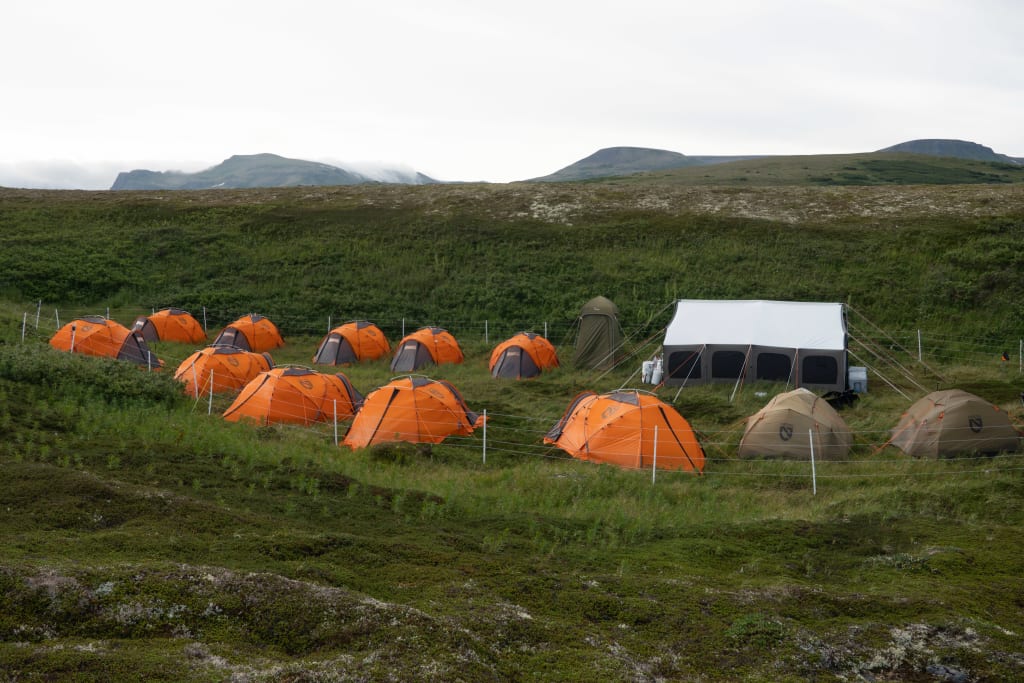
Don’t let me scare you away from Bear Camp though. It’s worth setting your expectations appropriately, but trust me, it’s worth roughing it for a few days to get these incredible encounters with the bears.
OVERALL OPINION: SAFARIS VS BEAR CAMP
Bear Camp and safaris attract a slightly different type of traveler.
My take is: if you want variety or unpredictability, go with the safari.
If you want a more immersive experience with fewer crowds, opt for Bear Camp.
That being said, both experiences are nothing short of magical. Going on safari and going to Bear Camp are two of my favorite experiences I’ve had in all my travels. If you’re a wildlife lover like I am, you’ll want to add both to your bucket list.
FAQS
Which would I recommend for a first experience?
I would recommend going on safari first. There is more variety with a greater number of unique animals, so you can get a feel for wildlife travel without committing to hanging out with one animal for multiple days. Also, it's much more comfortable. You can sleep in a bed and take a nice hot shower at the end of the day.
What other wildlife experiences would I love if I loved a safari / Bear Camp?
Outside of Bear Camp and the African safaris, my two favorite wildlife experiences were a cruise in Galápagos and trekking to see primates (both gorillas and chimpanzees) in Uganda.
In the next year, I’m traveling to Antarctica (along with the Falkland and South Georgia Islands) to see penguins and seals and to Tonga to swim with humpback whales. I know they are going to be some of my best wildlife encounters of my life.
On the top of my bucket list is a jaguar safari in the Pantanal in Brazil and swimming with orcas in Northern Norway.
EXPLORE MORE

Answering ALL Your Questions About Bear Camp (Katmai NP)

5 Moments From Bear Camp I Can’t Stop Thinking About (Katmai NP)

Bear Camp Archives: My Favorite Photos & Fun Facts (Katmai NP)

The Ultimate 2 Week Alaska Itinerary: Glaciers, Bears & More

Flying Over Glaciers: A Helicopter Tour Over Prince William Sound

Dog Sledding on a Glacier in Alaska: Is It Worth It?

The Best Things To Do in Kenai Fjords National Park

Northwestern Fjord Boat Tour Review (Kenai Fjords National Park)

Kayaking to Aialik Glacier in Kenai Fjords National Park

Hiking the Harding Icefield Trail: Is It Worth the Climb?

Hiking Lost Lake Trail: Seward's Most Underrated Hike
