
Visiting the World's Only Musk Ox Farm in Palmer, Alaska
20,000 years ago, North America was covered in a sheet of ice. It was the peak of the last major ice age. Woolly mammoths and saber-tooth tigers roamed the Earth. So did the musk ox, but unlike the woolly mammoth and saber-tooth tigers, they survive to this day.
Musk oxen are incredibly resilient creatures. In fact, they’ve been around for the last 2 million years, long before Homo sapiens entered the scene just 300,000 years ago.
At this point, you might be asking “what is a musk ox exactly?” Fair question. I heard it a lot when I told people I was going to visit a Musk Ox Farm. I had never heard of musk oxen myself before I researched unique things to do in Alaska. Sadly, there are only 180,000 left on Earth and most of them live in cold, remote environments like northern Canada, Greenland, and Siberia, so it’s understandable that they tend to fly under the radar.
So, the question remains. What exactly is a musk ox? If you want the answer to that question, I recommend a visit to the Musk Ox Farm in Palmer, Alaska. Here, you’ll get the chance to see these ice age survivors up close and learn about their history. Below, I wrote about our experience visiting the Musk Ox Farm, including what we learned on the tour and whether I think it’s worth adding to your Alaska itinerary.
WHAT IS A MUSK OX?
The musk ox is a large Arctic animal known for its thick, woolly coat. They almost look like a cross between a bison and a yak, so you might assume they’re closely related. Surprisingly, musk oxen are actually much more closely related to goats and sheep.
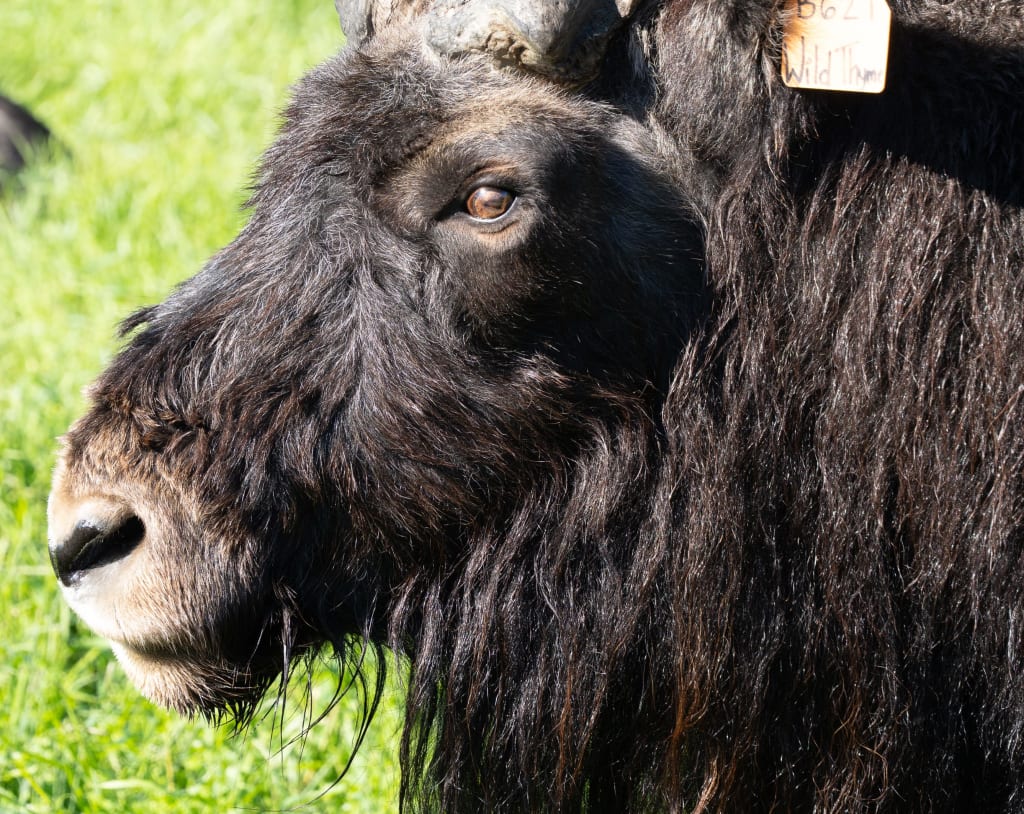
Musk oxen can withstand temperatures as low as −40°F (which, fun fact, is also −40°C).
A BRIEF RECENT HISTORY OF MUSK OXEN IN ALASKA
By the early 1900s, musk oxen had disappeared from Alaska entirely. Part of the problem was their defense strategy: when threatened, musk oxen form a tight circle and stand their ground. They don’t run away. Very effective against wolves, not so much against hunters with guns.
In 1930, 34 musk oxen were captured in Greenland and brought to Alaska. That herd grew to 750 oxen over the next four decades before the animals were redistributed across the state. The Alaska Department of Fish & Game estimates the current population of musk oxen in Alaska at roughly 4,000, mostly in the northern part of the state where the climate is cooler. All 4,000 descend from the same 34 individuals that were brought over from Greenland almost a hundred years ago.
Today, the musk oxen in Alaska are still vulnerable. They face threats from predators such as wolves, brown bears, and of course, humans, as (somehow) hunting musk oxen is still legal. Recently, as the Arctic has warmed and the sea ice has started to disappear, polar bears have been spending more time on land, putting them in musk ox territory and adding an additional potential predator to the list that musk oxen need to worry about. Musk oxen, like the polar bears, also face threats from climate change.
Musk oxen have already managed to stick around for two million years, through ice ages and changing climates and other threats on top of that. Hopefully, despite these new threats they face, they’ll be roaming the land in Alaska for a long time to come.
THE MUSK OX FARM
The Musk Ox Farm is a non-profit organization that raises a herd of 77 musk oxen. They claim to be the only musk ox farm in the world. They’re located in Palmer, Alaska, roughly an hour away from Anchorage, the nearest city with a major airport.
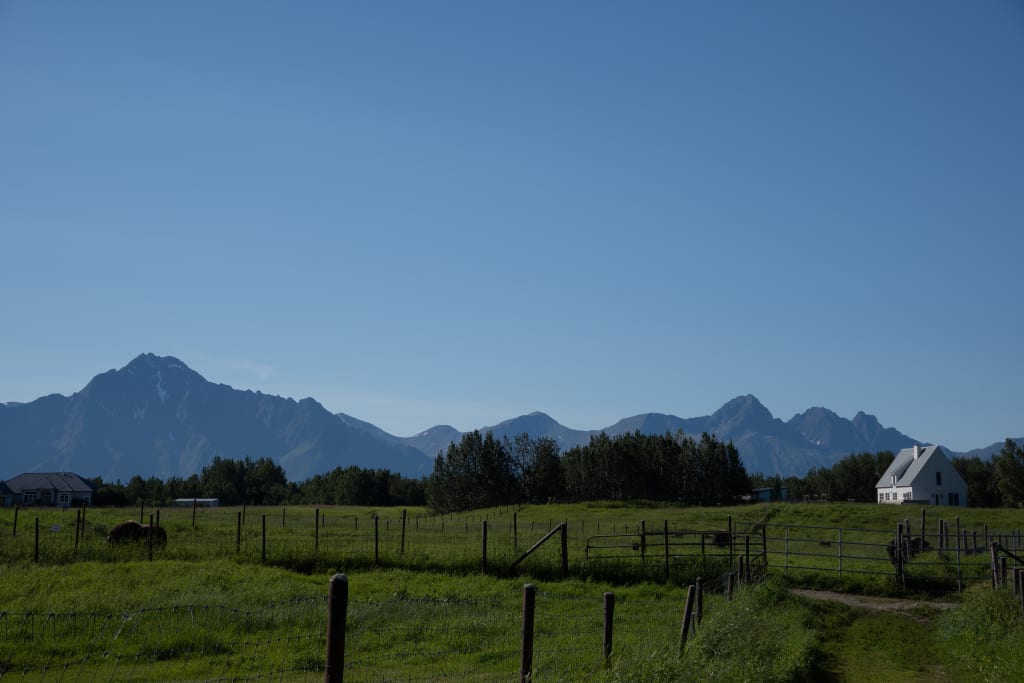
They raise the musk oxen for their qiviut (pronounced kiv-e-oot), which is the wool that grows underneath their long outer coat and is shed annually each April or May. Their wool is said to be eight times warmer than sheep’s wool and softer than cashmere (which comes from goats). They have a gift shop onsite that sells hats, scarves, and other goods made from qiviut.
OUR EXPERIENCE
Alex and I took the 10am tour at the Musk Ox Farm.
We saw the newborn calves and their mamas first. The babies were very playful, running about this way and that, while the mothers kept a watchful eye on them.
“This is Fable and this over here is Sonnet. We try to pick a theme for the names of the calves each year,” our guide, Keenan, explained.
“So this year’s theme is AI models?” Alex asked, referring to Anthropic’s Claude models with the same names.
We can’t seem to escape AI, I guess, even on a farm.
It turns out the theme had nothing to do with AI. The theme was “book club”. The other calves of the year were named Novel, Saga, and Story. My personal favorite of the themes I heard about from previous years was “eggs”. Can you imagine a better name for a musk ox calf than Frittata? Me neither.
We stood beside the fence with the mothers and their calves for a few minutes, watching them interact. We even saw a mother charge at another mother’s calf who approached too close.
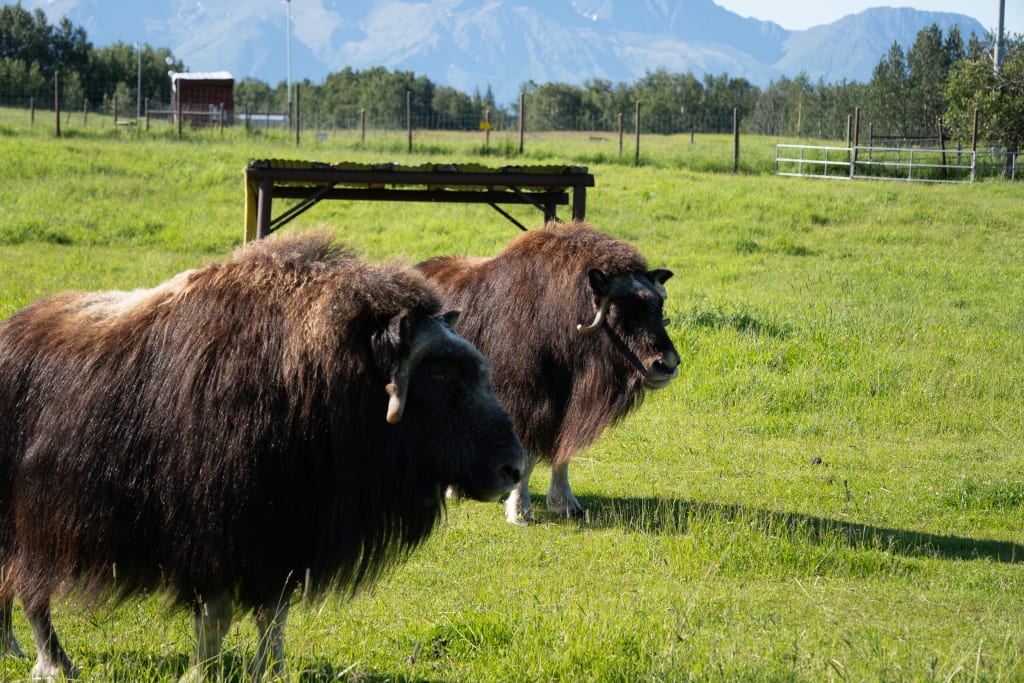
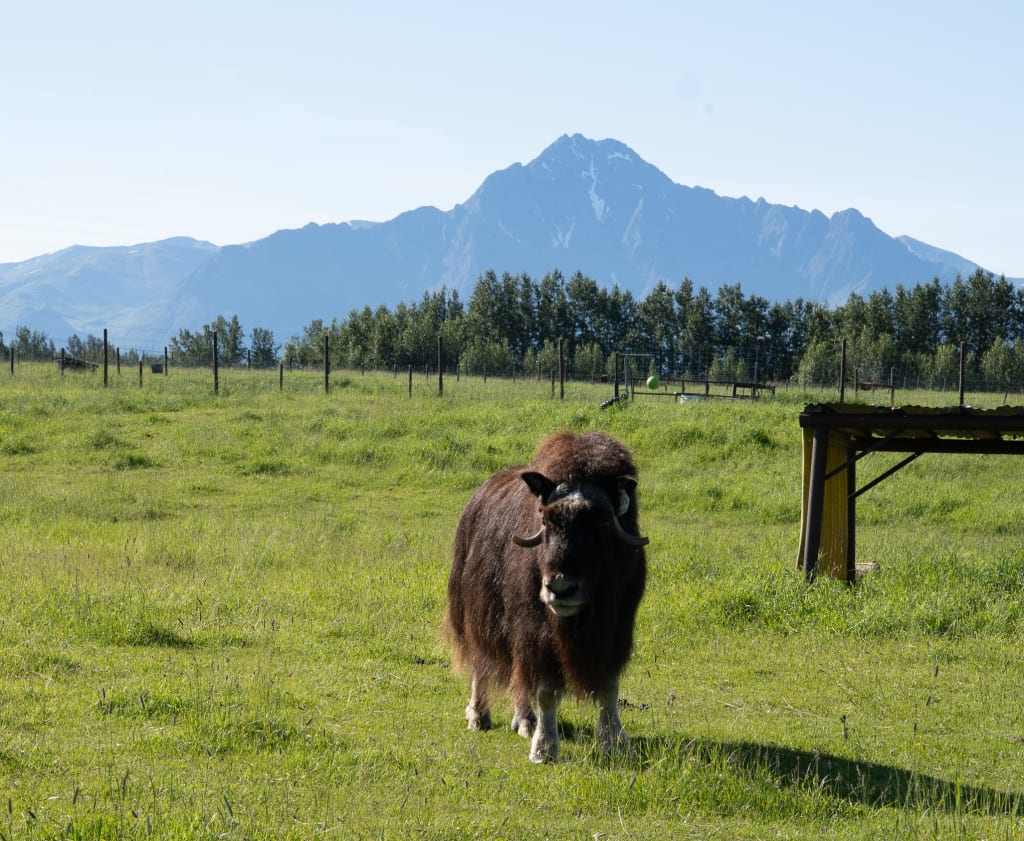
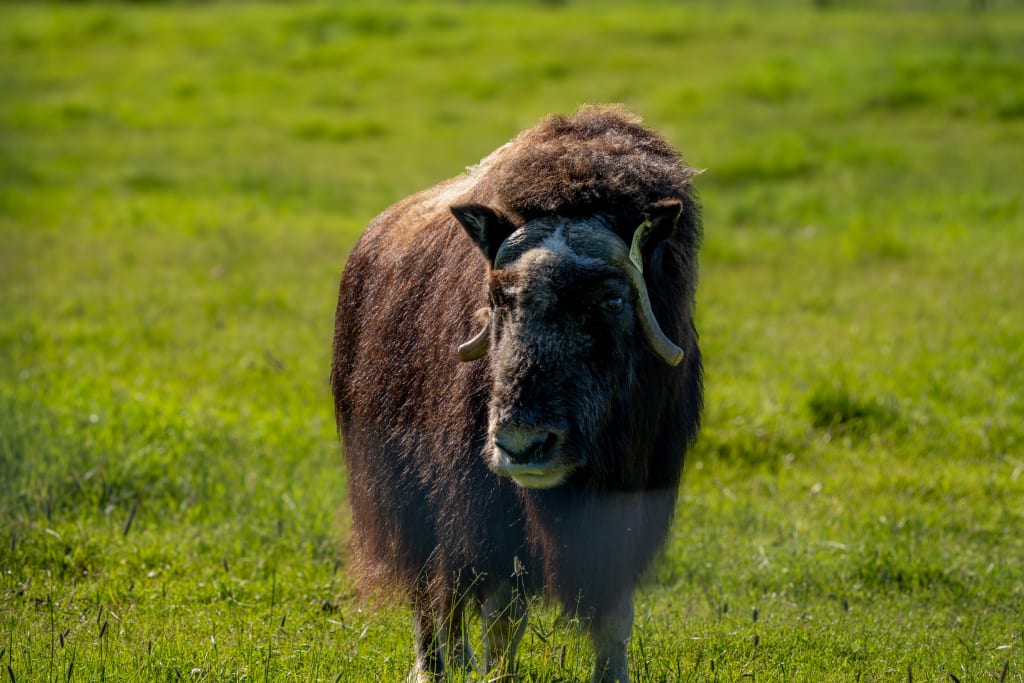
After the calves, we met the senior citizens. In the wild, musk oxen can live up to 12 years (if they’re male) or 18 years (if they’re female), but they can live much longer in captivity. We were first introduced to Sybil, the oldest musk ox on the farm, who was 23 years old. We also met Sybil’s son, who had gotten into his fair share of fights throughout his lifetime and had only one horn left. Horns don’t regrow if they are damaged.
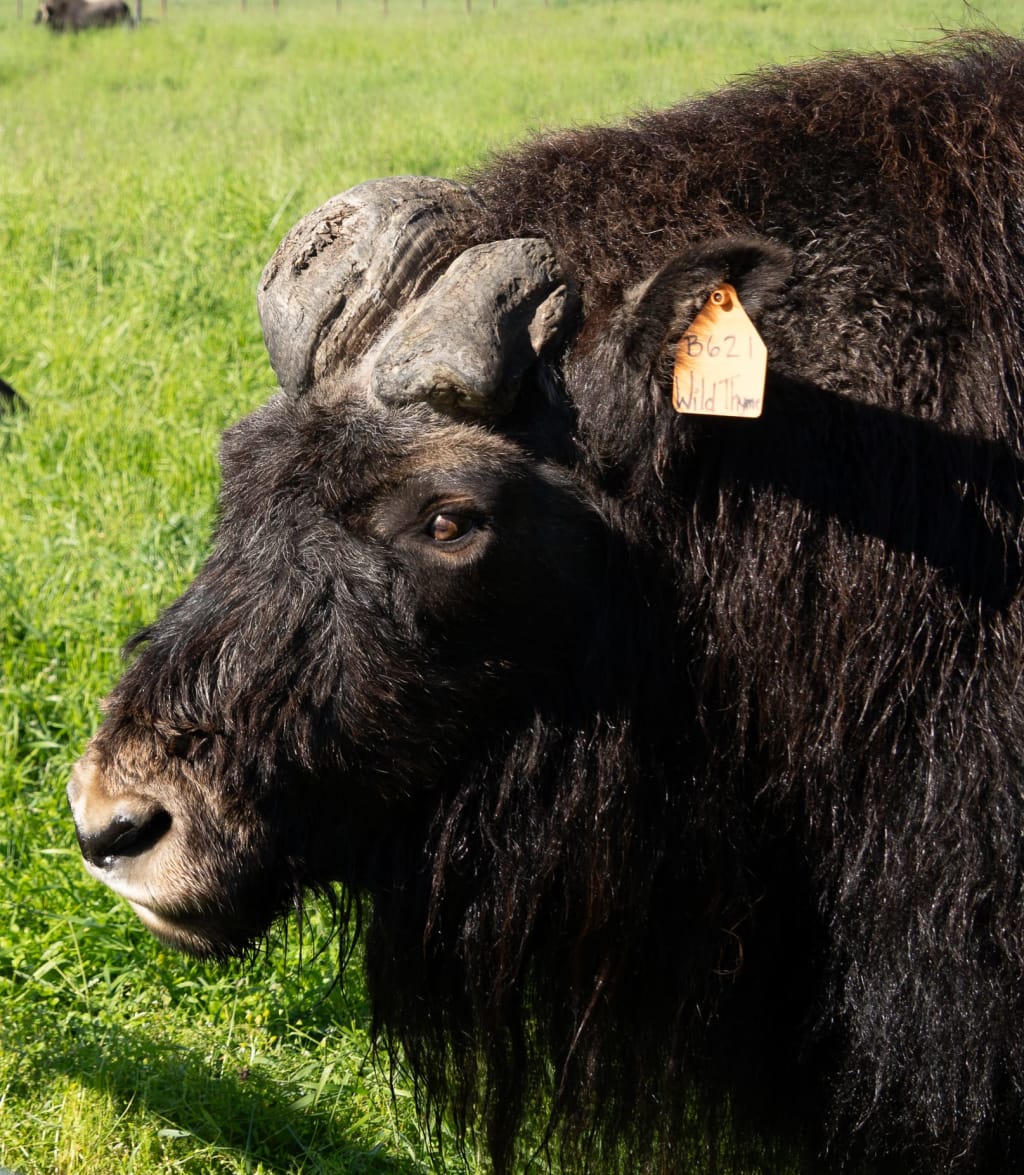
The last group we met were the young bachelors: the males just a few years old that weren’t yet ready to reproduce but were too old to live with their mothers. This one was wary.
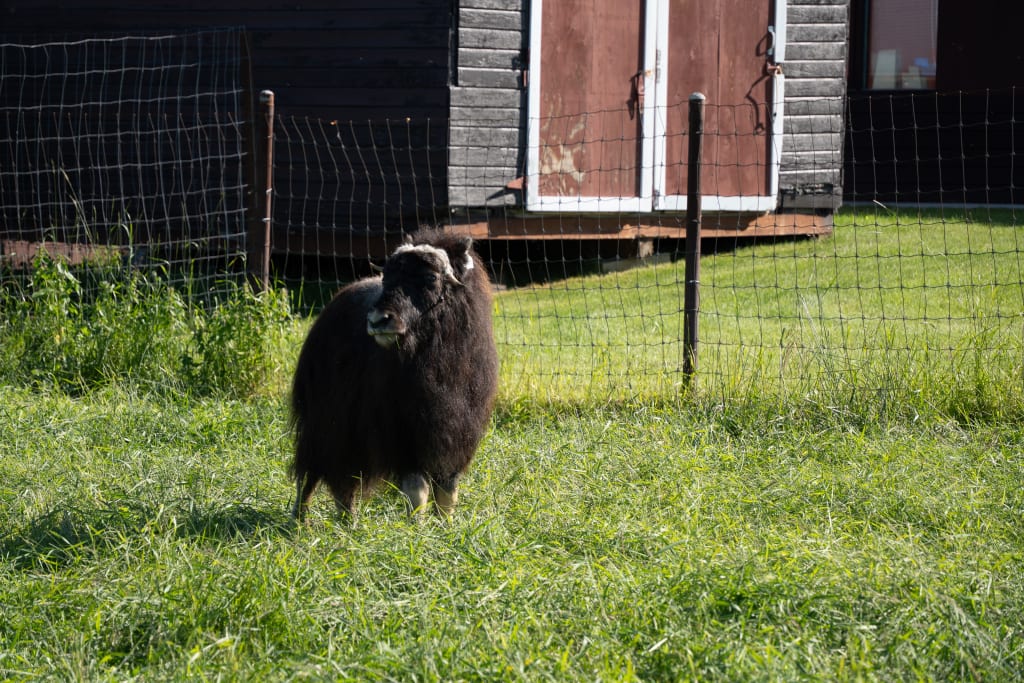
But this other one was far more trusting than most of the other musk oxen and walked right up to the fence for us.

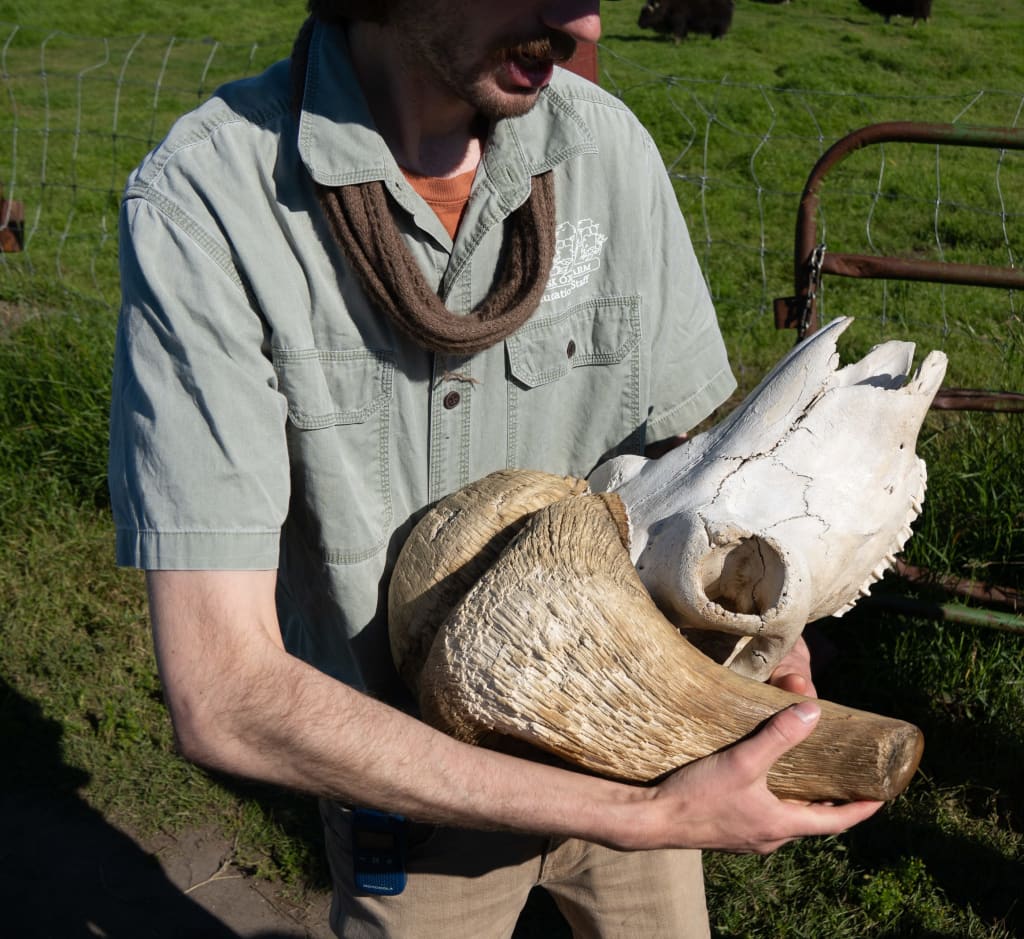
In addition to walking around the farm and spotting live musk oxen, we got to hold a musk ox skull. It was very heavy in my arms, but Keenan told us it weighed just over 20 pounds. I still have my doubts about this, because I pick up my 14 pound mini poodle all the time and he is not nearly as heavy as that skull was. My arm felt like it was going to fall off after holding the skull for just a few seconds!
After the tour around the farm, we wandered into the small, one-room “museum”. Here, we petted the only musk oxen we were allowed to pet on the tour: the taxidermied one who had sadly been hunted years ago.
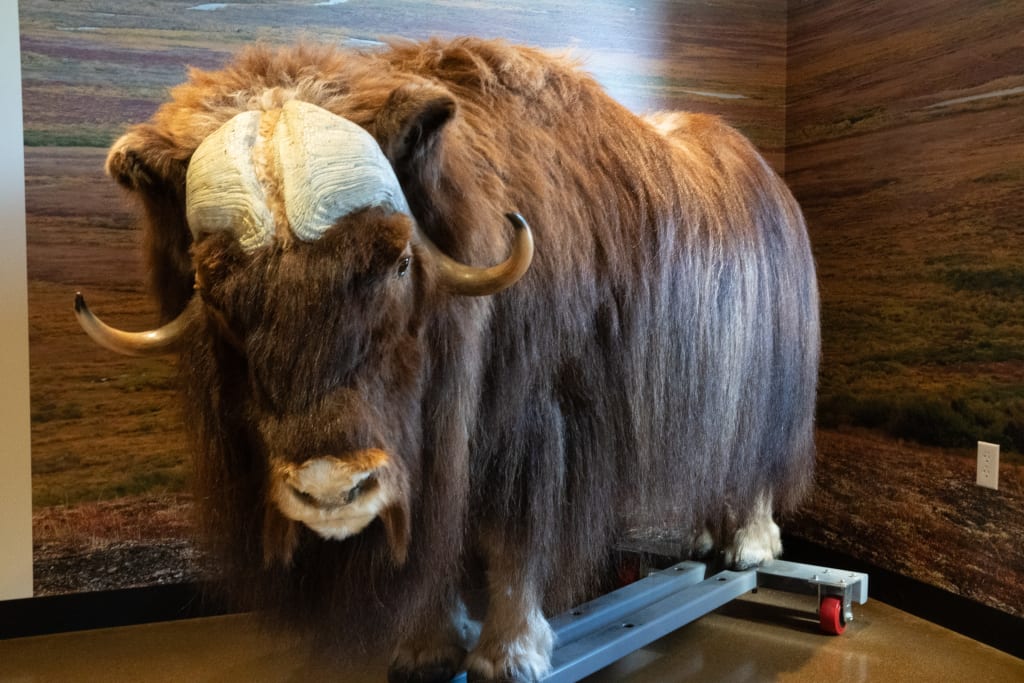
We read some informative plaques on the musk oxen, poked around in the gift shop, thanked our guide for the wonderful tour, and hit the road. The hour flew by, but what a nice morning it had been.
IS IT WORTH IT?
We certainly thought so! It was an affordable, educational, and unique experience, as one of the few places in the entire world to see musk oxen. I’m also an animal lover and tend to enjoy any experience involving animals.
The only downside is that it’s an hour’s drive each way from Anchorage and the activity itself only lasts an hour. To make the drive feel worth the effort, I would tack on another experience in Palmer, either a meal or a visit to the Reindeer Farm 15 minutes away in the town of Butte.
That being said, we drove to Palmer for just the musk ox tour and we thought it was worth driving out of the way for. Spending an hour at the Musk Ox Farm was a fantastic way to kick off our epic 2 week trip in Alaska.
FAQS
How long does the tour last?
The tour lasts between 45 minutes and 1 hour.
Do you need to make reservations in advance?
Reservations are recommended but not required. We had a lot of walk-ins during our tour, but we made reservations in advance.
How much does a visit to the Musk Ox Farm cost?
The cost of a ticket is $16 per person.
When do the tours run?
Tours run hourly year-round, although the schedule varies by season. Be sure to check the website for the current schedule before your visit.
Where else can you see musk ox in Alaska?
There are several other places where you can see musk oxen in Alaska, including the Alaska Wildlife Conservation Center in Girdwood, the Alaska Zoo in Anchorage, and the Large Animal Research Station at the University of Alaska in Fairbanks.
If you want to see musk oxen in the wild, your best bet is the Seward Peninsula around Nome, where they can often be spotted from the roads outside town. Wild populations also live in more remote parts of western and northern Alaska, including Nunivak Island and Nelson Island.
Do you have to be fit to do the tour?
No, as long as you can walk around outdoors for ~1 hour with lots of breaks sprinkled in, you can do the tour.
Can kids do the tour?
Yes, they can. We had a few kids on our tour. Just note that they need to be old enough to follow instructions. It’s important that they stick close to the group at all times and don’t wander off on their own.
Can you pet or feed the musk oxen?
No, you cannot.
Is it safe to visit the Musk Ox Farm?
Yes, it’s safe. Your tour guide will give you a briefing at the beginning of the tour to guide you on how to behave throughout the tour to ensure you stay safe. Specifically, you should never crouch (even to take a photo), refrain from sticking your hand through the fence, and stick with the rest of the group at all times.
EXPLORE MORE ALASKA ARTICLES

The Ultimate 2 Week Alaska Itinerary: Glaciers, Bears & More

Flying Over Glaciers: A Helicopter Tour Over Prince William Sound

Dog Sledding on a Glacier in Alaska: Is It Worth It?

Northwestern Fjord Boat Tour Review (Kenai Fjords National Park)

Kayaking to Aialik Glacier in Kenai Fjords National Park

The Best Things To Do in Kenai Fjords National Park

Hiking the Harding Icefield Trail: Is It Worth the Climb?

Hiking Lost Lake Trail: Seward's Most Underrated Hike

Answering ALL Your Questions About Bear Camp (Katmai NP)

5 Moments From Bear Camp I Can’t Stop Thinking About (Katmai NP)

Bear Camp Archives: My Favorite Photos & Fun Facts (Katmai NP)
