
48 Hours in the Central Serengeti With Unbelievable Big Cat Sightings
Two days. Three lion cubs. Two leopard cubs. One cheetah cub. What more could you ask for?
If you asked me to describe my dream safari, I don’t think I would have been able to come up with something as spectacular as the experience we actually had in the Central Serengeti. Time and time again, I found myself speechless after yet another unforgettable wildlife encounter. I had been on safari before this trip to Tanzania, but the sheer abundance of wildlife and the inter-species interactions we witnessed elevated the Central Serengeti to a league of its own.
If you’re wondering whether the Serengeti deserves a place on your Tanzania itinerary, the answer is yes. Here’s everything you need to know before you go, along with my stories of the unforgettable wildlife encounters that made the Central Serengeti one of my favorite places on Earth.
WHAT IS SERENGETI NATIONAL PARK?
Serengeti National Park is part of the Serengeti-Mara ecosystem, one of Africa’s most wildlife-dense regions. This ecosystem is bisected by the border between Kenya and Tanzania. The Kenyan side is known as Maasai Mara National Reserve and the Tanzanian side as the Serengeti.
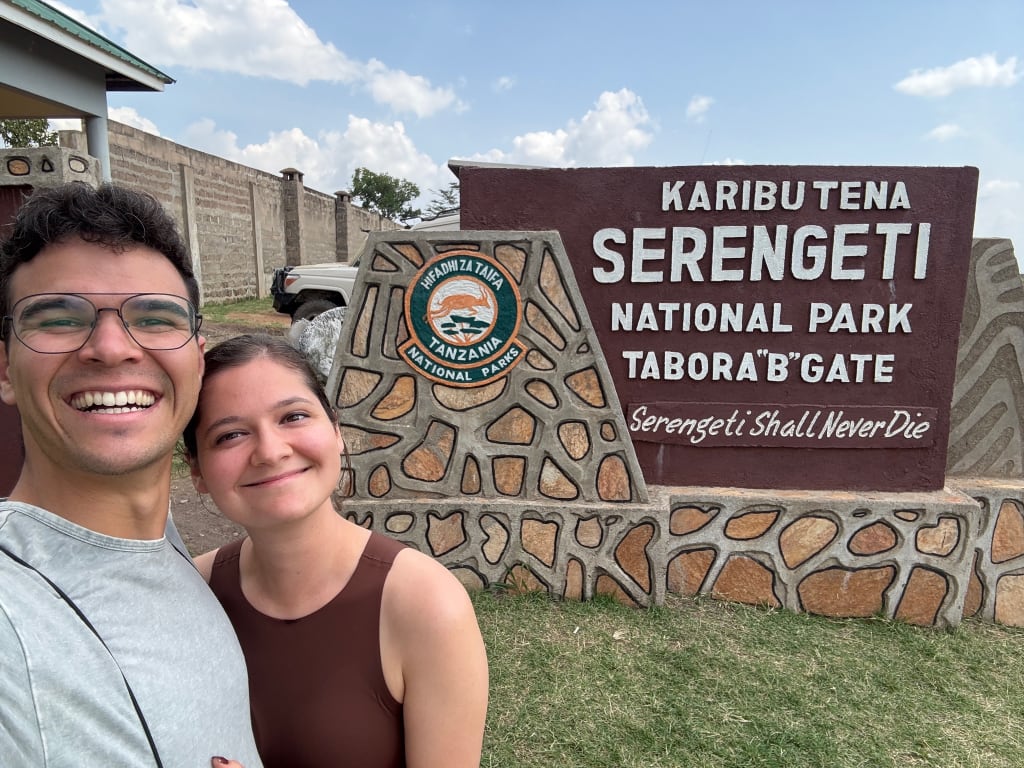
Serengeti National Park covers an astounding 5,700 square miles and is divided into five major regions.
The Northern Serengeti is best known for the Mara River crossings during the Great Migration. Every year, more than 1.5 million wildebeest and 250,000 zebras migrate through the Serengeti-Mara ecosystem in search of fresh grass to graze on. One of the migration’s most dramatic moments occurs when the herds brave the crocodile-infested Mara River on their journey between Tanzania and Kenya. The river crossings are the Northern Serengeti’s signature attraction, which draws most of its visitors to the region.
The Central Serengeti is the most popular region to visit. It’s famous for its exceptional big cat sightings year-round. The Western Corridor also has excellent wildlife sightings year-round yet receives a fraction of the crowds that the Central Serengeti gets, making it an excellent choice for a visit. In fact, our guide Iddy recommended this region.
The Southern Serengeti is famous for the wildebeest calving season, when hundreds of thousands of calves are born over just a few weeks. This abundance of vulnerable newborns attracts predators, making it another fantastic destination for big cat sightings between the months of January and March.
The Eastern Serengeti receives far fewer visitors than the rest of the park, but it’s an excellent place to search for cheetahs.
WHY VISIT THE CENTRAL SERENGETI?
The Central Serengeti offers the most reliable sightings for lions, leopards, and cheetahs compared to Tanzania’s other parks. It is particularly well known for its large prides of lions, who are known to hang out on the Serengeti’s distinctive kopjes, large granite rocks that jut out of the savannah. The Lion King’s Pride Rock was inspired by these kopjes.
OUR EXPERIENCE
I let out a squeal when I first laid eyes on them. This was the last thing we expected. We had spent hours driving through the Central Serengeti and, up until now, any big cat sighting had drawn a crowd with up to thirty cars clustered around, even if the cat was in a tree far away and barely visible even with binoculars. For us to have a lion mama and her three one-month-old cubs all to ourselves was inconceivable.
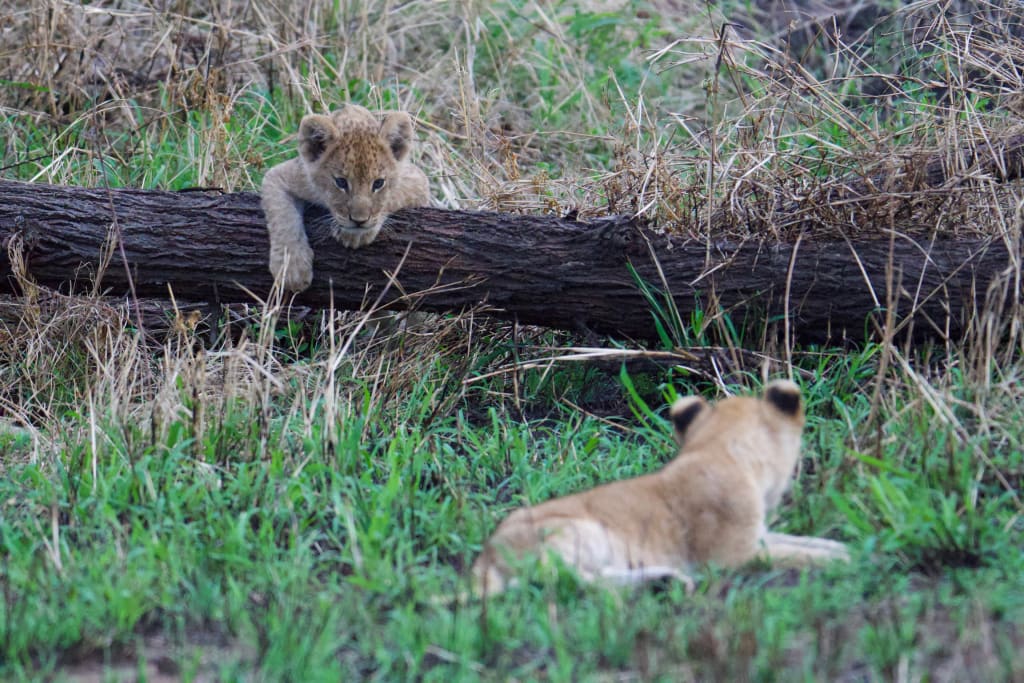
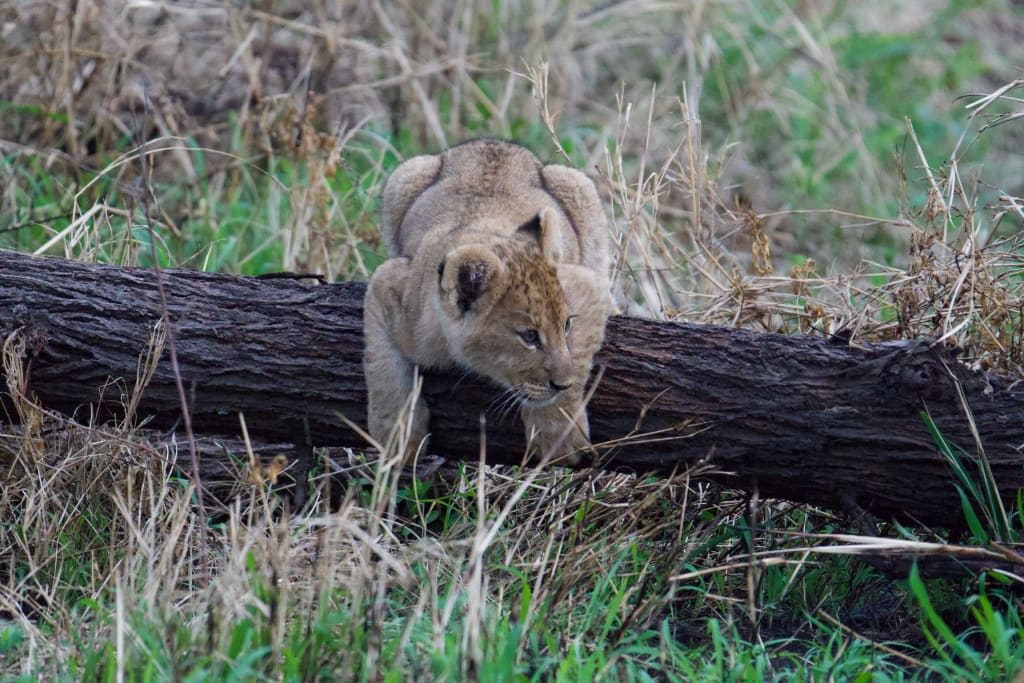

But there they were, running around, jostling with each other, and bouncing off the nearby trees, and we were the only car around.


For the most part, the lion cubs paid us no mind and continued playing as if we weren’t there. The mother, however, kept her eyes on the vehicle the entire time and inched closer to her cubs.


As we watched the cubs play, I noticed three other vehicles parked a short distance away. “Fools!” I thought. “They’re missing out on the best sighting of their lives right now!”

But then I started to second guess myself. Could we be the ones missing something? What were the vehicles doing over there? There couldn’t possibly be anything more interesting than what we were witnessing.
It turns out there could be.
We had already spent fifteen glorious minutes hanging out with the mother and cubs, so we decided to give them some space and see what the other vehicles were up to. In the minutes that followed, I experienced the best wildlife sighting of my entire life.
A pride of fifteen lions was feasting on the remains of their kill. They managed to bring down a buffalo, a giant creature weighing up to 2,000 pounds.
Trigger WarningClick to reveal hidden photos and video
Lions feeding on a buffalo carcass. No gore-focused close-ups, but the scene may still be upsetting.
Click to reveal hidden photos and video
Lions feeding on a buffalo carcass. No gore-focused close-ups, but the scene may still be upsetting.

The males sat off to the side, already satiated as they got first dibs on the meal. Now the females and their cubs were allowed to dig in.

My eyes darted from left to right taking in all the action. We stayed with the lions until the sun went down and we headed back to camp, beyond elated with what we just witnessed.
This was how we ended our first day in the Central Serengeti, the best day in our 2 week long trip through Kenya and Tanzania. We spent the morning watching thousands of wildebeest cross the Mara River in the Northern Serengeti after waiting for it to happen for three and a half days. We then drove to the Central Serengeti and hung out with an entire pride of lions. It simply couldn’t have been a better day.
Read all about witnessing the Great Migration here.
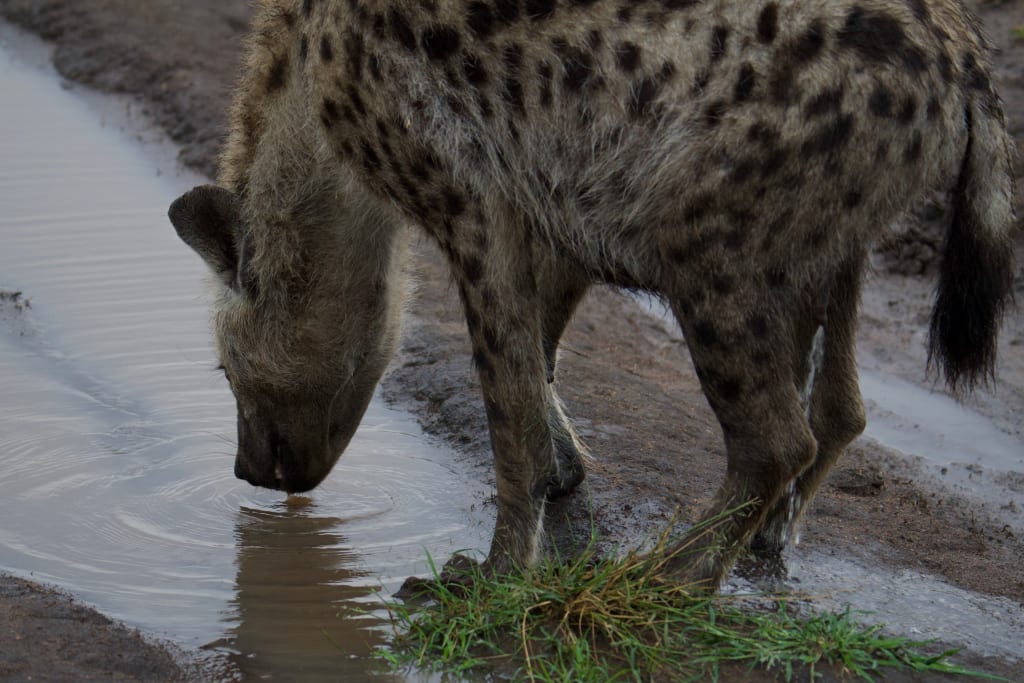
But the days to come were incredible as well. The next morning, we got a glimpse of a hyena in the middle of the road ahead of us, drinking from a filthy puddle.
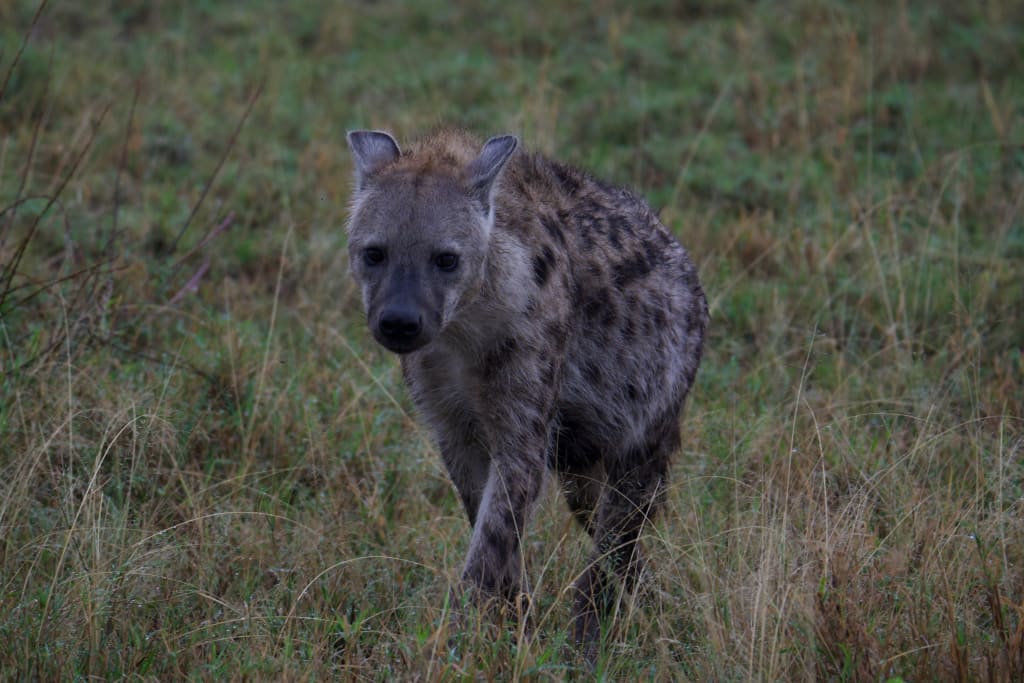
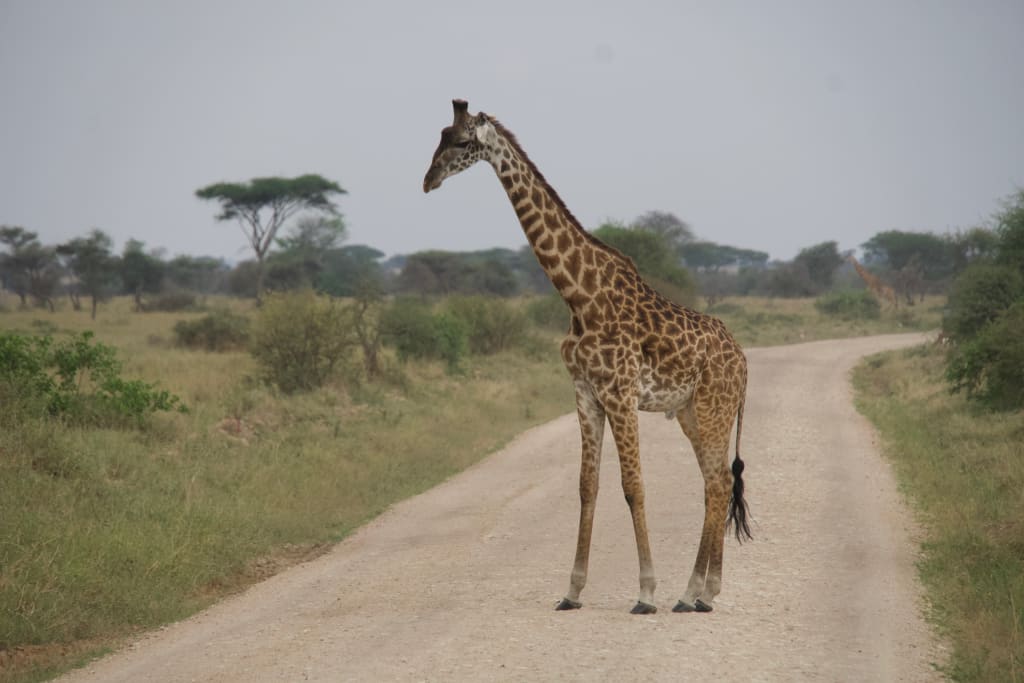
This wasn’t our only roadside sighting. Our next encounter was with a herd of giraffes.
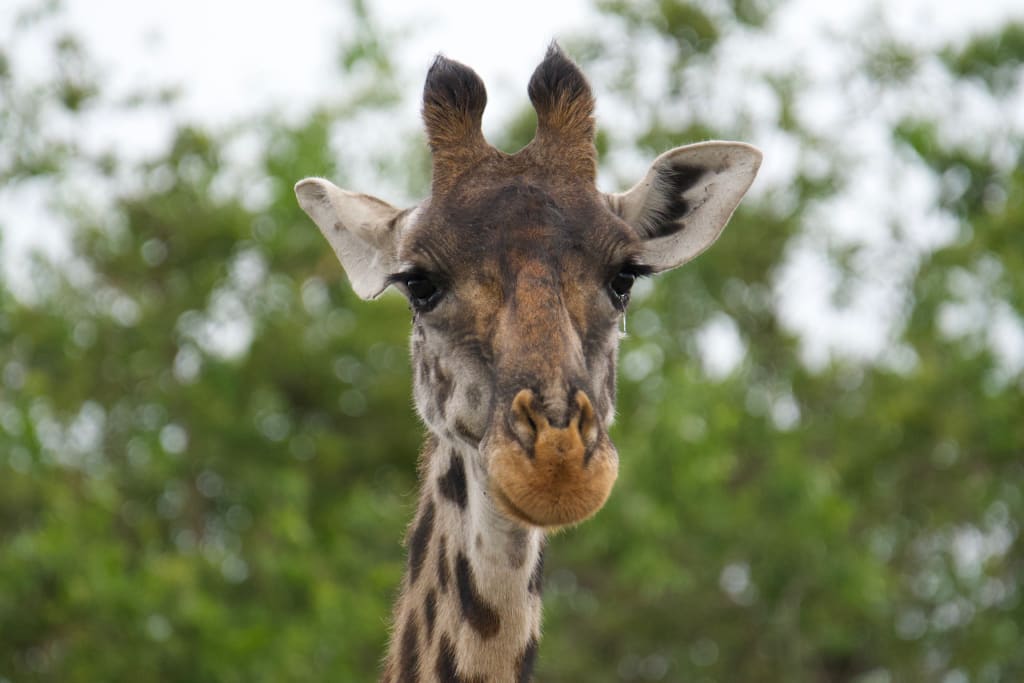
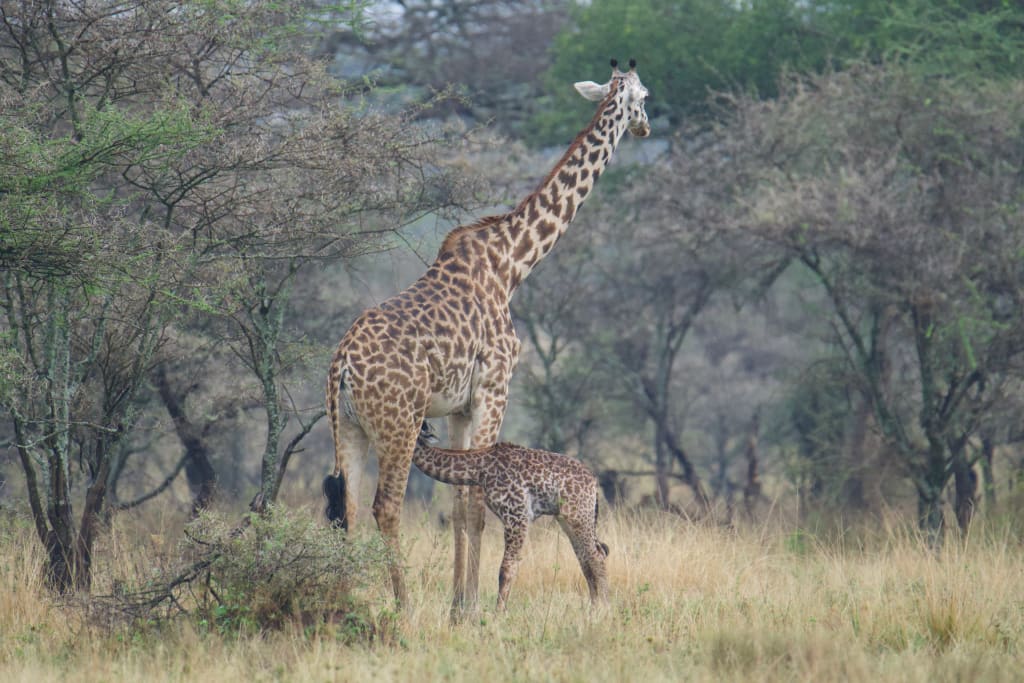
We had a few great giraffe sightings over the next few days in the Central Serengeti. My favorite was seeing this baby giraffe breastfeeding from its mother.
After spending a few minutes watching the roadside giraffes, we returned to the scene of last night’s crime. The dead buffalo’s leg bones were now scattered across the savannah. This was the work of hyenas, who for the most part are scavengers instead of hunters and often feast on the carcasses left by lions.
By the time we arrived, though, the hyenas were nowhere to be found. A lone male lion had returned to reclaim the carcass. He and the rest of the pride were still full from the previous night’s feast and spent most of their time lounging in the grass. Since there wasn’t much activity, we decided to continue our drive.

For the next few hours, we didn’t see much. The onset of rain encouraged many animals to seek shelter and also meant the dirt roads were caked with a thick mud that made them hard to maneuver. We did catch a glimpse of this gorgeous Saddle Billed Stork though. He didn’t seem to mind the rain.

The next few hours dragged on as we waited for something exciting to happen. We had just decided to pull off the road to enjoy our packed lunch when our guide, Iddy, got a call over the radio and immediately put the car in motion.
After a short drive, we saw her. A gorgeous leopard grooming herself.


This was actually our second leopard encounter in less than 24 hours. The first time, we were much further away, and there was a cluster of vehicles blocking our view, but Alex captured this amazing photo with his zoom lens.

We didn’t notice it until we looked through our photos later that evening, but if you look carefully, you will see a kill behind the branches. Leopards are famous for being able to drag their prey high up into the treetops, where it’s much harder for larger predators to steal them. Lion prides, in particular, will often bully a lone leopard into surrendering its meal, so hoisting a kill into a tree gives the leopard a much better chance of enjoying its hard-earned feast.
The leopard in front of us now was much closer than the one we saw yesterday in the tree. I could already tell it was going to be a fantastic encounter.
“There must be a cub,” Iddy remarked. Apparently breastfeeding mothers are more likely to groom themselves constantly as their cubs will mess up their fur. Sure enough, moments later we saw not one, but two gorgeous month-old leopard cubs.
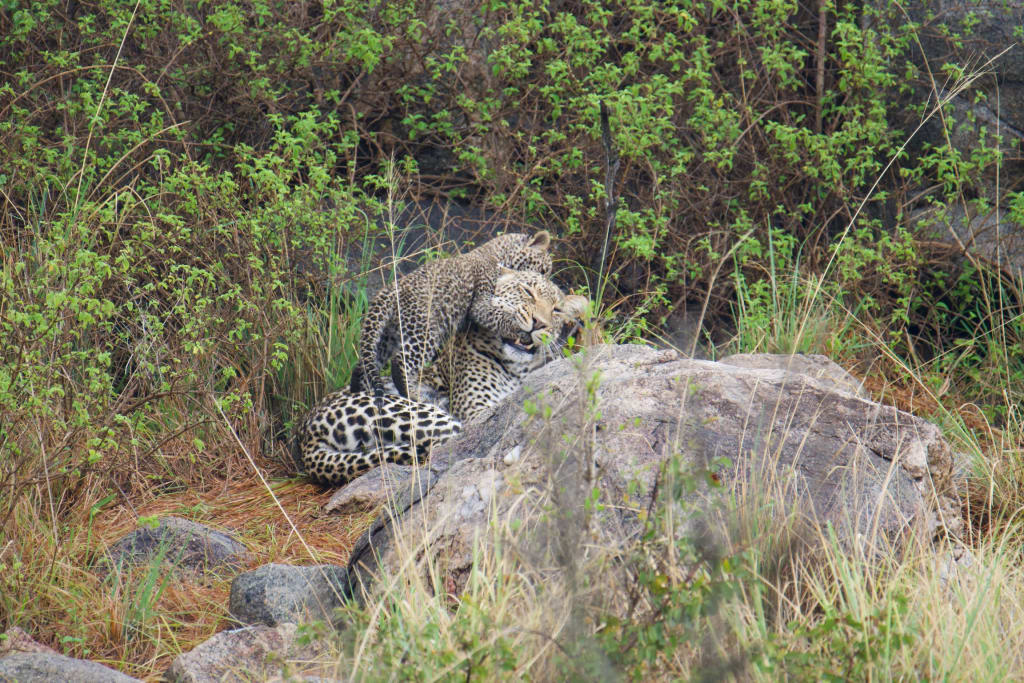
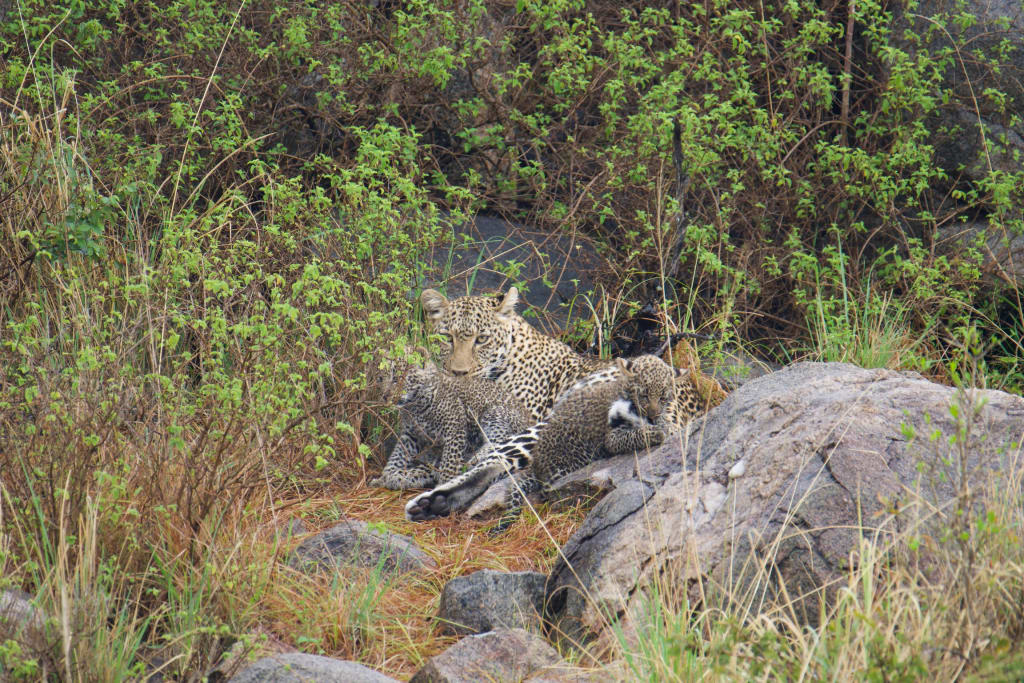
These cubs, like the lion cubs we saw last night, were incredibly playful. One kept pouncing on her mother’s tail, practicing for the big hunts she would surely participate in once she was a little older.
After a short while, the mother set off for a hunt. Without food, she wouldn’t be able to produce milk to feed her cubs. The cubs followed for a short distance before giving up and returning to their hideaway behind some brush at the top of a boulder.

At this point, the mother moved quickly and we lost her. We decided to pick up where we left off with lunch. Watching the mother interact with her playful young cubs was one of the highlights of our trip to Africa.
After lunch, we continued driving in search of more wildlife. Iddy stopped the car beside a grey heron just a few feet away. The bird started jerking its neck from left to right in an odd, dance-like motion. With one swift movement, the heron snatched a mouse from the bushes. His dance was a clever tactic to daze and confuse his prey!
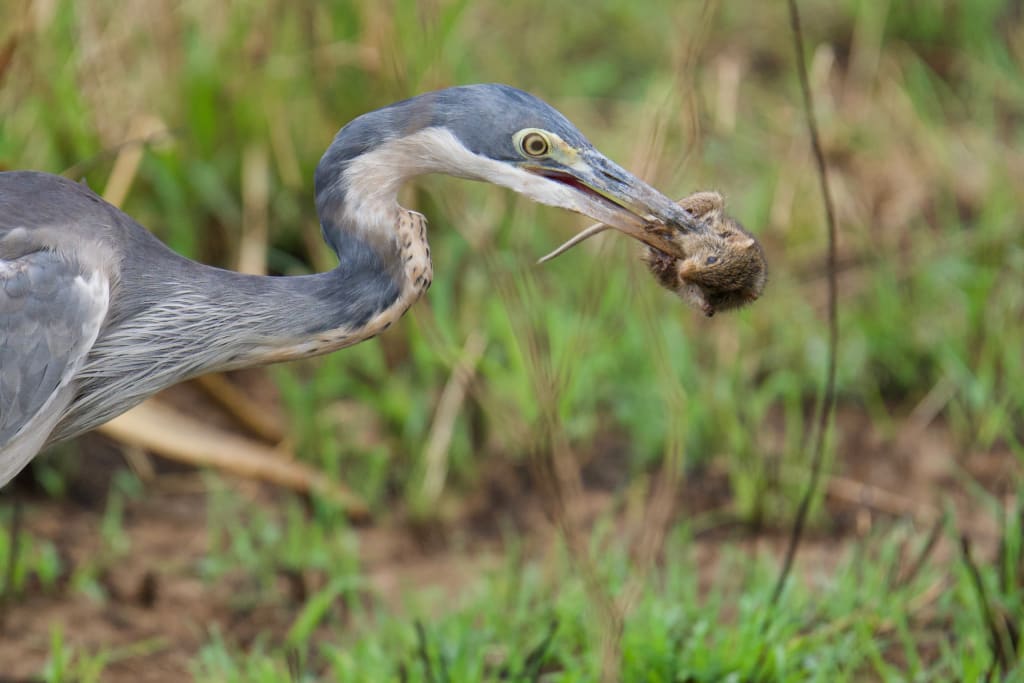
We were so close we could hear the poor mouse squeal in a state of panic. The heron didn’t make him suffer for long, and promptly swallowed him in one gulp.
This was another one of the most memorable wildlife encounters of the trip. By the end of the safari, I realized it wasn’t the sightings themselves that stuck with me most. It was watching the animals go about their lives. It was watching vultures squabbling over scraps, leopards caring for their cubs, cheetahs stalking antelope, and this heron putting on a fascinating display as it caught its dinner. I’d take watching the heron catch the mouse over a lazy lion sighting any day.
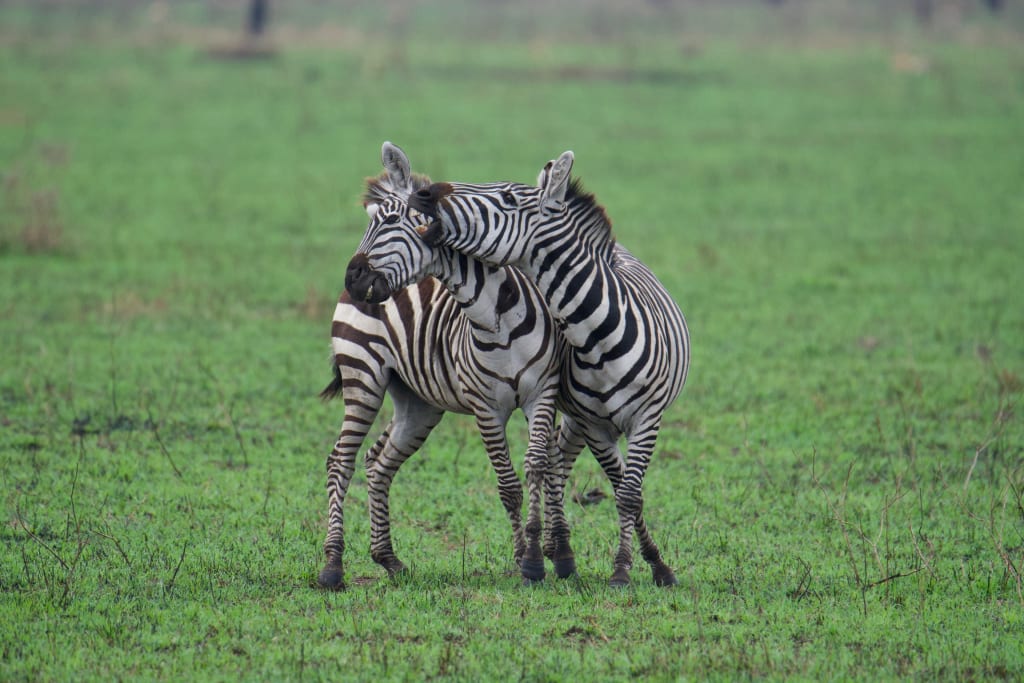
Of course, some of the most exciting interactions were the predator-prey chases, but not every interaction in the Serengeti involved life and death. Thankfully, many were far more lighthearted, such as the one between these two zebras who spent several minutes sparring and nipping at each other’s necks.

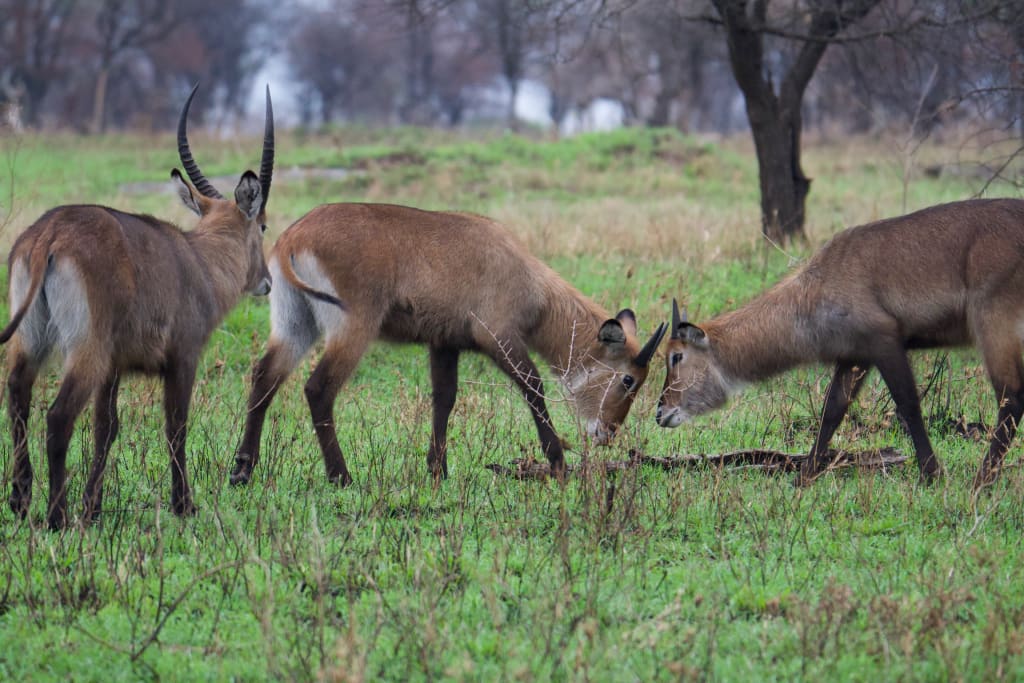
These waterbucks we saw were also quite playful and loved to joust with one another.
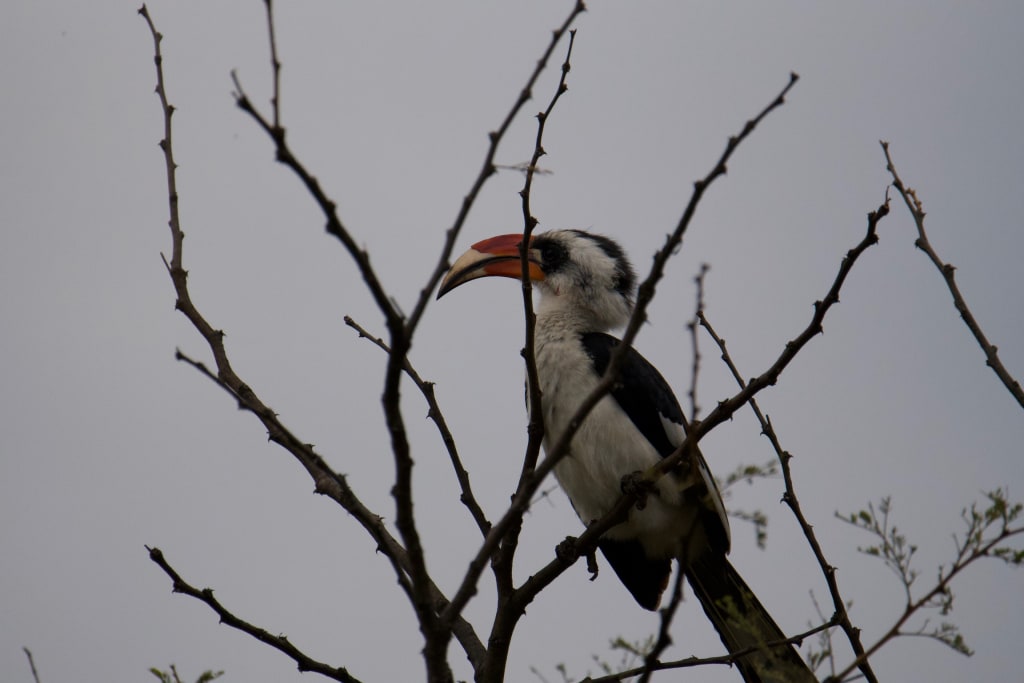
We ended our second day in the Central Serengeti with one last sighting: the red-billed hornbill. Disney fans might recognize this bird as the inspiration for Zazu from The Lion King.
We reluctantly tore ourselves away from the savannah and made our way back to camp just after sunset. We were staying in a tented camp in the heart of the Central Serengeti, where canvas walls were all that separated us from the wildlife outside. That night, we heard hippos grunting a short distance away. At one point, Alex and I both woke to the unmistakable sound of buffalo thundering past our tent. By morning, their hoofprints were stamped into the mud just a few feet from our doorstep.
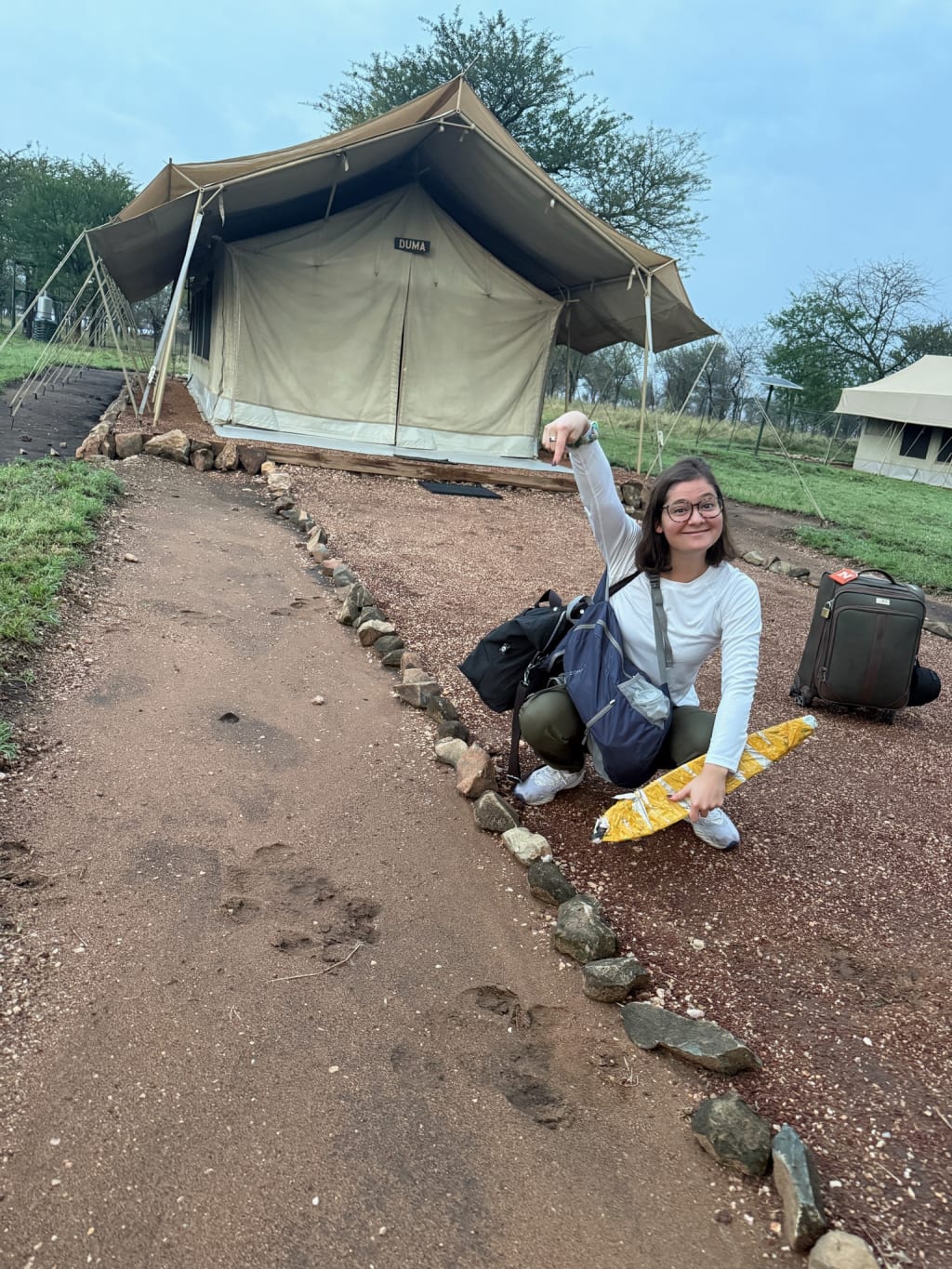
As you can tell by the picture above, we stayed in the Duma tent. Duma is the Swahili word for cheetah.
A few other Swahili words you might want to learn on safari:
- Simba means lion
- Twiga means giraffe
- Tembo means elephant
- Asante means thank you
- Karibu means welcome
- Jambo means hello
- Safari means journey
Our final morning in the Central Serengeti began with a delicious breakfast and a show, with the show being a baboon filtering through the camp garbage and being chased away by staff.
Sadly, after breakfast, it was time to check out of our hotel. We had been welcomed with a song when we arrived, and as we loaded our bags into the safari vehicle, the staff gathered once more to sing us a farewell song. They never failed to put a smile on our faces.
Thankfully, we still had a few more hours in the park before we had to leave and we had two more incredible wildlife sightings.
The first was a bloat of hippos wallowing in the river. Hippos are very aggressive creatures and considered the most dangerous animal in Africa. Even within the pod, they frequently snapped at one another.
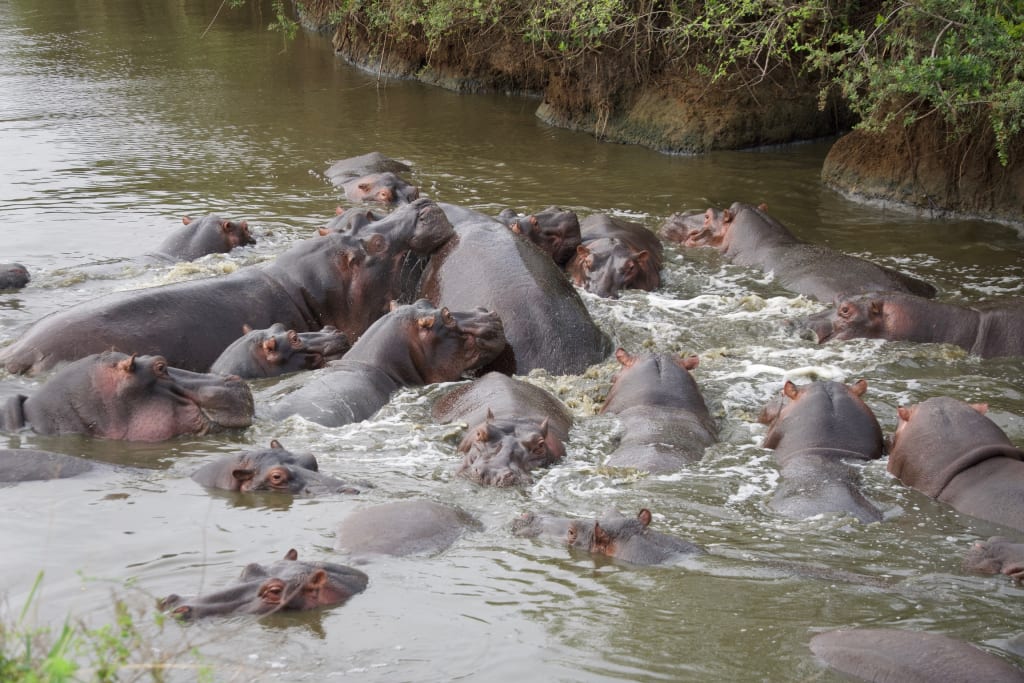
The most entertaining part of the encounter was watching them defecate. They would wag their tails as they did their business to spray the poop in every direction as far as it would go to mark their territory. It was disgusting, truly, but quite funny as well.
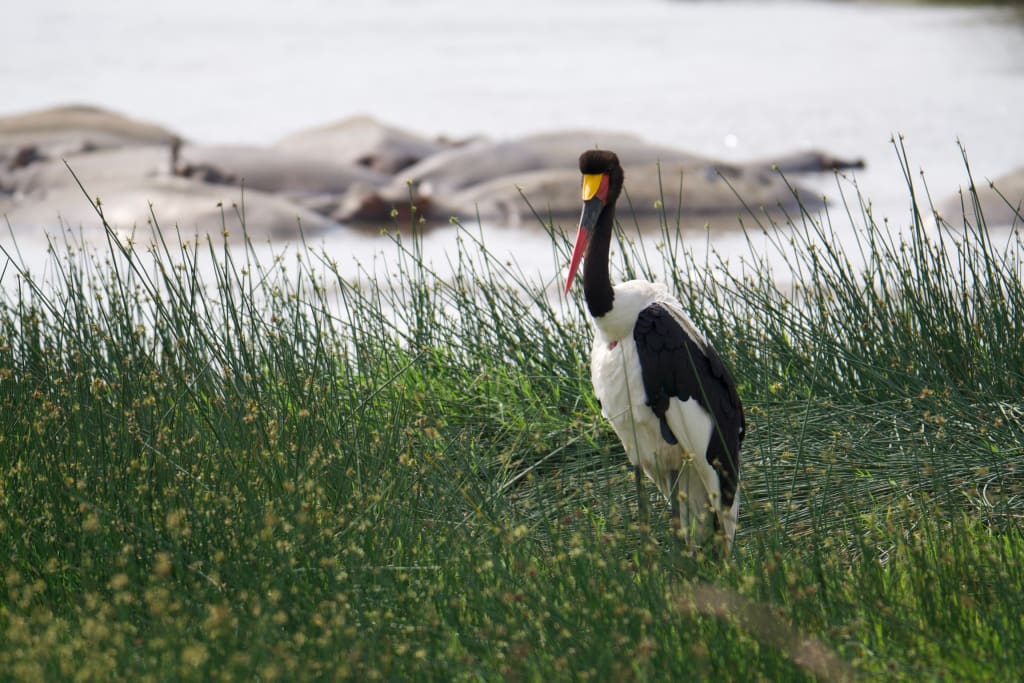
We left the hippos behind and headed for the park gates. As we were exiting the park, we saw the last big cat.
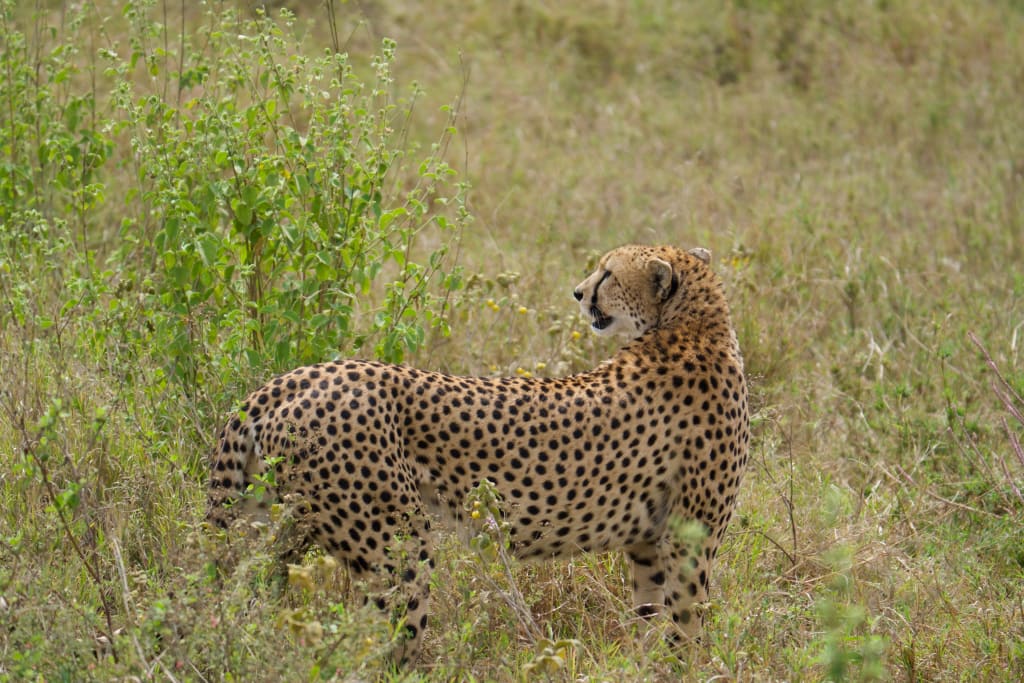
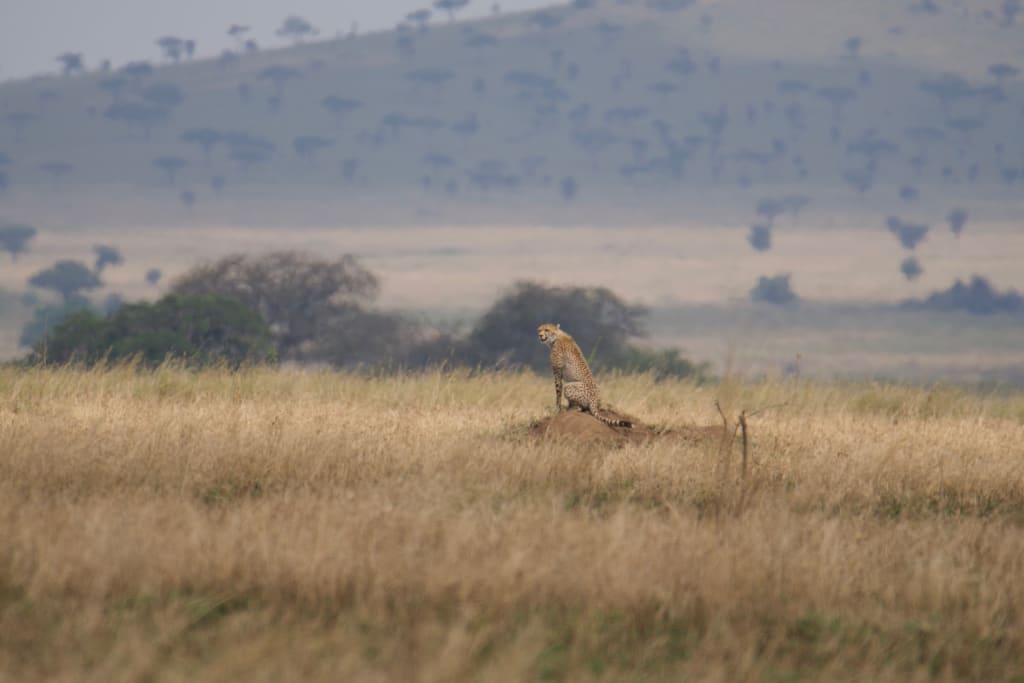
Our encounter with this cheetah was much shorter than those we had with the lions and leopards, but we did catch a glimpse of this eight-month-old cub with her mother. Cheetah cubs have a notoriously low survival rate, as lions and hyenas in particular will kill them to eliminate competition for food, so this cub sighting felt especially rare and special.
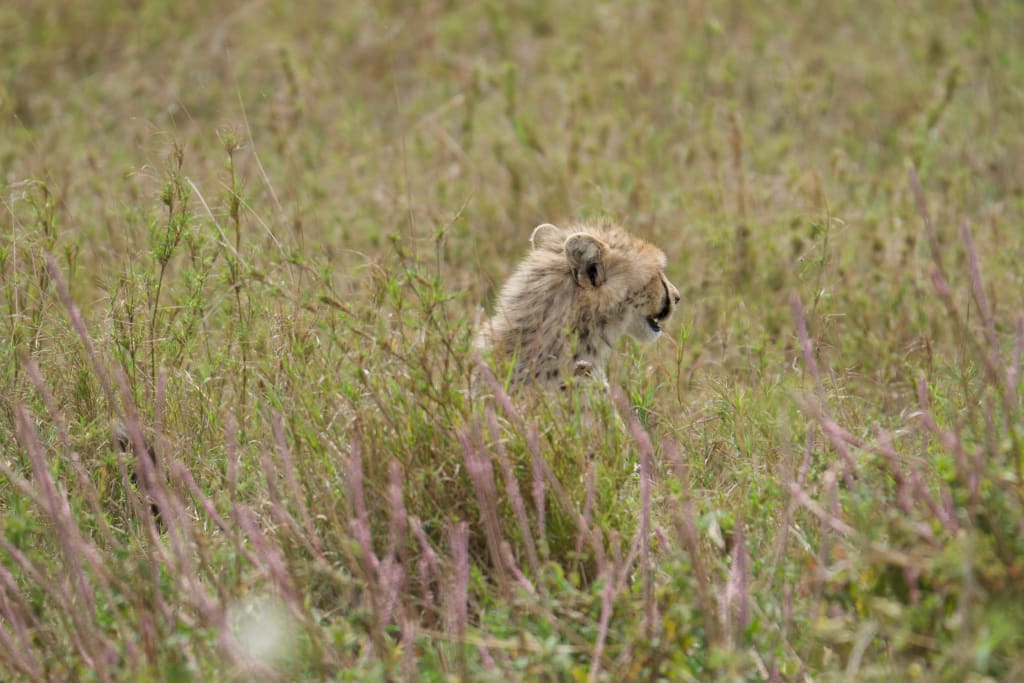
In just 48 hours, we’d seen the cubs of all three of Africa’s big cats. Iddy told us it was the first safari he had ever guided where his guests had managed to see lion, leopard, and cheetah cubs on the same trip.
After bidding farewell to the cheetah and her cub, we exited the park gates and, just like that, our two days in the Central Serengeti had come to an end. We had seen lions feasting, leopard cubs pouncing, zebras rearing, hippos lunging, and a heron outsmarting a mouse. The Central Serengeti far surpassed all my expectations and became one of my favorite places on Planet Earth.
BEST TIME OF YEAR
The best time to visit the Serengeti is in one of the two dry seasons, either during calving season (January to February) or Great Migration season (June to October). We wanted to see the Great Migration in the Northern part of the park, so we visited in August. If you choose to visit during March to May or November to December, you’ll likely have more rain, which can impact the number of animal sightings and make the roads harder to drive on. That being said, the Central Serengeti has abundant wildlife year-round, so there’s no terrible time to visit.
HOW MUCH TIME DO I NEED?
It depends on the amount of time you have in Tanzania. I highly recommend a minimum of 48 hours in the park, which is how long we had. If I had to choose just one place to visit in Tanzania, I’d make it the Central Serengeti, so I wouldn’t be too stingy with your time here. A visit of 2-3 days is ideal.
HOW DO I GET THERE?
Most visitors choose to drive from Kilimanjaro International Airport to the Serengeti. Along the way, you can stop at Tarangire National Park, Lake Manyara National Park, or Ngorongoro Conservation Area if you choose. I highly recommend a visit to Tarangire.
If you’re short on time, several airlines operate daily bush flights from Arusha and other parks to Seronera Airstrip in the heart of the Central Serengeti. Flying dramatically reduces travel time and allows you to spend more time on safari, but it’s also the most expensive option.
DO I NEED A GUIDE?
I highly recommend getting a guide for your safari for a number of reasons. First, guides are experienced in identifying the signs that an animal is near before they’re able to see it, so you’ll likely have more sightings with a guide. They also communicate with other guides over the radio when there’s a particularly good sighting, so you get the added benefit of more eyes in other places looking out for the animals.
Furthermore, the guides know where it’s safe for tourists to eat, and are familiar with the long drives on bumpy dirt roads. It takes a long time to get from place to place, and trust me, you’d rather relax and take a nap in the back of the car than tackle the drive from park to park yourself.
Alex and I traveled with EasyTravel Tanzania, and have nothing but positive things to say, especially when it comes to our outstanding guide, Iddy. His knowledge went above and beyond what we’ve seen from other safari guides we’ve had in the past.
I strongly recommend hiring a private guide so you can go at your own pace, start the day when you want, and take bathroom breaks when you need.
WHERE SHOULD I STAY?
We stayed at Serengeti Tortilis. It was one of our favorite camps throughout our trip. The staff was so friendly and would sing to us as we arrived, departed, and enjoyed our dinner each night. We also enjoyed hearing the sounds of wildlife outside our tent at night, including buffalo running by and hippos grunting and groaning.
IS IT WORTH IT?
Yes. Visiting the Serengeti was one of the most incredible experiences of my life. It’s one of my favorite places on Earth. Watching a pride of lions devour a buffalo carcass still feels like a dream, as if I was part of a live-action Lion King remake. I’ll also never forget the baby lions and leopards in particular. I’m a firm believer that a visit to the Central Serengeti should be on everyone’s bucket list. I promise you won’t regret it.
FAQs
Can you see the Great Migration in the Central Serengeti?
You can see migrating herds of wildebeest and zebra in the Central Serengeti, but the Mara River crossing takes place in the Northern Serengeti. We saw giant herds in the Maasai Mara and the Northern Serengeti when we visited in August, but relatively few wildebeest in the Central Serengeti.
Can you see the Big Five in the Central Serengeti?
Yes, you can potentially see the Big Five (lions, leopards, elephants, rhinos, and buffalo) in the Central Serengeti. While sightings of lions, leopards, elephants, and buffalo are relatively common, black rhinos are extremely rare in the Central Serengeti. If seeing all of the Big Five is a priority, I recommend pairing the Central Serengeti with the Ngorongoro Conservation Area, where rhino sightings are far more likely. That being said, we did not see a rhino in Ngorongoro.
What are the chances of seeing lions?
Very high. The Central Serengeti is one of the best places in Africa to see lions thanks to its large resident prides and abundant prey that keeps the lions active and well fed. We saw a pride of fifteen lions eating a buffalo and a mother with her three cubs in just 48 hours in the Central Serengeti.
What are the chances of seeing leopards?
High. Leopards are naturally elusive, but the Central Serengeti is widely regarded as one of the best places to spot them in Africa. We were lucky enough to see leopards twice in less than 48 hours, including a leopard in a tree with a kill and a mother with her two playful cubs.
What are the chances of seeing cheetahs?
Pretty good. Cheetahs are less common than both lions and leopards, but there’s a good chance you’ll spot one, particularly during the cooler hours of the morning and late afternoon. Our final wildlife sighting before leaving the park was a cheetah mother with her eight-month-old cub.
What other animals can I see in the Central Serengeti?
In addition to the big cats, you can find elephants, buffalo, giraffes, zebras, hyenas, hippos, warthogs, jackals, baboons, wildebeest, gazelles, impalas, topis, waterbucks, and countless bird species.
Is it safe to visit the Central Serengeti?
The Central Serengeti is very safe if you follow park and camp rules. Make sure to follow your guide’s instructions and never step out of the vehicle unless the guide tells you it’s okay. This should be common sense, but do not touch wildlife even if they approach the vehicle.
If you’re staying in a tented camp like we did, you’ll likely be escorted to and from your tent after dark, as animals frequently wander through camp at night. We heard hippos and buffalo outside our tent, but at no point did we feel unsafe.
What is the bathroom situation during the safari?
There are bathrooms in the parks, although they are few and far between. I would highly recommend bringing your own roll of toilet paper and hand sanitizer every day as availability in the facilities is not guaranteed. I also found Asian toilets to be more common than Western toilets.
More often than not, we ended up doing a bush pee, which involved pulling off to a remote corner of the park and urinating behind the vehicle. If you are not comfortable with this, the guide will find facilities for you, but as I mentioned it is often a lengthy drive to get to the nearest facility and it will reduce the amount of time you have for wildlife viewing.
What camera equipment do you recommend?
I would recommend a zoom lens for the best photos. My husband has a 200-600mm Sony zoom lens that took the majority of the photos in this article, paired with a Sony a6700 camera. He also brought an 18-300mm all-in-one zoom lens on this trip.
Do I need binoculars?
Yes. They are a must, and if possible I would recommend getting a pair for each person on the trip, as it can be cumbersome to constantly adjust the settings for each person, especially in high-action moments. It is an added expense, but the safari is a significant investment of capital, and it is worth investing in the right gear to maximize the experience you have. The tour operator usually provides one pair of binoculars, but they will use them to spot wildlife as well, so you are sharing with a number of people. My husband has 8x40 Crossfire Vortex binoculars and loves them.
Do safari vehicles have AC?
Often they do not. When you are driving, it is not as much of a concern, because guides often keep the windows open and in most vehicles the roof of the car pops up and allows in a lot of air. However, you will be parked in one spot when you are viewing animals, and the sun is strong. I recommend packing a portable hand-held fan, sunscreen, and a wide-brimmed hat.
How rough are the roads? Will I get carsick?
The roads are not paved in Tanzania, so you will get to experience what they humorously describe as an African massage. It is bumpy, but the roads are not too windy so I personally did not have an issue with car sickness.
Do I need malaria medication to visit Tanzania?
It is recommended to get a prescription to prevent malaria, yes. I have taken atovaquone/proguanil (Malarone) many times now and have never experienced side effects.


