
One Day at the Grand Canyon: South Kaibab to Skeleton Point Hike
Millions of people visit the Grand Canyon every year. It’s not exactly what I’d describe as a hidden gem. But 99% of visitors miss the best experience in the park: descending below the rim and hiking into the canyon.
I knew from the minute I began researching the park that I wanted to be part of the 1% of visitors that choose to hike. But, the more I learned, the more I began to understand why most people don’t bother. The heat. The lack of shade. The steep ascent as you make your way back out of the canyon. These hikes are no joke.
But, with the right preparation, these hikes are well worth the effort. Since we only had a half a day in the Grand Canyon, we had to be selective about how we spent our time. After hiking the South Kaibab Trail to Skeleton Point, I can confidently say we made an excellent choice.
If you’re interested in this hike, be sure to read below for all my best tips to prepare yourself for this awe-inspiring experience.
WHAT IS THE GRAND CANYON?
The Grand Canyon is an enormous natural gorge formed by the Colorado River. Despite its name and fame, it’s not even close to one of the largest canyons in the world by depth. Depending on how it’s measured, that honor belongs to either Yarlung Tsangpo Grand Canyon in China or Kali Gandaki Gorge in Nepal, both of which are roughly 3 times as deep as the Grand Canyon.
Superlatives aside, the Grand Canyon is an incredibly popular place to visit. Last year, it received 4.4 million visitors, making it the 4th most visited national park in the United States.
WHERE IS THE GRAND CANYON?
The Grand Canyon is located in northern Arizona in the southwestern part of the United States. It sits within Grand Canyon National Park, about 4 hours north of Phoenix and 4.5 hours east of Las Vegas by car.
NORTH RIM VERSUS SOUTH RIM
There are two main destinations for visitors in Grand Canyon National Park: the North Rim and the South Rim. Although they’re only about 10 miles apart as the crow flies, getting between them requires either a 21-24 mile hike through the canyon or a roughly 3.5-4 hour, 200 mile drive, as you have to drive around the canyon to get from one rim to the other.
Most first-time visitors should choose the South Rim, which is open year-round, easier to reach, and has more viewpoints, hiking trails, and accommodations.
DAY HIKES IN THE GRAND CANYON
The National Park Service website is a fantastic resource to use when deciding which day hike to do at either North or South Rim. The most popular options at the North Rim are North Kaibab Trail and Widforss Trail and at South Rim, Bright Angel Trail, South Kaibab Trail, and Rim Trail.
SOUTH KAIBAB TRAIL DAY HIKES
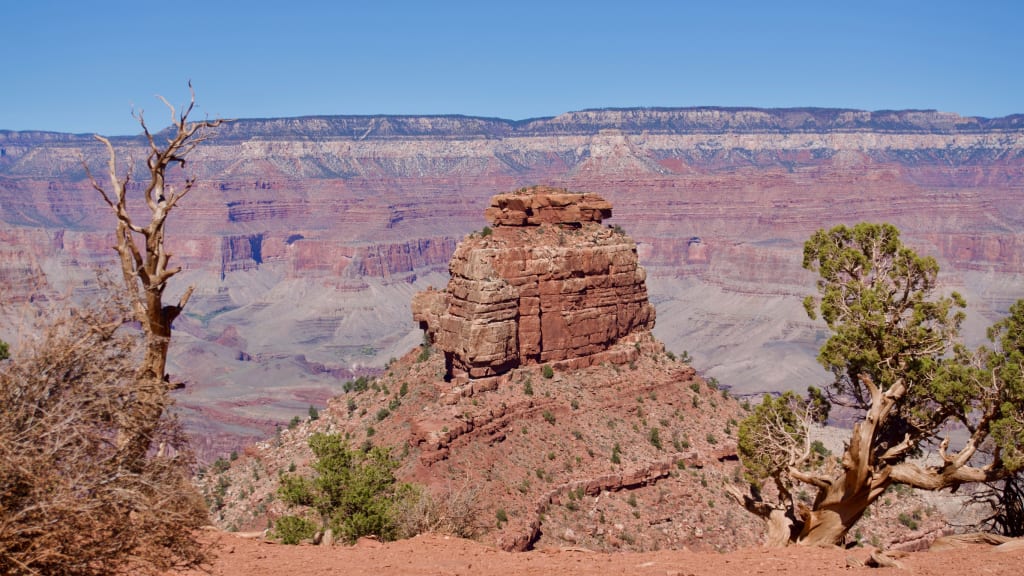
Alex and I did the South Kaibab to Skeleton Point hike. We descended over 2,000 feet into the canyon, past the Ooh Aah and Cedar’s Ridge viewpoints all the way to the Skeleton Point, where we turned around and ascended up the same path back to the canyon rim.
Keep in mind that the farther you descend into the canyon, the farther you’re committing yourself to hiking back up. Most people, from what we observed, decided to turn around at either Ooh Aah Point or Cedar’s Ridge. I’ve included the hiking stats below if you were to turn around at those viewpoints instead.
The National Park Service is adamant: you should NOT hike past Skeleton Point without an overnight permit. If you want to hike to the Tipoff or Phantom Ranch, consult with a park ranger before your hike.
Regardless of where you plan to turn around, I highly recommend reading the following National Park Service Resources before your hike: the Trail Webpage and the Trail Overview.
OUR EXPERIENCE
I hope you like switchbacks! If you do, you’re in for a treat. The steep descent starts the minute you leave the trailhead. You’ll wander down the dusty trail, taking sharp 180 degree turns every minute or two as you wind your way deeper and deeper into the canyon. Don’t worry, though, nothing lasts forever. We made it to the first viewpoint in less than half an hour. The switchbacks are behind you but the steep descent does continue past this point.
The good news is that the incredible canyon views start at that first viewpoint, Ooh Aah Point (hence, the name). Here, you can see the canyon stretch out for miles in front of your eyes.
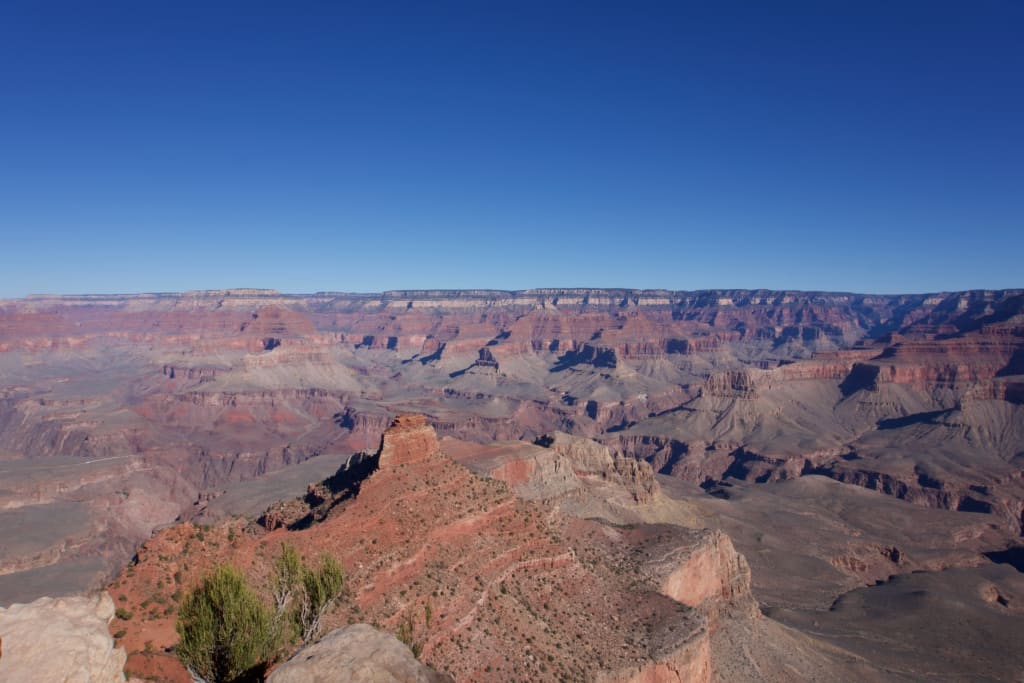
I’ll be honest, though. I didn’t have much time for any “oohing” or “aahing” at this point. There wasn’t a lot of space on the trail to step aside and soak in the views without blocking the path of the other hikers, so we had a fellow hiker snap a quick photo of us and we kept moving. No big deal. The views would get better the further we went, anyway.
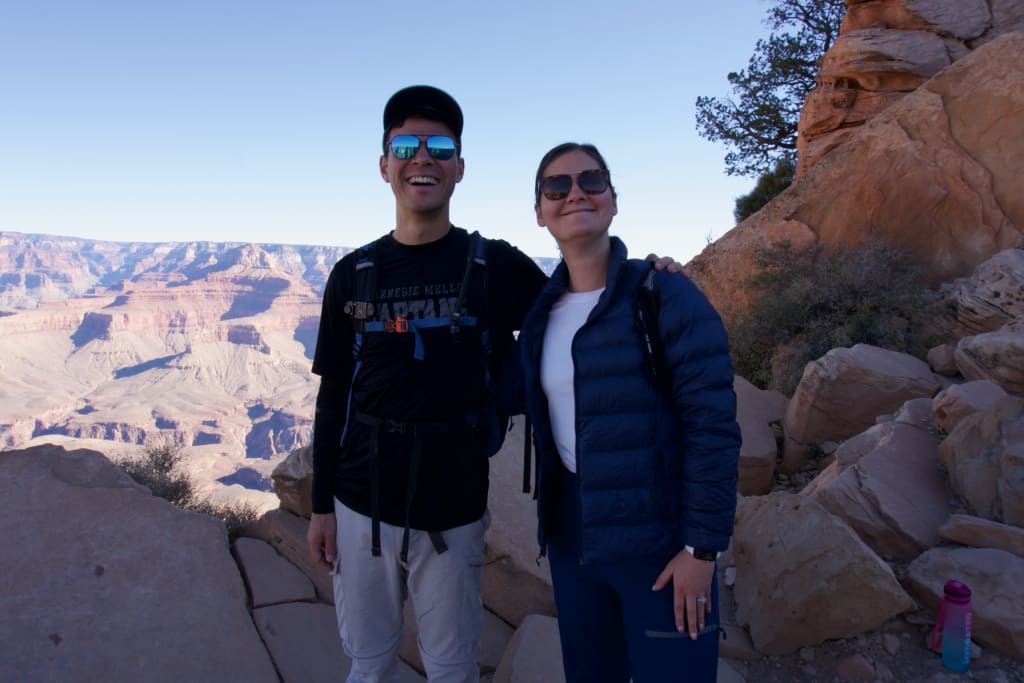
Even if you don’t plan to hike all the way to Skeleton Point, I highly recommend you at least try to get to the second viewpoint, Cedar’s Ridge. There’s more space to stretch out and soak up the sweeping views of the canyon here.
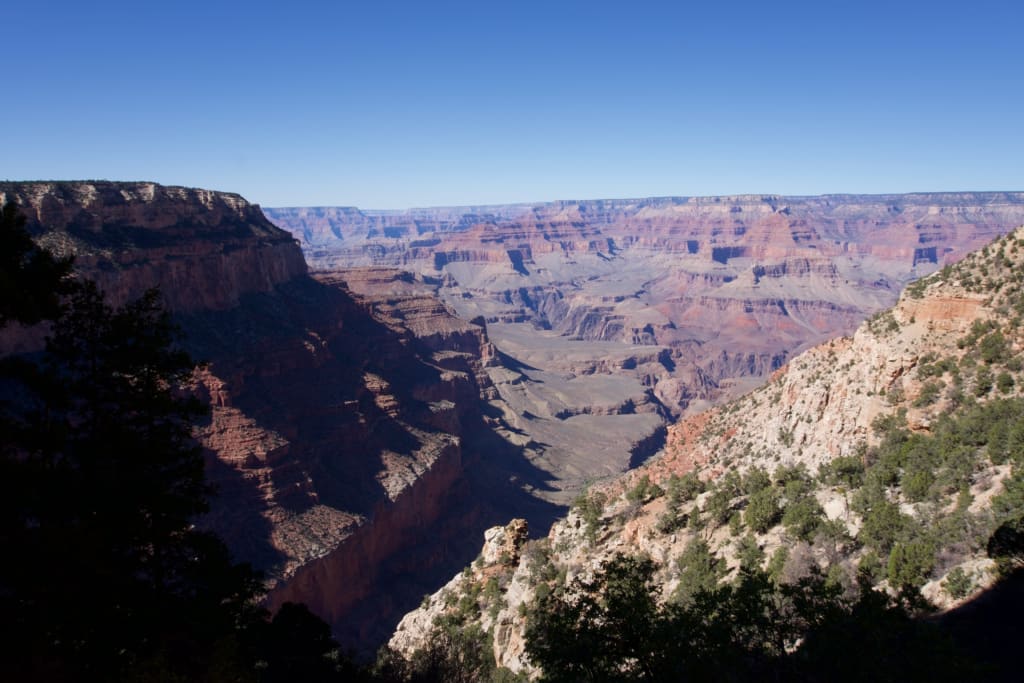
By the time you reach Cedar’s Ridge, you’re much deeper into the canyon. From this point, you can really see the bands of red, orange, tan, and even green rock layered throughout the canyon.
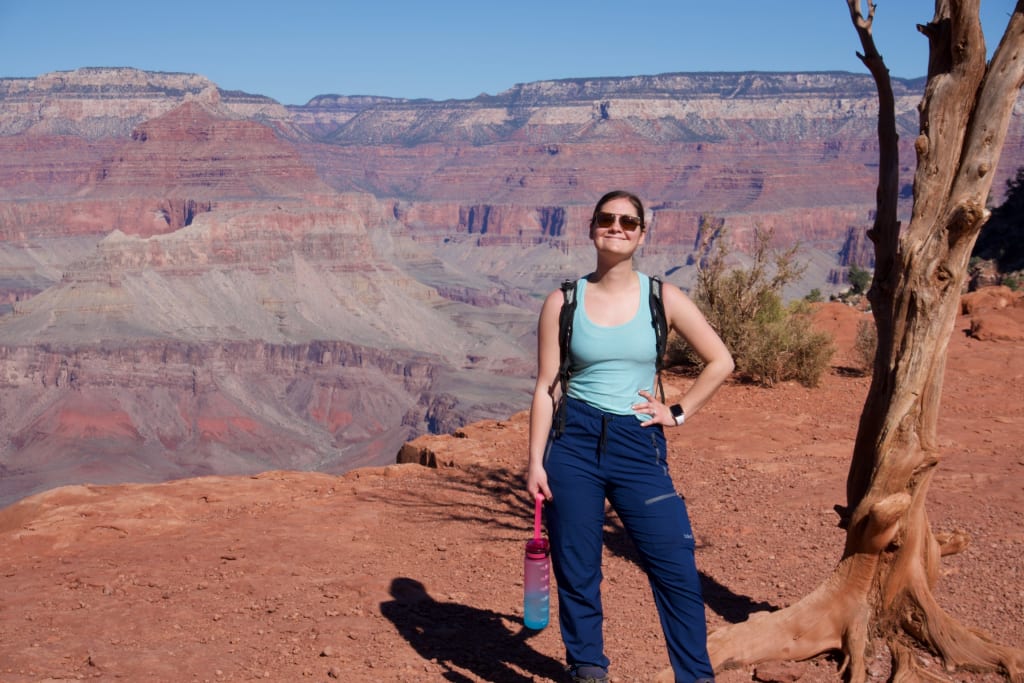
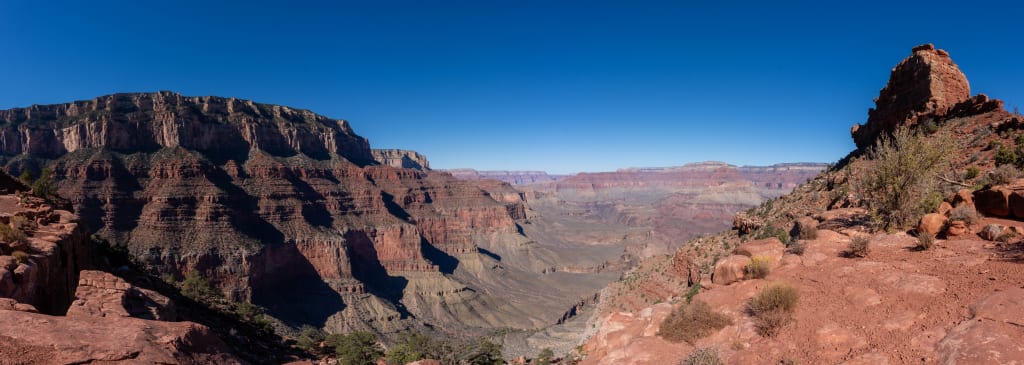
And, if you can keep going beyond Cedar’s Ridge, even better. This section of the hike was undoubtedly my favorite. The crowds thinned considerably beyond this point and the views just didn’t quit.
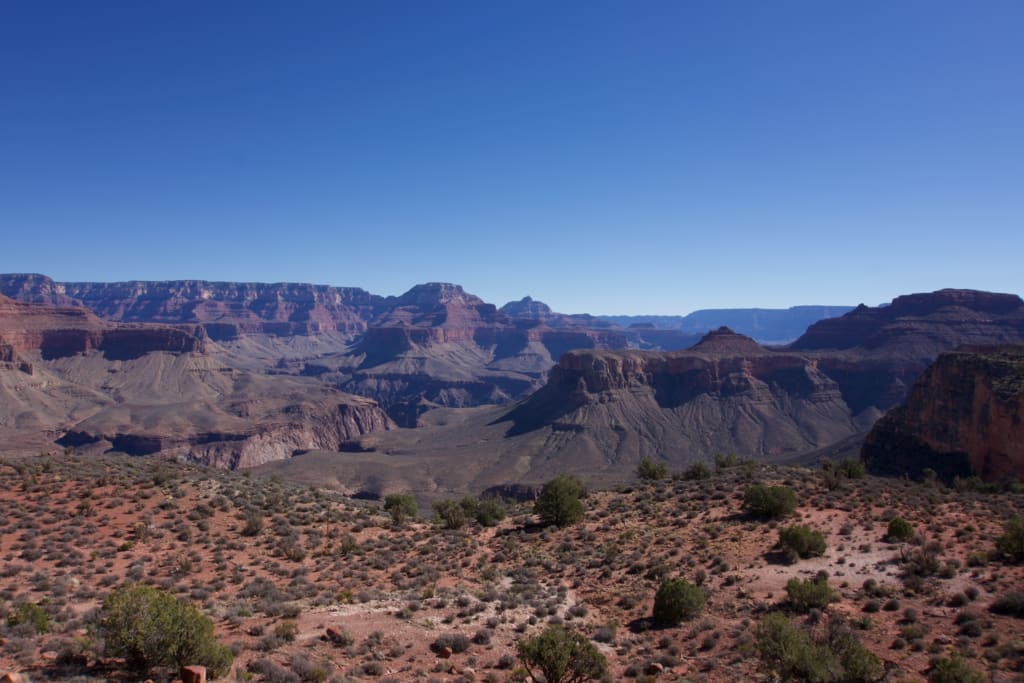
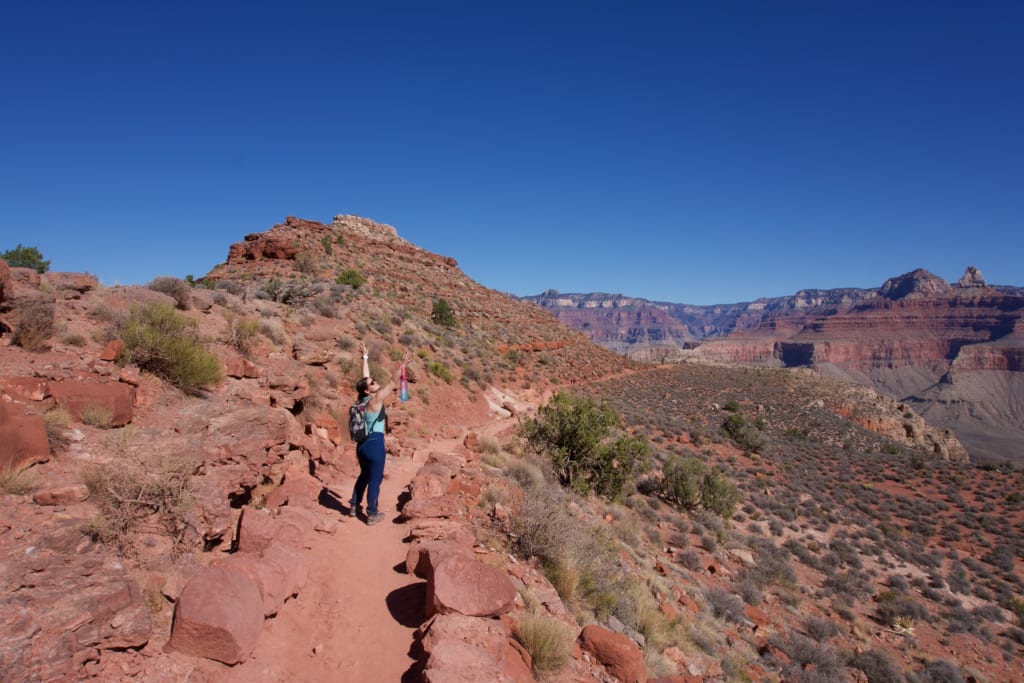
But, the thought did occur to me as I kept descending: I’m going to have to climb back out of here very soon. With each step I was signing myself up for more and more of a challenge.
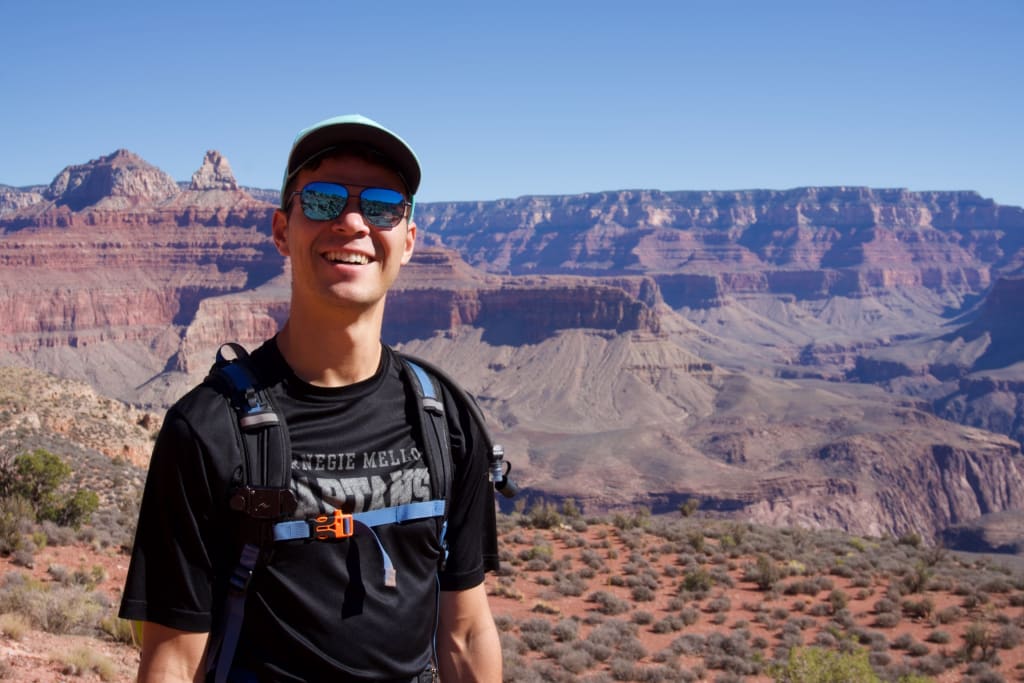
Alex and I made it to Skeleton Point in just under 2 hours. There was plenty of space to sit on the rocks, have a snack, and stare out into the distance.
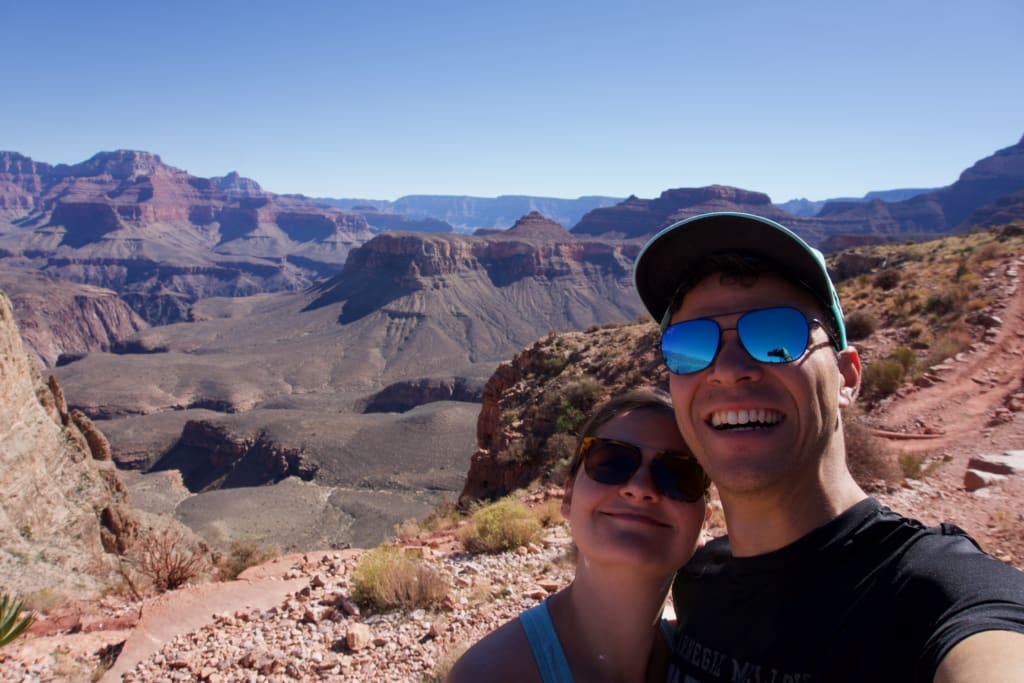
In a strange way, being this far down into the Grand Canyon reminded me of being inside the Suleymaniye Mosque in Istanbul. The grandeur of both the canyon and the mosque dwarfed me and reminded me how small I am in the scheme of the world. I’m just one tiny person, occupying one tiny corner of a world that is so much bigger than I’ll ever be able to fully comprehend. But enough of my existential thoughts.
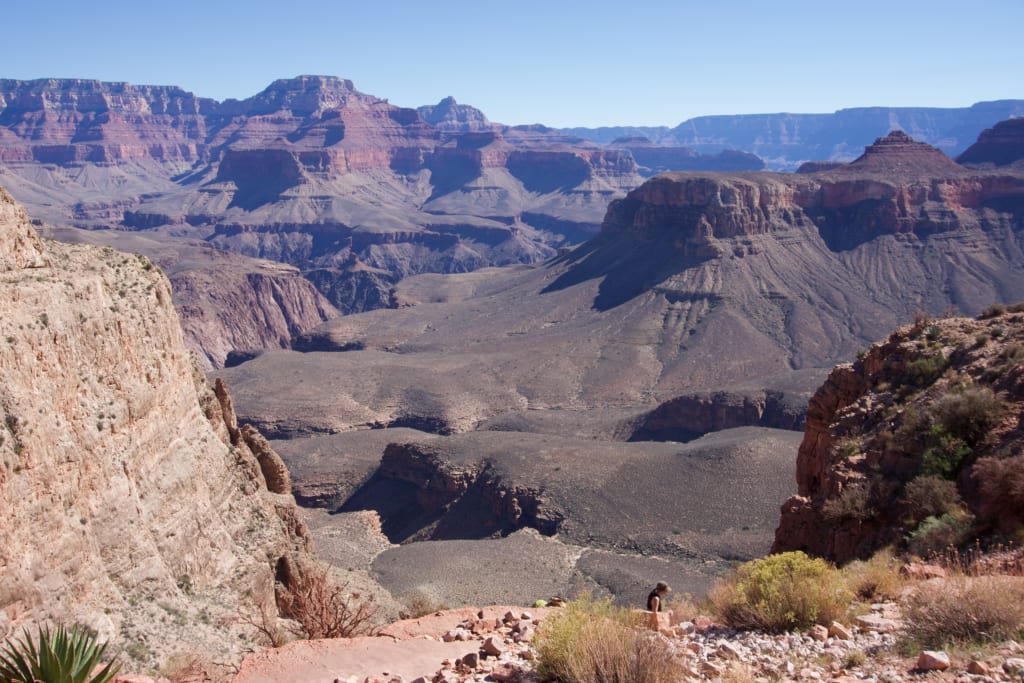
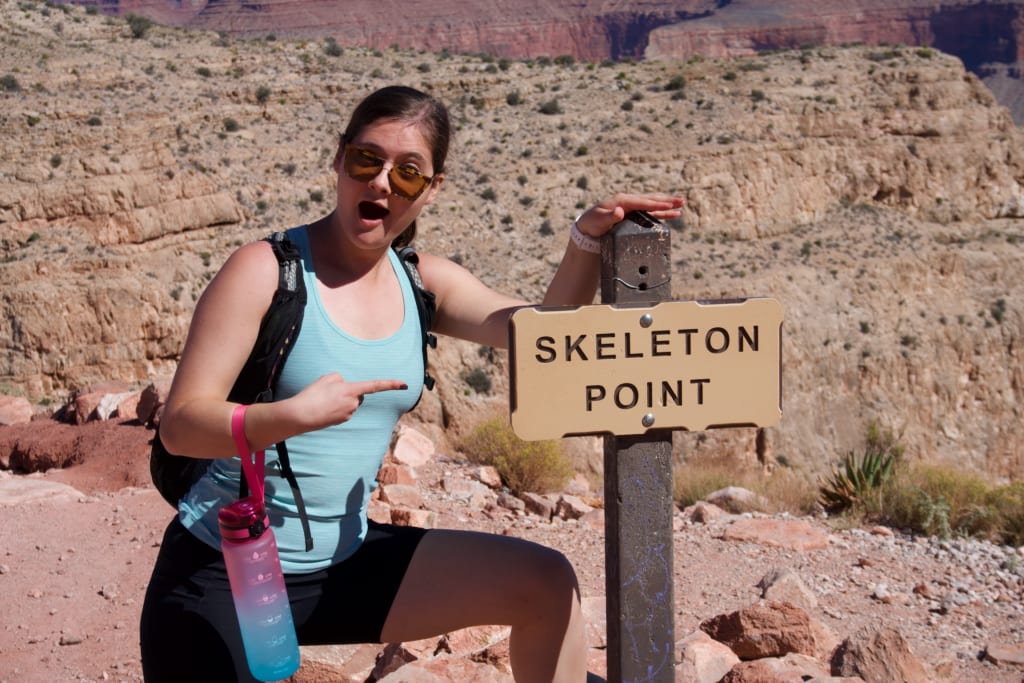
After twenty minutes, the sun beating down on our arms reminded us that it was only going to get hotter and that we better get a move on. We started back up the dirt path the way we came.
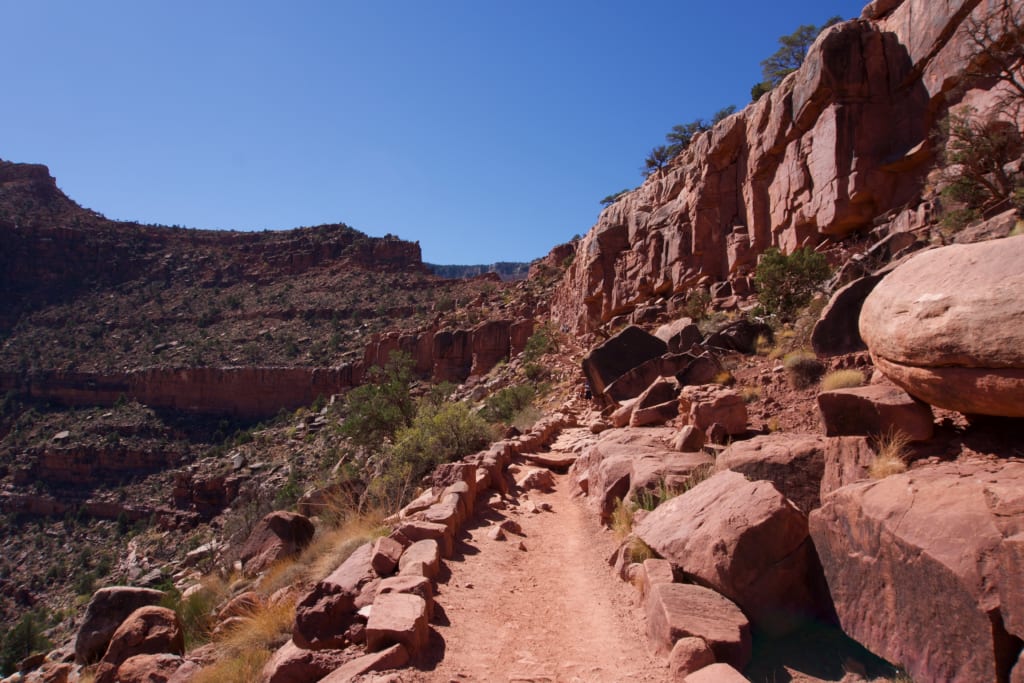
As expected, it was certainly more challenging climbing back out of the canyon that it had been descending down into it, especially now that the temperature was 10 or 15 degrees warmer. We maintained a slow yet steady pace, and made it back to the rim 2 hours later. Somehow, it took us the exact same amount of time to go up that it had to go down, but I think that’s because I move like a snail on the uphill and Alex slows us down on the downhill.
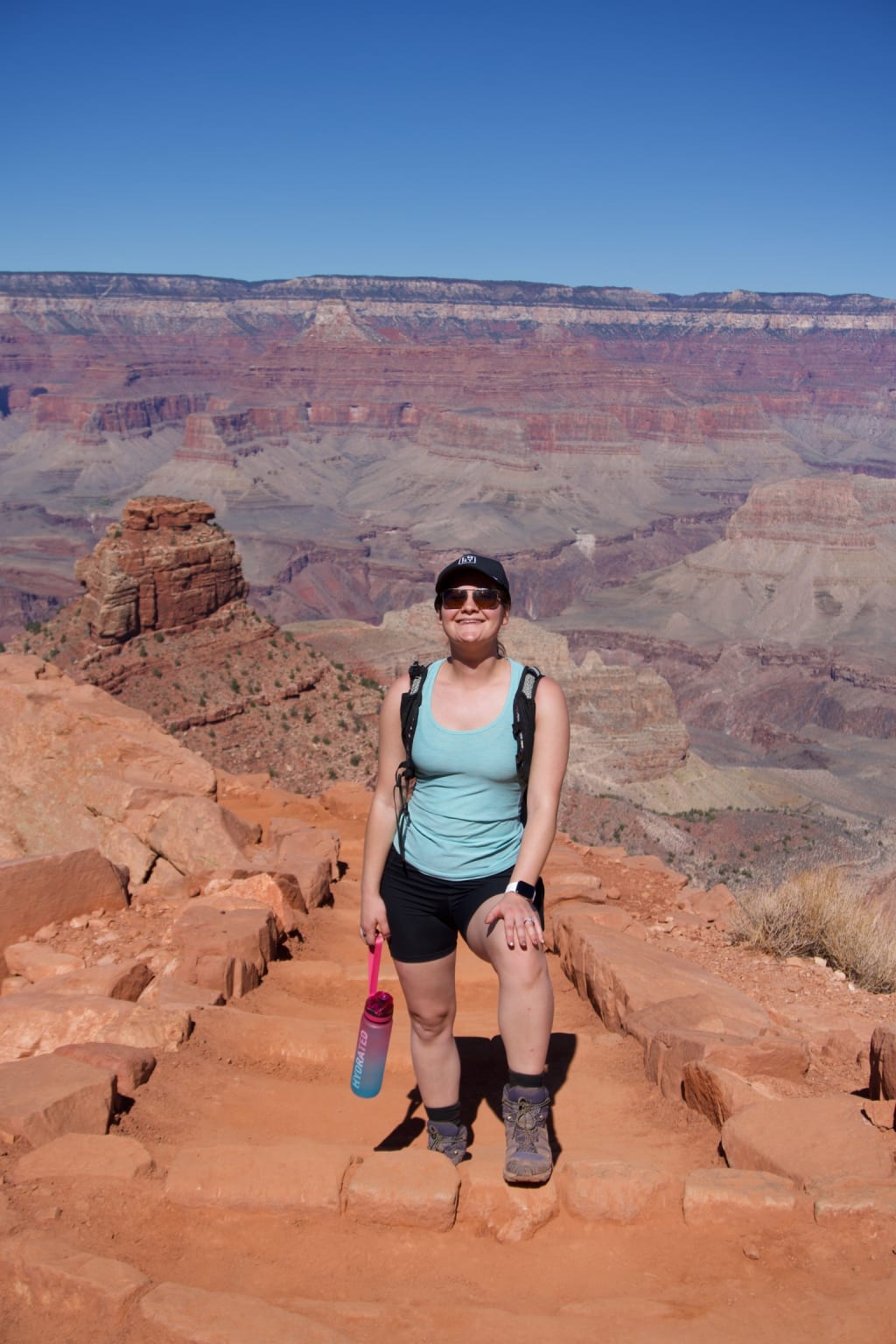
I will say, I’m glad we started our hike early. By noon, the canyon was crawling with hikers. There were ten times more people on the trail than there had been when we started our hike at 9. We were constantly stepping aside on the narrow trail to let people pass and the calm, peaceful atmosphere from the morning had evaporated entirely. I was more grateful now for the few minutes of peace we had gotten at Skeleton Point.
We finished the hike covered in sweat but with a healthy sense of accomplishment and a healthy appetite too. This hike gave me the confidence boost I needed, as I was planning to do a much harder hike a few months later: climbing Volcan Acatenango in Guatemala. (That hike was a doosy but so so worth it. Want to hear more about how that went? Check out this article).
We boarded our shuttle back to the Visitor Center by 1:30pm. In just over four hours, we had descended more than 2,000 feet into the Grand Canyon and climbed every single one of those feet right back out. I’d call that a pretty productive morning. Next on the agenda? Lunch and a nice, long nap.
SAFETY WARNINGS & PREPARATION TIPS
This hike is no joke and you need to come prepared. The National Park Service reports that more than 300 people are rescued from the canyon every year and that there have been hundreds of fatalities over the past couple hundred years. The most common causes of fatalities are extreme heat and flash flooding in the canyon.
I say all of this so that you come prepared, not so that you avoid the hike entirely. Thousands of people hike into the Grand Canyon each year without incident. If you follow these safety precautions, you’re much more likely to have a safe and enjoyable experience:
- Bring plenty of water on your hike. There is NO water on the trail. I would bring at least 4L per person if you’re hiking during the summer and 3L per person otherwise. We brought 4L per person in October to be safe and drank 3.5L each.
- Plan for direct sun with no shade. Bring a hat, sunscreen, and, if you have it, a cooling towel, handheld fan, or spray bottle to keep yourself cool during the hike.
- Start your hike early. Not only will you avoid the crowds that plague the trail later in the day, but more importantly you will avoid the worst heat. We started at 9am and I recommend starting no later than us (ideally earlier).
- Pack layers. It can be cold early in the morning as you start the hike, or even later in the day as you descend further into the canyon. We started off the hike in down jackets and were in a tank top and shorts a few hours later.
- Do not attempt to hike from the rim to the river and back in one day, especially between May and September, when extreme heat can quickly become life-threatening. For the South Kaibab trail specifically, don’t hike past Skeleton Point without an overnight permit.
- Follow the rules around mules. We didn't encounter any mules during our hike, but they regularly use the South Kaibab Trail to transport supplies and tourists into and out of the canyon. Mules have the right of way. The National Park Service instructs hikers to step off on the uphill side (away from the canyon edge), stand quiet and still, follow the wrangler's instructions, and wait until the last mule is at least 50 feet past before getting back on the trail. It’s important to follow these instructions to keep yourself, the riders, and the mules safe.
Be sure to read the National Park Service website for more tips on how to stay safe on your hike.
BEST TIME OF YEAR TO HIKE
The best time of year to hike the Grand Canyon is during the spring (March-May) or fall (late September-November). We hiked in October and had perfect weather.
I would actively avoid visiting between June and early September if at all possible. Heat is a major concern during this period, as temperatures can reach over 100 degrees and there is very limited shade on the hike.
The winter is a great time to hike to avoid the crowds, but snow and ice can be a concern during this season. Given how steep the hike is, in my opinion it would be treacherous with ice and snow.
WHERE TO STAY
The most convenient place to stay when visiting the South Rim is inside Grand Canyon National Park in Grand Canyon Village. We stayed at Bright Angel Lodge in Grand Canyon Village and it was very convenient, even though it’s definitely in need of renovation and the beds are quite small.
If lodging inside the park is unavailable, Tusayan is the next best option, located just 7 miles south of Grand Canyon Village.
I’ve seen many other bloggers recommend Williams (60 miles away) or Flagstaff (80 miles away) as great places to stay near the Grand Canyon, but in my opinion they’re too far if you plan to start your hike early, which you should to avoid excessive heat and crowds.
GETTING TO GRAND CANYON VILLAGE
The easiest way to get to Grand Canyon Village is to fly into either Phoenix Sky Harbor International Airport (~4 hours away) or Harry Reid International Airport in Las Vegas, Nevada (~4.5 hours away). Either way, renting a car to get from the airport to Grand Canyon Village is the best option.
GETTING TO THE SOUTH KAIBAB TRAILHEAD
There is no parking at the South Kaibab Trailhead, so plan to take the free shuttles organized by the National Park Service instead.
There are two free shuttles that take visitors to the South Kaibab Trailhead.
Most visitors will park at the Visitor Center and take the Orange Shuttle. It departs every 15 to 20 minutes and it takes less than 10 minutes to get to the trailhead.
However, early risers might prefer the Hiker’s Express, which shuttles visitors to the trailhead from the Bridge Angel Lodge bus stop, Backcountry Information Center, and the Visitor Center. The Hiker’s Express departs at 6, 7, and 8am.
The full schedule can be found here.
Our lodge also recommended calling this phone number to reach Xanterra taxi service if the shuttles aren’t operating: (928) 638-2631.
THINGS TO DO AT THE SOUTH RIM BESIDES DAY HIKES
You don’t have to be an avid hiker to visit the Grand Canyon. In fact, the National Park Service estimates that only 1% of visitors venture below the rim! The grand majority of visitors choose to admire the canyon from above. You can visit viewpoints like Mather Point and Yaki Point, walk sections of the Rim Trail, drive along the scenic Desert View Drive, or even fly above the canyon in a helicopter, if you can afford to splurge.
If, on the other hand, a short day hike isn’t enough to scratch the hiking itch, consider spending a night inside the canyon. With a backcountry permit, you can turn your hike into an overnight backpacking trip or tackle the famous Rim-to-Rim route from one side of the Grand Canyon to the other.
IS IT WORTH IT?
Yes, both the visit to Grand Canyon National Park and the hike from South Kaibab to Skeleton Point and back were worth the effort.
We loved the hike. It was the perfect way to see the Grand Canyon in just a few hours and it got our blood pumping but wasn’t so strenuous that we were cursing our life choices the entire time.
FAQS
What should I bring on the hike?
I would pack the following:
- At LEAST 3L of water per person (4L is ideal and the bare minimum if you’re hiking between May and September)
- Snacks
- Electrolyte packets (I love LMNT)
- Sunscreen
- Sun hat
- (Ideally) cooling towel, handheld fan, or spray bottle
- Hand sanitizer
- Toilet paper and ziploc bag for waste
- Layers (it’s cold in the morning and as you descend further into the canyon)
- Hiking boots or sneakers
- Trekking poles (we didn’t need them but they would be helpful on the steep descent)
- First aid: Advil, blister bandaids, etc.
How much water do I need for this hike?
I would bring AT LEAST 3L per person, and 4L if you’re planning to hike through the summer heat between May and September. We drank 3.5L per person in October. There is no water along the trail so you need to bring the entire 3-4L with you when you start the hike.
How hard is the hike?
The trail is steep, but well-maintained and in my opinion the hike is very manageable if you’re in decent shape. We only spent 2 hours climbing uphill, so we were tired at the end of the hike but it was nowhere near one of the hardest hikes we’ve done. The part that would make it more challenging is the heat, so be sure to start your hike early in the morning and avoid the summer months of June through early September if possible, when the heat is the most extreme.
Is the trail well-marked?
Yes, there is just one path to follow the entire way. It’s pretty much impossible to get lost along this trail.
Is the trail pet-friendly?
No, South Kaibab Trail is not pet-friendly. Grand Canyon National Park prohibits pets on all trails below the rim, so it’s best to leave Fido at home for this adventure.
How can I avoid crowds on the trail?
My two biggest tips to avoid the crowds are to start early (9am or before) and to continue hiking past Cedar’s Ridge. The National Park Service surveyed hikers and estimated that ~65% of people turn around at or before Cedar’s Ridge, so the stretch of the trail between Cedar’s Ridge and Skeleton Point is comparably much quieter.
What is the bathroom situation on the trail?
There are two backcountry toilets at Cedar’s Ridge, the second major viewpoint along the trail. Fair warning, they are smelly. Very smelly. Plug your nose smelly. But they’re functional. My recommendation is to bring your own toilet paper and hand sanitizer with you.
Other than that, there are no toilets, and since you’re on a narrow, high traffic path for the majority of the hike, there will be few opportunities for an improvised bathroom break.
Do I need a permit for the hike from South Kaibab to Skeleton Point?
No, no permit required. Permits are only needed if you plan to camp overnight in the canyon.
Are there steep dropoffs on the South Kaibab Trail?
There are sections of the South Kaibab Trail with steep dropoffs along one side, but I never felt like I was one wrong step away from tumbling into the canyon. The trail was wide enough that I was personally not nervous during the hike, but if you have a severe fear of heights, it might not be the hike for you.
Is one day enough for a first visit to the Grand Canyon?
We thought so! Descending into the canyon gave us an appreciation for how deep and large the canyon really is and we felt ready to leave by the time we finished the hike.
If I were to design the perfect day in the Grand Canyon, though, I would personally tack on a helicopter flight in the afternoon after the hike, so you can appreciate the Grand Canyon’s enormity from a completely different perspective. That would be a truly epic day.
Either way, with or without the helicopter flight, one day at the Grand Canyon is enough for tight itineraries.
How far in advance should I book accommodation?
The recommendation I commonly see online is to book your accommodation 6-9 months in advance if you want to stay inside Grand Canyon National Park, especially if you’re visiting in the spring, summer, or fall. We got lucky and booked just two weeks in advance for a weekend in late October, but I wouldn’t count on there being availability so close to your stay. Try to plan at least a few months ahead if possible.
How much does it cost to enter Grand Canyon National Park?
Grand Canyon National Park charges a $35 entrance fee per vehicle, which covers everyone in the car and is valid for seven days. If you have an America the Beautiful annual pass (which costs $80 as of 2026), you won’t need to pay the $35 fee.
EXPLORE MORE NEARBY

Hiking the Narrows Without the Crowds (Top Down)

Best Things to Do in Vegas (That Don’t Involve Gambling & Partying)
EXPLORE MORE USA NATIONAL PARKS

The Best Things To Do in Kenai Fjords National Park

Answering ALL Your Questions About Bear Camp (Katmai NP)
EXPLORE MORE HIKES AROUND THE WORLD

Hiking Acatenango: Watching an Active Volcano Erupt Above the Clouds

How to Visit Rainbow Mountain (Vinicunca) Without the Crowds

Why the 1 Day Inca Trail to Machu Picchu Is My Favorite Hike Ever

The Kumano Kodo: Hiking Japan's Ancient Pilgrimage (Hongu to Nachi)

Hiking the Harding Icefield Trail: Is It Worth the Climb?
